Posted in reflections

Religion and politics don’t mix

A beaker filled with water to which oil has been added, demonstrating insolubility of oil in water.

When I was a boy, conversations around the dinner table helped knit our family together. Many words of wisdom from my father and mother were delivered in that setting, including : “Religion and politics don’t mix.” I wonder: Have we forgotten this wisdom?

A woman had been part of her denomination for decades. However, she recently left because leaders in her congregation strongly hinted that to be “Christian” means voting for a particular political party. This story comes from my home country, yet as a missionary living in West Africa, I encouraged pastors to strictly avoid endorsing specific candidates or their parties, to merely ask people to pray then vote their conscience. This was in accordance with the long-standing informal policy of my denomination.

In the global village now connected via the internet, these same pastors now know instantly what world leaders say. They hear American politicians promising to remove any remaining legal obstacles to U.S. churches endorsing political candidates and they hear the applause of church leaders. Yet is this wise? Such a move could be disastrous, making congregations satellite campaign offices instead of places where people can come to hear the Good News of Jesus Christ. It would take our eyes off the unshakable Kingdom (Hebrews 12:28) that Jesus taught us to pray would come (Matthew 6:10), encouraging instead the church to down the cup of temporal power, a poisoned chalice that so far we’ve only been sipping.

The temptation is real in multiple countries. It was campaign season, and a West African politician approached one of our pastors and his associate, inviting them to visit his home. There, he pulled out a dresser drawer filled with money. “I’ll allow you to help yourself to this money,” he promised. “All you need to do is next Sunday endorse me from the pulpit.” That day, the two pastors resisted the temptation. Instead, they told me the story and I commended them for their courage.

Jesus knew something of this temptation. Forty days and forty nights in the wilderness eating nothing, he was famished. Matthew 4:1-17 (CEB) recounts three ways that the devil tried to entice our Lord to abandon his mission. His final method was to tempt Jesus with power, taking him to a high mountain and showing him all the world’s kingdoms. “I’ll give you all of these if you bow down and worship me,” he offered. Yet Jesus replied: “Go away, Satan, because it’s written, ‘You will worship the Lord your God and serve only him’ ” (4:10). When offered rulership – its power and its perks – the Son of God firmly refused. He would not be deterred from the holy mission his Father had set before him.

An election is just around the corner in Kenya. Last Sunday, our pastor encouraged people to register to vote, but added: “In our church, we don’t endorse candidates or parties.” My pastor knows the wisdom of neutrality, that the witness of the church can be compromised if we are not careful. I think he’d agree that what my parents insisted around our family dinner table is good advice. Religion and politics still don’t mix.

___________________

Image credit: Carpenter Valley Assocation

Posted in pastoral care, reflections

Thoughts after a cancer ward visit

memorial_tombstone_at_przyszowice_cemetery_2
By myself (User:Piotrus) (Own work (taken by myself)) [GFDL (http://www.gnu.org/copyleft/fdl.html) or CC BY-SA 3.0 (http://creativecommons.org/licenses/by-sa/3.0)%5D, via Wikimedia Commons
A hospital chaplain spoke of the comfort provided to Christians by the belief we have eternal souls. As patients’ bodies gradually become weaker and more uncooperative, they rest in the fact that no disease can diminish their soul which would soon go to be with Jesus. While I respect that position, N.T. Wright has correctly noted that the New Testament hope in the face of death is not disembodied existence but the resurrection.(See his excellent book, Surpised by Hope).

Yesterday I visited a cancer ward. There were many who were wasting away, limbs shriveled, eyes sunken, their frail frames a shadow of what they once were. As I prayed with a friend, my prayer was that God would restore his health. Yet whether God chooses to heal, our faith is that this is not the final chapter. Creation is followed by re-creation. Mortality surrenders to immortality; death is swallowed up in victory (1 Cor. 15:54). Eternal life follows resurrection at Christ’s return, God’s gracious gift to the righteous (John 3:16, Romans 6:23).

“He fell asleep in Jesus.” So wrote a friend of mine at the passing of a loved one. It’s a good summary of what happens when people die: They fall asleep. When Jesus returns, believers will have a sweet awakening to life eternal, while punishment and destruction is the rude awakening reserved for the wicked (John 5:28-29; Rev 20:11-15). Both Jesus and Paul used “sleep” as a snynonym for death (John 11:11-14, 1 Thess. 4:13-18). Yet Christians fall asleep in the steadfast hope that the same Jesus whom God raised to life will himself raise us to eternal life (1 Corinthians 15:51-55). One short sleep later and Jesus (at his return) will receive us (formerly mortal but now immortal) into his strong arms. The old Negro spirituals called this the “great gettin’ up mornin.’ ” What an amazing awakening that will be!

When it comes to how Christians conceptualize death, sleeping in Jesus is a minority position. Most instead believe in an immortal soul that leaves the body at the moment of death. While I see no conclusive biblical evidence for an “immortal soul” – an idea from Greek philosophy – there are a few New Testament passages traditionally interpreted as teaching a conscious existence apart from our bodies (Luke 16:19-31; 2 Cor 5:1-8, 12:1-5). This is called body-soul dualism, the belief that the enduring part of the human being is not the body but an indestructible soul.

Whichever position one takes, one thing is certain: We must be ready for our own demise. The writer to the Hebrews affirms that all human beings are “destined to die” and “after that face judgment” (Hebrews 9:27, NIV). There are no post mortem opportunities to make things right with God. Are you ready for that encounter?

Posted in Uncategorized

3 holy habits for citizens who follow Jesus

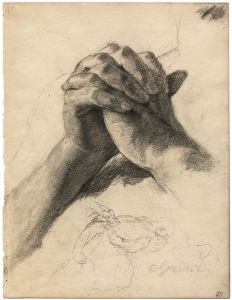
praying-handsYesterday, the United States inaugurated its 45th President. The colorful pageantry we have come to expect as power passes from one American administration to another was on full display.

Whatever our feelings might be toward a given leader, emotions are fleeting; habits endure. Here are three holy habits to develop as citizens who follow Jesus, no matter what country we call home:

1) Pray for leaders. As missionaries, my wife and I often let our supporters know specific ways that they can pray for us. We know that the task God has given us is too big on our own. If we are to make it, we need teammates, people calling our name before the throne of Grace (Hebrews 4:16, Ephesians 6:19). In the same way, Scripture asks us to pray for “kings and for everyone who is in authority, so that we can live a quiet and peaceful life in complete godliness and dignity (1 Timothy 2:2, CEB). The task of civic leaders is heavy and often thankless. Are we in the habit of praying for them?

Sometimes it’s hard to know specifically how to pray for leaders. Here’s a public prayer I recently offered:

Lord God, we pray that you will guide our new President. Give him your wisdom and self-control. May he seek the good of others and listen to those who are marginalized. Grant that he may not depend upon himself but upon you in all the important decisions that he must make. Surround him with those who will have the courage to say what must be said. Make his heart tender that he might lead our nation in a directon that pleases you. In Christ’s name we pray, AMEN.

2) Call on leaders to do what is right.  So important to the Bible’s message is doing what is right by the poor, the forgotten, and the powerless that this concern is woven like a golden strand throughout both Old and New Testaments. Deuteronomy 27:19a (NIV) warns: “Cursed is anyone who withholds justice from the foreigner, the fatherless or the widow.” Likewise, Amos was a simple farmer from the village of Tekoa, near Bethlehem. In the 8th century BC, God sent him on a mission to Bethel. There, he railed against the abuses of Israel’s elite, insisting: “A lion has roared: who will not fear? The LORD God has spoken; who can but prophesy?” (Amos 3:8, CEB). His message – while addressed to many nations – was also for the leaders of his own people, Israel’s elite. He accused them of crushing the “weak” and the “needy” (4:1), offenses that he later in the chapter warns will result in domination by foreign powers, famine, drought, and disease.

Jesus modeled this kind of prophetic spirit in Matthew 23:37-39 when he wept over Jerusalem for having killed the prophets and having rejected his own message. Earlier in the chapter, he condemned the teachers of the law and the Pharisees not only for their hypocrisy but for having forgotten “the more important matters of the law,” including “justice, peace, and faith” (23:24, CEB).

While praying for our leaders is crucial, it is insufficient. We as prompted by God must go further, raising our voice on behalf of those unjustly targeted. Amos and Jesus give us a pattern for responsibly engaging our leaders, calling on them to do  what is right. Moments arise when – to use the words of Dallas Willard – a “holy discontent” wells up inside and we must prophesy or else be disobedient to the voice of the Holy Spirit. Who are the “fatherless, the foreigner, and the widow” in our day? Who are the citizens around us who are neglected, even oppressed? There comes a time when Jesus followers must speak up, voicing our opposition to policies and decisions made by our leaders that crush the weak and needy among us. To do less is to deny who we are as Christ followers.

3) Be the change.  Beyond prayers and speaking up for what is right, a final holy habit comes from Mahatma Gandhi: “Be the change you want to see in the world.” This outlook is implied by Paul in Romans 2:21b-22a (NIV): “You who preach against stealing, do you steal? You who say that people should not commit adultery, do you commit adultery?” We cannot expect the behavior of our leaders to be exemplary if our own conduct is sinful. Instead, Paul elsewhere calls us to be “children of God without fault in a warped and crooked generation” (Philippians 2:15a, NIV), to be “people who shine like stars in the world because you hold on to the word of life” (Philippians 2:16a, CEB).

A pastor in a large cathedral in Nairobi recently invited the police to come to a special service. At a key moment, more than 200 officers came forward and received a prayer for God’s safety and blessing. Though later during his sermon he did not hesitate to admonish them to act with intergrity at work, he reminded everyone present that the character of the police and all our leaders is merely a reflection of the character of a people as a whole. The leaders produced are a direct product of the community that produces them.

800px-martin_luther_king_jr_nywts_6
Martin Luther King, Jr.

In his Letter from a Birmingham Jail, Martin Luther King, Jr. speaks of “self-purification.” As civil rights marchers faced police brutality in the 1960s, he knew that hate could not be overcome by hate, so instead he called his people to non-violence. Self-purification meant rehearsing behind closed doors how to passively resist when publicly beaten by a billy club, dragged by the arm or aggressively handcuffed.

King’s self-purification was applied in a specific circumstance during the civil rights movement, but what would happen if followers of Jesus applied it more generally? He knew that they had to be the change. If they wanted non-violent police, then they themselves had to be non-violent. Likewise, if we desire public leaders who are righteous, what private sinful practices must we allow God to eliminate in our own lives? A transformation of the public realm must begin in the private realm, yet long experience teaches us that human beings are woefully indadequate to make such changes in their own lives. Only God’s power can do that! (2 Cor. 5:17, Romans 12:1-2; 1 Thess. 5:23-24).

Praying for leaders, calling them to do what is right, and modeling needed change are three holy habits for citizens who follow Jesus. God may lead us to develop others, depending upon the situation. Nonetheless, no matter who occupies positions of authority over us, may these practices help God’s people live with winsomeness and integrity.

_____

Images used in the essay are in the public domain.

Posted in ecclesiology & sacraments, reflections

If denominations took a StrengthFinder™ test

dscn6415Gallup’s StrengthFinder™ is all the rage. Take a 30 minute test online and you’ll discover your “Top 5,” the key elements of who you are and how you see the world. This constructive tool has helped me understand how God has wired me and what value I can add to the organizations where I work. It focuses on what is right with an individual and not what is wrong, designating 34 “strength themes” and describing them in detail.

Disclaimer: Though I’ve taken the test, have been in 2 workshops explaining the strengths approach, and have been coached on my Top 5  strengths, I am not a certified coach.

But I wonder:

What would the top strengths be if the StrengthFinder™ test were applied not to individuals but to Christian denominations?

I’m a lifelong Nazarene (in the Wesleyan-Holiness tradition), so I have a better basis of speculating what my own denomination’s strengths might be. But because my readers come from a variety of Christian backgrounds, I’ll attempt an assessment of a handful of other Christian traditions based on what I’ve studied and observed about them supplemented by conversations over the years with individuals within those traditions. Feel free to correct me where you think I’ve gotten it wrong.

Take a minute and read about all 34 strength themes, then come back to this essay.

For brevity’s sake, let’s identify the top 3 from five major traditions.

(Note: Though I currently live in East Africa, my observations are most applicable in the North American setting which – as an American – is the context with which I am most familiar).

1) Roman Catholicism

a. command – For Roman Catholics, the Pope is the undisputed spiritual leader. Though advised by the Magesterium (collection of Cardinals), he can speak ex cathedra (from the Chair), making pronouncements that are binding upon the faithful. It makes for a unified and authoritative voice on matters of social ethics.

b. ideation – Across time, Roman Catholicism has been theologically creative. The doctrine of purgatory was innovative in its time, and the veneration of Mary and the saints has provided a conversation starter between Roman Catholic missionaries and those for whom ancestors are a large part of their religious worldview.

c. empathy – Hospitals and schools often sprout up wherever the Catholic message is preached. There’s a “can do” attitude apparent in various RC orders, from Jesuit priests (and their education emphasis) to the compassion of nuns as exemplified (for example) in Mother Teresa of Calcutta.

2) Episcopalians/Methodists

a. inclusiveness/includer – The Episcopal Church in the U.S.A. (ECUSA) prides itself on creating space for people that society has marginalized. Unlike many denominations, the ECUSA is happy to ordain women, as is the United Methodist Church.

b. harmony – Peace and reconciliation are important themes for both Episcopalians and United Methodists. For example, the UMC held a peace seminar in the Democratic Republic of the Congo in August 2015. Likewise, in 2013, the ECUSA participated in a World Council of Churches (WCC) conference in Busan, South Korea that emphasized the theme of justice, peace, and reconciliation.

c. positivity – Christians within this tradition often have a post-millenial view, believing that the church’s role is to help build the Kingdom of God while we await the return of Jesus Christ. There’s a strong belief that we can make the world a better place now, that the Gospel has marked social elements to it that are not incidental to the Christian message but are at its very core.

Continue reading “If denominations took a StrengthFinder™ test”

Posted in book reviews

An excellent summary of Wesleyan theology

essential-beliefsMark Maddix and Diane LeClerc have done it again. Just two years after collaborating as co-editors of Essential Church: A Wesleyan Ecclesiology (Beacon Hill, 2014), they’ve overseen the production (also by Beacon) of Essential Beliefs: A Wesleyan Primer (2016), a welcome volume that will fill an important niche for those desiring a concise but comprehensive introduction to Wesleyan theology.

The term “primer” is well-chosen. Each of the 19 chapters in the 159 page book serves as an introduction to an important doctrinal topic. Organized in a traditional format, the five sections move the reader from 1) the sources and method of theology, to 2) God as theology’s subject, then 3) creation/humanity/sin, followed by  4) the nature of forgiveness and sanctification, and ending with 5) the church’s “meaning, purpose, and hope,” i.e. ecclesiology and eschatology. By book’s close, the careful reader will have taken in the panoroma of Wesleyan theology and – thanks to the suggestions for further reading at the end of each chapter – confidently be able to double back to pursue smaller trails that fork off from the main path.

The editors assigned the writing of chapters out to a crop of younger, emerging scholars, both male and female (Essential Beliefs, 16). This was a good decision, giving the book a freshness and sensitivity to more recent emphases, including a relational reading of sanctification. Also commendable is that not all writers were from North America, with solid chapters contributed by an Austalian, Zimbawean, Brit, and Filipino.

Mark Maddix’s chapter on spiritual growth contains a sentence that caught my attention. Referring to Communion, he observes: “Christians recognize that as they breathe in through participation in Word and Table, they are healed, empowered, and equipped to breathe out in God’s mission in the world” (Essential Beliefs, 122). This is a powerful metaphor that applies not only to Eucharist but to many other discipleship aspects of church life, including Christian education, preaching, and participation in small groups. Not having read Essential Beliefs until this week (December 2016), it’s fascinating that his breathing in/breathing out image is exactly what I have developed at greater length in Mere Ecclesiology: Finding Your Place in the Church’s Mission (Wipf & Stock, 2016) as the concept of “spiritual respiraton.” Maddix’s sentence is a confirmation that the Holy Spirit is always speaking to the church in sundry locations, yet somehow moving us together in the same direction.

Continue reading “An excellent summary of Wesleyan theology”

Posted in discipleship, ecclesiology & sacraments, missions & evangelism

Wipf & Stock publishes latest Crofford book

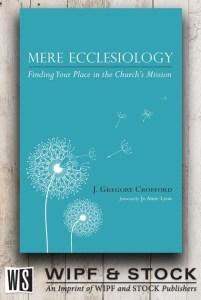
mere-ecclesiology-coverJ. Gregory Crofford, Mere Ecclesiology: Finding Your Place in the Church’s Mission (Eugene, Oregon: Wipf & Stock, 2016)

Available in paperback for $ 13.60 USD at Wipf & Stock by clicking here, or at Amazon.com for $ 17.00 USD by clicking here. An Amazon Kindle e-book edition will be available in early 2017.

Book synopsis

Too many churches limp along with no clear sense of mission. In Mere Ecclesiology: Finding Your Place in the Church’s Mission, Dr. Crofford clarifies the purpose of God’s people through the metaphor of spiritual respiration. “Breathing in” (worship and discipleship) leads to “breathing out” (transformative service in the world). Newcomers and seasoned believers alike will be challenged to discover their calling as the Holy Spirit sends the church out on a challenging mission to heal families, communities, and creation itself.

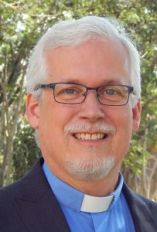
greg_photo-copy
Dr. Gregory (“Greg”) Crofford, Ph.D. (University of Manchester), is a Senior Lecturer and the Ph.D. (Religion) Program Coordinator in the Religion Department at Africa Nazarene University (Nairobi, Kenya).
An interview with the author

What led you to write this book?

Christianity is fragmented. I wondered: What are the characteristics that all churches within the Christian tradition share? Mere Ecclesiology is an attempt to identify what unites us and to celebrate it.

You talk about “spiritual respiration.” What do you mean by this rather odd term?

Just like the human body must breathe in order to survive, so must Christ’s body, the church. It’s a word picture. “Breathing in” represents discipleship, coming to Christ and growing in our faith, both individually and corporately. ” On the other hand, “breathing out” is the mission God gives the church in the world, impacting communities through service that transforms. A healthy church will evidence both movements of the Holy Spirit, inward and outward.

Your chapter on “calling” has some surprises. Why do you present the word in such broad terms?

One of the downsides of the clergy/laity divide in how we conceptualize the church is that we become like a soccer match with only a few playing on the field and the rest watching in the stands. Yet Ephesians 4:11-16 teaches that all of God’s saints (believers) have a place of service, a role to fill not only in the church but in how the church fulfills her mission for the sake of the world. It is not just clergy who have a vocation from God. We all have a calling to fulfill. This is really where the sub-title of the book comes into play: “Finding your place in the church’s mission.”

Continue reading “Wipf & Stock publishes latest Crofford book”

Posted in Christology

The counterintuitive God

clockCounterintuitive: different from what you would expect (Merriam-Webster’s Online Dictionary). Like a clock that runs backwards, there’s little doubt: God is counterintuitive.

Take the incarnation, the eternal Christ clothing himself in human flesh. If the choice had been up to us, we might have chosen huge and flashy. Instead, to bear Emmanuel – “God with us” – the LORD chose someone humble and unknown.

Luke 1:28 (NIV) tells the story:

Greetings, you who are highly favored! The Lord is with you.

Who was this “highly favored” person? Mary was a young Jewish girl. There was nothing noteworthy about her. She had no powerful connections, no high birth to commend her. Yet God – who has a habit of doing the unexpected – chose her to bear the Christ child.

Besides using the unknown Mary as Christotokos – the mother of Christ –  another counterintuitive element of Christmas is tactics. Christ’s coming to earth was hardly the Powell Doctrine. The former American Joint Chiefs of Staff believed that – as a last resort – if the military must be used, then go big. Amass huge quantities of soldiers and equipment, then overwhelm the enemy. But on Christmas, God didn’t get the memo. He didn’t dispatch an army of angels (though an angel choir did sing for a handful of shepherds). Instead, God parachuted an infant Jesus quietly behind enemy lines, like a single SEAL in camouflage. In a world under the destructive thumb of the devil and his sinister band of brothers (1 John 5:19, Ephesians 6:12 ), this underwhelming response seemed counterintuitive.

Besides choice of people and tactics, a final counterintuitive aspect of the incarnation is love. For a creation that had hatefully snubbed its Creator, one might expect in return well-derserved wrath, God paying back hate with greater hate. Yet to our utter amazement, this “SEAL” sent by God came armed with only one “weapon.” Hate could never overcome hate; only love could do that:

For God so loved the world, that he gave his only son…

Paul in the cross discerned heaven’s jujitsu, writing to the Romans: “Do not be overcome by evil, but overcome evil with good” (Romans 12:21, NIV). The cross is a counterintuitive demonstration of God’s love for us sinners who despised him (Romans 5:8). While God’s self-denying modus operandi makes little sense to human calculus, love is the powerful magnet that for twenty centuries has drawn people to their knees at manger, cross, and empty tomb.

Humble Mary, baby Jesus, love – These are three indications that we worship a counterintuitive God. The LORD acts differently than what you would expect. For the sake of our world, may we as Christ’s followers recommit ourselves to doing likewise.

Posted in Christology

Incarnation and holiness

mangerIt’s a persistent theme across the centuries. Spirit is good; flesh is evil.

Some of the ancient Greek philosophers taught the exaltation of the soul and the denigration of the body. Plato extolled the immortal soul while Gnosticism later picked up the theme, infecting early Christianity with the notion that salvation is achieved only when the soul is liberated from the prison house of corrupt flesh. Augustine never escaped the lure of this view, implying the dirtiness of the body by teaching that original sin is passed down through the procreative act.

The negative Greek view of human flesh is what makes the reaction to Paul’s teaching in Acts 17 understandable. He met with a group of Epicurean and Stoic philosphers at Mars Hill in Athens (17:18). At first, they gave him a polite hearing as he attempted to build a bridge to them, speaking of the altar he had discovered which bore the inscription “to an unknown God” (v. 23). But then Paul lost his audience as quickly as he had gained it. What did he do wrong? He affirmed that God had raised Jesus from the dead (v. 31). Nothing bespeaks the value and goodness of the human body like God’s willingness to restore one to life. The philosophers would have none of it.

But we’re getting a bit ahead of the story. Long before Easter comes Christmas. While Easter is the feast of the resurrection, Christmas is the feast of the incarnation:

The Word became flesh and made his home among us. We have seen his glory, glory like that of a father’s only son, full of grace and truth (John 1:14, CEB).

The eternal, Triune God who had made all that is and pronounced it “good” (Genesis 1) tabernacles among us as Emmanuel, God with us (Matthew 1:23) thereby dignifying humble flesh. If the Gnostics were correct to believe that the pure spirit of divinity could never stoop to inhabit a corrupt human body, then the incarnation becomes a non-sense. Yet we are not Gnostics and should resist their false teaching. Christian orthodoxy affirms that whatever the disobedience of Adam and Eve may have done to the human condition, God still sees in our body something already very good, something worth saving and perfecting.

Christmas as the moment when the Word became flesh is the celebration of God’s good creation as symbolized by the tiny body of a baby boy. Our body was never meant to be viewed as a brake on our spiritual progress, as something that weighs down our escape from this world. Far from a hindrance to our relationship with God, the body – properly viewed – becomes an instrument of praise. For every follower of Christ, our body becomes the very temple of God’s Holy Spirit (1 Corinthians 6:19). Our body – what God already pronounced “supremely good” (Genesis 1:31, CEB) – we give back to the Lord so that it may be purified and set apart for sacred use (Romans 12:1-2). We worship God with our body. In so doing, our body becomes a vehicle the Lord can use for holy purposes.

The next time you are tempted to think of your body as an obstacle to fulfilling God’s mission in your life, remember that the eternal Christ never spurned a body. Instead, he saw the incarnation as necessary, a human body as essential to fulfilling his divine calling. This Christmas, let us thank God for the body he has given us, and with joy give our body back to him for his sacred use.

————–

Image credit: Tou Logoi Logou


Posted in African theology, reflections

Africa and the re-enchantment of the West

By Douglas Baulch (Douglas Baulch) [CC BY 3.0 (http://creativecommons.org/licenses/by/3.0)], via Wikimedia Commons
Merlin the magician
Vampires, wizards, witches, zombies – enchantment pervades the NetFlix movies we stream, the television programs we watch, and the books that sell by the millions. Science may be taught in our classrooms – the “Star Trek” franchise still has a following, after all – but it’s the paranormal and the supernatural that are all the rage. In North America and Europe at the close of the 20th century and the beginning of the 21st, we’re seeing what may be termed the re-enchantment of the West.

As a missionary serving in Africa, I find this phenomenon fascinating since Africa arguably has never been de-enchanted, nearly a century of colonial rule and decades of post-colonial Western influence notwithstanding. Teaching a class of pastors in Benin some years ago, one told the story of seeing a mob with sticks chasing a stray dog. They beat it while the animal tried to escape. Finally, the bleeding dog fell to the ground under the pummeling of the crowd, then before their eyes changed into a young man, complete with bleeding wounds on his body. The pastor wanted to know: What does Christian theology have to say about that?

Recently I ordered a textbook for a theology course at the unversity where I teach. The book was published recently in the West, by Western scholars. Though the book has much to commend it, my Kenyan students will look in vain to find any framework by which to respond to the question the West African pastor asked me, yet Benin and Kenya are close in outlook. In January 2016, a story was reported in multiple news outlets that breathes the same enchanted worldview. Purportedly, a Kenyan man had his motorcycle stolen. To find out who had taken it, and to get it back, he went to the witchdoctor, who allegedly sent a swarm of bees. The bees split into two groups, one enveloping the missing motorcycle, the other attacking the supposed thief. As reported in one French language edition of the story, people sent for the witchdoctor, who then made the bees leave. One Kenyan official gave an alternative explanation, reporting that a queen bee had become lodged in the handlebars, which explains the swarming of the rest of the hive. It was one event but explained through two very different pairs of spectacles.

The re-enchantment of the West and the ongoing enchantment of sub-Saharan Africa raise several questions in my mind:

  1. What place does science education have in curriculum of public and private schools? Is its purpose de-enchantment?
  2. Does an acknowledgment of cause/effect in the universe as explained by science necessarily exclude supplementary explanations of other agents such as witchdoctors, or – to use the Western paradigm – witches, warlocks, or wizards?
  3. Must Christian theology in a postmodern world rediscover categories that appear in older systematic theologies, including the discussion of angels and demons? Are there any other voids in our teaching that encourage African Christians to seek explanations – and sometime, solutions to their everyday problems, like stolen bikes – in sub-Christian ways, by means other than addressing their needs to God in prayer?
  4. Western views of magic as portrayed in fiction suggest both benevolent and malevolent forms, so-called “good witches” or “good wizards.” Can we mentally compartmentalize this as harmless fantasy – merely the entertaining product of a healthy imagination – or are we unwittingly encouraging dabbling with very real malevolent forces, to our own spiritual harm?
  5. How do we adress issues around magic while avoiding sowing fear, keeping our eyes firmly on the truth that Christ has vanquished evil in all of its forms? In desiring to be relevant, is it possible that we’ll end up making the devil and his minions larger and more powerful than they are? We must not inflate the power of the demonic by giving it undue attention, detracting from the surpassing greatness and power of the Triune God, a God who is never far away but present and active in our world.

These are areas that are ripe for theologizing based upon solid exegesis of biblical material. Having been trained in a Western setting, I did not have eyes to see Scripture in-light of the kind of question that the Beninese pastor asked me. After twenty years in Africa, I’m more sensitive to such questions. However, they are better dealt with by local African theologians who can marry scientific explanations (where applicable) to the more supernaturalistic worldview that they know so well and that is apparent in Scripture.

In light of the re-enchantment of the West, we are witnessing a golden opportunity for Western and African Christian theologians to put their heads together to provide biblical answers to practical questions but from a holistic worldview. Let us not be satisfied to let vacuums in our thinking persist. Answers that honor God are there if we are willing to seek them. We owe the church and our world nothing less.


Photo credit: By Douglas Baulch (Douglas Baulch) [CC BY 3.0 (http://creativecommons.org/licenses/by/3.0)%5D, via Wikimedia Commons

Posted in sermons & addresses

A ceremony to remember – Brad and Emily

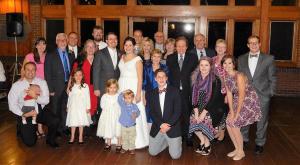
croffords_weddingOn November 4, 2016 – in Des Moines, Iowa – I had the honor of performing the wedding ceremony for my son, Brad, who married Emily (Em) Papp. What a day of joy that was for me, Amy, and all gathered! With Brad’s and Em’s blessing, I share below the wedding homily delivered that day.


“Be kind, tenderhearted, and forgiving”

Ephesians 4:32 (NLT)

Emily and Brad,

Today is a day of great joy, a day that together you have anticipated for a long time. Life offers us many gifts. We are grateful that in God’s timing, you have received the gift of each other.

As a couple, you have done what many have tried but failed to do. Over several years, you have found creative ways to make a long-distance relationship flourish. Through 11 hour drives between Iowa and Oklahoma, through many “Skype dates” and too many text messages and phone calls to count, you’ve nurtured your love and watched it grow. That effort is praiseworthy. Look around you. On this your wedding day, we your family and friends strongly affirm our love and support for you. We who have walked the same road before you say with confidence that the person who finds a trustworthy companion for life has found a very good thing.

As wife and husband, you are beginning a new and rewarding chapter in your story. You will now enjoy companionship in close proximity and the many joys it brings. Yet most married couples can testify to the adjustment that newlyweds must make, moving from the all-too-familiar “I” to the less familiar “we”. Deuteronomy 24:5 speaks of the challenge of two becoming one:

“A newly married man doesn’t have to march in battle. Neither should any related duties be placed on him. He is to live free of such responsibilities for one year, so he can bring joy to his new wife.”

The Apostle Paul, though unmarried, provided simple advice that is useful to everyone but particularly for spouses early in their marriage. In Ephesians 4:32 (NLT) he writes: “…Be kind to each other, tender-hearted, forgiving one another, just as God through Christ has forgiven you.”

Continue reading “A ceremony to remember – Brad and Emily”