Posted in reflections

God first

20151106_175754It’s an old marketing principle: If you want to sell it, sexualize it. So I was surprised to find headphones for sale not using sex as a hook, but religion.

The label read: “turn it up headphones.” Underneath were printed these four words:

Music is my religion.

Let’s be clear. Music is one of life’s good gifts. I’ve never been one to think that God put all the trees in the garden off limits and only allowed Adam and Eve to eat from one. Rather, it was the serpent who attempted to twist the LORD’s words in this way, asking husband and wife: “Did God really say, ‘You must not eat from any tree in the garden?’ ” (Genesis 3:1, NIV). Music is one of the trees that God encourages us to explore. Art, drama, science, sports – there are so many pursuits in this life that fill our days with meaning and that can bring glory to God.

What crosses the line with the “music is my religion” slogan is simple. It puts something else at the center of our lives instead of God. Any pursuit – even an otherwise wholesome one – that displaces God and takes center stage in our lives is an idol.

Football – what Americans call soccer – can take on religious overtones. While doing postgraduate study in Manchester, England, I often took bus 42 downtown to the John Rylands library. As I looked out the window one day, we drove by a small sign along the side of the road. It depicted a soccer ball with a halo over the top. Underneath were these words: “Worship the game.” As God is crowded out of the lives of many and fewer people are part of a community of faith, will vocabulary that before was reserved for the divine be co-opted by lesser things?

Here’s a quick priority test. Other than food, water, clothing and shelter, which human beings need to survive, what other things are there in our lives that have become such a part of our daily routine that to lose them would cause us pain? The Christian discipline of fasting can help us put them back in perspective. Calculate the time you spend on your smart phone or playing games on the internet. Now, for the period of one week, cut one of those out of your life. Instead, take 10% of that time and spend it talking with God. When you reach for the cell phone to send yet another SMS or to check FaceBook, or you reach for the remote on your TV to watch your favorite sport, instead sit quietly for two minutes and listen for God’s voice. This exercise will help us tear down idols and put God back at the center where He belongs.

I only have one religion, and that is God. No other pursuit – no matter how wholesome – must take the place of my pursuing Him. Let’s keep God at the center. Let’s keep God first.

Posted in missions & evangelism, reflections, The Wesleys and Wesleyan theology

Heaven isn’t enough

heavenWhy did Jesus die on the cross?

The tendency over the past 50 years in some Christian circles has been to say:

Jesus died on the cross so we could go to heaven.

The epitome of this approach was an evangelism strategy developed by the Reverend D. James Kennedy, pastor of the Coral Ridge Presbyterian Church in Fort Lauderdale, Florida. In home visits, church members would ask prospects: “Do you know for sure that if you died tonight you would go to heaven?”

At Seminary, we learned this method in a slightly modified form. However, it has always seemed incomplete to those coming from a Wesleyan-Holiness perspective. In Matthew 28:16-20, the passage commonly called the “Great Commission,” Jesus outlined our mission not as helping people make sure their ticket is punched for the heavenly bus ride. Rather, it is a call for people to follow Jesus in the here-and-now:

Go therefore and make disciples of all nations, baptizing them in the name of the Father and of the Son and of the Holy Spirit, and teaching them to obey everything that I have commanded you. And remember, I am with you always, to the end of the age (Matthew 28:19-20, NRSV).

Common Evangelical parlance says that we must “get saved.” Strangely, there is often little mention of this in relationship to following Jesus. An experience of praying a “sinner’s prayer” becomes the be-all and end-all of our interaction with individuals. Discipleship – the act of following Jesus and growing in holiness – seems to be relegated to an optional activity. To this, Gregory Boyd responds:

To place faith in Jesus Christ for salvation, therefore, is inseparable from the pledge to live faithfully as a disciple of Christ.

Even this needs more clarity, for a decision to “be saved” is a decision to turn our backs on wrongdoing and to follow Jesus together. The Great Commission is explicit at this point since disciples are to be baptized, a sign of our abandonment of evil ways and our initiation into the church. In meeting together we find strength and mutual encouragement. An ember separated from the fire soon grows cold,  but when left piled up with other embers keeps glowing and producing warmth. It is together that we can learn to obey all that Christ commanded, in love holding each other accountable.

But let’s return to the original question: Why did Jesus die on the cross?

We’ve seen so far that the answer “so that we could go to heaven” is inadequate in that is skips over the crucial notion of discipleship. It neglects to mention that our one day being with Jesus in heaven will be because we’ve followed him there first.

A better answer to the question would be:

Jesus died on the cross to save us from our sins.

houston

In the film, Apollo 13, the astronaut character played by Tom Hanks radios back to earth: “Houston, we have a problem.” In the same way, the Bible teaches that each of us has a problem, and that problem is sin. Sins are the evil actions we commit that estrange us from God. These acts of disobedience to God’s law (1 John 3:4) set us on a path that ultimately leads to our destruction (Romans 6:23). To follow the path of sin is to follow what Jesus called the “broad path” (Matthew 7:13). On the other hand, God gives us the power to choose to follow Christ. A decision to follow him is a decision – by God’s help – to turn away from the path of destruction and take another path, a narrow path that leads to life (Matthew 7:14).

When the angel appeared to Mary and told her that she was pregnant by the Holy Spirit and would bear a child, the angel told Mary what name to give the newborn. He was to be called Jesus, derived from the Hebrew word Yeshua (salvation). And what would Jesus’ mission on earth be? He would “save his people from their sins” (Matthew 1:21, KJV).

These days some want to rewrite Matthew 1:21 to say that Jesus will save his people not from their sins but in their sins. It is like we believe that since Jesus saves me, it doesn’t matter how I live. John Wesley (1703-91) called this false doctrine antinomianism, or lawlessness. He saw it as the most widespread and deadly error of his day. Yet the writer to the Hebrews makes it clear that Jesus died in order for us to live transformed lives:

Therefore Jesus also suffered outside the city gate in order to sanctify the people by his own blood (Hebrews 13:12, NRSV).

In this verse, to sanctify is to purify. God longs to make us like Jesus, to clean us up! Nina Gunter insists: “Grace does not leave us where it found us.” This is exactly the opposite of the slogans we hear, such as “I’m only human” or “I’m just a sinner saved by grace.” You may have been a sinner, but that was then, this is now (1 Corinthians 6:11).  Now, we are followers of Jesus Christ, reconciled to God, adopted into God’s family! Jesus can change us; he can save us from our sin, or he is no Savior at all.

Church leaders are wringing their hands, wondering what they can do to make the church grow again. May I suggest sinning Christianity is the problem? Until we get to the place where we are sick of our sin and desperate for God’s holy love to fill us, we will have nothing of value to offer to people who look on and see only the same filth and absence of love that they can find 24/7 elsewhere.  If the church has a PR problem, it’s only because it has a sin problem. How can we offer deliverance if we ourselves are still enchained?

Heaven isn’t enough. Jesus died for more than to take us to heaven. He died so that as his true followers we can live new lives, transformed lives, lives characterized by the power of the Holy Spirit, spilling over with God’s holy love right here on earth. May the Lord renew His church both individually and corporately!

—————

Image credits

Staircase to heaven: picturesofheaven.net

Houston: wingclips.com


Posted in Christology

Just who do you think you are?

lllJesus was used to people asking him this brazen question. In John 10:24, some Jews gathered around asked him: “How long will you keep us in suspense? If you are the Christ, tell us plainly” (NIV).

The Lord replied that he had already spoken openly about his Father, and that his miracles attested to his divinity. They got the message and angrily picked up stones to throw at him.

The Lord has a way of turning questions back on us. He did so with Simon Peter and the disciples in Matthew 16:15, asking: “But what about you? Who do you say that I am?” Famously, Simon answered: “You are the Christ, the son of the living God” (v. 16).

In Mere Christianity, C.S. Lewis popularized the “Liar, lunatic, or Lord” argument, sometimes called “Bad, mad, or God.” The passage in John 10 cited above is an example of Jesus’ claim to be God. If Jesus claims it, then there are only three possible ways that we can respond. Either we call him an evil blasphemer for making such a claim, we deem Jesus insane, or we acknowledge that he is who he claimed to be, the only Way to God (John 14:6).

Answering this question is the most important thing a person can ever do. If Jesus is God’s son, then we can have confidence that the wrong things we have done (our sins) can be forgiven because of what Jesus did for us at the Cross, dying as a once-for-all sacrifice.

Make no mistake. Deciding to follow Christ as his disciple will not be easy. At times, it will be excruciatingly difficult, yet it is a commitment that gives deep meaning and joy to life, confidence that in this life and after death, we are and will remain part of God’s family.

They said to Jesus: Who do you think that you are? He turns it around, and asks you and me: Who do you think that I am? Is he a liar, a lunatic, or Lord?

——–

Image credit: Bendigo Presbyterian Church

Posted in ecclesiology & sacraments

Something fishy about this meme

10606456_10154618217465010_6734428944087588241_nReligion and church get a bum rap. They have become dirty words, something socially acceptable to talk down.

Exhibit A: Let’s look at the meme to the right. It came across my FaceBook, shared and “liked” many times by others.

In the top line, note how “religion” and “church” are obstacles. They stand in the way of you doing what you really want to be doing (fishing) instead of being in church. The message is clear:

Fishing is fun, but religion and church are BORING.

Just go fishing. You’ll connect with God there, and have a lot more fun. What you need is relationship, not religion or church, or so the picture would have us believe.

Like most deceptive memes, there’s just enough truth here to sugarcoat the underlying falsehood. So let’s start with the truth in the meme. Many people – myself included – do connect with God through nature. While I don’t fish, I love to hike with my camera at the ready. No bird, rock, tree or flower can escape my 30x zoom lens. Like the Psalmist, I regularly see the hand of God in what the LORD has created:

“The heavens proclaim the glory of God. The skies display his craftmanship” (Psalm 19:1).

When walking with my camera, I am drawn to think about God. I talk to the LORD, and often I sense God’s presence in return, a sense of peace, of God’s love, of companionship with the divine. So far, so good.

Where the meme loses me and I start to say – “Now, wait just a minute here!” – is the false dichotomy, as if you can choose either a relationship with God fueled by nature or religion/church. Truth be known, we need not choose between the two. Both hold many comforts for the disciple of Christ.

Let’s start with the word “religion.” Contrary to the negative connotation given by the meme and by the title of Christian rapper Jefferson Bethke’s well-intentioned but half-truthish viral video, the word “religion” as used in Scripture is positive. Two prominent uses are found in 1 Timothy 5:4 and James 1:26-27. There, the instruction by Paul and James is not to jettison religion but to live out a form of religion that is genuine and caring. How can this be done? Both agree that how we treat others – the members of our family, the widows, the orphans – is to model positive and genuine religion. Interestingly, the word “religion” in both passages is understood socially. The true and honorable practice of religion means confirming the value of our professed relationship with God by treating those around us with love and concern. Though he doesn’t use the term “religion,” John ratifies this sentiment:

Whoever claims to love God yet hates a brother or sister is a liar. For whoever does not love their brother and sister, whom they have seen, cannot love God, whom they have not seen (1 John 4:20, NIV).

Beyond the Scriptural understanding of religion is one more philosophical. The second definition of “religion” in Merriam-Webster’s Online Dictionary is “a system of religious beliefs or practices.” The words “belief” and “practice” are in the same constellation as the term “worldview.” Religion is the God-shaped “glasses” through which a believer views reality. C.S. Lewis once remarked: “I believe in Christianity as I believe that the sun has risen: not only because I see it, but because by it I see everything else.” To infer that religion is somehow opposed to relationship is like saying we should never use our eyes so that we can develop a keener sense of hearing. Religion (symbolized by the eye) helps us interpret reality God’s way. Relationship (symbolized by the ear) gives us a sense of meaning as we talk with God and develop intimacy with our Creator. Just like we function better with both eyes and ears – when it comes to God – we need both religion and relationship.

A second word in the first part of the meme that is given a negative spin is “church.” I’d be the first to admit that there are plenty of churches that aren’t worthy of the title. Ingrown, judgmental, legalistic, these clusters of Christians give churches in general a bad name. Prison chaplain Lennie Spitale laments that many who find Christ and grow in their faith inside prison fall away once released. Though they try to go to church on the outside, too many Christians leave the impression that they have their act together. The ex-prisoner feels awkward and uncomfortable, often reconnecting instead with former friends with whom they fall back into destructive habits and patterns (Prison Ministry: Understanding Prison Culture Inside and Out [B & H Publishing, 2002, Kindle edition], 28).

potatoesBut I learned a lesson about potatoes that applies to churches. As a teen, my boss at the supermarket asked me to sort through a shopping cart filled with 10 lb. bags of potatoes. The bags were smelling ripe, so I ripped them open and dumped the potatoes out on the table. Usually, out of 20 or 25 good-sized potatoes, it was only 1 or 2 that were rotten. These I threw away, while the rest got bagged up for re-sale. So it is with churches. Some Christians in churches seem rotten, so much that we’d like to throw them away like I did with those putrid potatoes. But most believers are just fine, imperfect people like you and me who – by God’s grace – are coming to look more and more like Jesus. Will we throw away the whole bag of potatoes for the sake of a few smelly ones?

Church is not just an option for the believer. It’s a necessity. The writer to the Hebrews urged his readers to keep coming together for worship and mutual encouragement (Hebrews 10:25). Likewise, John Wesley (1703-91)  identified 5 crucial “means of grace” that help us grow in our faith. These are prayer, reading the Bible, fasting, the Lord’s Supper, and “Christian conference.” By “Christian conference” he meant every way that believers come together. This involves weekly worship on Sundays but also includes being part of a small group where we can take care of each others’ needs, pray for each other, laugh together and – when necessary – warn a brother or sister when we see something creeping into their lives that risks drawing them away from God.

The community of faith has been so positive, so life-giving and joyful for me across the years that it’s rare for my mind to wander during worship to somewhere else I’d rather be. Instead, on the occasional Sunday morning when job duties and airline travel schedules keep me away from church, my mind often wanders there, with questions like:

-I wonder what songs they’re singing?

-I hope the pastor’s sermon series continues well today.

-Do you think that Joe’s job search we’ve been praying for has turned anything up?

-Today’s the day that the Smith’s baby gets baptized. They must be excited!

Relationship, religion, church – what powerful words! I’m glad that when it comes to us and God, we need not choose between them. They each have their place in our Christian vocabulary. By the strength of our example, energized by the Holy Spirit, let us make each of these words attractive and winsome in the eyes of our culture.

———–

Image credit (potatoes): thekitchencousins.com

Posted in From soup to nuts

On sugar maples, Southern red bishops, and theology

Southern_red_bishop
A Southern Red Bishop rests after feeding on tender grain at the Walter Sisulu Botanical Gardens in Roodepoort, outside Johannesburg, RSA

This week, Amy, Brad and I are exploring Capetown for the first time. While we’re away getting acquainted with another beautiful part of South Africa, it seemed timely to re-publish these nature reflections from near Johannesburg.

I’ll be back next Saturday with a new “Theology in Overalls” blog post.

Godspeed,

Greg

————

My father-in-law, John, is amazing. When I was dating his daughter, Amy (now my wife), I would sometimes visit their home near Auburn, New York. Usually at some point, her dad would proudly take me on a stroll in their park-like back yard, pointing out the many species of trees, some of which he had planted himself. Looking at the trees, I could identify oaks, elms, and maples. For John, that was child’s play. In his youth, he had studied to be a forest ranger and had spent several years surveying in the Northeast. He knew not only the English names for all the trees, but the Latin ones, too, terms like acer saccharum (sugar maple) and ulmus americana (American elm).

I wish he could travel to South Africa. His health now would never allow the trip. If he came, I’d show him the Walter Sisulu Botanical Gardens where not only are there many varieties of trees, but also birds. When it comes to birds, I’ll admit that I’m still weak in identifying different species, but little by little, I’m learning. And my favorite so far at Sisulu is the Southern Red Bishop. Riding my bike in our neighborhood the other day, I saw many birds, but instead of thinking “Look at that bird!,” I mused: “I hope that sacred ibis doesn’t decide to dive-bomb me!” My two-wheeled approach startled a pair of laughing doves, chasing them upward. To my right on the freshly mowed grass, a black-masked weaver pecked at a worm.

What applies to species of trees and birds applies to God. There was a time when I was content to just say “Jesus loves me, this I know, for the Bible tells me so.” But with time, I don’t just want to know that I am saved. I want to know how salvation works. So we learn of soteriology, Christology, hamartiology, and the Christus Victor. Some think theologians needlessly complicate things. I beg to differ. The same God who made salvation simple enough for a child to understand made study of Scripture and theology profound enough for minds far greater than my own to spend a lifetime contemplating the mystery of redemption.

So let’s have at it. Let’s unabashedly dive in deep to all areas of knowledge and master each discipline’s vocabulary as an act of worship to our Creator God. And I’ll make you a deal: If you are interested in knowing more about tertium quid, conditional immortality, and the eschaton, I’ll keep plugging away in areas that hold less fascination for me, but where my interest can still be sparked. One day, I hope to shake my head in disbelief that I used to be satisfied with merely saying “tree” and “bird.”

Posted in sermons & addresses

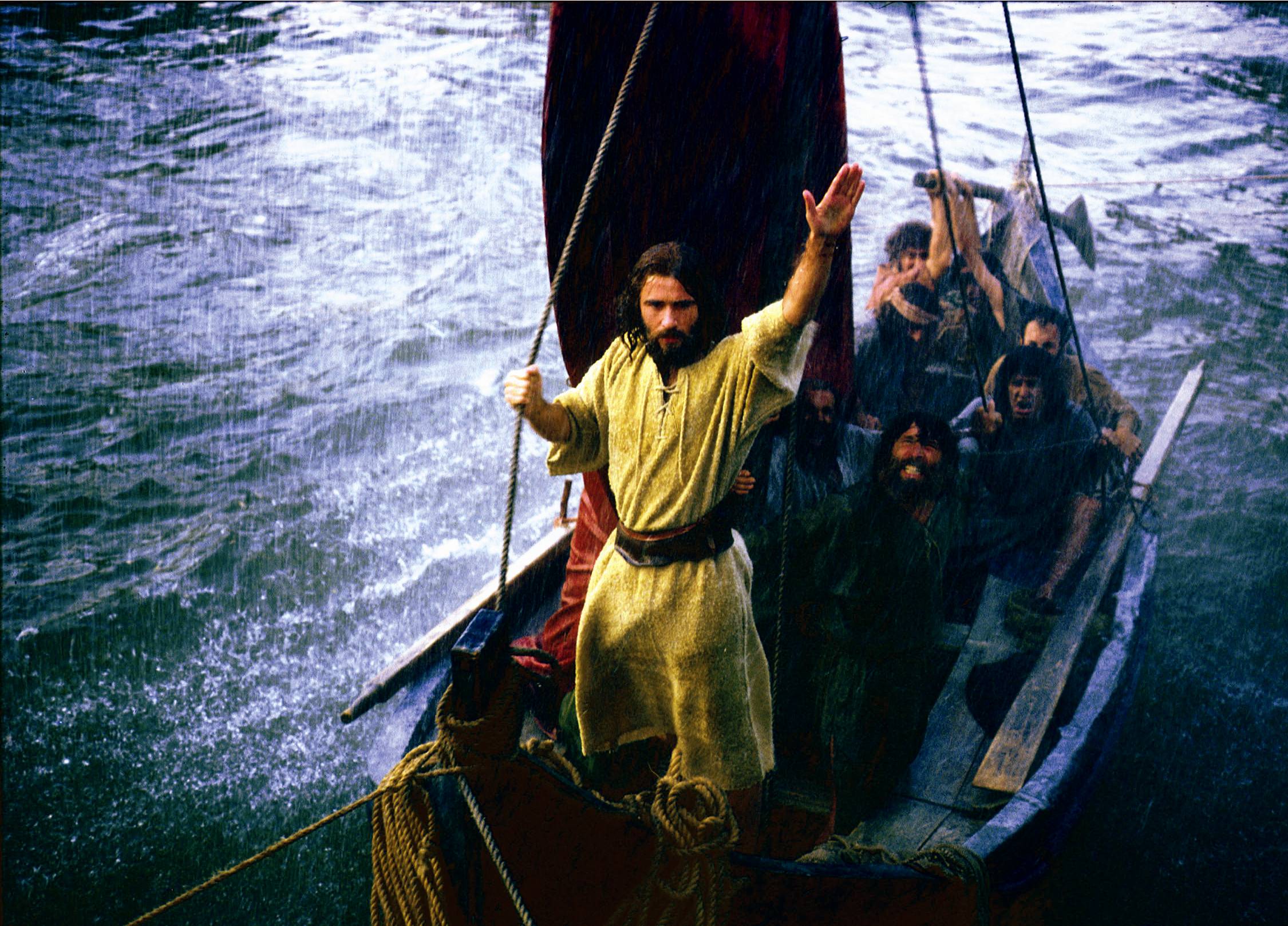
Calming the storm – Mark 4:35-41

jesus_stormOn Saturday September 26, 2015, I was honored to preach at the Bridge Church of the Nazarene in Lubumbashi, Democratic Republic of the Congo (DRC). It capped off a week of teaching. Here is a rough transcript of the sermon, which was well-received by all.

—————

“Calming the Storm”

Mark 4:35-41

INTRODUCTION

Some years ago when serving as a missionary in Haiti, I visited the island of La Gonave with Sadrack Nelson, my assistant. For a week, we taught a course, much like the course we’ve enjoyed together this week. When the course was finished, we said our goodbyes and – early in the morning – headed to the dock to catch a boat back across the water to Port-au-Prince. We paid our passage on one of the speedboats, and sat on board waiting for the other passengers to arrive. On the side of the boat, a small metal plaque read: “15 passengers maximum.” I counted as more and more passengers paid their fare and climbed aboard…12, 13, 17, 21, 24…Counting the captain, we numbered 26. I began to pray.

That morning, the water was very rough. This didn’t slow down the captain, who opened the throttle to maximum. The waves tossed the boat back and forth as all of us were deluged with the spray. At more than one point, I wondered – like the disciples crossing the sea of Galilee in the storm – whether we would capsize. Finally, I called out to the captain: “With the rough seas, shouldn’t we go slower?” To this he replied, “God is with us.” I couldn’t help but respond with the words of Jesus in Matthew 4: “You shall not test the Lord your God!”

I. LET’S CROSS TO THE OTHER SIDE (v. 35)

In Mark 4, we find the story of another time when waters were rough and people feared they would drown. But before we get to that part of the story, let’s back up just a bit. Earlier in the chapter, Jesus had been teaching the people about the Kingdom of God, telling them various parables. But now in v. 35, when the evening had come, he said to his disciples: “Let us go over to the other side.”

Why would Jesus say this? Were there not many people already where they were who needed to know about Jesus? Did they also not need more teaching? Surely, they did, yet the Lord realized that on the other side of the lake, others waited who needed his help, in this case, a man from the Gerasenes who was demon possessed (Mark  5:1-20). Jesus is always lifting our eyes to those who have not yet heard.

I can identify with Jesus’ words, “Let us go over to the other side.” It reminds us of how God lead me and my family from Côte d’Ivoire to Benin. I had been serving for more than 3 years as Director of the Nazarene Bible Institute in Abidjan. Amy had her ministry, and our sons were doing well in their primary school. Little did we know that God was about to send us somewhere else.

One day at the office, I heard the fax machine begin churning out a fax. It was sent by our missionary in Ghana, and was a copy of an article. Beninese President Matthew Kérékou has spoken to a conference of missionaries held in Johannesburg. At the end of his speech, he made a plea:

Come to Benin. Help me lay a Christian foundation for my nation.

It was an amazing story, and I wondered aloud: “I wonder who God will send? ” Later at home, I showed my wife, Amy, a copy of the fax. She reminded me of a conversation from two weeks earlier, when our field director had mentioned Benin as one of the countries that we still needed to enter. The Lord had spoken to Amy’s heart that night, but now the fax seemed like a confirmation. “Could it be that God is calling us to go to Benin?” she asked. I ruled it out, but she encouraged me to join her in prayer on the matter.

A few days later, I was listening to a song in my car, on the way to the office. It was Philips, Craig and Dean’s “I am crucified with Christ.” The lyrics follow the words of Galatians 2:20:

I am crucified with Christ, and yet I live

Not I, but Christ who lives within me.

The cross will never ask for more than I can give

For it’s by his strength I live.

There’s no greater sacrifice…

I am crucified with Christ, and yet I live.

After listening to the song, it seemed that the Lord spoke to my heart:

And what about you, Greg? Are you crucified with me? Are you still on the cross? Will you do what I’m asking you to do? Will you go to Benin?

Arriving at the office, I parked the car and climbed the stairs. I was the first one on team to arrive that morning, and I locked the door behind me. Down on my knees, I told the Lord all the reasons why we weren’t the ones to go. “I”m a theological educator,” I said, “not a church planter.” When all my excuses were done, I pleaded: “God, I can’t do this.” The Lord answered: “You’re right. You can’t, but I can, and I’ll go with you.”

That day I gave in to the Lord. Nearly 1 year later, God had put all the pieces together for us to move to Benin. It’s amazing to see how that time of just 4 1/2 years in Benin, of laying a foundation, has lead to things that surpass what we could have imagined, good things, God things. Through the sacrifice of many Beninese and the moving of the Holy Spirit, we now have more than 100 churches and more than 15,000 Nazarenes in Benin. To God be the glory!

And what of you? The Church of the Nazarene in the DRC is mostly in three cities, namely, Goma, Lubumbashi and Kinshasa. Could it be that Jesus is also saying to the Church of the Nazarene in the DRC: “Let us go over to the other side”? Church, so many more need the message of holiness! Are we willing to do what God is calling the church to do, to go to those who have not heard? I can promise you: God will reward our obedience to Him.

II. THE WAVES BROKE OVER THE BOAT (v. 37)

When we respond to Jesus’ call to cross over to the other side, we shouldn’t be naive. He has not promised that things will be easy. They climbed into the boat, and before long, v. 37 tells us that a furious squall came up. The result? The “waves broke over the boat.”

In December 1999, just 11 months after arrival, it seemed like our boat would sink. One after another, we fell ill with malaria. First was me, then Amy, followed by John. Only Brad was spared that month. While in the clinic receiving treatment, they discovered a mass in Amy’s lower abdomen. The doctor recommended that she fly back to the U.S. where she could receive further testing. So, Amy headed to her parents in New York State while I stayed behind and did the single dad routine. The night before her surgery, Amy called to say that the test that is 98% accurate showed cancer. We prayed over the phone, then I called others to pray. The next day, the surgery went well, and – praise the Lord – the mass was benign!

My brother and sisters, my story is hardly unique. So many of you have known such times of trial. God has never promised that things will be easy. In fact, when we are obedient to the Lord and launch out in new ways, rest assured that things will get tough. Expect it. I Peter 4:12-13 (NIV) advises:

Dear friends, do not be surprised at the painful trial you are suffering, as though something strange were happening to you. But rejoice that you participate in the sufferings of Christ, so that you may be overjoyed when his glory is revealed.

Yet despite the difficult times, I’m glad to know the story doesn’t end there.

III. JESUS IS STILL IN THE BOAT

The disciples were afraid they would drown. But one thing reassured them: Jesus was still in the boat! They woke him up, and cried out: “Teacher, don’t you care if we drown?” (v. 38). Then Jesus stood up and told the wind to be quiet. Verse 39 tells us: “Then the wind died down and it was completely calm.” Turning to his disciples, he asked: “Why are you so afraid? Do you still have no faith?” (v. 40).

I don’t know where you are living right now. Maybe you wonder how you will pay your children’s school fees, or perhaps you’ve been looking for work for a long time, yet nothing materializes. Or it may be a health matter, or you wonder how you will get the rent for this month. There are times when we say to the Lord: “Don’t you care if we drown?” At times like this, let us not forget: Jesus is still in the boat! He cares, and he will help us.

In John 16:33, on the night of his arrest, Jesus comforted his disciples: “In this world you will have trouble.” Aren’t you glad the verse doesn’t end there? It continues: “But take heart! For I have overcome the world.”

What waves are crashing over the side of your boat? Call out to Jesus! He loves you, and he will calm the storm.

IV.  CONCLUSION

The story of Jesus and his disciples on the sea of Galilee holds many lessons for us. He told his disciples: “Let’s cross to the other side.” How about you? In what ways does God want to stretch you, to use you to reach those who still don’t know about Jesus or the message of holiness? Will we be obedient to the call? Be assured, it won’t be easy. In fact, it will be very difficult to obey, and you may even fear for your life as the waves comes crashing in over the sides. But take courage! Jesus will never leave you. He will never forsake you. Jesus is still in the boat, and he will see you through.

——-

Image credit: Simchajtv.com

Posted in autobiographical, reflections

The power of modeling

DatsunThe stick shift stood tall, like a bully daring me (the punk) to step over a chalk line. Sure, I had my driver’s license, but I had passed my road test with our family car, an automatic. This was different. At 17, this was my first car, a 1973 Datsun 610, and this was no automatic. This was a four-on-the-floor. The price had been reasonable and the decision to buy the economical two-door sedan seemed wise at the time, but now I wondered: What had I done?

It was Sunday night. Early Monday morning, I was to report to the grocery store across town for my first day on the job. Thankfully, all is not lost when you have an amazing Dad. With me riding shotgun, he drove my Datsun to the empty parking lot of a nearby department store. He could have immediately switched spots and told me how to drive a standard, but for now, he had a better plan. “Watch me, Greg” he advised. Then patiently he modeled how left leg and right hand work together to clutch and shift. First he showed me, and then later – behind the wheel myself – I imitated his actions. A punk no more, an hour later, I drove us back home. The bully had been defeated.

Driving stick shift isn’t the only area in life where modeling is powerful. It is just as important when it comes to Christian faith. The Apostle Paul, writing to the Corinthians, was direct: “Follow my example, as I follow the example of Christ” (1 Cor. 11:1, NIV). Youth are meant to observe those who are older. The sobering question is:

What are we modeling?

Foul language, harmful habits, and infidelity play out on the family stage. The saying is true: “Little pitchers have big ears,” but children also have open eyes. When they see us modeling negative things, they will pattern their own lives accordingly. The apple rarely falls far from the tree.

Thankfully, the power of modeling can be turned in a positive direction. Riding along with his parents, a six-year-old boy piped up from the back seat. “Daddy,” he said, “I’m going to be just like you. I’m going to be a Christian, and I’m going to be a pastor.” A smile came across the young father’s face. I felt honored to witness a sacred moment.

Singing about a father’s influence on his son, Philips, Craig and Dean pray:

Lord, I want to be just like you, ‘cuz he wants to be just like me.

Mothers also model confident living for their daughters. Providing a pattern of egalitarian marriage is a godly heritage that young girls can admire. They in turn will seek out men who understand and practice the mutually beneficial synergy of teamwork.

As for families, so for faith. St. Francis of Assisi reminded us: “Preach always. When necessary, use words.” We learned in first grade during “show and tell” that showing beats telling every time.

Who’s watching you? What are you modeling? May God give us grace to lead lives that others will want to imitate.

Posted in autobiographical, From soup to nuts

On Houston airports and Charlie Brown

Charlie Brown, a well-loved cartoon character created by Charles Schulz

We theologize a lot about prayer. It touches so many aspects of who God is and God’s interaction in the world.

Sometimes we say that God responds “yes, no, or wait.” But have you ever had a moment where “no” or “wait” simply weren’t going to cut it? You had to have “yes” or else something irretrievable would be lost?

Times like that are faith building.

In Matthew 7:7, Jesus made it simple:

“Ask, and it will be given to you; seek, and you will find; knock, and it will be opened to you”(NASB).

What prayers have you whispered – or shouted – in desperate moments, and God replied with a resounding and timely “YES!”?

Here’s my story. Share yours in the comment thread.

——————————

In March 2009, Amy and I were about to move to Kenya following a 3 year hiatus in our missionary service. I was asked to come to Nairobi for the Africa Regional Leadership Conference. At the same time, our younger son, Brad, was in his senior year of high school in Bethany, Oklahoma. He had already participated in several school plays, but this time was different. The play was “You’re a good man, Charlie Brown,” and he had the lead role. He was Charlie Brown.

Thankfully, I was able to book my return plane flight to be back home in Oklahoma City just in-time for the final performance. Little did I know that the airline had other ideas. At London Heathrow, the plane was delayed for almost 2 hours. What was to be an easy connection in Houston, to catch my final plane back to OKC, now would be hopelessly tight.

Many hours later, we landed in Houston and pulled up to the jetway. I looked at my watch. I had exactly 30 minutes until the connecting flight to OKC took off. Waiting nervously for the carousel at the baggage claim to start moving, almost in a panic – How could I miss his last performance? This was my son! – I prayed a hurried prayer:

“God, you know that I NEED to be at that performance. Smooth the way in this airport. Help me to make that plane!”

No sooner had I prayed when the belt started moving, and the very first suitcase that came out? It was mine,  unheard of on a crowded international flight. Score one for God.

Excusing myself profusely, and explaining that I had to make my son’s final high school play performance, I elbowed my way to the front of the long line in the passport control area as people gladly let me pass. They seemed to understand. I told the immigration officer why I was in such a desperate hurry and to what terminal I was headed. He glanced at his watch, stamped my passport, and handed it back to me with these words:

“You’ll never make it.”

That only motivated me more. Pulling my two bags, I ran all out-of-breath to the train that connects the international to the domestic terminal. After only 1 minute, the train pulled up and I climbed on. Exiting the train, I dashed to the escalator to the lower level, realizing I had a mere 6 minutes before the plane off. They were announcing the final call for my flight.

At the bottom of the escalator, one of those motorized cars for the elderly and disabled was waiting. Though I’m neither elderly nor disabled, I explained that I was on the OKC flight. The driver threw my suitcases on board, and told me: “Hop on!” Horn blaring and red beacon flashing, we hurried to the gate. Thanking the driver, I handed the agent my boarding pass and rushed down the jetway. Stepping onto the plane, there was only one seat left empty, my own. As I collapsed exhausted into my seat,  the plane door closed and we began to taxi. I  made it! A sincere “Thank you, Jesus” quietly escaped my lips.

Any one of those quickly executed steps along the way in that busy Houston airport that March day would have been surprising enough, but only a loving and powerful God could have orchestrated them together, and all so that a proud Dad could make the final play performance of his amazing son.

Posted in The Wesleys and Wesleyan theology

Christian perfection review: a response from Dave Stark

David Thomas Stark
David Thomas Stark

Last week, I posted a review of David Thomas Stark’s 2011 Manchester thesis on John Wesley’s doctrine of Christian perfection. Read the full review here.

David was my classmate at Manchester, and we always enjoyed good discussions. So, it’s no surprise that he gave a thoughtful e-mail response to my review, which I’ve posted below with his permission.

We live at a time when what God’s grace can accomplish in our lives is too often downplayed. Yet Stark helps us understand that the remedy to one extreme is not going to the other. The “credibility gap” that Mildred Wynkoop first mentioned is often laid at the feet of the American Holiness Movement. But, in-light of Stark’s thesis, it may be asked: Did Wesley sow the seeds of the “oversell” of our doctrine, claiming too much for it?

Let the reader decide.

——————–

Greg,

Thank you for this review and reminder that I should at some point pursue getting my work published. You were as engaging and complimentary as you were critical, and I appreciate that. You seem to understand the importance of amissibility in Wesley’s logic and in early Methodist spirituality. Allow me a few further points of explanation, which I don’t necessarily expect you to readdress in your review:

1) You’re correct that much discussion has been made about Methodist identity within or without the Church of England, but I believe I am the first to hammer home that it was specifically because of the doctrine of Christian perfection as prioritized in the context of holiness revivalism in the early 1760s (albeit an arguably failed first experiment) that early Methodism made some of its most momentous and official, legally-binding steps towards securing what would ultimately become its independent, denominational status (i.e. increased licenses under the Act of Toleration, The Model Deed and The Deed of Declaration during this period or its aftermath). I don’t gather that you’re of the camp much bothered much by the fact of Methodist dissent, but there is a growing batch of scholars (Jeremy Gregory, David Rainey, and Joseph Wood – all who I knew from my studies in Manchester) who I think are trying to re-peg Wesley back into an Anglican identity which he necessarily left in actual practice, even if he couldn’t bring himself to admit it. Wesley and the early Methodists could be regarded as “faithful dissenters”, in that they imagined themselves in line with earlier strains of Anglican renewalist thought (Richard Hooker, for example), but they were dissenters nonetheless, as is proved by every legal document they signed describing themselves to be as much. That agenda, I think, is based on a current “identity crisis” of sorts (as Christianity Today most famously put it about a decade ago) by those in the COTN or other offshoot groups from Methodism to normalize and formalize their organizations’ existences within a more consistent tradition of faith rather than the lonely and compromised strands of splinting denominationalism and sectarian association which have more historically been its reality. If “second blessing” holiness revivalism as actually taught by John Wesley was the catalyst for a distinct Methodist identity as I argue, then it makes sense that movements which were defined for over 200 years by this “distinguishing doctrine” or “peculiar doctrine of Christian perfection” as Wesley called it but no longer maintain it with Wesley’s unique and original radical semblance, would have no problem recasting themselves in a congruent chain with Establishment. Whether or not the Established Church is as interested in such remains suspect.

2) Per you criticisms in final paragraph starting with “A final preoccupation”, I would point at that I did state “Previous paradigm suggestions for the chronological development of Wesley’s doctrine of Christian perfection that have argued its shape only reached maturity in the mid or late 1760s or later [so after the context of holiness revival] reflect more of an agenda to disassociate the MEthodist leader from the excesses of perfectionism mangiest during the early 1760s than a historically accurate review of his presentations” (bottom of page 200). There I was referencing, but yes, would have been better to specifically point back to, my section from pages 38-42 titled “Survey of Date-Based Paradigms of Development in Wesley’s Doctrine of Perfection”, which includes the likes of Outler, Maddox, Watson, Moore, Fraser, Gunter, Peters, and NTC’s own Olson. The point I attempted to make is that the holiness revival is not something that the “Mature” John Wesley emerged out of, but rather something which the shape of the mature Wesley’s doctrine and pastoral practice actually inspired and should be accountable and accredited for. In fact, I think the strongest language that Wesley every used to describe the secondness of entire sanctification as deliverance from the “evil root and inbred sin” (all aspects emphasized most prominently in the American Holiness experience) occurred in 1767- well after he should have “corrected” himself from the doctrine’s excesses. In the sermon “The Repentance of Believers” (1767), Wesley argued for the spiritual importance, if not even salvific importance, of a second event of grace with such assertation as to make it impossible to regard secondness as replaceable in an authentically Wesley’s understanding:

Then only the evil root, the carnal mind, is destroyed, and inbred sin subsists no more. But if  there be no such second change, if there be no instantaneous deliverance after justification, if there be none but a gradual work of God (that there is a gradual work none denies) then we must be content, as well as we can, to remain full of sin till death. And if so, we must remain guilty till death, continually deserving punishment.  (JW, “The Repentance of Believers” (1767), Works [BE], 1:346.

Referring to Wesley as an “occasional theologian” proves helpful for dismissing problematic arguments like the above from his corpus, even if they occurred so late in his ministry. But there are definite hamartiological weakness, overemphases and downright inconsistencies in Wesley. And not to nitpick, but as quickly as he said he never used the term sinless perfection, he followed up in the next line that he does not object against it either. His constantly playing this game of semantics is why I called it “qualified sinless perfection”.

3)  And to the larger point of new “approaches”, I would refer you back to my concluding remarks on pages 210- 212, including footnote 24, 30, and 31, in which I list at least five writers by name At the end of thesis I was bookending my introductory statements in the section on Methodist Ideal and Identity in Contemporary Dilemma from the middle of pages 13-16. The mistake I made in not continually reciting these scholars by name- the likes of Outler, Maddox, Noble and other well known and much loved scholars in the Methodist and Nazarene tradition I will not re-mention here by name was intentionally done out of a sense of reverence for my heroes at the time than a mistake or omission. It is a very understandable that modern day committed Methodists, Wesleyans and Nazarenes would want to disassociate his teachings from more problematic areas of its more recent activities, but my point is that there is much more in common with radical Wesley and the American Holiness Movement, just as there was with Wesley and the radicals Maxfield and Bell, than there was difference. Further study could use my thesis as a reference of dialogue with more specific examples of authentically Wesleyan language and practice in the 19th century Holiness Movement and, say, the 20th century Holiness movement abroad. I’m find with what you said — that Wesley can and should be always improved upon. No doubt, he will need to be improved upon by his followers to maintain his relevance in each new and increasingly distanced generation. I just prefer that when this is happening that those points of improvement on Wesley are clear and not casted as the founder’s original thoughts or intentions. After years of learning about John Wesley in college and grad school, I personally was shocked to encounter the real, decisively indecisive, consistently inconsistent and ever elusive John Wesley during my PhD studies when I set out to find him in his own words and in the words of early Methodist spiritual autobiographies and testimonies, which I researched extensively at the Special Collections of the John Rylands University Library of Manchester (transcribing for my own purposes more than 90 of the 153 letters in the Early Methodist Volumes at the time). Ultimately, It bodes better for the Wesleyan tradition, and all religious traditions for that matter, to acknowledge the gaps that exists within what its founders wrote and meant and what its modern adherents may wish they had or hadn’t. A more general question that I pondered as I wrote my thesis was whether it is better that a religious movement and tradition lives and dies on the thoughts, principles, and practices it was originally founded upon and clearly proclaimed, or if it should be improved upon through the ages to the point of missing much of its original point in the first place. Is it not more faithful to eulogize than it is to re-imagine, especially when it is clearly more intellectual honest to do so?

Sincerely,

David

PS: For any of this blogs reader’s who are more interested in my arguments, a link to my extended abstract can be found on: www.mwrc.ac.uk/david-stark. I can be reached at davidtstark@yahoo.com

Posted in The Wesleys and Wesleyan theology

Another look at John Wesley’s doctrine of Christian perfection

David Thomas Stark
David Thomas Stark

John Wesley (1703-91) spent much energy explaining and defending his understanding of Christian perfection. The term has since proven no less easy to explain even though it is a biblical one, appearing in passages like Matthew 5:48, where Jesus calls us to be “perfect,” even as our Father in heaven is perfect.

David Thomas Stark has written a cogent and illuminating inquiry on this challenging topic, entitled “The Peculiar Doctrine Committed to Our Trust: Early Methodist Ideal and Identity in the First Wesleyan-Holiness Revival, 1758-1763” (PhD thesis, University of Manchester, 2011). He examines this pivotal time in the history of British Methodism, a period when John Wesley defined Christian perfection in a way that made it more immediately accessible to the average Methodist yearning for a deeper work of God in heart and life. It is this new emphasis – paraphrased in Stark’s words as “an instantaneous but amissible second work of growth in grace producing qualified sinlessness, available now!”(p. 69) – that opened the door to more than 600 professions of entire sanctification in all parts of England. At the same time, Wesley could be inconsistent in how he presented Christian perfection. Stark identifies some of those problematic areas, especially weaknesses in Wesley’s harmartiology (doctrine of sin).

As one who grew up questioning the validity of “once saved, always saved” doctrine, I was pleased to see that John Wesley did not adopt a “once entirely sanctified, always entirely sanctified” posture. To be “amissible” means able to be lost, and this important caveat has made its way into the creedal statements of denominations that follow in Wesley’s footsteps, including Article X in the Articles of Faith of the Church of the Nazarene. This admission protects those who teach a second work of grace from falling into an “I’ve arrived” posture, thereby cutting themselves off from the ongoing need for the kind of self-examination implied in the words of the Lord’s Prayer: “Forgive us our debts, as we also have forgiven our debtors” (Matthew 6:12, ESV).

Stark’s thesis is structured in a way that keeps the reader engaged.

Chapter 1 examines the development over time of John Wesley’s idea of Christian perfection. Though Wesley’s default position in theological debate on many topics was to claim that he was merely teaching what he had always taught, Stark identifies important shifts in Wesley’s Christian perfection concept, discerning four distinct stages. These culminated in the position outlined above, a position that – contrary to the denial of some modern interpreters – Stark convincingly demonstrates that Wesley maintained from 1757 until his death in 1791.

Chapter 2 transitions to a recounting of the first (and only) Wesleyan-Holiness revival that occurred in John Wesley’s lifetime. Though some of the ecstatic manifestations from the earliest years of the Wesley brothers’ preaching in the 1740s are well known, it was surprising to find a May 1759 account from Wesley’s Journal that included mention of listeners laughing uncontrollably. This evokes the so-called “Toronto Blessing” of the late 1990s. More surprising still is Wesley’s forbearance toward this kind of chicanery. Stark observes that – contrary to Wesley’s earlier impatience with such examples of “enthusiasm” (fanaticism) – Wesley now appeared “more open to these kinds of displays” (p. 74). If Wesley evolved in his view of Christian perfection, then here is another area where the more mature Wesley appears to have attenuated his stance. This area merits additional digging in the primary resources to clarify the issue.

For those who imagine a lock-step agreement between John and Charles Wesley on most issues, Chapter 3 and 4 confirm conclusions previously drawn by John Tyson. In fact, what John celebrated as a moving of the Holy Spirit between 1758-1763, his younger brother, Charles, critiqued as instances of enthusiasm bound to discredit the Methodist cause. Central to this period were the hundreds of testimonies to Christian perfection, a state of victory over sin that is the bi-product of a deeper divine work commonly termed “entire sanctification”. The brothers’ disagreement hinged on the timing of the attainment of Christian perfection – not so much the positive aspect of perfect love – but the negative consideration of deliverance from all sin. Charles was skeptical of this work of grace happening earlier in life, postponing it to the time immediately before death. For his part, John increasingly saw such a postponement as a de facto enthronement of sin as the norm for the Christian rather than the life of holiness. Stark adds texture to this important discussion between the brothers. Further, he examines the brothers’ ecclesiology and how Charles’ unwavering commitment to the Church of England made him far less receptive to the pragmatic adaptations that his brother made as the new wine of Methodism gradually burst old ecclesiastical wineskins.

Chapter 5 rounds out the thesis, narrowing the focus to the more extreme manifestations of perfectionism. Chief among these was the prediction by London Methodist preacher George Bell of the end of the world, scheduled for February 28, 1763. Besides teasing out overlooked nuances between Bell’s behavior and the more reasoned involvement of Thomas Maxfield, Stark makes a case that in nearly all particulars other than amissibility, Bell and Maxfield were merely following the logic of their mentor, John Wesley. This was implied in the deliberate way that Wesley handled the affair, only reluctantly expelling them. Though Wesley took pains in writing to distance his views from theirs, one is reminded of the saying: “Erasmus laid the egg that Luther hatched.” New to me was the emphasis that Bell and Maxfield placed upon Wesley’s non-profession of Christian perfection. Stark clarifies: “They truly believed that they were living in the promised land of Christian perfection that Wesley, a type of Methodist Moses, had only led the people towards but never entered himself” (p. 177). Stark makes a modern application, observing:

It is odd that later denominations that look to Wesley as a namesake and primary influence would necessitate testimony of Christian perfection as a prerequisite to ordained ministerial service since Wesley himself never made any such claim or made it necessary for early Methodist ministry (p. 203).

David Stark has done a commendable job of re-examining John Wesley’s developing doctrine of Christian perfection. Though a good deal of what he writes can be found in other interpretive sources – particularly his treatment of Methodism’s growing breach with the Church of England – his deeper investigation of the Bell/Maxwell saga within the context of the 1758-1763 revival contributes an improved understanding of that painful event.

A second area of originality is his fascinating discussion of what some – though not Wesley – called a “third work of grace” or the “sanctification of the mind.” Through an examination of Wesley’s 1762 Wandering Thoughts, he shows how close Wesley came to affirming that subsequent to entire sanctification is a work of God that can even prevent stray thoughts from entering our consciousness. Stark ably places mind sanctification within the context of the lofty claims that some Methodists made at the time.

A final preoccupation in the thesis is re-visiting one area of division between classical Wesleyanism and the American Holiness Movement over the nature of Christian perfection. According to Stark, it has been argued that John Wesley modified his doctrine after the disastrous Bell/Maxfield episode, softening his claims for Christian perfection. Starks observes: “Though it can be said that early Methodism was in an experimental phase during 1758-1763, to argue that any major changes in Wesley’s teachings on the substance or structure of Christian perfection were introduced after this period is a groundless argument” (p. 200). Unfortunately, the reader is left to wonder exactly which modern interpreters are making this argument as none – other than Albert Outler, in passing – are referenced here nor at the end of chapter 5, where Stark (p. 212) speaks vaguely of “approaches” intended to “lift Wesley and his doctrine from the limitations of his context.” Here, he provided no specific quotations from modern Wesley scholars to illustrate. Revisions of the thesis would do well to shore-up this weakness.

Other times, Stark goes along too readily with those who criticize Wesley’s supposed promotion of “sinless perfection,” a term Wesley never used. For example, after citing a passage from Wesley’s 1784 On Patience, Stark quotes (without critique) Victor Shepherd, who asks: “If this is not sinless perfection, then what would sin-free perfection be?” However, in the passage quoted, noticeably absent is what Wesley commonly called “infirmities,” which may include mistakes of various kinds. For example, forgetting one’s spouse’s birthday is technically a falling short of God’s glory (Romans 3:23), yet would not be a sin “properly so-called,” to use the term from Wesley’s 1766 treatise, A Plain Account of Christian Perfection. A rebuttal of Shepherd’s critique in this instance would have strengthened Stark’s analysis.

Those who espouse what Collin Williams called the Wesleyan “optimism of grace” should be thankful for investigations that identify problematic areas in Wesley’s teaching. It is always possible to improve upon Wesley. Stark’s “The Peculiar Doctrine Committed to Our Care” helps the reader identify areas where such improvement is needed. As of this writing, it has been 4 years since the thesis was approved and the PhD awarded to David Stark. It is unfortunate that the thesis has yet to appear in monograph form, for it deserves a broader reading by those committed to promoting the message of holiness.