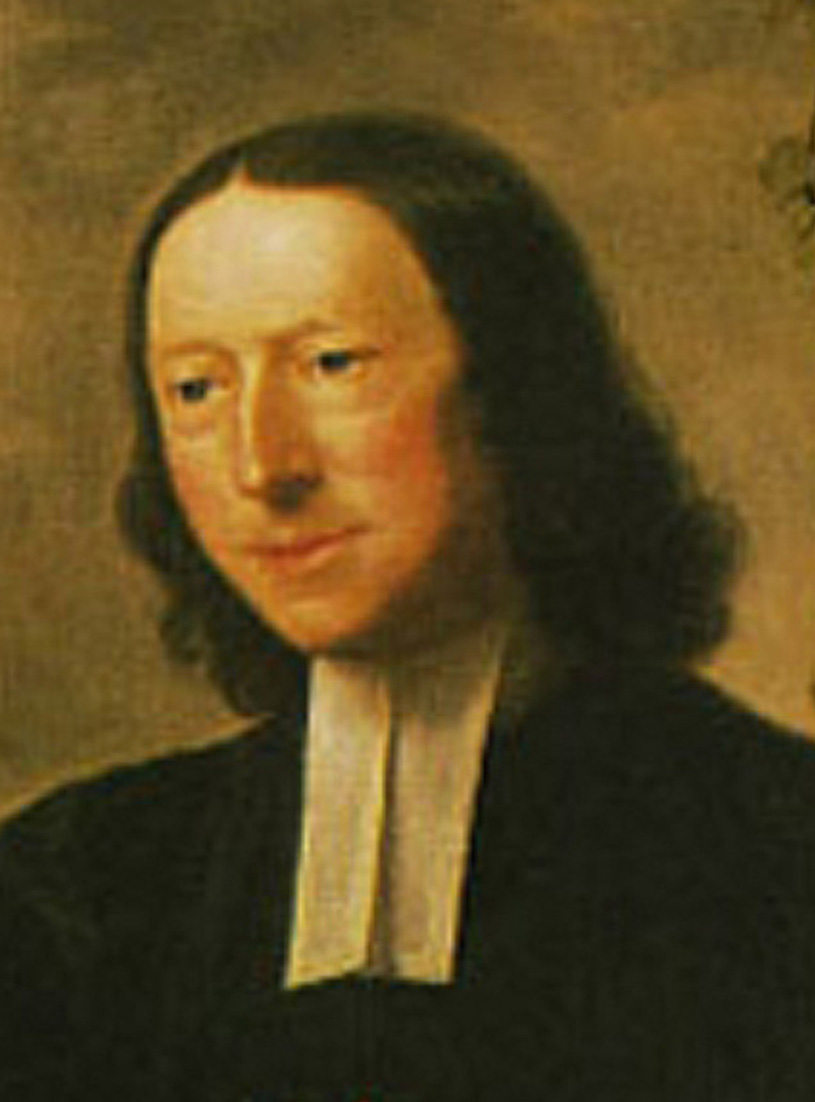
John Wesley’s message was simple, just like Jesus’. Is ours?
He insisted in his 1746 The Principles of a Methodist Farther Explained:
I have again and again, with all the plainness I could, declared what our constant doctrines are; whereby we are distinguished only from Heathens, or nominal Christians; not from any that worship God in spirit and in truth. Our main doctrines, which include all the rest, are three, — that of repentance, of faith, and of holiness. The first of these we account, as it were, the porch of religion; the next, the door; the third, religion itself (Works, 8:521-22, CCEL digital edition).
Jesus was once asked to sum up all the Law and the Prophets, the heart of the message of what Christians now call the Old Testament. He answered by saying that we should love God and love our neighbor (Mark 12:28-34). These are the two Great Commandments, and they are the very marrow of what it means to be a Christlike disciple.
What does the religion of loving God and others look like, particularly as worked-out socially? In Principles Farther Explained, Wesley continued:
This love we believe to be the medicine of life, the never-failing remedy for all the evils of a disordered world, for all the miseries and vices of men…this religion we long to see established in the world, a religion of love, joy, and peace, having its seat in the heart, but every showing itself by its fruits, continually spring forth, not only in all innocence, (for love worketh no ill to his neighbor), but likewise in every kind of beneficence, spreading virtue and happiness all around it (p. 524).
Check out any news website. How many of the stories use fear as a hook?
– Something sinister is in our food!
– Vaccines cause autism!
– A meteor will strike the Earth!
The message is loud-and-clear: Be very, very scared.
The problem with fear is that it destroys relationships. The first ruptured relationship was between humans and our Creator. Genesis 3 tells the story of God’s search for Adam in the garden. God asked: “Where are you?” Adam and Eve were hiding, and Adam answered:
“I heard you walking in the garden, so I hid. I was afraid because I was naked.”
Their sin – disobedience to God’s command not to eat of the tree of the knowledge of good and evil – produced fear. Fear in-turn led them to flee from God. Hiding symbolizes estrangement, absence of relationship.
Yet fear wreaks havoc not only on our relationship with God. It also prevents deep relationships with others. Some years ago, we spoke of our missionary work at a church located in a U.S. town where historically there has been high tension between blacks and whites. After the service, the pastor gave us directions back home.
“Make sure,” he said, “that you don’t turn right heading out of the parking lot. That will take you through a bad section of town.”
Once the pastor had gone, rebels that we are, we climbed in the car, pulled out of the parking lot and turned right. We soon found a chicken restaurant and had some dinner. Sure, we were the only white customers in the establishment; it mattered not one bit. The employees treated us kindly and with respect and the other customers smiled at us. There was no fear; we were welcome. The well-meaning pastor had given us fear-based directions. Instead, we chose otherwise and enjoyed a pleasant and safe dinner. In a way, I pitied the pastor. What relationships was he missing out on in that town because he could not get past the fear factor, a fear based upon the superficial characteristic of skin color?
The apostle John gives the remedy for the fear factor. It’s the love factor:
“There is no fear in love. But perfect love drives out fear, because fear has to do with punishment. The one who fears is not made perfect in love” (1 John 4:18, NIV).
Paul writes: “Serve one another in love” (Galatians 5:13b). Service is the incubator in which love can grow. You may fear the homeless and want to walk past them, holding your wallet a bit tighter. But something happens when you volunteer at the rescue mission and find out that it’s not just “the homeless.” It’s George and Susan and Ralph and – suddenly – you begin to care.
Perfect love casts out fear.
“Religion of hate” is another popular phrase that instills fear. It allows us to “other” an entire swath of the Earth’s population, to write them off as infected with what can come across as a dangerous form of belief. But what happens when stereotypes are subjected to new information? “Aalim” (not his name) sat next to me on the plane. He was traveling home with some other high school students, checking out universities where he might attend. He told me that he liked the Oklahoma City Thunder (a city where I’ve lived before) and loved playing basketball. We talked about Kevin Durant and his amazing skills on the court. By the end of the flight, Aalim was no longer a faceless individual in a group. He was just a regular teenager, a basketball fan, an aspiring architect. Yes, I know what I’m told to think about “them.” It’s the same fear-based thinking that told me not to drive through “the bad part of town,” but how can I fear someone like Aalim when I get to know him even a little?
Perfect love casts out fear.
I’m part of the Wesleyan-Holiness stream of Christianity. We pride ourselves on the “optimism of grace,” a belief that God can do amazing things in the human heart, transforming our lives and making us like Jesus, filling us with love for God and neighbor. But when it comes to our knee-jerk response to current events, sometimes I wonder:
Do we have spiritual dyslexia? Is perfect fear driving out our love?
Do divisions in our families, communities and nation persist because we have allowed ourselves to be overcome by fear instead of getting down on our knees and giving our fears to God, serving the very ones we fear and thereby dispelling fear with love? What unquestioned prejudices passed down allow us with impunity to “other” our neighbors, building walls instead of bridges?
Fellow follower of Jesus, perfect love still drives out fear. Isn’t it high time we get beyond the fear factor?
Sometimes God is gentle breezes and rainbows. Other times, the LORD is ferocious winds and thunder clouds. In Numbers 21, God is both.
The people were griping and complaining…again. They railed against God and Moses:
Why have you brought us up out of Egypt to die in the desert? There is no bread! There is no water! And we detest this miserable food! (Numbers 21:5, NIV).
Scripture never says in so many words that God was angry, but it’s a justified conclusion. Right after this complaint, the LORD sent venomous snakes into the camp and “many Israelites died” (v. 6).
Yet God – in steadfast love – relented. God commanded Moses: “Make a snake and put it on a pole; anyone who is bitten can look at it and live” (v. 8). So Moses made a bronze snake and did exactly what God instructed. Those who looked up at the bronze snake, though bitten by a serpent, were healed.
It’s an inspiring story to that point, so memorable that Jesus discerned in the story a parallel to his own crucifixion, a day when he would be lifted up like the bronze desert snake (John 3:14), a spiritual balm for all who look to him.
But the story of the people of Israel and the bronze snake has another chapter. Fast forward hundreds of years. It is the time of King Hezekiah and this good servant of God is determined to purge the land and the Temple of idols. In 2 Kings 18:4 (NIV), we read:
“He removed the high places, smashed the sacred stones and cut down the Asherah poles. He broke into pieces the bronze snake Moses had made, for up to that time the Israelites had been burning incense to it. (It was called Neshutan).”
What happened? Sometime between Moses and Hezekiah, what had been intended as simply a helpful way to focus their attention on the God who heals had mutated into something magical. Instead of the people looking past a mere symbol to the awesome God behind the symbol, they made the bronze snake an object of their worship, an end in itself. Sensitive to the voice of the LORD, the king knew it had to go.
“Holiness, Africa’s Hope” is a banner that hung outside a church office, but I wonder: Can holiness become like a bronze snake? Can even the phrase “Holiness Unto the Lord” subtly shift over time to become a magical saying, falsely comforting those who mouth it as if the words themselves have power? Are we with every good intention unwittingly directing people to trust in a religious experience – however meaningful and valid – and not the Saviour who is the source of that experience? Rather than saying “Holiness, Africa’s Hope,” would it not be more accurate and biblical to say: “Jesus, Africa’s Hope”? Nowhere in the New Testament is holiness described as our hope, yet Colossians 1:27 affirms:
“To them (the saints) God has chosen to make known among the Gentiles the glorious riches of this mystery, which is Christ in you, the hope of glory.”
Our hope is not holiness, but Jesus. Our hope is not a what, but a Who.
“Star light, star bright, the first star I see tonight…”
The children’s poem came to mind last week. Under my feet was the cool grass of the Walter Sisulu Botanical Gardens in Roodepoort, South Africa. But this night we weren’t looking at the birds or the plants. Our focus was the heavens, and I learned amazing new things.
That “first star I see tonight” has a name. It’s called Sirius, the brightest star visible from any point on Earth. It is 8.6 light years away, or 8.6 x 5.8 trillion miles distant from our planet. It is a white star, of much greater size and intensity than our own Sun, which is only a medium-sized yellow star.
Likewise, the Hubble telescope keeps capturing images of space that take our breath away, glimpses of the enormity of the cosmos:
Hubble Ultra Deep Field, 2014
In A Short History of Nearly Everything (Doubleday, 2003), Bill Byron dazzles the reader with a fascinating description of how the stars, planets, and all that is suddenly sprang into existence:
In a single blinding pulse, a moment of glory much too swift and expansive for any form of words, the singularity assumes heavenly dimensions, space beyond conception…In less than a minute the universe is a million billion miles across and growing fast….in three minutes, 98 percent of all matter there is or ever will be has been produced. We have a universe. It is a place of the most wondrous and gratifying possibility, and beautiful, too. And it was all done in about the time it takes to make a sandwich. – p. 28
The Psalmist was no less impressed than Mr Byron, marveling:
When I look up at your skies and what your fingers have made – the moon and the stars that you set firmly in place – what are human beings, that you think about them; what are human beings that you pay attention to them? (Psalm 8:3, CEB).
There is a tendency these days in theology to size-down God. It’s a convenient way to solve the problem of evil and suffering: “Maybe a good God doesn’t always act because God can’t.” But after an evening gazing at the stars, that explanation loses whatever small attraction it might have held. When the heavens declare a mind-blowing, awesome, immensely powerful Creator God, how could I ever believe in a puny god like some Christians seem to half-heartedly serve?
Goodbye, puny god. Hello, majestic God of the universe!
But like the Psalmist dared paint his tiny self onto this boundless cosmic canvas, so I hazard to ask:
If God could fling stars into space, what could this God of love do in my life? Could this God in Jesus Christ forgive me, deliver me, change me, energize me to make a difference on this tiny speck of a planet we call Earth?
Likewise, a fresh vision of this beyond-my-imagination God is bound to deepen my intensity in worship. How can I, a mere grain of sand in the vast scheme of things, come lightly into the presence of such a fearsome Triune God? How dare I stand in the sanctuary and play with text messages, FaceBook or a dozen other distractions when in the presence of such a Being?
Get outside. Get away from the city lights. Look up, but I warn you: Your puny god will be no more. Instead, you will be drawn to your knees in praise of our magnificent Creator God.
——-
UPDATE: I changed the light year reference to 5.8 trillion rather than 1 trillion miles. See the comment from Lucien Jacquet below, who corrects that and a few other scientific details.
John and Charles Wesley were the 18th century co-founders of Methodism. Their young lives were ones of moral striving, extreme fastidiousness in their approach to the Christian faith, an emphasis on the merit accrued by good works. This went on well into adulthood until the brothers – through a series of providential events – received greater light. They came to understand that we do not perform good works in order to be saved. Rather, because God in Christ has graciously saved us, we as a result perform good works. In theological terms, justification (divine pardon of sins) comes first, followed by sanctification (God’s cleansing, leading to holiness of heart and life).
For three decades, the Wesleys had the order backwards, wrongly placing sanctification prior to justification. Once God corrected this error in their thinking and spiritual experience, the brothers – no longer preoccupied with saving themselves – devoted their full energies to announcing the glorious message of saving and sanctifying grace, both the free gift of a loving God, a provision of Christ’s atonement. Their initial error was one they inherited from their father, Samuel – a Church of England clergyman – and their mother, Susanna, but was larger than their upbringing. Moralism was the default message of the Church of England and had been for the second half of the 17th century right up to the Wesley brothers’ arrival on the scene in the early 1700s.
Centuries earlier, Benedict of Nursia (480-543 AD) had devised a rule that served as the organizing principle of a monastery he founded in Monte Cassino, an austere covenant of conduct by which monks agreed to abide. In 53 short chapters, the HolyRule of Saint Benedict (1) lays out the Abbot’s expectations in every area of life together in the monastery, from eating and sleeping to manual labor, reading of books, and the “Work of God,” the 7 daily worship times that form the backbone of the Benedictine system. What was the ultimate purpose of the 72 “Instruments of Good Works” detailed in Chapter IV? Benedict clarified (p. 8):
Behold, these are the instruments of the spiritual art, which, if they have been applied without ceasing day and night and approved on judgment day, will merit us from the Lord the reward which He hath promised.
As a theological heir of the Wesleys – knowing their early struggles to find the assurance of salvation – my radar is tuned to detect anything akin to salvation by human effort. The above quote betrays what is undoubtedly the greatest weakness of The Holy Rule of Saint Benedict, a moral stretching-and-straining that is admirable but devoid of grace.
Yet shall we cast aside as worthless the entirety of a treatise just because Benedict made the same mistake as the early Wesleys? To do so would be foolish, and we would only be cutting off our nose to spite our face. For those open to light from diverse sources, the Holy Rule has much to teach about practical discipleship, including the high place given to the memorization of Scripture, especially the Psalms. Among other matters, Benedict underscored humility as conducive to spiritual growth, the place of corporate discipline in the Christian life, and the beauty of simple living. Let’s examine briefly how Benedict helpfully weaved these into his monastic system.
Admit it. You’ve done it. You’ve snapped a photo of yourself – a “selfie” – at least once. Maybe you’ve even gone to the next level and bought one of those trendy selfie sticks, a trick to make a selfie appear like someone else took it.
Sometimes I wonder: What if wasn’t just individuals who took selfies?
What if the church could take a selfie?
What would she see? A better question might be: What should she see?
These are the kinds of questions that more than 300 Nazarene thinkers asked at the March 2014 Global Theology Conference, held in Johannesburg, South Africa. In a summation, Dr Thomas Noble, Professor of Theology at Nazarene Theological Seminary concluded:
The church must be God-glorifying, Christ-centered, and Spirit-filled.
Dr Thomas Noble, Nazarene Theological Seminary
The statement is strong for several reasons. First, it is brief, making it more memorable. Secondly, it is Trinitarian, focusing equally upon God the Father, God the Son, and God the Holy Spirit. That is no small virtue at a time when so much of our worship music centers on Jesus to the point that the Father and the Spirit are in danger of being eclipsed. Finally, it is not a halfhearted suggestion. It breathes urgency by using the word “must.” To neglect any of three characteristics is – in some sense – to cease being the church.
But let’s unpack the parts of this triplet.
The church must be God-glorifying.
Worship is the church gathered, but what is the purpose of worship? Pastor Victoria Osteen, Co-Pastor of Lakewood Church in Houston, Texas, was roundly criticized following her remarks in a widely-circulated video. She opined:
When you come to church, when you worship Him, you’re not doing it for God really. You’re doing it for yourself, because that’s what makes God happy. Amen?
Self-absorption runs counter to Christ’s call to a life centered upon God and poured out in service to the world. Self-glorification is the antithesis of the two Great Commandments, loving God and neighbor (Mark 12:29-31). John Calvin (1509-64), the great Reformer from Geneva, noted regarding God the Father: “As all good flows, without any exception, from him, so ought all praise deservedly to return to him.” (1) Beyond worship, if the church receives human praise for a work of charity, shall she accept the credit for herself or deflect it back to the Father, the source of all that is good?
The church must be Christ-centered.
If God the Father is the one who to be glorified by the church’s worship and deeds, this does not dismiss the importance of Christ in all that we do. To be Christ-centered as a community of faith means above all never losing sight of Christ crucified. In his self-giving love at Calvary, we behold the exemplar of who we are called to be both individually and corporately. In The Crucified God, Jürgen Moltmann observed:
The gospels intentionally direct the gaze of Christians away from the experiences of the risen Christ and the Holy Spirit back to the earthly Jesus and his way to the cross. They represent faith as a call to follow Jesus. The call to follow him (Mark 8:31-38 par.) is associated with Jesus’ proclamation of suffering. To follow Jesus always means to deny oneself and to take ‘his cross’ on oneself. (2)
Christ crucified is the antidote to the narcissistic ethos of our time. As the church contemplates the self-giving love of Christ most excellently displayed in his death, she will be disgusted by every ingrown, time-consuming program that makes the church a comfortable club for the saints instead of a rescue squad rushing to the aid of those sick and dying from sin.
The church must be Spirit-filled.Make no mistake: This is not just any spirit, for the New Testament recounts the life-sucking and malevolent presence of evil spirits in the cosmos (Ephesians 6:10-20). Rather, God calls the church to be filled with the Holy Spirit.
Wesleyan-Holiness teaching has emphasized the need for God to pour the Holy Spirit out like a river upon individual believers. Too often, we forget the corporate nature of this filling as exemplified on the Day of Pentecost. On that momentous occasion, it was the church gathered together in prayer that experienced the miraculous descent of the Dove (Acts 2:1-4). Only through the ongoing effusion of the Third Person of the Trinity is the church unified, cleansed, gifted and empowered for her outwardly-focused mission. Clark Pinnock explained:
God did not pour the Spirit out for us to exult in it as a private benefit. The purpose was ( and is) to empower witnesses to God’s kingdom (Acts 1:8)…God wants a community that, like Jesus, gets caught up in the transformation of the world. (3)
The Holy Spirit is the dynamo of the church (Acts 1:8). Though potentially dangerous if overdone, the metaphor of spiritual warfare demands reliance on the continual protection and empowerment of the Holy Spirit. This is especially important when the church begins living out its call to pierce the darkness by loving the last, the lost and the least, resulting in fierce push-back from the Enemy. Only the Spirit can instill courage amidst the fight, filling the church with stubborn love toward all even if she is at times the target of undeserved hate. Only the Spirit can energize the People of God to advance the Kingdom of Heaven, often against seemingly impossible odds.
If the church took a selfie, I wonder what she’d see? Would she capture the image of a community of faith that glorifies God, is centered on Christ and his selfless example, and overflows with the power and love of the Holy Spirit? Give me that kind of a church and we’ll change the world.
———
Notes:
(1) John Calvin, in I. John Hesselink, Calvin’s First Catechism: A Commentary (Louisville, KY: Westminster John Know Prss, 1997), 9.
(2) Jürgen Moltmann, The Crucified God (Minneapolis, MN: Fortress Press, 1993), 54.
(3) Clark Pinnock, Flame of Love: A Theology of the Holy Spirit (Downer’s Grove, Illinois: InterVarsity Press, 1996), 141.
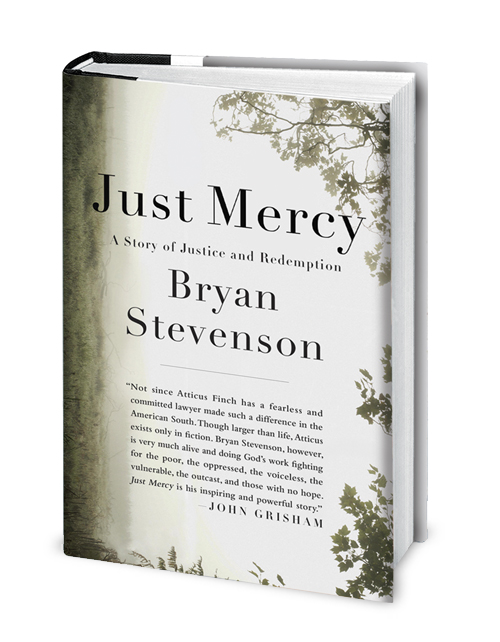
Jesus once told a cabal of religious leaders anxious to stone a woman caught in adultery: “Let any one of you who is without sin be the first to cast a stone at her” (John 8:7, NIV). In his bestseller, Just Mercy: A Story of Justice and Redemption (Spiegel and Grau, 2014; Amazon Kindle edition), New York University School of Law Professor Bryan Stevenson calls us to a different task, that of catching the stones cast by others.
Just Mercy recounts Professor Stevenson’s founding of the Equal Justice Initiative (EJI), a legal aid organization based in Montgomery, Alabama that advocates for those who are victims of shortcomings in the U.S. criminal justice system – the wrongfully convicted, prisoners on death row, and juveniles tossed into the chaos of the adult prison population.
Caring about prisoners is a biblical mandate – “Remember those who are in prison as though in prison with them…” (Hebrews 13:3a, ESV) – so books like Mr Stevenson’s invite the Church to engage an issue too often shunted aside. Well-told stories seize the reader’s heart and won’t let go, stories like Walter McMillan, exonerated after having spent 6 years on death row for a murder he couldn’t have committed. Then there’s Joe Sullivan, convicted with dubious evidence and testimony at 13 years old of rape and sentenced to life in prison with no possibility of parole, what Stevenson calls “death in prison.” These and a dozen other vignettes – bolstered by troubling statistics of the sheer number of incarcerated Americans, disproportionately African-American – tell the story of sectors of a criminal justice and prison system tainted by racism and sexual abuse, desperately needing reform.
Bill and Gloria Gaither’s hymn, “Because He Lives,” affirms Christian faith in a powerful way. Other Gaither songs (mercifully) have faded into obscurity, ditties like “Happiness” –
I found happiness.
I found peace of mind.
I found the joy of living,
Perfect love sublime!
I found real contentment, happy living in accord.
I found happiness all the time, wonderful peace of mind, since I found the Lord.
The beloved composers from Alexandria, Indiana have written some amazing songs, but let’s be honest: This isn’t one of them. To assert that embracing Christian faith gives us “happiness all the time,” removing sadness from the believer’s experience, is theological quackery. Two events that made me decidedly unhappy this week were terrorist attacks in Paris and northeast Nigeria, the senseless toll of lives brutally snuffed-out surpassing 2,000. A third saddening occurrence didn’t make the news, but it was important to those who knew her. Karen (38), a loving wife and mother of three, succumbed to cancer after a prolonged, heroic fight. She was a teen in the Missouri church where I pastored. She had so much to live for! Really, God?
The “Minnesota Mission,” Sedalia Church of the Nazarene, summer 1992. Karen is the third girl from the right, standing.
At times of grief, we don’t need another happy-clappy song to make us feel guilty for crying. For times like this, we need lament, the words of King David grieving over his slain son, Absalom:
The king was shaken. He went up to the room over the gateway and wept. As he went, he said: “O my son Absalom! My son, my son Absalom! If only I had died instead of you—O Absalom, my son, my son!” (2 Samuel 18:33, NIV)
Thomas Tomkins (1572-1656) set this biblical text to choral music. As a tenor in the A Capella Choir at Eastern Nazarene College, the song never failed to move me. (Click here for to a moving rendition of the piece with a beautiful montage).
Ecclesiastes 3:4 reminds us that there is a time to weep. But apart from funerals – which these days are as likely to be called a “celebration of life,” further discouraging tears – do we allow lament as one of the languages of our Christian worship?
In his book, Worshipping Trinity: Coming Back to the Heart of Worship (Wipf & Stock, 2012), Robin Parry devoted chapter 9 to the topic of lament. Unpacking Romans 8:17-25, he notes (p. 140) that by “groaning in the Spirit,” we:
1. Express our “sorrow, pain and frustration at the current state of affairs”;
2. Signal our “expectation for a better future”;
3. Intercede, which is “simultaneously a prayer to God for new creation.”
Parry observed: “So the story of the church and of creation is darkness now but light to come – a story already played out in the life of Jesus” (p. 139). Yet much like Holy Week, are we sometimes on Dark Saturday tempted to fast-forward to the Resurrection?
Don’t do it. To heal, we need lament!
We need to give one another permission to feel the deep, searing pain of loved ones ripped away from us, just like Jesus was snatched from the disciples and laid lifeless in a damp tomb. And while it’s understandable that most of what we sing on Sunday morning is upbeat, positive praise addressed to God, is there not a place for worship music that says: “God, this hurts so bad”?
These reflections began with a critique of Bill and Gloria Gaither’s song, “Happiness.” To their credit, they wrote a more authentic song entitled “I believe, help thou my unbelief.” Make no mistake: This is a lament, a desperate desire to hold on to Christian faith even in our darkest moments. It doesn’t tie things up in a nice little bow, and so in the same spirit, I leave the reader with no tidy conclusion, only this song.
Amy and I tried out a recipe for German Apple Pancake, taken from Allrecipes.com. You can read the recipe over at this link.
My family likes to rib me about “German heritage days,” when I’m especially vocal about how I think things should be done. A positive part of that German heritage (through my mother, whose maiden name was Schwinge) is a knack for making delicious dishes and confections. (I’m not there yet, but I’m learning!) Amy and I had fun making this one together.
This recipe tasted pretty eggy (is that a word?) since it uses 4 eggs. Also, it uses surprisingly little sugar for such a large pancake. We didn’t have an ovenproof skillet, so we just folded everything into a glass pie shell. That worked just fine. The two of us polished it off, no problem.
The German Apple Pancake is not likely something you’ll make on a regular basis. We hope to have it each New Year’s Eve, as our tradition.
At the front of the chapel at Northwest Nazarene University (Nampa, Idaho – USA) is a memorable quote from Charles Wesley (1707-88), one of the founders of Methodism:
Unite the two so long disjoined, knowledge and vital piety.
With apologies to Mr Wesley, the theme on which God is putting a fire in my bones these days is this:
Unite the two so long disjoined, personal and social transformation.
Like airplanes need two wings, so the Gospel message needs both a personal and social aspect in order to take off and take us where we need to go. While there are some in all age categories who understand and practice a two-winged Gospel, sometimes it seems like the church is a plane with only one wing.
Personal transformation has been the stock-in-trade of the 50+ crowd. This is the Billy Graham flavor of Christian faith focused upon the individual. In the Wesleyan-Holiness variety, it’s a call to be saved and sanctified, meaning God forgiving the wrong things that we have done, filling us with love for God and others, so much that unworthy habits in our lives get crowded out. It’s a fresh start, a new beginning and a life-long journey toward being more-and-more like Jesus, even as God’s Spirit lives inside of us (2 Corinthians 3:18, 5:17). More recently, many have emphasized getting to heaven and – in the meantime – a daily nurturing of our relationship with God through prayer and the reading of Scripture. Historically, this approach is known as pietism.
Social transformation is the heart-cry of many believers in their 20s, 30s and 40s. Young followers of Christ see a world that is broken and needing to be fixed, a world in need of salt and light (Matthew 5:13-16). With social justice as an important rallying point, they throw themselves into helping the poor, saving the Earth by changing their consumption habits, or battling prejudice against minorities. It’s about seeing God’s Kingdom come, God’s will be done on earth as it is in heaven (Matthew 6:10). They see in Jesus a model for how to minister to those forgotten and oppressed by our society. Further, they have the audacity to believe that these wrongs can be righted, that evil systems can be changed.
At the center for street kids run by the Church of the Nazarene in Antananarivo, Madagascar, children receive basic education, a hot meal, and learn about the love of Jesus
Unfortunately, we have an unhealthy tendency to think in binary terms, as if one must be either in the personal transformation camp or the social transformation camp. In our day, we see a growing generational divide. The older set may consider those younger to be naive and distracted from the heart of the Gospel, which in their view is mostly about getting people ready for the next life, while the younger set rejects the “Club Heaven” approach, finding that flavor of Christianity to be insular and therefore of limited impact.
But what if the church – like a jet – was always meant to have two wings, not one? What if message of Jesus Christ is not either/or, but both/and?
In fact, the Gospel is about both personal and social transformation. It can neglect neither one for any length of time and thrive, no more than an airplane with only one wing can fly.
As related to local churches, the need differs according to the setting. In a congregation that is insular, we must lean in the direction of community involvement, of adding to piety what John Wesley called “works of mercy” — feeding the poor, visiting the sick, and clothing the naked. It may involve going beyond symptoms to root problems, of marching against corruption or government practices that destroy the environment or campaigning against abortion as a form of systemic evil.
In other churches that are already strong on social transformation, leaders will need to inject a healthy dose of the personal elements of the Gospel. Here is included a call to a life-changing encounter with Jesus Christ, a need to leave our sinful ways behind and let God change us from the inside out. The use of small accountability groups can do much to foster a stronger inner life and help move new believers on to a closer walk with God.
Some will ask: Which comes first, personal transformation or social transformation?
As a community of faith, we must always pursue them at the same time.
If we say that personal transformation must come first, the track record is that the church never gets around to building the Kingdom of God beyond the church, to social transformation. Further, as Wesleyans, we believe in the means of grace. In addition to taking the Lord’s Supper, we believe that God can use any number of practices to bring about change in our own lives – praying with others, visiting a nursing home or prison, campaigning against wrongful imprisonment of the innocent, volunteering at the rescue mission, being a Big Brother or Big Sister, going on a Work and Witness trip – all of these practices and more can be what God uses to make people aware of their need for a radical encounter with Jesus that will deliver them from the grip that sin has upon their lives. We must never make “getting saved” a prerequisite for heading out in mission with the church. Often, God will use the mission itself and rubbing shoulders with disciples of Christ to draw individuals to salvation.
Jets need two wings to fly. In the same way, the message of Jesus Christ is about transformation, both personal and social. Pastors and church leaders, how are you pursuing these dual emphases in your setting?















 Gregory Crofford
