Posted in Bible, From soup to nuts, reflections

5 things I learned by reading the entire Bible in 2014

??????????This is the time for making New Year’s resolutions. Last year, I made two that I’m glad to say – by the grace of God – I accomplished:

1) Read through the Common English Bible in 2014 (see the plan here);

2) Wrote a daily devotional guide, Trente Minutes Avec Dieu, for speakers of French, available here. This was based on what I read in the reading plan outlined in # 1.

As I look back on the experience of reading through the Bible, at least five observations come to mind:

1. This Book contains some practical things!

It’s a tribute to a collection of 66 ancient writings that even in the year 2014 it contains what I would call  “Golden Passages” that speak to my own journey. So many could be cited, but here are just two:

“In your struggle against sin, you haven’t resisted yet to the point of shedding blood” (Hebrews 12:4).

How deadly must sin be if the writer to the Hebrews says we should resist it to the point of shedding our blood? We take sin far too lightly.

“I sought the LORD and he answered me. He delivered me from all my fears” (Psalm 34:4).

I’m reminded due to stormy weather of a very turbulent landing in Johannesburg in late November, following a trip to Mozambique. It’s good to know verses like Psalm 34:4 in times like that!

2. This Book is filled with anger and blood.

There’s no avoiding the issue: the Bible is a violent book, especially large swaths of the Old Testament. The fictional character, President Jeb Barlett, admits in one episode of The West Wing: “I’m a New Testament man, myself.” Wycliffe Bible translators start by translating the New Testament for a good reason. Though there are passages in the Old Testament that present a softer, more loving God, they can be obscured by the horror of other sections. Don’t tell my Old Testament profs, but there’s a reason many preachers prefer the last 27 books to the first 39.

3. This Book is amazingly simple.

Vacation Bible School teaches young children verses like John 3:16 and 1 John 1:9. As they memorize those Scripture portions, their young minds comprehend some basic truths: God is my Creator, God loves me, God wants to forgive me, and God  wants to be part of my life. That’s the simple genius of the Bible.

4. This Book is amazingly complex.

On the other hand, men and women study for years to receive doctoral degrees in biblical literature. There is a constant stream of new commentaries being released to take into account recent findings about a myriad of questions related to the Bible and its background. (Check out the New Beacon Bible Commentary which is an excellent resource, available through the Nazarene Publishing House).

5. This Book will make you hungry for God.

Just when you’re ready to give up because of the complexity and tedious character of some parts of the Bible, all of the sudden there’s a passage that makes you want God more than anything:

“I want to know Christ–yes, to know the power of his resurrection and participation in his sufferings, becoming like him in his death, and so, somehow, attaining to the resurrection from the dead” (Philippians 3:10-11, NIV).

And then you realize: This Book really needs to be read through a Jesus lens. He is what makes it all come together.

If you want to read the Bible through in 2015, I’d encourage you to do so. Was it an easy year? No. Was it a worthwhile thing to do? Absolutely. Go for it!

——–

Image credit: Bibledrills.com

Posted in sermons & addresses

Three lessons from the birth of Jesus

nativiI preached this sermon Sunday morning December 28 (2014) at the Maraisburg (South Africa) Church of the Nazarene.

———

TEXT: Luke 2:1-20 (Common English Bible)

I.  INTRODUCTION

Have you heard the expression “familiarity breeds contempt”? The saying means that we no longer value what we think we know very well. Luke 2:1-20 may be one of those passages where we think we’ve “been there, done that.” As a boy, I recall on Christmas morning seeing the presents under the tree and wanting to open them up right away. But first we had to eat breakfast (so Mom insisted), then our tradition dictated that my Dad read Luke 2:1-20, the Christmas story, and that we pray before any gifts were exchanged.

And so even now as an adult, I must concentrate on what God is trying to say in this passage. It’s not “Let’s hurry up and get this over so we can get to the good stuff, the presents.” Rather, I understand that the best gift is hidden right here in the Bible passage. So let’s talk this morning about three lessons from the story of Jesus’ birth.

II.  FIRST LESSON: GOD DELIGHTS IN SIMPLE PEOPLE WHO LOVE HIM.

The first lesson is this: God delights in simple people who love Him.

Remember Mary? She was a simple maiden living in Nazareth, an out-of-the-way town in an out-of-the-way corner of the Roman Empire. Most experts think she was only 14 or 15 years old, too young to have had sexual contact within her strict Jewish setting. Yet in Luke 1:38, once she has heard the news from the angel telling her that she had been chosen to carry the Christ child, her simple love for God shines through in her response:

I am the Lord’s servant. Let it be with me just as you have said.

Or how about Joseph? Matthew 1:18-24 shows a man ready to break off his engagement with Mary. Why? Because she is pregnant and Joseph knows the child is not his. How many of us men would be willing to accept the angel’s explanation in a dream, that the child was conceived by the Holy Spirit? We have no recorded verbal response from Joseph, but the simplicity of his faith is proven by his actions. Matthew 1:24 says: “When Joseph woke up, he did just as an angel from God commanded and took Mary as his wife.”

Mary and Joseph, Joseph and Mary – together, they teach us a lesson: God delights in simple people who love Him. And what about us? Loving God does not exclude the educated or the wealthy, but it also embraces simple folks from humble circumstances. If God could use two humble individuals like Mary and Joseph, surely he can use people like you and people like me. The only question is: Are we available?

III.  SECOND LESSON: BIG THINGS OFTEN START SMALL.

Yet not only do we learn that God delights in simple people that love Him. There is a second lesson tucked away in this story: Big things often start small.

Sometimes we see this in the corporate world. Steve Jobs began a company in 1976 out of the garage of his parents’ home in Los Altos, California. You may recognize the name of the company he founded: Apple Computers. In 2013, the value of Apple’s outstanding shares was $ 460 billion USD.

But if big things often start small in the business world, this is equally true when it comes to the Story of God. When Joseph and Mary laid the baby Jesus in an animal feed trough in the tiny village of Bethlehem, little could they fathom what a difference this child would make. In 2,000 years, the message preached by Jesus now echoes around the world, with as of 2010 more than 2 billion Christians living in virtually every country on Earth. Big things often start small.

I wonder: In 2015, is there something small but important that God wants you to do? Perhaps this is the year that you will discover your purpose. Don’t say: “No, it can’t be that. That’s unimportant.” God has a way of taking seemingly small things and using them in big ways. Just make sure it’s for God’s glory and not yours.

IV.  THIRD LESSON: WHEN GOD SAYS OBEY, DO IT QUICKLY.

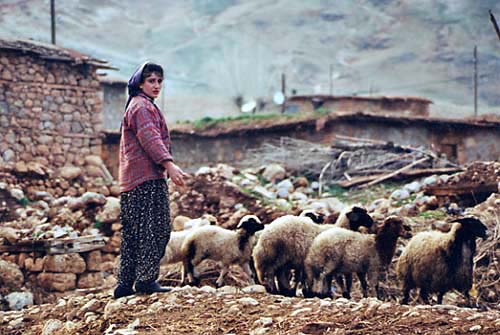
A Turkish shepherdess

There’s a third lesson for us today from the story of Jesus’ birth. This lesson comes from the shepherds, that group of men (possible even some women included) who were watching their sheep at night. Luke tells us that the angels gave an impromptu concert of praise, announcing the birth of Jesus. I love the shepherds’ response once the angels were gone: Verse 15 – “Let’s go right now to Bethlehem and see what’s happened.” Lesson? When God says obey, do it quickly. The command was implied in the words of the angel, in v. 12:

“This is a sign for you: you will find a newborn baby wrapped snugly and lying in a manger…”

It’s fun to think about the excuses the shepherds could have used. They could have said:

– “We can’t leave these sheep here. Someone else will have to find the Christ child.”

– “Don’t those angels know that Bethlehem is quite a walk from here? It’s the middle of the night. Let’s get some shut-eye.”

– “They said we’d find the baby, but they didn’t specify tonight. We can always go tomorrow.”

But the shepherds didn’t find ways to wiggle out of their duty. They went right away, so right away they found Joseph and Mary and the baby lying in the manger. Because they obeyed God’s instructions right away, they received the blessing of their obedience right away. Verse 20:

“The shepherds returned home, glorifying and praising God for all they had heard and seen. Everything happened just as they had been told.”

And what about you and me? What has God been telling us to do but we have been stalling? Obedience delayed has another name: disobedience. Let us not miss out on God’s blessing. When God says obey, let’s do it quickly.

V.  CONCLUSION

Every Christmas present has been unwrapped. The Christmas tree and decorations will soon be stored away, yet three lessons remain from the story of Jesus’ birth. First, God delights in simple people who love Him. Secondly, big things often start small. Thirdly, when God says obey, do it quickly.

Benediction – Jude 24

“To the one who is able to protect you from falling, and to present you blameless and rejoicing before his glorious presence, to the only God our savior, through Jesus Christ our Lord, belong glory, majesty, power and authority, before all time, now and forever. AMEN.”

———

Image credits:

manger scene – Nextara.org

shepherdess – Habetrot

Posted in book reviews

Appreciation for a bridge builder

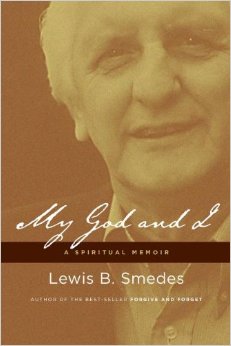
SmedesLewis B. Smedes, the late professor of Christian Ethics at Fuller Theological Seminary, wrote fourteen books in his lifetime. I’ve read only one, his last, My God and I : A Spiritual Memoir (Eerdmans, 2003), which is a rather backwards way of doing things. Still, if this book is a good indicator of the quality of his prior work, I’ve got some more reading to do!

Professor Smedes sums up his outlook on life in a succinct paragraph (p. 64):

I was, from the start, a Christian of the bridge. I liked bridges that I could cross over to drink from unbelievers’ goblets, to feast on their wisdom, and to admire their good works. I also liked bridges that I could cross over and, with God’s blessing, be a blessing to the people on the other side.

Though he joined the Christian Reformed Church as a young man, it is apparent that Smedes over time grew increasingly uncomfortable with parts of the Calvinistic creed, particularly the doctrine of absolute sovereignty, that “God is in control” of the most minute details of what transpires on earth. In response to this idea, he pens one of the most moving chapters in the book. Recounting the death of his newborn son, only a day old, Smedes observes (p. 121):

On the day that our baby boy died, I knew that I could never again believe that God had arranged for our tiny child to die before he had hardly begun to live, any more than I could believe that we would, one fine day when he would make it all plain, praise God that it had happened.

Smedes’ honest remarks resonate with me. We concur when later he applies the same logic to the events of 9/11/2001, seeing in the terrorist attacks not the hand of God but the pure face of evil. He concludes: “God, we hope, will one day emerge triumphant over evil, though, on the way to that glad day, he sometimes takes a beating” (p. 125). I am happy to affirm that God is far more powerful than anyone, but cannot ascribe evil committed by others to a good God, an inescapable conclusion if one believes that God has ordained all that happens.

On the negative side of the ledger, My God and I does not read evenly. The earlier chapters are slow, so the reader should be persistent since the second half of the book moves at a quicker pace.

My God and I is a good snapshot of one who combined the life of the mind with a warm heart for people. It’s a rare combination. In our polarized world, one can pray that the Lord will raise up more conciliators like Lewis Smedes.

Posted in book reviews

One man who changed the world

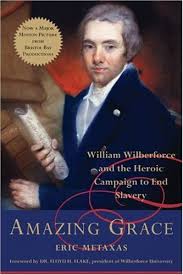
WilbeforceOne of my favorite movies is “Amazing Grace,” the 2006 film recounting the life of William Wilberforce, the late 18th/early 19th century crusader against the slave trade. When buying Eric Metaxas’ Amazing Grace: William Wilberforce and the Heroic Campaign to End Slavery (Monarch Books, 2007), I wondered if it would be as good as the cinematic production. The answer is: It’s not as good. It’s better.

Metaxas brings the sure hand of a veteran storyteller to his subject matter. Though he did much research for the book, he avoids footnoting, preferring instead to move the narrative along at a brisk clip, unburdened by any academic apparatus. (At the back of the book, he points interested readers to more scholarly books on Wilberforce). With wit and an engaging style, the author transports the reader back to the time when the slave trade every year saw 50,000 Africans kidnapped (mostly from the West African coast) and transported in horrific conditions across the Atlantic to the West Indies and the American colonies. Those who survived – sometimes as few as half on-board – lived short and brutal lives on sugar plantations on Caribbean islands like Jamaica, Barbados and St. Kitt.

Through the pages of Amazing Grace, one key lesson emerges: If you know your cause is just, never give up. It took twenty years of sweat and toil as a team of abolitionists led by Wilberforce for Parliament to finally outlaw the slave trade in the British Empire. Though tempted at times to give up, the MP from Yorkshire – a mere 5 foot 3 inches and sickly – proved to be small but mighty.

Yet Metaxas tempered this heroic portrayal in important ways, humanizing the protagonist. Wilberforce’s cause took him away from his family, so much that one time his young son didn’t recognize his own father when Wilberforce took him screaming from the house maid’s arms! Metaxas also noted Wilberforce’s tendency to jump from one topic to another, finding it hard to discipline himself and stay focused on one subject. Wilberforce himself attributed this to the raucous lifestyle that he lived at Cambridge as a young man, where he never learned to focus sufficiently on study. To what degree this was influenced as well by his decades-long dependence upon opium to treat his colitis is also not clear.

Metaxas’ biography makes at least two major contributions that go beyond the film. First, he delves much deeper into Wilberforce’s Christian faith, talking about his conversion (the “Great Change”) and how he was influenced by Methodism, the stricter form of belief promulgated in the 18th century by George Whitefield and John Wesley. In contrast to those giants of faith, the author does a commendable job showing how Wilberforce lived a much sunnier form of evangelical faith including a ready wit and positive celebration of life’s wholesome joys. Secondly, Metaxas explains how Wilberforce’s Christian faith informed his concern for the numerous other social causes he promoted. These included prison reform, successfully passing a bill through Parliament to open up India for missionary work (which included abolition of the ritual burning of widows on the funeral pyres of their deceased husbands) and founding the SPCA, the Society for the Prevention of Cruelty to Animals.

All-in-all, Amazing Grace: William Wilberforce and the Heroic Campaign to End Slavery does an excellent job of providing further details necessarily cut-out of a 2 hour movie. I read the book in about 12 hours over two days and found myself pulled along by the story, impressed by the skill of the author. Other than two very small errors in the text, the editing was excellent and the still color photos from the movie welcome. Christians who marry personal piety with social action informed by faith will appreciate this well-drawn portrait of a great man.

———-

Image credit: Amazon.com

Posted in book reviews

The Cross and the Lynching Tree: A Review

james-cone
Professor James H. Cone

WARNING: This essay contains graphic language and images.

James Cone’s The Cross and the Lynching Tree (Orbis, 2011; Kindle edition) was a difficult read, at times excruciating for an American child of upper-middle class white privilege like myself. Yet if healing is ever to come – if we are ever to live as one race, the human race, for whom skin color is no more important than a dozen other interesting but secondary characteristics – then we must return to the scene of the crime. Reconciliation begins there.

For Americans, the crime scene spanned at least sixty years, from 1880-1940. Over that period, nearly 5,000 black Americans died at the hands of white lynch mobs (Cone, 3). The victims included a handful of women but were mostly men strung up on trees, castrated, pulled behind automobiles, flayed into unconsciousness and burned alive.

Lynching on 9 August 1930, in Marion, Indiana

No due process of law was given to these black men often accused of raping white women. In many instances, white anger was provoked by consensual sexual intercourse between a black man and a white female (Cone, 127).

The Marion, Indiana lynching (pictured above) inspired Abel Meeropol (aka Lewis Allen) to pen the poem, “Strange Fruit,” later recorded by blues singer, Billy Holiday (cited by Cone, 120):

Southern trees bear strange fruit

Blood on the leaves and blood at the root

Black body swinging in the Southern breeze

Strange fruit hanging from the poplar tree.

Continue reading “The Cross and the Lynching Tree: A Review”

Posted in From soup to nuts

Jeddie’s bread

A large pizza, loaf of bread and coffee cake, all from a single batch of dough

Part of the fun of being on extended holiday is trying new things. Amy divulged to me the secret of her tasty pizza, a yeast bread recipe from her friend, Jeddie, shared years ago in French language school:

JEDDIE’S BREAD

1) Into a large bowl, pour 1 cup warm water. Add 1 teaspoon yeast and stir. Let rest 5-10 minutes.

2) To the mixture, add 2 cups sour milk.  To sour the milk, add 2 teaspoons vinegar or lemon juice.

3) Next, add:

– 3/4 cups oil

– 1/4 cup sugar

– 1 tablespoon baking powder

– 2 teaspoons salt

– 1/4 teaspoon baking soda

4) Knead in 6-8 cups flour.

(Optional during step 4: play Anne’s Murray’s “You Needed Me.” – yes, that’s Greg’s punny humor…)

At this point, you can either put in fridge overnight (covered with a kitchen towel) or use the dough right away.

The recipe makes a lot. Amy and I made pizza and a loaf of bread, plus some coffee cake – see photo.

Note: For the coffee cake, she took half of the dough and added an extra large egg and 1/4 cup sugar, sprinkling with brown sugar, a variety of brown spices, some margarine and apple sauce. You can also use the same modified dough for sweet rolls. Be creative.

Enjoy!

Posted in book reviews, From soup to nuts

An engaging tale in search of a broader audience

51TQQwFVyBL._AA160_Every good writer should write about what they know. As one born and raised in the vicinity of Elbridge, New York, where A Rifle for Reed (Amazon Kindle, 2013) takes place, author Amy Crofford is well-suited to craft this young reader’s tale. Well-researched and fast-paced, the story follows the 1851 adventures of twelve-year-old Reed Porter. It is a time of ferment in the country as people take sides in the great debate over slavery. Reed’s family is caught-up in the drama surrounding the Fugitive Slave Act and must decide where their loyalties lie.

Crofford is a newcomer to the genre and offers a wholesome alternative to much of the darker themes that dominate youth literature. The main drawback to the book – and the reason for my four star rating – is its limited marketing as a self-published work of fiction. One can only hope that a publisher will latch onto this engaging story and give it the wider audience it deserves.

Posted in book reviews, From soup to nuts

An inspiration for all achievers

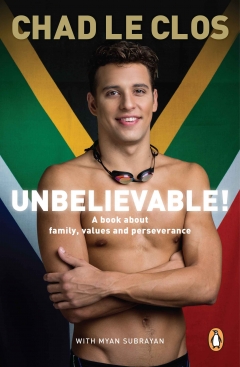
Myan Subrayan -Unbelievable! - HRYou may not be a swimmer, but if you’re an achiever in any area of life, you’ll enjoy Unbelievable: A Book About Family, Values, and Perseverance (Penguin, 2014; Amazon Kindle edition). Author Myan Subrayan had done an excellent job introducing us to one of South Africa’s sports heroes, 2012 Olympic swimming gold medalist, Chad le Clos.

Mr le Clos surprised many when he bested the legendary Michael Phelps in the men’s 200 m butterfly in London. What has been equally impressive since that high moment is Chad’s down-to-earth way of handling success. Thanks largely to his strong family, he has stayed grounded, including throwing himself into a handful of worthy causes. These include the fight against breast cancer, following his mother’s battle with the disease, as well as the campaign to save Africa’s rhinos from extinction.

Unfortunately, on some topics, the book stays in the shallow end of the pool. As a person of faith, I would have appreciated more about Chad’s religion. From time-to-time there was a hint, such as this line : “God has given me talent and opportunities, and I want to use these to make a positive difference wherever I go” (location 1736, Kindle). Hopefully, future bios will confidently swim into deeper waters.

All-in-all, Unbelievable accomplishes what it sets out to do. At a time when some other South African sports heroes have spectacularly imploded, it’s refreshing to see a young man who has already accomplished much yet kept a positive and balanced outlook. Keep up the good work, sir.

————

Photo credit: Penguin Books (South Africa)

Posted in reflections

There’s only one race

img-0-7268608-jpgWith one observation, anthropologist Charles Gailey changed my worldview:

“There is only one race, the human race.”

His “we’re all in this together” claim took a wrecking ball to the way I had previously seen people. Until then – why, I cannot say- I had always begun not by seeing what makes us all alike but by identifying what makes us all different:

He is tall, I am quite short;

She is athletic, I am not;

I am musical, he can’t carry a tune;

She is Roman Catholic, I am Nazarene;

He is black, I am white.

The 1970s Joe Raposo Sesame Street jingle only reinforced the point:

One of these things is not like the other,

One of these things just doesn’t belong.

Can you tell which thing is not like the others

Before the time I finish my song?

And so at grade school I dutifully focused on what was “not like the other,” the dark skin of Bruce and Julie, the only African-Americans in my primary school. Or Tony, the Italian heritage first grader with the big nose and Coke bottle glasses who from first grade on was the outcast. Then there was awkward Patrick, one of the few worse at sports than I was, always chosen last when we picked teams in gym class. As long as I could find among my classmates a “them” who was different and so “didn’t belong,” my fragile ten-year- old self could be sure of my position among the “us” who were alike.

The “us and them” narrative continues in 2014 America, subtly woven into the very words we use to talk about how we relate to each other. Do we not realize that sometimes the words themselves are a part of the problem? Some who rightfully protest inconsistent standards in policing based on skin color speak of “racism,” thereby unwittingly conceding that what differentiates us is more important than what unites us, in this case whether our skin is black or white. If Gailey is right – that there is only one race, the human race –  then the word “racism” misses the mark.

How can it in the final analysis be about “race” if we’re all part of the same one?

The problem lies elsewhere. The problem lies with mistakenly focusing on the adjective, not the noun:

Rich man, poor man

Christian boy, Muslim boy

Down’s Syndrome baby, healthy baby

Black girl, white girl

No matter our group of origin, we have all swallowed the same Kool Aid. We have all been socialized to think that what makes us different from each other trumps what makes us the same, and so we immediately underscore the adjective and ignore the noun.

We forget that what our Creator sees is not..

a man with money and a man with little

a boy who worships Jesus or a boy who worships Allah

a baby with a birth defect and a baby who appears flawless

a girl with dark skin and a girl with light skin

In each case, what God sees is only…

a man

a boy

a baby

a girl

…each one fearfully and wonderfully made in God’s own image, who together make up not many so-called races but a single race, the human race. Look around you – we’re all running the same race, the human race. Are we going to trip each other up or help each other cross the finish line?

Whether it’s Ferguson, Missouri, Staten Island, New York, or Tehran, Iran, when we’re ready…

– to no longer start the conversation with our differences and so engender fear of the other

– to begin the conversation with what makes us alike and so create unity based on our similarities

…then maybe during this season of hope we can genuinely wish for peace on earth, good will toward all human beings. For truth be known, upon every precious one of us, God’s indiscriminate favor rests.

————-

Image credit: The Now Newspaper

Posted in book reviews

Magesa on African Spirituality

51nfH883olL._UY250_In What is not Sacred? African Spirituality (Orbis, 2013, Kindle edition), Laurenti Magesa, a Jesuit from Tanzania (East Africa), opens up a new world to Westerners unconsciously fashioned by an individualistic frame-of-reference, a different way of being where the primary category is not “I” but “we.” This communal worldview takes into account not only the present but reserves a large place for the past, ancestors who have gone before, those who though dead, still live.

Magesa acknowledges that arguably there are many African cultures; however, he maintains that there is a unified way of viewing the world and life together that unites all sub-Saharan peoples, what he calls a “sameness of spirit and intention” (location 147). What is not Sacred? addresses a variety of topics related to this worldview. He argues that a truly African Christianity must allow Africans to preserve from their pre-Christian religious heritage elements that are not in conflict with the Gospel.

This essay shall limit itself to three topics that Magesa addresses, namely: 1) the role of vital power; 2) sex and community, and 3) reconciliation.

The role of “vital power”

What is “vital power”? Magesa observes (location 620):

Vital power requires and demands the active ‘skill’ inherent in created order so as to negotiate relationships between the visible and invisible elements of the universe. Vital power implies that nothing is what is seems to be on the surface. To realize this is to begin to know the meaning of life and to start living it well and fully.

The author calls this vital energy “primordial,” a force that helps the “universe to exist harmoniously and with all its constituent components” (location 633). Importantly, the ancestors are a “fundamental link in the force of life” and the “dispensers of morality and (the) venerated patriarchs of the community” (location 645).

While what Magesa observes is undoubtedly correct, he seems incapable of stepping outside his own frame-of-reference to offer meaningful critique. He passes by without comment the term “venerated patriarchs.” Can females have no place among what John Mbiti calls the “living dead,” those who take an active interest beyond the grave in the earthly vitality of the people group? According to Rev Gift Mutkwa of Africa Nazarene University, the Shona of Zimbabwe do acknowledge Mbuya Nehanda as an ancestor, but primarily for her status as the wife of Sekuru Kaguvi. In any case, if women are almost never acknowledged as ancestors, this has ramifications for the here-and-now role of women in societal leadership. If women will not be venerated later, why should we consider their point-of-view now? Magesa’s own faith confession (Roman Catholic) does not allow for the ordination of women, but for Christian traditions that do, one may ask: Is an element of prejudice based upon gender hard-wired into the African religious worldview?

Laurenti Magesa
Laurenti Magesa

A second area where Magesa offers no corrective is the question of spirit possession and libations. Speaking of herbalists who heal, he portrays them as “guided by other powers such as that of the ancestors through dreams of possession” (location 697). Likewise, he speaks of “ancestral spirits” who are capable of “bi-location,” dwelling in the “sky” but also able to “possess any creature for a certain purpose” (location 774). Later, Magesa explains: “Broadly speaking, spirit possession can be benevolent or malevolent, depending upon whether the possessing spirit fulfills positive or negative expectations” (location 1551). Because (on Magesa’s reading) the spirit can guide a family regarding the seemingly recalcitrant but justified behavior of some of its members, this type of spirit possession can have a “pedagogical value for the larger society to reform unjust systems” (location 1564). In no instance does Magesa critique the practice of spirit possession. Instead, he appears to ascribe to it positive value. For the reader reliant upon Scripture as the rule of Christian faith and practice, this is no small offense. Followers of Christ are called upon to “test the spirits, to see whether they are from God” (1 John 4:1a, NIV). One must wonder whether some have unwittingly invited demon possession in the name of so-called ancestral possession. Could this explain why the frequency of demon possession seems greater in Africa than in the Western world where the cult of ancestors is largely absent?

Further, Magesa describes “daily veneration of ancestors through prayer, or frequent pouring of libations to them” as “acts of piety” and as “necessary for the good ordering of the life of the community” (location 1306). Does Magesa’s language of piety as related to ancestors introduce an element foreign to Christian faith? Pouring out libations to the ancestors treads dangerously close to a similar practice that Paul declared out-of-bounds. In 1 Corinthians 10:14-22, he warned the Corinthians to avoid participating in both the table of the Lord and the “table of demons,” of drinking the cup of the Lord and drinking the “cup of demons.” To do so is to practice idolatry (v. 14) and to risk arousing the Lord’s anger  (v. 22). The error was split religious loyalties. God will brook no competition. Would this not include competition with the mini-deities called ancestors?

Continue reading “Magesa on African Spirituality”