Posted in Christian ethics

Stanley Hauerwas and The Peaceable Kingdom: Part 3 of 4

G.K. Chesterton wryly remarked: “Christianity has not been tried and found wanting; it has been found difficult and not tried.” What is true for Christianity is equally true for pacifism.
Let’s face it: violence sells. What would a James Bond movie be without silencer-fitted handguns taking out the “bad guys” and explosives detonating every 20 minutes? No one makes action figures of Mahatma Gandhi.

It is upstream against this strong cultural current that Stanley Hauerwas is determined to swim. Chapters 5-6 of The Peaceable Kingdom: A Primer in Christian Ethics (Notre Dame, 1983) form the heart of his argument. Much more is packed into these chapters than can be addressed here, but let us examine three ideas, namely, Jesus’ denial of the “right of violence,” the church as God’s “sanctified people,” and just war theory.

Jesus’ denial of the “right of violence”

Without question, the Sermon on the Mount is the most challenging portion of the gospels to put into action. Yet it is here in Chapter 5 of The Peaceable Kingdom where Stanley Hauerwas teases out the implications of non-violence. Commenting on Matthew 5:43-48, he insists (p. 85):

God wills nothing less than that men and women should love their enemies and forgive one another; thus will we be perfect as God is perfect. Jesus challenged both the militaristic and ritualistic notions of what God’s kingdom required – the former by denying the right of violence even if attacked, and the latter by his steadfast refusal to be separated from those on the “outside.”

Jesus was not creating a peaceful ethic out of whole cloth. Isaiah 11:6-9 is the image of the “peaceable kingdom,” of the wolf lying down with the lamb, of God’s holy mountain where lions will eat straw like an ox and where children play near a snake’s nest without fear of harm. Yet how shall this idyllic estate be attained? For Hauerwas, violence as a “right” must be eschewed and can be because the resurrection – “God’s decisive eschatological act” (p. 88) – establishes peace not in some far off future but as a “present reality” (Ibid.). The Sermon on the Mount contains “rigorous demands” but is not “some unrealizable ideal” (p. 85). Because Christians “worship a resurrected Lord, we can take the risk of love”(p. 90). This love is embodied in forgiveness, the only way that we can renounce violence.

The ethic of loving forgiveness is imaginable on a personal basis, and there are stories to bear it out, such as parents of a slain child eventually being able to forgive the guilty party. Here Hauerwas is on solid ground experientially. Where it becomes murkier is relationships between groups or nations. Is a peace ethic workable when so much is at-stake? Cannot “loving one’s neighbor as oneself” mean practicing a love that “protects” (1 Cor. 13:7)?

Yet Hauerwas seems to realize that ethical theory is insufficient. As the old saying affirms, some things are better “caught than taught.” The peaceable kingdom is best modeled not individually by corporately by the winsome lifestyle of the people of God .

Continue reading “Stanley Hauerwas and The Peaceable Kingdom: Part 3 of 4”

Posted in Christian ethics

Stanley Hauerwas and The Peaceable Kingdom: Part 2 of 4

Look at any tree. What you see above the ground – branches, leaves – is mirrored underground where we cannot see. So, if a tree’s branches stretch one-hundred feet into the sky, then its roots push one-hundred feet into the earth.

As with trees, so with Stanley Haurwas’ book, The Peaceable Kingdom: A Primer in Christian Ethics (Notre Dame, 1983). In an eight chapter book, I’m four chapters in and still the author has only vaguely alluded to peace. Yet it is the ideas in pages 1-71 that will anchor what he has to say in pages 72-151, like the deep roots of a sprawling tree.

In Part 1, we looked at Chapters 1-2. In this post, let’s consider Chapters 3-4. Specifically, let’s take a look at two ideas, namely, his concept of freedom and how Christian community determines our ethics.

Freedom as “the presence of the the other” 

In what sense are we “free”? Stanley Hauwerwas rightly points out that there are many circumstances over which we have no control. He points to a professor of philosophy who was denied tenure, so instead he enrolled in law school and became a successful attorney. While he chose his new path, the roadblock that pushed him to change directions was determined by other forces not of his own making. Because of the reality of causes outside of ourselves, instead of the word “freedom,” Hauerwas (p. 42) substitutes the concept of “agency”:

…to be an agent means I have tried to develop my action within an ongoing history and within the community of language users. Even what has happened to me, my habit of dependency, becomes mine to the extent that I am able to make it part of my story. I am not an agent because I can ’cause’ certain things to happen, but because certain things that happen, whether through the result of my decision or not, can be made mine through my power of attention and inattention.

This “ongoing history” is part of the “narrative” of which each of us is a part. A personal illustration may help. My Uncle Norman grew up alongside my father (Don) in the Pacific Northwest. Yet at a critical juncture in his early 20s, my dad joined the Navy, which relocated him to New Jersey, where he met my mother. And so began a new story, resulting in a new family raised on the East Coast. Meanwhile, his brother, Norm, stayed on the West Coast, married, and raised his own children. Though they are my cousins and we’ve gotten together several times, I realize that they have been brought up with a different narrative, a story with some common elements to my own, but a divergent story nonetheless. So, for both myself and my cousins, important parts of who we are were not our own choice. Neither of us chose our parents, nor where we would grow up. In that sense, none of us were “free.”

But returning to Stanley Hauerwas, he is not willing to say that elements of our environment determine in-full what we become. He observes: “Yet it is the Christian claim that no one is completely determined that he or she lacks all means to respond to the story of God and thus find some means to make his life his or her own” (p. 44).

I agree with the thrust of the author’s argument, but it does raise a question:

To what degree does becoming part of God’s story require a repudiation of our story up to that point? 

Having grown up in a revivalistic tradition, I remember hearing many “testimonies” (as we called them) to what God had done in the lives of individuals. Many testified to a life that was aimless and damaged in some way before coming to Christ, and how much more meaningful and hopeful God had made their lives since that encounter. The most common “narrative” was of radical change. As one who never spent – in the words of the old hymn – “years in vanity and pride, caring not my Lord was crucified” – I longed to hear testimonies from those whose stories from the start seemed more aligned with the “story of God,” as Hauerwas called it. Are we willing as a community of faith to affirm not only the “prodigal sons” (and daughters) but also those who never wandered in a far off land? Are not both testimonies of God’s grace at-work in the lives of individuals?

Continue reading “Stanley Hauerwas and The Peaceable Kingdom: Part 2 of 4”

Posted in Christian ethics

Stanley Hauerwas and The Peaceable Kingdom: Part 1 of 4

Over the years, I’ve had a knack for coming in on the middle of a conversation, and consequently totally misunderstanding its meaning.

Such is the danger of writing in 2012 about The Peaceable Kingdom: A Primer in Christian Ethics (Notre Dame, 1983). So much has already been said over the last 29 years about this early work by Stanley Hauerwas. It’s a conversation I’ve missed,  but in a strange way, that’s an advantage. I come at the work untainted by what others have written about Hauerwas, free to engage his writing directly, without the undue influence of others.

Background

Stanley Hauerwas is a professor of theological ethics at Duke University, shared between the Divinity and Law schools. His later book, A Community of Character (1991), is widely considered his best, laying out a Christian social ethic informed by the community of faith.

Professor Hauerwas has acknowledged the influence of Mennonite theologian John Howard Yoder on his own thinking. That debt was apparent not only in Peaceable Kingdom but also in Hauerwas’ scathing assessment of what he perceived to be American imperialism in foreign policy. This critique he delivered in a zealous but rambling address to a lukewarm audience at the 40th annual meeting of the Wesleyan Theological Society in March 2005, a meeting that I attended and where Hauerwas was the keynote speaker.

Herein lies part of my motivation for carefully reading through The Peaceable Kingdom. In it, I hope to find the answer to my sincere question:

What led a man of his academic stature to risk alienating a room filled with members his own guild, over what some viewed as a matter of political opinion rather than of Christian faith? 

This four part series will examine the 1983 book, analyzing two chapters at a time. Accordingly, this first installment will weigh the major themes from Chapters 1-2.

Laying the foundation for a narrative Christian ethic

Christian ethics usually falls under two headings:

1. deontological — Emphasis is upon duty, and there is an accent upon rules, standards for behavior gleaned especially from the Ten Commandments, the Sermon on the Mount, or other moral guidelines contained in Scripture.

2. teleological — Here the focus is not so much on rules as the end (Greek telos) or objective being sought.

Stanley Hauwerwaus attempts to side-step this either/or approach by introducing a new variable, namely, narrative. He contends: “We know who we are only when we can place our selves – locate our stories – within God’s story” (p. 27). Why should understanding the role of story and our place within in have anything to say about how we live? Hauerwas (p. 28) gives three reasons. First, we are contingent beings, dependent (as is all creation) upon God for our existence. Secondly, we are historical beings. Tradition develops over time, but especially within the context of a community of faith. Finally, narrative is crucial because God has chosen to reveal Godself through narrative, particularly through the story of Israel and the life of Jesus.

The author’s claims raise questions. If ethics are determined within the context of community, then we might ask:

What do we do when two communities draw opposite conclusions about what is morally correct?

This is no hypothetical situation. Groups of Mormons have concluded that having multiple wives is not only morally acceptable but even desirable. At the same time, the consensus of American society in the 1800s was that having multiple wives was morally wrong. Two different communities drew two divergent conclusions. In the end, Mormons had to give way on the issue, if they wanted Utah to be admitted into the Union as one of the states.

Continue reading “Stanley Hauerwas and The Peaceable Kingdom: Part 1 of 4”

Posted in ecclesiology & sacraments, missions & evangelism

Deep and wide: Marrying discipleship and evangelism

As a child, I used to sing a course in children’s church. It had some fun motions that went along with it:

Deep and wide,

Deep and wide

There’s a fountain flowing deep and wide.

Don’t get hung up on the meaning of the words. I’m not sure what the “fountain” was, perhaps a reference to William Cowper’s creepy lyric: “There is fountain filled with blood, drawn from Immanuel’s veins.”

Yet as ironically shallow as “Deep and Wide” seems in retrospect, it’s a good description of what the church ought to be. If we’re only “wide” (and not deep), people will go elsewhere. On the other hand, if we’re only “deep” (and not wide), we may end up as the church of “us four and no more,” as if being small in number somehow makes us holier. The challenge is to be good at both, inviting people in and taking them to the next level in their walk with Christ.

Continue reading “Deep and wide: Marrying discipleship and evangelism”

Posted in Bible, Christian ethics

Honey, I shrunk the Bible

It was one of the more memorable fun flicks from the ’80s. Wayne Szalinski (played by Rick Moranis) was the mad scientist working on an incredible shrinking ray. Sadly, he only managed to blow things up, until the day his invention worked, accidentally shrinking two of his own children and two of the neighbor’s. The rest of “Honey, I shrunk the kids” revolves around the hapless teens’ attempts to avoid dangers lurking in the lawn while their parents search frantically for their diminutive offspring.

Herein lies a cautionary tale: We can shrink things unintentionally that were never intended to be shrunk. 

Take the Bible, for instance. Sometimes I wonder whether we’ve reduced both its size and its function.

Continue reading “Honey, I shrunk the Bible”

Posted in sermons & addresses

Five questions about the Second Coming, answered

Note to the reader

This is a sermon I’ve preached recently in Kenya, Rwanda, and the DRC. It has been well-received, and I hope it will be  helpful to you as well.

All Scripture citations are from the New International Version.

———————————————-

Text: Acts 1:1-11

INTRODUCTION

It’s a famous line that’s been used in countless book titles. Just fill in the blank:

“Everything you always wanted to know about ______ but were afraid to ask.”

What would you put in that blank? Today, here’s how I’d like to fill it:

“Everything you always wanted to know about the Second Coming, but were afraid to ask.”

In some ways, this is a hard topic to preach since there’s no single “classic passage” that we can turn to. Rather, what we can determine about Christ’s return is scattered in various passages of the New Testament. So even though we’ve chosen one passage (Acts 1:1-11) as our official sermon text, today is really more of a topical sermon. I hope you have your Bible open, since we’ll be looking at a variety of Scripture portions. Together, let’s consider five questions about the Second Coming.

Continue reading “Five questions about the Second Coming, answered”

Posted in reflections

Does God have all the power?

I like a catchy tune as much as the next person. It’s the lyrics that sometimes bog me down. The chorus to Twila Paris’ “God is in Control” affirms:

God is in control

We believe that His children will not be forsaken.

God is in control

We will choose to remember and never be shaken.

There is no power above or beside Him we know, oh oh oh

God is in control, oh oh oh

God is in control.

There’s much to commend here. Like Daniel in the lion’s den, we believe in a God who is able to rescue the faithful. So the line reminding us that God’s “children will not be forsaken” certainly rings true with the witness of Scripture, at least if we add in the final vindication of the righteous at the resurrection, as the book of Daniel itself does (see 12:1-3). The idea that we should “choose to remember and never be shaken” is likewise on-target. Thankful remembrance of the mighty acts of God is wrapped up with the celebration of Jewish Passover and Holy Week/Easter.

Where I start to question is the next line. It starts well, claiming that there is no power “above” God.  That’s an important affirmation for the Christian. To say that a power greater than God’s exists would de facto mean that this new power is the rightful God and that who we have called “God” until now is merely an imposter. But the Twila Paris lyric continues, veering into dubious territory. It claims that there is no power “beside” God. In other words, God’s is the only power.

Is that true?

Continue reading “Does God have all the power?”

Posted in book reviews

Howard Snyder on the kingdom

A group of theologians was discussing the Gospels. After a long exchange, one lamented: “Jesus promised us the kingdom, and instead all we got was the church!”

Many of us can identify with the frustration of our sister. She looked at the church with its divisions and failings and she desperately longed for something better.

If we ache for the full in-breaking of the kingdom of God in human history, there’s a reason. Jesus was the one who taught us to pray: “Your kingdom come, your will be done on earth as it is in heaven” (Matthew 6:10, NIV). The word “kingdom” appears 54 times in Matthew’s gospel alone. By comparison, the word “church” appears a mere three times. For this reason, some have called Matthew the “Gospel of the kingdom.”

For an idea so important to Christian theology, one would think that there would be unanimity about is meaning. If only life were so simple. In Models of the Kingdom: Gospel, Culture, and Mission in Biblical and Historical Perspective (Wipf and Stock, 2001), Howard Snyder investigates eight distinct ways that Christians across the centuries have interpreted the kingdom concept:

1. The kingdom as future hope;

2. The kingdom as inner spiritual experience;

3. The kingdom as mystical communion;

4. The kingdom as institutional church

5. The kingdom as countersystem;

6. The kingdom as political state;

7. The kingdom as Christianized culture;

8. The kingdom as earthly utopia.

The models evaluated

The first option only sees God’s kingdom in terms of Revelation 21, the New Jerusalem descending at God’s command. The kingdom is none of our concern; God will bring it about only as the final curtain descending on the stage of history. The second and third options allow for a present experience of the kingdom but spiritualize it. Jesus said: ” The kingdom of God is within you” (Luke 17:21, KJV). Howard Snyder (p. 41) calls this “Inner Kingdom” of the second option the most individualistic of all eight, whereas the “mystical communion” model at least has the merit of including a communal aspect. While John Wesley had some room in his thinking for other models, it is here where he placed his accent by underscoring the necessity first to save one’s own soul before turning to other tasks, such as helping others work out their own salvation or overturning the kingdom of Satan to set up the kingdom of Christ (Snyder, 62). Continue reading “Howard Snyder on the kingdom”

Posted in Bible, reflections

Scripture: Our Rule of Faith and Practice

Philosopher Blaise Pascal once said that “man is only a reed, but at least he is a thinking reed.” Likewise, on the great tree of Christianity, the Church of the Nazarene is only a leaf, but we are a colorful leaf. Our emphasis upon holiness of heart and life, evidence of God’s transforming grace radically at work in us, helps us bring color to the branches of the Christian tree.

Sometimes as Nazarenes we get caught up on what makes us different from other Christians, on being the colorful leaf. We can forget that leaves are part of trees. The Church of the Nazarene shares much in common with Christians of other traditions, particularly those that bear the name “Protestant.” One common element is the emphasis we put upon the Bible as the benchmark for what we  believe, how we “do church,” how we hear the Spirit’s voice and how we decide questions of ethics and morality. In theology talk, we accept the Bible as our “rule of faith and practice.” [See discussion in Randy Maddox, “The Rule of Christian Faith, Practice, and Hope,” in Richard P. Thompson and Thomas J. Oord, eds., The Bible Tells Me So: Reading the Bible as Scripture, Kindle edition (Nampa, Idaho: SacraSage Press, 2011),  location 2098].

Continue reading “Scripture: Our Rule of Faith and Practice”

Posted in Christian ethics, reflections

Love? Absolutely, but what does love require?

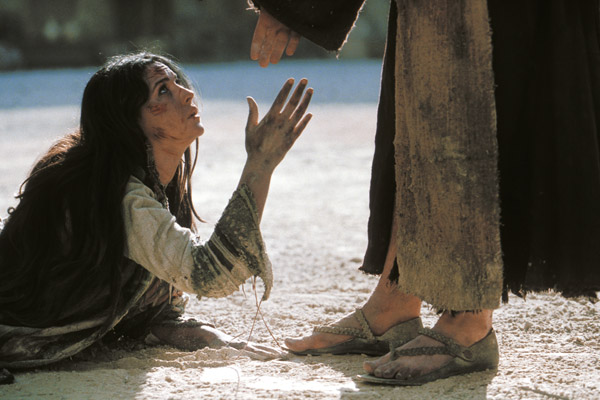
The essence of the Christian faith is love. Rarely, however, do we ask: And what does love require? Jesus answered this question not with a sermon but through his actions. He showed us what love requires during an instructive encounter with a woman unfaithful to her marriage vows (John 8:1-11).  The religious authorities brought her before the Lord. They demanded: “Teacher, this woman has been caught in the act of adultery. Now in the Law Moses commanded us to stone such women. So what do you say?” (v.5, ESV).

The reader hardly needs John’s explanation in v.6 to understand that this was a trap. Their target was not the hapless harlot but the teacher whose growing popularity they envied. They knew that if Jesus excused her action that de facto he would be setting aside the seventh commandment, a serious charge against any rabbi. On the other hand, if he concurred with the punishment that these scribes and Pharisees were only too willing to carry out, his popularity with the people would take a major hit. After all, hadn’t Jesus said that his “yoke” was “easy” and his “burden” was “light” (Matthew 11:29)? Yet agreeing with their decision would appear to undercut that claim, joining him to those who specialized in piling up laws and interpretations. In the eyes of the common person, Jesus might go from “one of us” to “one of them.”

Continue reading “Love? Absolutely, but what does love require?”