Posted in reflections

Don’t Be Brave

“You’re a wise woman; what are God’s words for me today?”

I was dumbstruck. How could Lois ask me that? I wondered.

Time seemed to stand still as I looked into my dear friend’s eyes, red and puffy from a week of tears and lack of rest. I glanced quickly around the small hospital room. My husband was quietly conversing with Rob, Lois’s husband. Their seven-year-old son, James, lay near death in the unkempt bed. He was moaning softly. The scabbed marks on his wrists and ankles betrayed the use of restraints that had tied him down during his earlier seizures. Rob had since convinced the hospital staff that the restraints were not needed if he lay on the bed with his feverish son. He stroked James’s face and arms with a damp cloth and murmured memories and endearments in an effort to keep him cool and calm. James was not only having complications from malaria and asthma, he was also experiencing heart problems caused by the differing medicines. The next morning, James would be flown on a life flight to Paris, France, from the small West African country where we all served as missionaries.

I closed my eyes and prayed. Lord, you said you would put words in our mouths. I don’t know what to say here.

When I opened my eyes, the movement of time was restored. Lois looked expectantly at me. I opened my mouth and only four words came out: “Lois, don’t be brave.” These were not words that my psychology professor would have approved, nor were they words that came from my experience as a pastor’s wife or missionary. In fact, I could not believe they had left my mouth at all, and my hand flew to cover my mouth as if to shove the unwanted words back.

Continue reading “Don’t Be Brave”

Posted in The Wesleys and Wesleyan theology

Charles Wesley’s masterpiece, “Wrestling Jacob”

At the time of his brother Charles’ death in 1788, John Wesley praised him for his keen poetic talent. Specifically, he mentioned Charles’ masterpiece, “Wrestling Jacob.” The fourteen stanza poem is a reflection on the character of God as summed up in a single word: love.  The poem appears below. Leave your reaction in the comment thread. Do you agree that God’s nature can be boiled down to love?

Wrestling Jacob

1) Come, O thou traveller unknown, 

Whom still I hold, but cannot see,

My company before is gone,

And I am left alone with thee,

With thee all night I mean to stay,

And wrestle to the break of day.

Continue reading “Charles Wesley’s masterpiece, “Wrestling Jacob””

Posted in missions & evangelism

Take the “roughing it” missions challenge!

How would you fill in this blank: “If I had to ________, I would really be roughing it!”

Sometimes the view we have of missionaries is a 1908 view, of Harmon Schmelzenbach piloting his covered wagon across swollen streams and rugged hills, taking the Gospel message to the Swazi people. Tied up with that picture is a rural view, of being far away from so-called “civilization” and enduring the hardships of missionary life.

Don’t get me wrong. There are still missionaries who live far away from population centers, but more and more missionaries are going where the people are going, and that is to the cities. Rapid urbanization is one of the amazing facts of life on planet earth at the beginning of the 21st century, as this montage so graphically depicts.

One would be tempted to think that the migration to the cities means an easier way of life for most people, that electricity would be readily available, fresh drinking water abundant and good sanitation a given. This is simply not the case. In Nairobi, Kenya, a city of roughly 3.1 million people, many residents only have a couple hours of electricity per day. Others must walk a good distance carrying plastic containers to draw clean water from a distant tap or bore hole, enough for the day’s drinking, cooking and washing.

How can we privileged Westerners who rarely face such a grind of daily living identify with those for whom life is much tougher?

Continue reading “Take the “roughing it” missions challenge!”

Posted in book reviews, Christian ethics

When rights are secondary: Duty rediscovered

Under guard and carefully preserved in the refrigerated atrium of the National Archives in Washington D.C. are the precious parchments upon which our country was founded. We reverently shuffled past the glass display cases, the low light barely illuminating the faded documents. To the left resides the Declaration of Independence while in the center is the Constitution. As we made our way to the right of the chamber a third document came into view. Dimly visible was the Bill of Rights, the sacred words that make up the first ten amendments to the Constitution.

Talk of “rights” is nothing new on the American scene. A course in American history is replete with the concept of rights, whether the rights of slaves to be free, the rights of women to vote or the rights of citizens to have access to affordable health care. But in our rush to claim our rights, more people are beginning to ask:

What is my duty?

Meic Pearse is one such voice. In Why the Rest Hates the West: Understanding the Roots of Global Rage (InterVarsity Press, 2004), he writes to those who have trouble understanding the context that gave rise to the atrocities of September 11, 2001. His argument is far-ranging, but a key plank in his thesis is the “me” orientation of Western (North American and European) culture vs. the “we” perspective of the non-Western world, what Pearse calls “the rest,” i.e. Africa, South America, and Asia. If the West were content to live out its radically individualistic credo without exporting it to the rest of the world, conflict could be avoided. However, in myriad ways, Pearse insists that countries like the United States are engaged in cultural imperialism, imposing our supposed superior values on others. One powerful source for this imperialism is media which includes sources on both sides of the political spectrum. Pearse observes (see Kindle location 1942):

Continue reading “When rights are secondary: Duty rediscovered”

Posted in ecclesiology & sacraments

Are your colors clear?

“I’m a part of the fellowship of the unashamed. The die has been cast. I have stepped over the line. The decision has been made. I’m a disciple of His and I won’t look back, let up, slow down, back away, or be still.

My past is redeemed. My present makes sense. My future is secure. I’m done and finished with low living, sight walking, small planning, smooth knees, colorless dreams, tamed visions, mundane talking, cheap living, and dwarfed goals.

I no longer need preeminence, prosperity, position, promotions, plaudits, or popularity. I don’t have to be right, or first, or tops, or recognized, or praised, or rewarded. I live by faith, lean on His presence, walk by patience, lift by prayer, and labor by Holy Spirit power.

My face is set. My gait is fast. My goal is heaven. My road may be narrow, my way rough, my companions few, but my guide is reliable and my mission is clear.

I will not be bought, compromised, detoured, lured away, turned back, deluded or delayed.

I will not flinch in the face of sacrifice or hesitate in the presence of the adversary. I will not negotiate at the table of the enemy, ponder at the pool of popularity, or meander in the maze of mediocrity.

I won’t give up, shut up, or let up until I have stayed up, stored up, prayed up, paid up, and preached up for the cause of Christ.

I am a disciple of Jesus. I must give until I drop, preach until all know, and work until He comes. And when He does come for His own, He’ll have no problems recognizing me. My colors will be clear!”

– This statement was found among the papers of a young African pastor after he was martyred for his Christian faith.

Source:  Dr. Howard Culbertson, Professor of Missions, Southern Nazarene University, Bethany, Oklahoma. The piece is entitled “Christian commitment: My Colors,” and is found here. The story is attributed to longtime missionary Louise Robinson Chapman.

Posted in The Wesleys and Wesleyan theology

Charles Wesley in battle mode

I’ve been researching a paper for the upcoming meeting of the Wesleyan Theological Society, to be held at Trevecca Nazarene University in early March. The paper is titled:

Christus Victor: A Wesleyan Appraisal of sub-Saharan Power Christology”

In the first part of the paper, I’m looking at primary sources, and will be focusing particularly on the sermons of John Wesley and his New Testament Notes as well as the hymns of Charles Wesley. In my doctoral research, I was looking at his hymns in relation to another theme, so this time around with new eyes on the material,  I’ve been pleasantly surprised to uncover some amazing verse on the theme of the conquering Christ. Here are stanzas 5-7 of a hymn based on Rev. 2:8-9:

We then the power of faith shall prove

Nor shrink from persecution near,

But more than conquer in thy love,

Thy perfect love which casts out fear.

Tho’ earth and hell at once engage,

And fiends, and formal saints conspire,

The synagogue of Satan rage,

And threaten us with racks and fire;

Bold shall we stand in thy great might,

For Jesu’s sake count all things loss,

With beasts, and men, and devils fight

Beneath the banner of thy cross.

Continue reading “Charles Wesley in battle mode”

Posted in The Wesleys and Wesleyan theology

John Wesley said that? Maybe not…

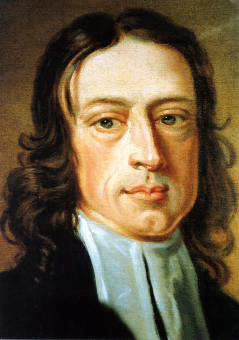
John Wesley, 1703-91

A colleague sent me a fascinating article about quotations wrongly attributed to John Wesley as well as “facts” surrounding his life and ministry, so called facts that actually are either plainly false or else unverifiable. An example of such a pseudo-quotation is:

Do all the good you can, by all the means you can. in all the ways you can, in all the places you can, at all the times you can, to all the people you can, as long as you ever can.

Another example is the term “social holiness.” In Methodism today, the term has come to mean any social project engaged in by the people of God.  Now, that doesn’t mean we can’t use the term that way if we want. We need not follow John Wesley slavishly, but at very least we should explain what Wesley meant by the term, which Heitzenrater agrees is a reference to Christian community, and I would add, especially the class meeting and bands.

Read it all by clicking here.

Posted in book reviews, missions & evangelism

Dive deeper with THE HEAVENLY MAN

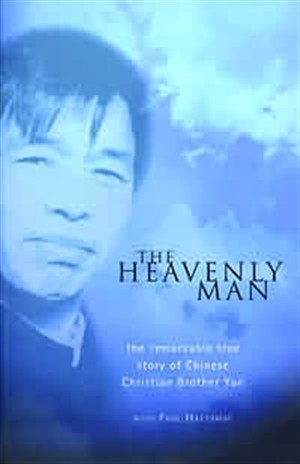
When it comes to knowing Christ, are you tired of splashing around in the kiddie pool? This year, if you want to dive deeper in your Christian experience, pick up a copy of The Heavenly Man (Monarch Books, 2002).

This story by Paul Hattaway of Asia Harvest Mission chronicles the tribulations and victories of Chinese evangelist Liu Zhenying, better known as Brother Yun. The title of the book comes from his first arrest by Chinese authorities. As he was be being interrogated and beaten, they asked him where he was from. Pastor Zhenying shouted: “I am a heavenly man!” For his refusal to stop preaching the gospel,  Brother Yun was locked away on three occasions, spending years in prison. Many of his guards came to faith in Christ, as did other prisoners. During his first stint in prison, he refused to eat or drink, laying immobile for 74 days. While that appears medically impossible, who are we to discount what God can do? In the same vein is Yun’s miraculous escape from prison, reminiscent of Peter in the Book of Acts.

There are several “take aways” after reading The Heavenly Man:

1. Memorize the Word of God. Often, Brother Yun was locked away by himself with no Bible. He had to rely upon what he had committed to memory. How well would we as Western Christians fare if the only Scripture portions we had were what was in our head?

Continue reading “Dive deeper with THE HEAVENLY MAN”

Posted in book reviews, missions & evangelism

Keeping missions aloft in the winds of change

I stepped onto a Boeing 737 headed for South Africa, admiring its sleek design and powerful engines. “What would Wilbur and Orville Wright have thought of this bird?” I asked my missionary colleague.  In a little over 100 years, aviation has changed massively. Yet despite the changes, some things have stayed the same. The same aeronautic principles that allowed the Wright brothers to float just above the beach at Kitty Hawk also lifted us thousands of feet into the air.

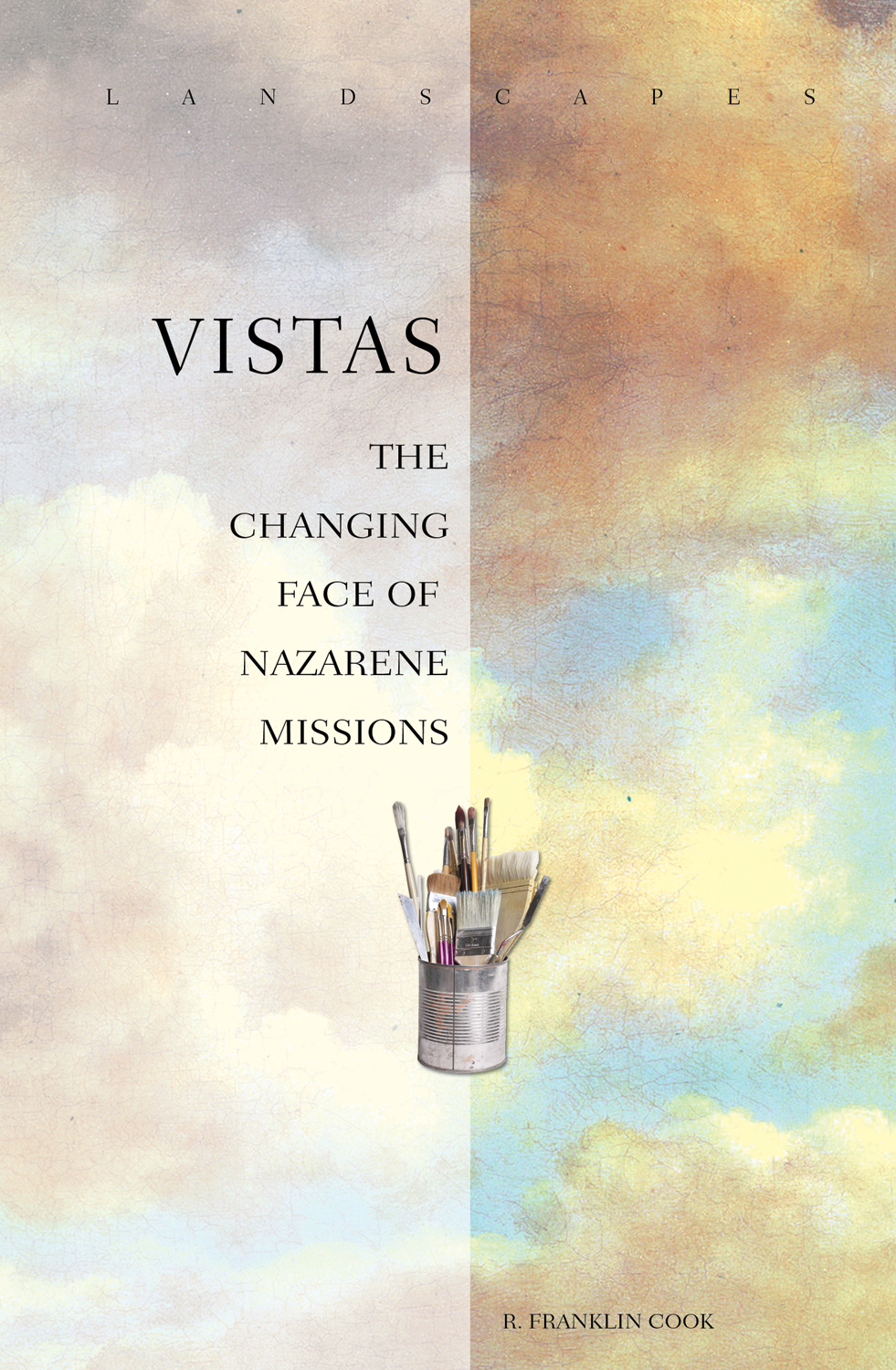
As with aviation, so it is with world missions. Amidst changes in how we carry out the mission, some principles have stayed the same. This is the message of Franklin Cook and five other veteran Nazarene missionary writers in the collection, Vista: The Changing Face of Nazarene Missions (Beacon Hill Press, 2009). Church planting movements and creative access missions are two of the new things that God is doing. Yet getting these efforts off the ground and keeping them aloft requires the “old fashioned” practices of prayer, discipleship, giving and education.

Some may argue that church planting movements are as old as the book of Acts, yet God does seem to be outdoing himself these days. Howie Shute describes the contours of a Nazarene Church Planting Movement (CPM) in Ethiopia, an exciting move of the Holy Spirit in our time. Growth happens most rapidly where focus is upon multiplication rather than addition. Shute emphasizes the necessity of passing along the “right DNA,” which means preaching and living holiness, churches planting churches in rapid succession and using local resources to get the job done (p. 48).

Continue reading “Keeping missions aloft in the winds of change”

Posted in sermons & addresses

Three questions, three answers: a message on divine healing (James 5:13-16)

A Note to the reader:

 This is an outline of a sermon on divine healing given by Dr Greg Crofford at the ANU University Church of the Nazarene on November 27, 2011. At the close of the sermon, he lead in a one minute moment of silence, inviting all present to search their hearts and see if there was any sin standing between themselves  and God and – if so – to confess it. Afterward, he invited those seeking healing (whether physical, emotional or spiritual) to come to the altar to kneel. Those requesting anointing were given the option of sharing with those gathered what the specific need was, allowing for more specific prayers. Dr Crofford and Rev. Gift Mtukwa then invited the “elders” of the church (leaders) to lay hands on the sick person, at which time either Mtukwa or Crofford made a small cross of oil on the head of the individual, anointing in the name of the Lord Jesus, followed by a prayer for full healing. Approximately thirty came forward for prayer and anointing that morning, some on behalf of others not present. (Healing by proxy occurred in the case of the centurion who asked for healing for his servant, though the servant was back at home – see Matt. 8:5-13).

The original sermon contained illustrations that have been taken out. Anyone using this sermon is encouraged to develop their own contextualized illustrations for the various points.

Sermon Title: “Three questions, three answers”

Text: James 5:13-16 (Read passage)

 I.   INTRODUCTION

Three questions, three answers – That’s what we find in the passage from James 5 that we just read together. That shouldn’t surprise us. James, after all, is a simple book, and a practical one. It addresses a range of everyday issues, like temptation, trials, listening before speaking, faith and deeds, compassion toward the poor, taming the tongue, wisdom, and submission to God.

And so here again at the close of the book, James raises practical issues. He quickly and simply addresses them as answers to questions. Let’s look one-by-one at those three questions:

1. Is any of you in trouble?

2. Is anyone happy?

3. Is any of you sick?

Continue reading “Three questions, three answers: a message on divine healing (James 5:13-16)”