Posted in Uncategorized

Working on book # 5

My wife sometimes reminds me:

You can’t edit a blank page.

As is often the case, she’s absolutely right.

Such maxims have encouraged me in the past and helped me move from “some day” to “now.” My doctoral thesis on prevenient grace was published in 2010. Next came a short book about hell, appearing in 2013. In 2014, I published a daily devotional book in French, then followed that up in 2016 with a book on the church’s mission. In case you’ve noticed, that puts me (more-or-less) on an every three years schedule for the writing of a new book. So, since 2018 is already half gone, here’s to kicking off the 2019 project:

Excellent Generosity: Ten Principles for Giving Living

The book is based on a Clergy Development seminar that I’ve given three times in Africa (Zimbabwe, Angola, and Kenya). All three times, it was very well-received. So, my intention is to expand each of the principles into one chapter of the book, with (of course) an introduction and conclusion to-boot. I hope to end up with something in the range of 100-110 pages, which is about what people seem willing to read these days.

As in the past, this blog will serve as the platform. Writing a chapter seems daunting; writing a blog post, less so. Here goes!


Posted in missions & evangelism, reflections

Solving the riddle of the 10-40 window

Lifeflight_Trust_Westpac_Rescue_Helicopter_-_Flickr_-_111_Emergency_(1)Warning: This post contains a graphic image that readers may find disturbing.


A father and his young son were driving down the highway. Suddenly, they suffered a terrible crash. The father was instantly killed, but his son survived. Severely injured, they helicoptered the boy to a nearby trauma center. As the medics rushed him into surgery to save his life, the trauma surgeon arrived, took one look at the victim, and concluded:

I can’t operate on him. He’s my son.

How can this be?

Maybe you’ve already figured out the solution to this riddle. (Pause reading if you need more time to think). The answer?

The surgeon was the boy’s mother.

Many people struggle to solve the riddle, even though female doctors have been commonplace for decades. The story illustrates that long ingrained patterns of thinking or assumptions about reality are not easily set-aside.

I’m an American missionary who has served for 22 years, mostly in Africa. I grew up in a Christian denomination that believes in missions, but until recently, “missions” always meant North America (or sometimes, the United Kingdom) sending missionaries “over there” to “the mission field,” i.e. Asia, Africa, South America, or remote islands. That missonaries were Westerners was an assumption, an ingrained way of thinking that we rarely openly acknowledged. But just like solving the riddle about the surgeon and the injured boy requires a new way of thinking, so solving riddles related to missions may require a new way of viewing the world and the role God wants us to play.

1040-window3

Take the so-called “10-40 window.” In the 1990s, missiologist Luis Bush dubbed the belt with the world’s most unreached people groups the “10-40 window.” It runs between 10 degrees and 40 degrees north latitude and contains countries in North Africa, the Middle East, and Asia that remain resistant and the most unreached with the Gospel.  Among these countries, Islam, Buddhism, and Hindu are the dominant religions.

The Joshua Project provides a rationale for this emphasis:

The focus of the Christian missions community 200 years ago was for the coastlands of the world. A century later, the success of the coastlands effort motivated a new generation to reach the interior regions of the continents. Within the past several decades, the success of the inland thrust has led to a major focus on people groups. Today, followers of Christ are concentrating their efforts on the unreached peoples of the world, most of which are in the 10/40 Window.

Missiologist Howard Culbertson promotes the 10-40 window idea as a way to encourage prayer for “a dying world” and “unreached people groups.”  Besides prayer, his website encourages readers to donate to missions efforts, to join groups that promote missions and to enlist others to catch a global vision.

Continue reading “Solving the riddle of the 10-40 window”

Posted in eschatology, sermons & addresses

What difference does the Resurrection make?

sunriseNote to reader: I preached this sermon on Sunday, April 1, 2018 at University Church of the Nazarene on the campus of Africa Nazarene University, Ongata-Rongai, Kenya.



Unless otherwise noted, all Scripture quotations are from the Common English Bible.

_________________________________________________________________________________________

Scripture reading: Acts 2:22-36 (CEB)

–prayer–

I. INTRODUCTION

Christ is risen! [He is risen indeed]. Several times today, we’ve repeated those words. But what would we say to a child who asks: “What difference does the resurrection make?” By the end of this messsage, we’ll know the answer to that question.

II. LIGHT ALWAYS FOLLOWS DARKNESS

Traditions have grown up around Easter that have little to do with the meaning of the day. The word “Easter” itself is of obscure origin. It may have come from an old English word referring to the goddess of Spring.

As a child, Easter meant wearing new clothes, a special outfit bought just for the day. Easter was also the day for the Easter Bunny who would deliver chocolates in a basket that we had to find hidden somewhere in the house. Or maybe there was an Easter egg hunt, children dashing about, looking for colored eggs.

These activities are fun for children but have little to do with the meaning of this day. And so instead of “Easter” we often now simply say “Resurrection Sunday.” For Christians, Resurrection Sunday is the surprise ending in a story that could have turned out much different, much darker. The joy and celebration of our living Christ is only meaningful when you linger at the foot of the Cross and behold the shame of a naked, lifeless Jesus. Only then does our Lord – clothed in glory and majesty, powerful and alive – stand magnificent in contrast. The bright light of Resurrection Morning is to us so precious because we have known the utter darkness of Holy Saturday.

And so here is the first answer to the question, “What difference does the Resurrection make?” It gives us hope that no matter how dark our lives may seem, light always follows darkness. The words of the song by Bill and Gloria Gaither ring true:

Hold on, my child!

Joy comes in the morning.

Weeping only lasts for the night.

Hold on, my child!

Joy comes in the morning.

The darkest hour means dawn

Is just in sight.

Christ is risen! [He is risen, indeed!]

Continue reading “What difference does the Resurrection make?”

Posted in reflections

He cares for me: Stories of God’s providence

The old saying rings true: “For those who believe, no explanation is necessary. For those who do not believe, no explanation will suffice.”

Nowhere is this more apparent than when discussing God’s providence. Merriam-Webster’s Dictionary defines “providence” as the “foresight and care which God manifests for his creatures.” This post will convince no skeptics, but for people of faith, you may find yourself nodding your head in agreement.

512px-WTC_New_York_1992_Sander_Lamme

On September 11, 2001, 2,763 individuals of various nationalities died when the Twin Towers collapsed following being struck by two commercial airliners commandeered by terrorists. Many have told stories of how they should have been there or on one of the commandeered planes, but for one reason or another, their plans changed that day. These included Patti Austin, who would have been on United Airlines 93 that crashed in Shanksville, Pennsylvania, fought over by heroic passengers who stormed the cockpit. Instead, Austin had changed her flight to a day earlier when she learned of her mother’s stroke. Champion Australian swimmer, Ian Thorpe, was on his way to the observation deck of the World Trade Center when he realized he’d forgotten his camera. He took a cab back to his hotel to retrieve it, then turned on the TV to see the horrific news of the first jetturned on the TV to see the horrific news of the first jet slamming into the North Tower.

I don’t want to get bogged down in the intricacies of the Open Theism debate, of whether and in what sense God knows the future. (For those who are interested, a good place to start is Gregory Boyd’s God of the Possible). In most instances of God’s providence, it’s enough to believe that God has a comprehensive knowledge of the present, and an ability to see the trajectory of events. Even this knowledge is more than sufficient for our loving God to act in favor of human beings.

If we were to know every instance in which God acted to avert tragedy in our lives, we would fall immediately to our knees in gratitude. When it comes to divine providence,  God’s intervention resembles the iceberg, where only a fraction is visible and the rest is hidden below the waterline. But that tip of the iceberg – the providences that we know about – is impressive enough.

Often when people ask how they can pray for our missionary work, we’ve responded by asking for protection during travel. Not surprisingly, both of my stories of God’s providence have to do with traveling in a vehicle.

Our first home assignment was in early 1997. We’d left Kansas City and were making good progress on a three day trip to Seattle. Pulling into Nampa, Idaho – where we planned to spend the night – I noticed that the car’s left rear tire was mostly deflated, so I pumped it up again and fueled the car for the next day. Coming out of the hotel the next morning, I was frustrated to see that the tire was deflated again. The bright side was that the crew at the Chevron station was efficient. They found a nail in the tire, patched it up, and in 45 minutes we were back on the road.

A few hours later, driving the south-north highway through eastern Oregon, conditions grew treacherous from a snowy winter whiteout. Authorities closed the highway, and we took shelter from the storm in a small diner. When the waitress came to take our order, we asked what was going on. “They closed the highway because of a pile-up,” she confided. Around 21 cars and trucks were involved, victims of the poor visibility and slippery roads. Upon further questioning, we discovered that the accident had occurred less than an hour ago. Suddenly, my nail in the left rear tire didn’t look like a curse; instead, it looked like a Godsend.

1024px-Car_wheel_round

Some years later, in 2002, we were on vacation in northern Togo. It’s a hilly part of the country, with steep grades in the road and treacherous drop-offs. While there are guardrails, they wouldn’t stand up to the rapid descent of an out-of-control truck or car. As we navigated yet another sharp turn coming down a mountain, I commented to my wife and sons:

This is one place you really wouldn’t want to lose your brakes.

A few minutes later, now on a straight-away, I tapped my brakes and was suprised when the pedal went to the floor! Gearing down, I managed to roll to a stop, then got out to see what was happening. The Toyota Forerunner’s brake line was ruptured, and the last of the brake fluid was bleeding out on the ground. It turns out (unbeknownst to us) that we had just completed the last of the sharp downhill curves. If my brakes had gone out 5 minutes earlier, who knows what sadder outcome might have been?

Jesus taught about God’s care for his creation. God clothes the grass of the field (Matthew 6:30) and knows when a sparrow falls to the ground (Matthew 10:29), so how much more does God care for us? The Lord even speaks of angels who watch over children (Matthew 18:10) and an angel of the Lord freed Peter from the jail where he awaited likely execution (Acts 12:6-19). These are just a few examples from Scripture of God’s loving care for his own, of his provision and protection.

One song that speaks eloquently of God’s care is Jimmy Owens’ “He Cares for Me.” The chorus reminds us:

His power is great and will ever endure.

His wisdom is peacable, gentle and pure.

But greater than all these glories I see

Is the glorious promise, that He cares for me!

Watch Daniel Choo sing a guitar cover of this song by clicking here.

What stories would you like to share of God’s care for you? Add them in the comment section.


Image credits

World Trade Center: By Sander Lamme (Own work) [CC BY 3.0 (http://creativecommons.org/licenses/by/3.0)%5D, via Wikimedia Commons

Tire: By Md.Mijanur rahman Mijan (Own work) [CC BY-SA 4.0 (https://creativecommons.org/licenses/by-sa/4.0)%5D, via Wikimedia Commons


Posted in sermons & addresses

God’s plan for marriage and sexuality

rings.jpgGenesis 1:27, 2:24

I. INTRODUCTION

The amazing thing about the Bible is that it addresses nearly every area of human life. Money? It’s in there. Death? There’s plenty about death in Scripture. Sickness? The Bible talks about it. Joy? Sadness? Friendship? Salvation? God talks about those, too. Today, let’s talk about a biblical topic that preachers often avoid. Today, let’s talk about marriage and sexuality.

II. MARRIAGE AND SEX: THE ORDER MATTERS

The first thing you’ll notice is the order. I could have said “sex and marriage” and that’s often how people address it. Sex first – our world says – and then maybe we’ll get around to marriage. But God’s plan is the other way around. Marriage is to precede sex.

In the Bible, the Song of Solomon is a celebration of sexual love. But notice it’s sex within a covenant, within the bond of marriage. It’s a bride and a groom longing for each other. Some want to overlook the obvious and make that book a parable of Christ’s love for the church, but I think that is reading the Bible backwards, imposing the New Testament upon the Old. Instead, the Song of Solomon should be seen for what it is, a long poem celebrating the God-given physical aspect of married love. So today, the Christian ethic draws on the Jewish ethic, and affirms that God made sex very good, so good that it is worth protecting as something sacred, and that’s exactly what the covenant of marriage does.

Continue reading “God’s plan for marriage and sexuality”

Posted in discipleship, reflections

Loving the world, forsaking the world

worldBurt Bacharach crooned: “What the world needs now, is love, sweet love. It’s the only thing that there’s just too little of.”

Jesus would have agreed. At the last supper before his arrest and crucifixion, he taught his disciples:

A new command I give you: Love one another. As I have loved you, so you must love one another. By this everyone will know you are my disciples, if you love one another (John 13:34-35, NIV).

The Lord was only asking them to do what his Father had already done. It was because God “so loved the world” that he sent Jesus (John 3:16). And Jesus in turn showed his love for the world, laying down his life for the world (John 1:29). It follows that what the Father and Son have done, we are called to do, loving the world in the power of the Holy Spirit.

Yet there’s an interesting tension in the New Testament books attributed to John. While there is a positive love of the world that fuels our service to God and others, there’s a negative kind of “loving the world,” one that chokes off our zeal for God and withers our concern for others. John warns:

Do not love the world or anything in the world. If anyone loves the world, love for the Father is not in them (1 John 2:15, NIV).

So which is it: Should we love the world or not? The answer is: BOTH.

Make no mistake: Our call is to love the world – all that God has made – wholeheartedly and unreservedly, in order that the world may be reconciled to God. We long for the day when heaven and earth will be one (Revelation 21:1-5). God has a loving concern for creation, the cosmos. What God has created, God longs to salvage and to renew. To this task God calls us, to partner with heaven to redeem the earth, including humans who have rebelled against God. If we do not love what God loves, how can we cooperate for its restoration?

Continue reading “Loving the world, forsaking the world”

Posted in Christology, Uncategorized

The Jesus question

768px-Circle-question-blue.svgThere are many intriguing questions in Christian theology, but one matters most. It’s the question Jesus asked his disciples:
Who do you say I am? (Matthew 16:15, NIV).

Simon Peter replied that Jesus is the “Messiah,” the “Son of the living God” (v. 15, NLT). This simple fisherman saw in Jesus of Nazareth the One anointed by God, the Christ. This confession of faith – Jesus as the Son of God – is the rock upon which Christ builds his church (v. 18).

It’s the Jesus question.

In math class, our teacher taught us to simplify fractions. Instead of 4/8 – she patiently explained – find the largest whole number that divides into both the numerator and the denominator. The anwer is 4, and when divided by that number, 4/8 becomes 1/2. It’s easier to work with simplified fractions.

What is true for fractions is true for theology. The Jesus question keeps us from getting lost in a maze of valid but ultimately less important questions; it simplifies things.

The Jesus question is helpful both corporately and individually:

Corporately — It’s a church, but is it a Christian church? Look past more complicated issues and determine what they think about Jesus. If a given church teaches that Jesus is both fully human and fully divine, if they believe that he is the Savior of the world and is himself God, that he died for our sins and rose again to reconcile us to God, then they clear the minimum bar. But if Jesus is in some way demoted or held to be a great teacher or prophet but not himself God, that church may be many things, but it is not Christian.

Individually — The Jesus question confronts each of us. Jesus wasn’t content to just know what the crowds were saying about him. He turned to his disciples and to us:

“But what about you?” he asked. “Who do you say that I am?” (v. 15, NIV)

We must decide who exactly this Jesus is, not only for others, but for us. Peter concluded: “You are the Christ, the Son of the living God.” Then he moved beyond words to action. He continued to follow Christ. For many of us, to respond positively won’t be a continuation of a journey but the beginning of a new one. To us and to all, Jesus says: “Follow me.”

Christian theology asks many questions. Theologians offer a wide variety of answers, but on the question of Jesus, voices unite. Only he is God’s eternal Son, God’s anointed, our hope for this life and the life to come. How have you answered the Jesus question?


Image credit: Wikimedia Commons


Posted in Advent & Christmas, sermons & addresses

7 Unusual Things About the Incarnation

Gospel_of_Luke_Chapter_2-1_(Bible_Illustrations_by_Sweet_Media)Note: I preached this short message in the chapel of Africa Nazarene University (Nairobi, Kenya) on December 13, 2017. Thanks to Chalé Atikonda, a BTh student at ANU, who heard the sermon and later suggested a further point, i.e. “an unusual task,” which I’ve added to this revised version.


Scripture reading: Luke 1:26-38

All Scripture citations are from the Common English Bible.

INTRODUCTION

“How should a King come?”

Jimmy and Carol Owens penned these words to the popular Christmas song:

How should a King come?

Even a child knows the answer of course;

In a coach of gold with a pure white horse.

In the beautiful city in the prime of the day,

And the trumpets should cry

And the crowds make way.

And the flags fly high in the morning sun,

And the people all cheer for the sovereign one.

And everyone knows that’s the way that it’s done,

That’s the way that a king should come.

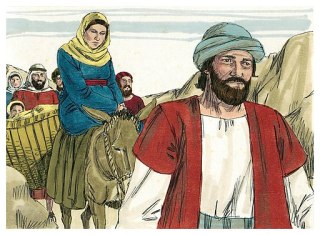
And yet the Gospel accounts of Christ’s coming to earth make it clear: God’s ways are not our ways. Today, let’s look at 7 unusual things about the Incarnation, based on Luke 1:26-38, the angel Gabriel’s announcement to Mary that she will give birth to a son.


FIRST, GOD SENT AN UNUSUAL MESSENGER.

The appearance of angels was hardly an everyday occurrence. This is implied when Gabriel says to Mary: “Fear not.” People aren’t afraid of everyday events, but when they’re rare, they might give you a scare. Here was God’s messenger coming to deliver stupendous news. The name “Gabriel” means “God is my strength.” Here was an unusual messenger, a mighty being sent by God, and Mary took notice.

SECOND, THE ANNOUNCEMENT CAME IN AN UNUSUAL PLACE.

If Nazareth were a Kenyan town, it might make the top 100 list, but somewhere at the bottom, nestled between Nambale and Tabaka. Then again, Nazareth might not make any list, for at the time, people said: “Can any good thing come out of Nazareth” (John 1:46). Wouldn’t it make more sense for a King to come to Jerusalem, the Nairobi of its day, the main commercial and economic hub? But God’s ways are not our ways.

Continue reading “7 Unusual Things About the Incarnation”

Posted in discipleship, parables, reflections

Swimming upstream

512px-Salmon_fish_swimming_upstreamQ – What do salmon, coho, and rainbow trout have in common?
A – They all swim upstream for reproductive purposes.

Biologists believe that odors of the home waters where they were spawned remain wired in their brain. Sciencing.com explains: “At maturity, they are instinctively drawn back to the place of their birth.”

These three species of fish hold a lesson for Christianity:

Reproduction requires swimming against the current.

Going with the flow is easier, but spawning the next generation of believers mandates a counter-cultural approach. We are upstream Christians in a downstream world.

The words of Paul to Titus have a timeless quality though they were written 1,900 years ago:

For the grace of God has been revealed, bringing salvation to all people. And we are instructed to turn from godless living and sinful pleasures. We should live in this evil world with wisdom, righteousness, and devotion to God, while we look forward with hope to that wonderful day when the glory of our great God and Savior, Jesus Christ, will be revealed. He gave his life to free us from every kind of sin, to cleanse us, and to make us his very own people, totally committed to doing good deeds (Titus 2:11-14, NLT).

They, too, were to be upstream Christians in a downstream world. In a society that was “evil,” Paul called Titus and the flock he shepherded to lead lives characterized by “wisdom, righteousness, and devotion to God.” Their attention was to remain hopefully focused on the future, the day of Christ’s return. Meanwhile, there was no place for idleness. In the same way the twelve-year-old Jesus insisted that he must be busy with his Father’s work (Luke 2:49), so Paul reminds Titus to commit himself to God’s good work in the world (v. 14).

What is striking about Paul’s advice to his young protégé is that living in an evil world never justified jumping out of the stream. Upstream fish remain in the stream but are strong enough to swim against it. To succeed in this counter-cultural feat, believers must remember three things:

1) Remember that our help comes from the LORD. Isaiah 26:3 reminds us:  “You will keep in perfect peace those whose minds are steadfast, because they trust in you” (Isaiah 6:3, NIV). The would-be crushing pressure from our surroundings must be matched by an internal spiritual force that pushes back. Andrés Filipe Arias knows this well. Caught up as a pawn in a geo-political chess game, this former Columbian Minister of Agriculture now sits in a Miami detention center. His petition for assylum in the U.S. hopelessly delayed, he faces 17 years of wrongful imprisonment if extradited to his home country. Such a force would have crushed many, but the husband of one and father of two has deep faith in God. When asked how he is coping, he replied: “I feel strong and at peace. Of course, every second I long for my home, my wife, and my kids. But I’ve learned to accept God’s will no matter how mysterious are His ways.” As to his sanity, he testifies that God sees to it.

2) Remember to swim together.  The salmon, coho, and rainbow trout swim upstream together. In the same way, resisting the downstream pull of our culture is best done when we stick together. This is the strongest argument for the church; there is strength in numbers. It’s no accident that it wasn’t a single Hebrew but three Hebrews brothers who together refused to bow before the idol of Nebuchadnezzar (Daniel 3:16-18). Ecclesiastes 4:12 (NIV) teaches that a “cord of three strands is not quickly broken.” Jesus calls us to be like the light set on a lampstand that draws people in from the darkness to the warmth of the light (Luke 11:33). We shine best when we shine collectively.

3) Remember to keep on loving. Being counter-cultural is no excuse for aloof disengagement. Jesus told of a time when evil would increase. What would be the result? “The love of most will grow cold” (Matthew 24:12b, NIV). Our love for God and for others is the ultimate measure of holiness (Mark 12:28-31). If our churches are shrinking, could it be that would-be seekers coming in from the cold – in the words of evangelist Charles “Chic” Shaver – never found enough love to keep them warm? What kind of “love” inscribes “all welcome” on the church sign but freezes people out once they step inside?

Like Paul and Titus, we live in a world that too often is evil, yet this is no excuse for downstream living. With the strength that comes from the Lord and banding together, followers of Christ model a different path, a better way. May our love never grow cold! Instead, let us open our arms wide to all, inviting people to join us and our Leader in this epic swim upstream.


Image credit: By Robert W. Hines, U.S. Fish and Wildlife Service [Public domain], via Wikimedia Commons


Posted in reflections

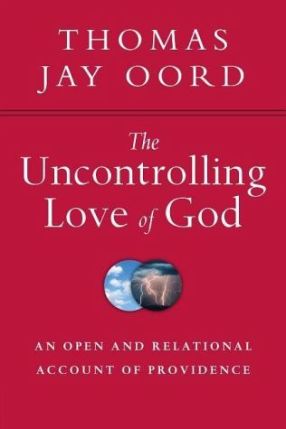
Oord’s Uncontrolling Love of God: A Critique

OordTom Oord’s The Uncontrolling Love of God: An Open and Relational Account of God’s Providence (IVP, 2016) has sold very well, including the Kindle version that has slept unread on my iPad for the past year. But now I’m teaching a course in contemporary theology, so the timing was good to read Oord alongside my students.

Let’s begin with what’s right with the book. First, Tom Oord is unafraid to tackle tough issues, and none is tougher than theodicy, what C.S. Lewis called “the problem of pain.” In the first chapter, he rehearses what anyone who has been a follower of Jesus for any length of time knows: Sometimes, God lets us down. What’s more, horrific things happen in our world, events that seem to defy our common understanding of God as both all-powerful and all loving. Oord’s timely and practical introduction draws the reader in.

A second positive aspect of The Uncontrolling Love of God is its down-to-earth style. You don’t have to be a trained philosopher to make sense of what he’s saying. Further, Oord has done a decent job of presenting biblical evidence to support his thesis, though it’s apparent he is more at home wearing his philosopher’s hat than his Scripture cap.

Which brings us to the question: What is his central idea? Oord explains:

God’s loving nature requires God to create a world with creatures God cannot control (Location 2001, Kindle edition)

The phrase “God cannot” is the hardest hurdle to clear, and Oord understands this. The reason he insists on using the phrase anyways is that the nature of love – according to Oord – is always non-coercive, or “uncontrolling.” Here Oord tries to carefully circumscribe the meaning of “coerce,” clarifying that it does not carry a psychological, violent, or bodily sense, only a “metaphysical” sense, meaning that – in such a scenario – God would “act as a sufficient cause, thereby wholly controlling the other or the situation” (Kindle location 2547).

I’m still reflecting on this central premise. I agree with Oord’s observation that if God can control in some circumstances in order to mitigate evil, then it becomes difficult to understand why God seems to stay quiet on the sidelines at other times (Kindle location 3000). Yet the biblical witness that God sometimes controls is too obvious to easily dismiss. For example, attempting to follow Oord’s model, I find it hard to believe that uncontrolling love alone can bring about the consummation of the Kingdom of God described at the close of the New Testament. In fact, Revelation makes clear that persuasive love alone will not be enough to reign-in the devil, the incorrigible enemy of God and all that is good. In overwhelming force – yes, coercion – Jesus will return and arrest the devil and his minions, casting them into a lake of fire (Rev. 20:7-10). This is a case where God in Christ will “wholly control the other or the situation,” to use Oord’s words. In fact, the spiritual warfare worldview as promulgated by theologian Gregory Boyd presupposes at least some form of coercion. This worldview is the default for nearly a billion of the world’s inhabitants that call Africa home, yet it seems not to register on Oord’s radar. Arguably, it is as much a challenge to his model as are miracles (addressed in chapter 8).

But let’s set aside the adjective “uncontrolling” and talk about the noun, namely, “love.” Throughout the book, Oord is critical of the Calvinistic penchant for making power (or sovereignty) God’s most important attribute. On the other hand, Wesleyan theologians often cite love as the essence of the divine being, and Oord is no different. But it may be asked:

Do we need to identify a single divine attribute that is most important? What purpose does such prioritization serve?

How would Oord’s project look different if — instead of beginning with love then building the superstructure of his argument upon that — he esteemed all God’s attributes equally, whether that be sovereignty, faithfulness, love, or a dozen other characteristics? Instead of looking at Philippians 2 and its kenotic interpretation as central, what if we rather saw that passage as only one piece of a much more complicated puzzle, one that also encompasses attributes seemingly opposed to love, such as wrath? In short, to identify love as the most important divine attribute is a judgment call. Some theologians will agree; others will decide on another attribute and reference his or her own proof texts. The only alternative is a far more ambitious project, to look at providence and the problem of evil in light of the various attributes of God’s character even if that means holding them in creative tension.

Tom Oord wrestles commendably with the problem of evil and suffering, yet he leaves out key Christological considerations, most importantly, the resurrection and the return of Christ. Without a future tense, theodicy is unsolvable. I wish Oord would be a little less philosophical theologian and a little more creedal theologian, for nested in the Apostles’ Creed are phrases that can give hope to every hopeless situation he eloquently describes in the first chapter of his book:

“On the third day he rose again.”

“I believe in the resurrection of the body and the life everlasting.”

The same comforts pastors provide at a Christian funeral should have something to say in a discussion of theodicy. Indeed, the resurrection is the peg on which the whole of the Christian faith is suspended. Arguably, it should also be the peg on which theodicy hangs. “Jesus rose. We too shall live.” The rest is details.

Where I think The Uncontrolling Love of God can help is with the non-believer for whom the resurrection might one day hold comfort (should they come to Christ) but who for now finds traditional theistic explanations of evil and suffering a deal-breaker. Oord’s book allows the reader to question whether what well-meaning Christians have told them about God and God’s ways is in fact completely accurate. I can see the book as facilitating a rethink for those who have concluded – through their experience – that God is either sadistic or non-existent.

The book’s weaknesses notwithstanding, I recommend The Uncontrolling Love of God. Even in the areas where the author and I disagree, it forced me to think about why I was disagreeing. That can only be healthy for any thinker who desires to plumb the depths of God and how God interacts with the creation.