When I was a boy and something broke, I’d take it to my dad. In my mind, he could fix anything. We’d go down in the basement to his work bench where we’d poke around in some of the boxes and containers. One tube of epoxy glue, one vice and 24 hours of patience later, whatever had been broken was as good as new.
Sometimes it’s not just objects that are broken. Sayings can be broken, too. Sometimes they can be fixed; other times, they’re beyond repair.
One of Israel’s favorite proverbs was broken and could not be fixed:
What do you mean by this proverb of yours about the land of Israel: ‘When parents eat unripe grapes, the children’s teeth suffer’? As surely as I live, says the LORD God, no longer will you use this proverb in Israel! (Ezekiel 18:2-3, CEB).
The proverb had become an excuse to shift blame. The rest of chapter 18 drives home the point that we must not blame our sins on those who came before us. Each of us is morally responsible before God as individuals.
Could what was true in Ezekiel’s day be true in ours? Is God asking us to jettison some sayings that have become counterproductive? Here are two that – like a dusty can of corn whose expiration date has passed – should be tossed in the trash, no longer fit for human consumption.
“I’m just a sinner saved by grace.”
God’s grace is an amazing thing! Without it, we would be lost (Ephesians 2:8-10; Titus 2:11). But in practice, we don’t read all the way to the end of the sentence. We get bogged down in the first four words, putting a full-stop where it doesn’t belong: “I’m just a sinner.”
The result is a sinning religion, a Christianity full of forgiveness but devoid of Christlikeness. We “get saved,” meaning that we’ve tucked our ticket for heaven in our wallet or purse for safekeeping. Now – so we think – we can do what we please. In theological terms, we may have been justified but we’ve stopped short of sanctification. The summit of the mountain lies ahead, but we’re satisified to camp out in the foothills.
Yet God invites us to climb higher. The lowlands of sin are behind us and there’s no turning back. Paul reminds the Corinthians that – while sin was a part of their past – it is no longer what they are about (1 Corinthians 6:9-11). And because of this, Peter insists: “You will be holy, because I am holy” (1 Peter 1:16, CEB).
“I’m just a sinner saved by grace” can be an entry ramp to the highway of spiritual compromise. It’s the travel companion of similar sayings like “I’m not perfect, just forgiven.” It rationalizes our sinful ways by conditioning us to live with a divided heart, forgetting that those who are double-minded are “unstable in all their ways” (James 1:8, CEB). Yet Christ calls us to a deeper life, one characterized by joyfully living into the ways of God. John Wesley called it “holiness of heart and life,” understanding that the very essence of holiness is love for God and others (Mark 12:28-34).
“Hate the sin, love the sinner.”
If love is the very essence of holiness, then we must address a second saying that claims to be loving. But is it?
Hate the sin, love the sinner.
The saying at a certain level sounds like Paul: “Love must be sincere. Hate what is evil; cling to what is good” (Romans 12:9, NIV). But can we ignore the repulsive effect that the “hate the sin, love the sinner” proverb has upon listeners? It is often in social media conversations around sexuality that well-intentioned Christians trot out the proverb, thinking all the while that they’re being graceful in doing so. But any communication has two parties, a transmitter and a receiver. Effective communication only happens when the message transmitted is accurately decoded by the listener in the way that the sender intended. And it is here that the breakdown occurs. The first phrase – “Hate the sin” – begins with the imperative, “Hate.” Like a flash-bang grenade tossed into the conversation, it deafens the listener to any words that follow. They never hear “love the sinner” because the only message they’ve received is that they are “the sinner” who is hated. If our objective is an evangelistic conversation, has the door just slammed shut?
Some have suggested reversing the words so that the saying becomes: “Love the sinner, hate the sin.” At least we then lead with love, not judgment. This seems closer to Jesus’ interaction with the woman caught in adultery (John 8:1-11). First, he pronounced words of love to her: “Neither do I condemn you” (11a, CEB). Then, he instructed her to abandon her wrongdoing: “Go, and from now on, don’t sin any more” (11b).
But I still wonder if the saying is beyond repair. Even if we lead with love by frontloading the words “love the sinner,” the proverb still has a whiff of smug judgmentalism about it. Phylicia Masonheimer asks:
Do we actually hate sin, or do we simply love judgment?
In “hate the sin, love the sinner,” the couplet “the sinner” comes across as clinical, like a medical journal article discussing “the patient.” It’s cold, aloof, and off-putting, like when a man talks publicly about “the wife.” What listener wants to have the verbal label “the sinner” taped on their chest? While it is theologically correct as a description of those who have not yet come to Christ (Romans 3:23, 1 John 1:10), we need God’s wisdom to know when is the right time as a relationship develops to speak of sin and its meaning. In our social media interactions, we forget that often we have not yet earned the right to speak at that deeper level, that many of our readers are still ripening to God through the action of prevenient grace. Our words will either stir up that grace or douse it. Experience tells us that whatever our intentions, the “hate the sin, love the sinner” proverb pushes people away. Isn’t it time for it to go?
Summing it all up
My dad was gifted at fixing broken objects. Sometimes when sayings are broken, they, too, can be mended. But there are other times when it’s best to just throw them out. The expressions “I’m just a sinner saved by grace” and “Hate the sin, love the sinner” are two such popular sayings, well-intended but counteproductive. May the Holy Spirit help us to be sensitive to these and other sayings that produce negative effects.
Maybe you were in some department store at a time when few were around. You could have taken the escalator going in the right direction, but what fun is that? So you looked down to make sure your shoe laces were tied, then stepped onto the rolling metal steps. You shifted into high gear, then started straining against the tide, pumping your legs at double-speed. Chances are you got some dirty looks along the way, but a minute later you raised your arms at the top in Rocky-like triumph:
You made it up the down escalator.
What you did was totally optional. After all, to make it to a higher level, you could have done what you usually do. You could have just taken the “up” escalator. But something strange has been happening lately. More escalators seem to be going down.
Marijuana? “Legalize its recreational use nationally,” some say, even though it is causing big problems for one state that already has.
Lesbian daughter? “Kick her to the curb until she straightens out. What would people at church think, after all?” (So now we have many homeless LGBTQ youth.)
These days, we seem to be flocking to the down escalators, dulling our senses, hardening our hearts and consciences, even as we sink to lower-and-lower levels. To buck the trend – to get to the next floor up – we’ll have to brush off an old skill:
We’ll need to gather our strength, steel our resolve, and walk up the down escalator.
The Bible can help. Paul reminds us in Romans 12:2 (NLT):
Don’t copy the behavior and customs of this world, but let God transform you into a new person by changing the way you think. Then you will learn to know God’s will for you, which is good and pleasing and perfect.
There are those who resist the tide. Former NFL star Keyshawn Johnson brought his son back home, pulling the talented player from the Nebraska football program. His reason? Keyshawn Jr. got distracted by university party life and was busted for marijuana. He forget why he was there in the first place, to excel at football. Fans applauded the unusual decision by a strict and caring dad.
Thankfully, some “up” escalators still function. Find them and use them; invite others to join you. Volunteer for Little League. Take your son or daughter along to visit an old friend at the nursing home. Make it a family activity to help pass out food at your church’s food pantry. There are many ways to keep your community’s “up” escalators well-oiled and in-service. In so doing, we’ll be modeling – as Rick Warren insists – that “it’s not about you.”
Sometimes your community’s “up” escalators are broken; all escalators are rolling downward. It’s decision time. When you exert yourself and walk up the down escalator, rest assured: You’ll get dirty looks. Pressure will mount for you to go with the flow. Don’t give in! Get enough people walking against the grain and someone’s bound to ask what happened to all the up escalators.
Meanwhile, don’t grow tired. Join with others who are going up and encourage each other. When you land at the top, thank the Lord, then have your moment of Rocky-like triumph, together.
It’s known as the country of hospitality, and for good reason. Living for 4 1/2 years (1999-2003) in the welcoming but scorching and malaria-ridden African nation of Benin was simultaneously a joy and a monumental challenge. We’ll forever be grateful that they took-in an American missionary family and – despite our failings – opened their hearts to us and loved us. We will always have Beninese soil in our shoes!
For all the positive memories of Benin that I treasure, one negative memory was a phrase we heard too many times to count:
Yovo, yovo, bon soir. Ça va? Cadeau!
Translation: “White person, white person, good evening. How are you? Give me a gift!”
It was a little sing-song that parents taught their children, what they apparently thought was a harmless ice-breaker. Every day Monday through Friday, I’d arrive at the church office to the enthusiastic greetings of a small group of neighborhood children. “Yovo, yovo, bon soir!” I knew they meant well, so I’d shake their hands and tell them:
It’s true, my skin is white, but I have a name. It’s Pastor Crofford. What is your name?
I’m a teacher, so I was confident I could gradually teach a proper greeting to a group of little boys and girls, and they responded well. No longer was I “yovo.” Little-by-little, they called me “Pastor.” But around town was a different story. Outside of restaurants? “Yovo, yovo, bon soir!” Walking down the street? “Yovo, yovo, bon soir!” Arriving at one of our new churches? “Yovo, yovo, bon soir!” And it wasn’t always just children; sometimes adults also called you “yovo.” I’d remind myself that it didn’t matter, not to be so sensitive. But when it’s happening for the 10th time in one day, it’s like a grain of sand in your shoe on a long walk. It might be small, but it starts to grate you. You begin to wonder:
Is the only thing about me that’s worth mentioning…my skin color?
Somewhere down in my soul, a seed of resentment quietly sprouted and took root. “You’re a Christian, a missionary no less!” I would preach at myself, but like fighting the Borg, resistance seemed futile.
One Sunday night we had a Bible study. Missionaries from various churches gathered at the house of an American diplomat. We always supsected that high-ranking U.S. Embassy personnel like “Rick” (not his name) lived in an involuntary bubble, but Rick confirmed our suspicions. He’d already lived in Cotonou for over a year. A week earlier, he’d been drafted to run in a 5k, representing the U.S. mission. We asked him how he’d done. He’d run well, but many had called out to him from the sides of the route, so he asked us:
What’s with this “yovo” thing?
We burst into laughter. We’d known about it since our first day in the country.
My wife, Amy, had a chance to chat with her adult English students, a dozen or so upper-class and well-connected Beninese. “What do you think of Benin?” they asked. She complimented them on the many things we liked, but got brave. “There is something you should change,” she remarked. “Get rid of the ‘yovo, yovo, bon soir’ chant. Ex-pats hate it.” It was an eye-opening moment for them. They thought the chant was welcoming; we saw it as a nuisance, a constant reminder that we were “other.”
Before we left the country a year later, we noticed fewer children were chanting it. When I visited Cotonou again four years later, the chant was gone!
Living in two West African nations for nine years forced me into a skin-color role reversal I never would have otherwise known.
In the New York state Erie Canal town where I attended school as a youth, African-American students – or “Negroes” as was commonly said then- were rare. Likewise, the college and seminary where I studied were almost entirely white. After seminary, I pastored a church in a Midwestern town that until 1948 had maintained two hospitals, one a well-equipped facility for white citizens and a separate (and inferior) hospital for black citizens. Our ministerial association had only white pastors, though there were some small all-black churches on the “other side of the tracks,” far away from our all-white churches.
My experiences in life until age 30 had been as a white person living in a white world. I had zero experience being in the minority. It’s hardly surprising then that I had no way to interpret the seemingly over-the-top comment of an African-American pastor who guest lectured in class one day. The only black man in the room speaking to a room full of white seminarians, he bravely observed (paraphrased):
Whether you acknowledge it or not, everyone in this room is at least somewhat racist. You can’t help it; that is the way you’ve been shaped by your white culture.
That was until I lived in West Africa. Only then, as a white raft adrift in a sea of black, did I have some appreciation of what it means to be perceived through the narrow lens of skin color. One of my Ivorian students admitted: “When we were little, our parents told us that when white people sleep, coins fall out of their ears.” I laughed! Maybe this was the tooth-fairy legend garbled? “No coins in my ears or on my pillow,” I assured him.
But when do seemingly harmless stereotypes mutate into something more sinister?
In the United States, white supremacist ideology is pernicious because it stubbornly rejects what God has revealed, that all human beings are created in the image of God (Genesis 1:27). It thrives on discredited notions of eugenics, that there are superior “races” and inferior “races” rather than a single race, the human race. Contrary to the Apostle Paul, who taught that we are “one in Christ Jesus” no matter our gender, our nationality, or whether we are slave or free (Galatians 3:28), the twisted thinking of racism conditions children to fixate on the minor differences that divide us rather than celebrating the major similarities that unite us.
Sometimes the seeds of discrimination are planted subtly. When I was five or six, I’d sometimes watch public television. (It was “Sesame Street” or a similar educational program.) Three colorful round shapes appeared on the screen, and one square one. The catchy jingle?
One of these things is not like the other. One of these things just doesn’t belong.
It’s only in retrospect that I’m appalled by the lesson since little boys and girls have no way to process it. How would I have felt if I were Bruce or his sister, Julie, the only two African-American students in my class of twenty-five at elementary school? The sub-text was clear: I’m not like the others, so I don’t belong.
This was public television, but shouldn’t Christian churches do better?
I loved my childhood church. At church, I learned many good things, including what it means to love God, but it’s not all that I learned. One adult, “Steve,” (not his name) would tell jokes at church at the expense of black people. His prejudiced yarns drew nervous chuckles from his grown-up listeners, but no one challenged him publicly.
Or how about the pastor who a few years ago – after a missionary service where they’d responsed well to the report of our work in Africa – walked us to the parking lot. He advised us to turn right out of the parking lot and not left. Why? “You’ll want to avoid the ‘bad part of town.’ ” The pastor drove off, but when he was out of sight, we turned left anyways, driving into the “bad part of town.” (It looked fine to us). For an hour, we enjoyed a tasty meal at a restaurant, the only white customers yet welcomed by the smiles of two dozen African-Americans who seemed to enjoy the food as much as we did.
Once, my fellow bank-teller during a lull in the drive-thru lamented (in all seriousness) that black men were “out to sleep with white women.” I mumbled a half-hearted protest, but uncomfortable, changed the subject.
Racism is pernicious because – like a crocodile – it lurks just below the surface of the human heart. You never know when it’s going to surface, clamp down on a victim and drag them under. Like the person who sees the splinter in the eye of her sister, not realizing the board she has in her own (Matthew 7:5), we must constantly bring ourselves before the Lord and ask God to examine our hearts, to “see if there is any offensive way in me, and lead me in the way everlasting” (Psalm 139:13, NIV). We must sing the old Methodist hymn: “It’s not my brother, not my sister, but it’s me, O Lord, standing in the need of prayer.”
When all your life you have been part of the majority group, it’s tough to put yourself in the shoes of the minority.
Yet if my experience in West Africa of being a minority teaches me anything, it reminds me that my “default” position should be to give credance to the complaints of minorities and not simply shrugging: “There they go again, playing the race card” or dismissing charges of prejudice out-of-hand as exaggerations.
Change came when the Beninese took our “yovo, yovo” complaint seriously, and started teaching their children a different way of interacting with expatriates. How about us, as white Americans? Are we willing to listen, to allow minorities to point out our blind spots, and to adjust our behavior accordingly? May we be willing to pray, as Jesus taught us: “Forgive us for doing wrong, as we forgive others…” (Matthew 6:12, CEV). And once forgiven, may God grant that we become the Lord’s agents of reconciliation.
It’s known as the country of hospitality, and for good reason. Living for 4 1/2 years (1999-2003) in the welcoming but scorching and malaria-ridden African nation of Benin was simultaneously a joy and a monumental challenge. We’ll forever be grateful that they took-in an American missionary family and – despite our failings – opened their hearts to us and loved us. We will always have Beninese soil in our shoes!
For all the positive memories of Benin that I treasure, one negative memory was a phrase we heard too many times to count:
Yovo, yovo, bon soir. Ça va? Cadeau!
Translation: “White person, white person, good evening. How are you? Give me a gift!”
It was a little sing-song that parents taught their children, what they apparently thought was a harmless ice-breaker. Every day Monday through Friday, I’d arrive at the church office to the enthusiastic greetings of a small group of neighborhood children. “Yovo, yovo, bon soir!” I knew they meant well, so I’d shake their hands and tell them:
It’s true, my skin is white, but I have a name. It’s Pastor Crofford. What is your name?
I’m a teacher, so I was confident I could gradually teach a proper greeting to a group of little boys and girls, and they responded well. No longer was I “yovo.” Little-by-little, they called me “Pastor.” But around town was a different story. Outside of restaurants? “Yovo, yovo, bon soir!” Walking down the street? “Yovo, yovo, bon soir!” Arriving at one of our new churches? “Yovo, yovo, bon soir!” And it wasn’t always just children; sometimes adults also called you “yovo.” I’d remind myself that it didn’t matter, not to be so sensitive. But when it’s happening for the 10th time in one day, it’s like a grain of sand in your shoe on a long walk. It might be small, but it starts to grate you. You begin to wonder:
Is the only thing about me that’s worth mentioning…my skin color?
Somewhere down in my soul, a seed of resentment quietly sprouted and took root. “You’re a Christian, a missionary no less!” I would preach at myself, but like fighting the Borg, resistance seemed futile.
One Sunday night we had a Bible study. Missionaries from various churches gathered at the house of an American diplomat. We always supsected that high-ranking U.S. Embassy personnel like “Rick” (not his name) lived in an involuntary bubble, but Rick confirmed our suspicions. He’d already lived in Cotonou for over a year. A week earlier, he’d been drafted to run in a 5k, representing the U.S. mission. We asked him how he’d done. He’d run well, but many had called out to him from the sides of the route, so he asked us:
What’s with this “yovo” thing?
We burst into laughter. We’d known about it since our first day in the country.
My wife, Amy, had a chance to chat with her adult English students, a dozen or so upper-class and well-connected Beninese. “What do you think of Benin?” they asked. She complimented them on the many things we liked, but got brave. “There is something you should change,” she remarked. “Get rid of the ‘yovo, yovo, bon soir’ chant. Ex-pats hate it.” It was an eye-opening moment for them. They thought the chant was welcoming; we saw it as a nuisance, a constant reminder that we were “other.”
Before we left the country a year later, we noticed fewer children were chanting it. When I visited Cotonou again four years later, the chant was gone!
Living in two West African nations for nine years forced me into a skin-color role reversal I never would have otherwise known.
In the New York state Erie Canal town where I attended school as a youth, African-American students – or “Negroes” as was commonly said then- were rare. Likewise, the college and seminary where I studied were almost entirely white. After seminary, I pastored a church in a Midwestern town that until 1948 had maintained two hospitals, one a well-equipped facility for white citizens and a separate (and inferior) hospital for black citizens. Our ministerial association had only white pastors, though there were some small all-black churches on the “other side of the tracks,” far away from our all-white churches.
My experiences in life until age 30 had been as a white person living in a white world. I had zero experience being in the minority. It’s hardly surprising then that I had no way to interpret the seemingly over-the-top comment of an African-American pastor who guest lectured in class one day. The only black man in the room speaking to a room full of white seminarians, he bravely observed (paraphrased):
Whether you acknowledge it or not, everyone in this room is at least somewhat racist. You can’t help it; that is the way you’ve been shaped by your white culture.
That was until I lived in West Africa. Only then, as a white raft adrift in a sea of black, did I have some appreciation of what it means to be perceived through the narrow lens of skin color. One of my Ivorian students admitted: “When we were little, our parents told us that when white people sleep, coins fall out of their ears.” I laughed! Maybe this was the tooth-fairy legend garbled? “No coins in my ears or on my pillow,” I assured him.
But when do seemingly harmless stereotypes mutate into something more sinister?
In the United States, white supremacist ideology is pernicious because it stubbornly rejects what God has revealed, that all human beings are created in the image of God (Genesis 1:27). It thrives on discredited notions of eugenics, that there are superior “races” and inferior “races” rather than a single race, the human race. Contrary to the Apostle Paul, who taught that we are “one in Christ Jesus” no matter our gender, our nationality, or whether we are slave or free (Galatians 3:28), the twisted thinking of racism conditions children to fixate on the minor differences that divide us rather than celebrating the major similarities that unite us.
Sometimes the seeds of discrimination are planted subtly. When I was five or six, I’d sometimes watch public television. (It was “Sesame Street” or a similar educational program.) Three colorful round shapes appeared on the screen, and one square one. The catchy jingle?
One of these things is not like the other. One of these things just doesn’t belong.
It’s only in retrospect that I’m appalled by the lesson since little boys and girls have no way to process it. How would I have felt if I were Bruce or his sister, Julie, the only two African-American students in my class of twenty-five at elementary school? The sub-text was clear: I’m not like the others, so I don’t belong.
This was public television, but shouldn’t Christian churches do better?
I loved my childhood church. At church, I learned many good things, including what it means to love God, but it’s not all that I learned. One adult, “Steve,” (not his name) would tell jokes at church at the expense of black people. His prejudiced yarns drew nervous chuckles from his grown-up listeners, but no one challenged him publicly.
Or how about the pastor who a few years ago – after a missionary service where they’d responsed well to the report of our work in Africa – walked us to the parking lot. He advised us to turn right out of the parking lot and not left. Why? “You’ll want to avoid the ‘bad part of town.’ ” The pastor drove off, but when he was out of sight, we turned left anyways, driving into the “bad part of town.” (It looked fine to us). For an hour, we enjoyed a tasty meal at a restaurant, the only white customers yet welcomed by the smiles of two dozen African-Americans who seemed to enjoy the food as much as we did.
Once, my fellow bank-teller during a lull in the drive-thru lamented (in all seriousness) that black men were “out to sleep with white women.” I mumbled a half-hearted protest, but uncomfortable, changed the subject.
Racism is pernicious because – like a crocodile – it lurks just below the surface of the human heart. You never know when it’s going to surface, clamp down on a victim and drag them under. Like the person who sees the splinter in the eye of her sister, not realizing the board she has in her own (Matthew 7:5), we must constantly bring ourselves before the Lord and ask God to examine our hearts, to “see if there is any offensive way in me, and lead me in the way everlasting” (Psalm 139:13, NIV). We must sing the old Methodist hymn: “It’s not my brother, not my sister, but it’s me, O Lord, standing in the need of prayer.”
When all your life you have been part of the majority group, it’s tough to put yourself in the shoes of the minority.
Yet if my experience in West Africa of being a minority teaches me anything, it reminds me that my “default” position should be to give credance to the complaints of minorities and not simply shrugging: “There they go again, playing the race card” or dismissing charges of prejudice out-of-hand as exaggerations.
Change came when the Beninese took our “yovo, yovo” complaint seriously, and started teaching their children a different way of interacting with expatriates. How about us, as white Americans? Are we willing to listen, to allow minorities to point out our blind spots, and to adjust our behavior accordingly? May we be willing to pray, as Jesus taught us: “Forgive us for doing wrong, as we forgive others…” (Matthew 6:12, CEV). And once forgiven, may God grant that we become the Lord’s agents of reconciliation.
James writes that our life is but a vapor, here today, gone tomorrow (James 4:14). Life’s brevity means that we can’t experience everything, even if you give full-time to your “bucket list.”
There is so much to learn, and so little time.
While I’ve been able to experience some things in my life that others will never experience – such as living as a missionary in four different African nations – what one chooses necessarily precludes other choices. There are other paths unchosen that I’ll never walk, even if I had the aptitude early on to do so.
I will never…
-Pilot a 747, though as a boy I thought I would become a pilot and was fascinated by jets;
-Be a bank officer, though I’ve been a teller more than once and was eyed by management for promotion;
-Work as a medical doctor, though I was in the top 3 of my zoology class as a college freshman;
Obedience to God’s calling on my life has led me in a different direction. I married, went to seminary, pastored a church, had children, then went overseas as a missionary educator. I’d do it again in a heartbeat.
Yet one of the dangers of specialization is the death of a wider curiosity.
As a theological educator, most of my reading is given to religious topics. I can read entire books on theological subjects that fascinate me but that would seem esoteric to you. How many people, after all, care much about the soteriological implications of the eschaton? (Eschatology – the doctrine of “last things” – is high on my list, and I’ve even written a book about hell). Someone once defined doing doctoral research as “learning more and more about less and less.” There’s some truth to that!
With the advance of knowledge, specializaton seems unavoidable. In the 15th century, Leonardo da Vinci (1452-1519) had the reputation of being a “universal man.” Benjamin Franklin (1706-1790) was similar; both had broad interests, expertise, and accomplishments in multiple fields. But in the 21st century, it’s hard to find anyone who has an encyclopedic knowledge like theirs. Too many additional volumes are in the encyclopedia now, too many “hits” from a simple Google search.
The downside of specialization – no matter what your field of study – is that a kind of glaucoma can set in, an intellectual narrowing of the field of vision.
So while I can have a stimulating conversation at a meeting of a theological society, what do I say when I sit on a plane next to a fellow passenger who is a supply chain manager, a physical therapist, or a gay activist? We live in different worlds. Rather than engage the conversation, I might choose to watch a movie or read my book about John Wesley. It’s a safe choice, but there’s no connection. Community suffers.
Yet specialization need not mean the death of a broader curiosity. With a healthy curisoity comes the ability to interact fruitfully with people from various walks of life. To this day, I will sometimes read about airplanes, follow financial news, or learn something new about biology. Though I didn’t walk down the career path of pilot, banker, or medical doctor, when I need a break from theology, I’ll dip my toe in another pool.
Curiosity is the mother of learning. Here are a three practical ways to cultivate curiosity:
1. Get a liberal arts education. I’m part of a denomination that sponsors multiple liberal arts universities. (Full disclosure: I teach at one, Africa Nazarene University). Though I was a religion major in undergrad, Eastern Nazarene College required me to take a number of “core” courses including World Literature, Living Issues, Intro to Math, Arts and Music, and General Psychology. This helped me situate the “tree” of my own discipline (religion) within a broader “forest” of knowledge. Even if what I gained was just general knowledge about various subjects, I at least knew where to start if ever I wanted to dig deeper. Because of a liberal arts education, I’m more likely to ask good questions from specialists if I want to know more. That makes for human connection.
2. Listen to others with opposing viewpoints. One of my life’s guiding principles is this:
You may not be convinced by the other side, but the discipline of curiously probing why others draw different conclusions than you do will help us avoid demonizing the “other.” Curiosity helps us co-exist, even if sometimes we must “agree to disagree.”
Ours is a world of specialization. While mostly a blessing, let us not become so narrow that broad-based curiosity dies. Let us keep cultivating a healthy curiosity so that – while we may never totally agree with one another – at least we can understand each other. Then maybe, just maybe, we can live together in peace.
They say fewer American teenagers have a driver’s license now, but for me and my agemates, it was a rite of passage. I vividly recall heading with my dad to a rural road west of Rochester, NY. He pulled the Chevy to the right shoulder, parked, then switched seats with me. It was one thing to pass a 20 question, multiple-choice exam for a learner’s permit. Now, it was time for introductions: “Theory, meet practice.”
You’ve deduced that I acquitted myself well that day in June. After all, I’m typing this! Yet that experience was just the beginning of a months-long driving mentorship with my father. There were dozens of pieces of driving advice, good practices that over time have for me became good habits, second-nature.
One of those lessons endures: Watch out for the blind spot. Seasoned drivers know that cars overtaking in the left lane disappear for a few seconds from your side-view mirror. If they’re in the blind spot – that invisible zone – you might slam into them when changing lanes.
Blind spots happen not only to drivers; they happen to believers. Acts 10 is a story of a blind spot. The religious narrative in which Peter and company were raised had shaped the way they viewed the world. In their day, there were only two categories of people: those who were chosen and those who were not. There was the People of God, aka the Jews, and those who were not the People of God, everyone else, the so-called Gentiles.
When Peter accepted Jesus as the anointed one of God, confessing him as “the Messiah, the son of the living God” (Matthew 16:16, NIV), he was acknowledging Jesus as the long-awaited deliverer of the Jewish people. But what Peter did not perceive – his blind spot, if you will – was that this Christ was more than a national Savior; he was the Savior of all humankind. It took a divine revelation on a rooftop in Joppa – a command to kill and eat animals which the Mosaic law called “unclean” – for God to correct his faulty vision.
Peter followed the messenger and arrived at the house of Cornelius, a God-fearing Gentile centurion. When Cornelius and his household decided to follow Jesus, the Holy Spirit fell upon them. Later in Acts 15:9, Peter testified to his incredulous brothers gathered at the Council of Jerusalem:
He made no distinction between us and them, but purified their deepest thoughts and desires through faith (CEB).
There was a longstanding way that they had interpreted Scripture which made it difficult for them to see something new that God wanted to do in the world. In short, they had a blind spot until the Holy Spirit in a disturbing vision performed worldview surgery on Peter.
In the same way, God has sometimes needed to correct my vision. He has used individuals to help me see what I could not see before. As a student at Eastern Nazarene College, Prof Helen Garretson taught abnormal psychology. She returned a report I’d written and deducted points for my use of non-inclusive language. Before that day, I had no idea what the term “inclusive language” even meant! But she took the time to explain that speaking of the human race as “man” excluded half of human beings, while writing “humankind” or “humanity” included females and so empowered them, too. Honestly, at first I thought she was nitpicking; I resisted the change. Yet in conversations with my female classmates, I discovered that Prof Garretson was not alone in her viewpoint. Reluctantly, I changed how I used the English language and now have eyes for a gender equality issue to which before I had been oblivious.
Lasik surgery to correct faulty vision
Among evangelicals, tokenism is another blind spot. If there’s a gathering of church leaders with ten speakers, how often will the program include a 9:1 ratio of male to female speakers? We may be sensitive to how publicity brochures will look if they feature slick photos of all men, but rather than fixing the deeper systemic issue, do we avoid criticism by inviting the token woman? Never mind that qualified women whom our Universities and Seminaries have educated struggle to find even a small church where they can fulfill their pastoral calling.
Both of these examples speak to whether we really believe Galatians 3:28:
There is neither Jew nor Gentile, slave nor free, nor is there male and female, for you are all one in Christ Jesus (NIV).
Here in Kenya, tribalism is another manifestation of blind spots. In 2007, violence erupted following a nationwide election, resulting in the death of more than 5,000 victims. In a recent chapel service, our assistant chaplain directed us to join hands in prayer for peace. As I looked across the room at brothers and sisters with hands clasped in prayer, I no longer saw Kikuyus, Merus, Luyas, Luos, Kambas or Americans. Rather, we were simply worshipers of God, united in Christ and our desire for peace as we anticipate a new round of elections.
In the 19th century United States, we had our own more severe form of tribalism, a deep-seated hatred nurtured through two hundred years of slavery. Those of European descent had long indentured those forcibly removed from Africa. We as a people rationalized a great evil, even as Christian preachers cherry-picked Scripture verses to justify the servitude of black men, women, and children. Even the 13th Amendment of the U.S. Constitution for purposes of representation to Congress counted a slave as only 3/5 of a human. God had to take our nation and its leaders up on a Joppa rooftop to perform painful worldview corrective surgery. Thousands of Civil War casualities shook us to our core, letting us finally see things in a new way. Old prejudices began to wither, a process that sadly is still far from complete.
As we think about blind spots, it pays to remember: Blind spots produce victims. Like the driver who changes lanes and crashes into the fellow motorist she couldn’t see, our blind spots can do serious damage. From the unplaced would-be female pastor who throws in the towel, to the grass that gets trampled when the proverbial African elephants fight, there is always a human price exacted. I wonder:
What other persistent blind spots might we as Christians have individually and collectively, blind spots that are taking a human toll?
Driving is a fine art. There are many lessons to learn to become a good driver; I’m thankful that my dad took the time to mentor me. Knowing there’s a blind spot in a side-view mirror still helps me avoid accidents. In the same way, let us pray that the Holy Spirit will reveal our blind spots, doing for us what God did for Peter. May we like Peter not resist rooftop visions, always open to God ‘s corrective worldview surgery. Clearer vision is worth it.
Lasik eye surgery: By Peretz Partensky from San Francisco, USA (Lasik : Laser Eye Surgery) [CC BY 2.0 (http://creativecommons.org/licenses/by/2.0)%5D, via Wikimedia Commons
The Bible cares about economics. A search for words like “rich,” “poor” or “money” yields dozens of verses. Why is it, then, that pulpits so rarely sound off on this important theme?
Many know the line from the Lord’s Prayer: “Give us today our daily bread” (Matthew 6:11, NIV). Yet Jesus was merely echoing a saying from Augur in Jewish wisdom literature:
Keep lies far away from me. Don’t make me either rich or poor, but give me only the bread I need each day (Proverbs 30:8, NIRV).
The church today is faced with dual dangers, that of too much emphasis upon riches or a too-easy surrender to poverty. Let’s take a look at both.
The danger of wealth
A Seminary professor asked his students to think about a time when they had to depend upon God. One student observed: “We don’t need God. We have savings accounts.”
The Bible has nothing against saving. Joseph, after all, saved the world from famine by maintaining a food bank (Genesis 41:46-49). Likewise, Proverbs 6:6 extols the industriousness of the ant and encourages us to be busy in the same way. Yet Jesus recognized the subtle danger of putting our trust in our riches rather than in God, of being a rich fool who is materially well-to-do but spiritually destitute (Luke 12:16-21). He cautioned that it was easier for a camel to go through the eye of a needle than for a rich person to enter God’s kingdom (Matthew 19:24, Mark 10:25, Luke 18:25).
Proverbs 30:9a (NLT) underscores the danger of riches:
For if I grow rich, I may deny you and say ‘Who is the LORD? (NLT).
Seneca once observed: “It is not the man who has too little, but the one who craves more, that is poor.” This reflects the teaching of Paul in 1 Timothy 6:8, advising us to be content with food and clothing. It is eagerness for money that leads us away from faith (6:10).
The danger of poverty
Yet if riches present one spiritual danger, poverty is another. Augur’s saying concludes with the adviso:
And if I am too poor, I may steal and thus insult God’s holy name (Proverbs 30:9b, NLT).
For those who have grown up comfortably middle class, it is difficult to appreciate the spiritual danger that poverty presents. When David says that he has never seen the children of the righteous begging bread (Psalm 37:25), I conclude that David lived a sheltered life. As a missionary who has lived in four African nations, I’ve seen my share of poverty, and it is no respecter of persons. There are many God-fearing people who struggle to make ends meet, despite working from dawn to dusk.
A coziness with poverty, unfortunately, is deterring African youth from vocational Christian ministry. Young people who otherwise would answer God’s call to full-time service in the church resist because they have seen the grinding poverty of pastoral families. This condition is worsened by a “poverty gospel,” the church’s mistaken notion that a poor pastor is a more spiritual pastor. Disobedience in the giving of tithes and offerings is thus rationalized.
Some justify the church’s neglect of poor people by citing Jesus’ observation: “The poor you will always have with you” (Mark 14:7a). Yet this citation ignores other teachings of Jesus, most notably the parable of the rich man and Lazarus (Luke 16:19-31). The parable is misused when we mine it for truth about the afterlife. Rather, it is a cautionary tale about the haves neglecting the have-nots. Jesus calls us to alleviate the conditions of the poor, not to close a blind eye.
God’s solution: mutual assistance
The solution to poverty appears in Acts 2:44-45. Long before the principle of “pay it forward” became popular through the 2000 Haley Joel Osment film, the first Christians in Jerusalem put it into practice. The concept is simply: Today, I have a need and you help me. Tomorrow, a third person has a need, and I will help her. Poverty does not honor God; generosity is the remedy. Such generosity is needed not only in our private lives but also in our public policy. God’s solution is neither dependence nor independence. Rather, the Gospel calls us to interdependence both spiritually and materially.
Summing it all up
The wise man, Augur, traces a middle-way between the danger of riches on the one hand and poverty on the other. Both riches and poverty can be a stumbling block spiritually. Let us beware false teachings that result in one error or the other. Instead, may we foster an interdependence that honors God.
Nigerian Chinua Achebe (1930-2013) was a giant among African novelists. Winner of the 2007 Man Booker International Prize – just one of many literary awards he received – Achebe is best known for his first novel, Things Fall Apart (1958), which as of 2008 had been translated into fifty languages.
As an American missionary who has lived for nearly 2 decades in four sub-Saharan African nations, I was anxious to see how Things Fall Apart would portray the interaction between his main character, Okonkwo (a rising leader among the Ibo of eastern Nigeria) and Western missionaries. It is here that Achebe succeeds by developing the contrast between Mr Brown, a gentle, listening missionary, and Mr Smith, a strident character who has no time to discover the religious worldview of the locals.
The strength of the book, however, is not in the final 1/3 but in the first 2/3. The reader is drawn into Okonkwo’s world with all its joys and messiness. The husband of three wives, he rules over his family with firm patriarchy, overachieving in-part because his own late father had been a good-for-nothing. Yet his world where eveyone has a role to fill and does so is spoiled when Okonkwo must acquiesce to a dark deed against his adopted son, Ikemufuna, accelerating his estrangement from his biological son, Nwoye, who later joins the Christians.
Things Fall Apart – though a novel – provides a fascinating study of the role of ancestors in the daily life of the people. Many Americans (with the possible exception of Mormons) can only trace their family tree back 2 or 3 generations. Our eyes are constantly on the future, the latest cell phone app or product innovation. Some wear the label “progressive” as a badge of honor. Yet Okonkwo symbolizes a conservative way of life, the communal backward glance over the shoulder, where existence is meaningful because one is part of an ongoing story that stretches back centuries. (The closest we’ve come as Westerners to appreciating this sub-Saharan African worldview is the 1970s TV miniseries, Roots).
Achebe catches the little details of life. It may be the portion of kola nut that a host lets fall to the ground, an offering to the ancestors who must eat before one’s guests do. Or it may be the egwugwu , the nine masked village men who represent the spirits of the ancestors and render judgment in disputes. In these ways and more, the ancestors are still part of the present life of the community. They are not dead and gone; rather, they are the living dead.
I experienced this outlook one day in a small village in southeastern Benin. We had purchased a small plot of land to build a church and it was time to sit with the owner and seal the deal. Not wanting to buy alcohol for the occasion (our church is teetotalling), they graciously accepted softdrinks instead. As we sat around the circle, the owner opened his softdrink with his teeth, then poured out a small amount on the ground, an apparent libation to his ancestors.
The challenge for Christians is how to bring together two worldviews without compromising the integrity of Christian orthodoxy. Where does one draw the line? Can we legitimately honor the example of ancestors without veering into the dubious territory of imploring their favor? Hebrews 11 is one example of how this might be done, paying respect to them for how they remained faithful to God. At the same time, one cannot maintain a shrine to them or “personal gods”- as Achebe’s Okonkwo does – for surely this is to divinize the ancestors, a directly violation of Exodus 20:30:
“You must have no other gods before (besides) me” (CEB).
It’s easy from a distance to be critical of ancestor worship, forgetting that sometimes we Western followers of Christ have been guilty of treading close to this line. Larnelle Harris sings these words in his song, “Friends in High Places“:
v. 1 – I’ve got hope when things look bad And I can smile when I should be sad I’ve got friends who lift me up when I’m feeling low And they watch over me wherever I may go
Chorus
I’ve got friends in high places So high but not so far away I’ve got friends in high places And I’m gonna be with them someday
How is the theology of these lyrics much different than Nigerians or Zambians invoking ancestors to protect and bless a family? Larnelle Harris’ song seems to be a misapplication of Hebrews 12:1 and the “cloud of witnesses” theology.
But back to Africa. Achebe’s novel was written in 1958, set in rural Nigeria. I wonder if the ancestral worldview is as dominant in urban Africa in 2017 where the Westernizing influences of social media are shaping new generations? Cultures change, and Africa is hardly immune.
Whether you’ve been to Africa or live elsewhere in the world, Achebe will help you move beyond the stereotypes of Africa that (unfortunately) are still all too common. For curing misconceptions, Chinua Achebe’s Things Fall Apart is a potent antidote and a reminder that all cultures have both merits and blindspots.
I preached this sermon at University Church of the Nazarene (on the campus of Africa Nazarene University, outside Nairobi, Kenya) on June 4, 2017.
Text: Acts 2:1-13
Introduction
Everyone was excited about the Feast of Weeks. They called it Shavuot, or Pentecost. They counted them down with anticipation. From Passover to the giving of the Ten Commandments at Mt Sinai — count ’em: 7 weeks, 50 days. And so from all over the Mediterranean basin and beyond, Jews who had scattered descended upon Jerusalem for a 2 day celebration. It was party time!
A surprising twist
Do you like surprises? On Pentecost, God did something surprising, something these Jewish pilgrims could not have expected. Now, the 120 gathered praying in the Upper Room knew what Jesus had said. Just before he ascended to heaven, the Lord had promised:
In a few days you will be baptized with the Holy Spirit (Acts 1:5, CEB).
But the visitors to Jerusalem knew nothing of Jesus’ promise.
When the wind blew, when the Holy Spirit descended, when the fire lit over the heads of the 120, when they heard them speaking their languages, miraculously empowered by God, the crowds were amazed. Some thought they were drunk, even though it was only 9 a.m.!
The rest of Acts 2 records Peter’s sermon. You might call it a birthday sermon. No, it wasn’t Peter’s birthday, but if was the birthday of the Church.
3 Lessons from Pentecost
Today is Pentecost Sunday. It’s the day on the Christian Calendar when churches around the world commemorate the coming of the Holy Spirit on that day so long ago. Red is the traditional color of Pentecost, symbolizing the fire of the Holy Ghost. Pentecost sometimes is overlooked. It may seem less important than Christmas (the Festival of the Incarnation) or Easter (the Festival of the Resurrection). Yet Pentecost Sunday is foundational for our faith, especially for our life together as the Church, the People of God. As we consider Acts 2, let’s look together at 3 lessons from Pentecost:
I preached this sermon in the chapel of Africa Nazarene University (main campus) on Tuesday, May 23, 2017. It was the first time I’ve preached an entire message on the topic of Christian social justice. Feel free to leave feedback in the comments.
N.B. – All verses are from the New International Version (NIV), unless otherwise noted
“Holy Discontent”
But let justice roll on like a river, righteousness like a never-ending stream (Amos 5:24, NIV).
One day a farmer worked in his field along the banks of the Congo River. He looked out over the river and a saw man struggling in the water, crying out: “Au secours!” (Help me). Quickly, the farmer dove in the water and rescued the drowning man, towing him to shore. By now, villagers had gathered round to see what all the noise was about. Soon, they saw many others flailing in the water. The villagers – moved with compassion – pulled person after person from the river. It wasn’t long before everyone was exhausted. Finally, a little boy spoke up:
I’m glad we’ve saved all these people from drowning, but I wonder: Who upriver keeps pushing these people in?
Amos saw the poor of his day and had compassion on them. But there came a time – moved by God – when he got tired of dealing just with symptoms. He was ready to raise his voice about the cause.
Of all people, Amos was an unlikely candidate to be a prophet. If he were alive to day in Kenya, he might have been a Maasai carrying his rungu, herding cows. Amos was a shepherd, likely with little education. He lived in the backwater town of Tekoa, not far from Jerusalem. The year was 760 B.C. and there was prosperity in the land. A longstanding peace was the order of the day under the stable rule of Judah’s King Uzziah and Israel’s King Jeroboam II.
The cancer of injustice
But if the two nations seemed as strong as a marathoner in the highlands of Kenya, there was nonetheless a secret cancer growing inside, the cancer of injustice. So God tells Amos to leave his flocks and to travel north approximately 100 km to Bethel, where Israel had its official place of worship and sacrifice to God. There Amos – like a doctor – diagnoses the illness and applies the divine treatment in hopes of healing their disease before it is too late.
What were the injustices?
Amos is smart how he addresses the crowd at Bethel. He starts in chapter 1 by making a quick tour of the surrounding nations. He points to Damascus first: “For three crimes of Damascus, and for four, I don’t hold back the punishment” (1:3, CEB). Then he moves on to Gaza, followed by Ashdod, Tyre, Edom, Ammon, Moab, and Judah. And as he makes the grand tour, you can almost hear the crowd shouting: “Amen! Preach it!’ But now in chapter 5, he zeroes in on Israel herself. The crowd grows silent. What were some of the abuses they were practicing?
v. 7 – They tuned “justice into bitterness and cast righteousness to the ground”
v. 10 – The had contempt for judges, especially judges who were upright, who told the truth
v. 11 – The leaders oppressed the poor
v. 12 – Because of bribes, the poor received no justice in the courts
v. 26 – They worshipped false gods
Amos confronts evil leaders in Israel.
In short, for the poor, life was brutal while the privileged few built stone mansions for themselves! (see v.11) Because of the prosperity of some, the poverty of others was disguised, but it was a thin veneer and God was not pleased.
The problem of hypocrisy
We might expect injustices in a land that knew nothing about God. But this was far from the case. These were the people of Yahweh. Certainly, they were careful to keep up appearances, observing all the prescribed sacrifices.
religious feasts? check
burnt offerings? check
grain offerings? check
fellowship offerings? check
excellent worship music? check
What was the problem exactly? They claimed to love God but they mistreated the powerless and the marginalized. So Amos thunders:
Away with the noise of your songs! I will not listen to the music of your harps. But let justice roll on like a river, righteousness like a never-failing stream (Amos 5:23-24).
But that was Israel long ago, right? Nothing like this would happen in the 21st century in the countries where you and I come from…would it? No one would go to church on Sunday and praise the Lord, then on Monday oppress or rob someone else…would they?
There’s an old Methodist hymn that reminds us: “It’s not my brother, it’s not my sister, but it’s me, O Lord, standing in the need of prayer.” As Jesus insisted in the Sermon on the Mount, we must first remove the board from our own eye before we can see clear to remove the speck from our brother’s eye (Matthew 7:3).
I spent my senior year in high school and my gap year between high school and University working at a grocery store, in the produce department. Soon after I started the job, my boss asked me to mop the floor of the back room as part of my night shift duties. The next day when I came into work, he asked if I’d mopped it. “Yes,” I replied. “The reason I ask,” he said, “is because it still looks dirty.” This went on for several nights, and he remained unsatisfied with my work. The floor still looked dirty when he came in the next morning. Finally, he asked me to show him what exactly I was doing when mopping. “Greg,” he said after watching me work for a few minutes, “you’re using dirty water and a dirty mop head. You need to use fresh water and change it often, and use a clean mop head. Otherwise, you’ll just spread the dirt around.”
Here at ANU, our slogan is: “What begins here, transforms the world.” And when we say “what begins here,” we really mean what God does in our heart. God must transform us first if we want God to be able to use us to change the world. If we are unclean, when it comes to trying to change the world, we’ll just be dirty mops spreading around dirty water. Nothing will change.
Last week was Holiness Week at ANU. The Lord used Dr Cindy North in a powerful way to speak to us about the change God wants to make inside of us individually. But may I suggest that that is not the end; it is just the beginning. When God has transformed us, it’s time to let God use us to impact our world.
The courage to speak up
Amos, though just a humble shepherd, found the courage to speak truth to power. When we come to the New Testament, we find the same theme. Ephesians is one of the richest New Testament books when it comes to the doctrine of the church. In the face of injustices and wrongs around us, what should the church do? Paul gives us the answer in Ephesians 5:11 –
Have nothing to do with the fruitless deeds of darkness, but rather expose them (italics added).
The KJV says: “reprove them.” That means to call them out! The Common English Bible renders it: “Reveal the truth about them.”
What’s fascinating is that Paul was merely following the example of Jesus himself. Matthew 5:3-12 contains what is usually called the Beatitudes. It’s not often that we look at them from the standpoint of social justice, but this is what Mark Bredin does in his book, The Ecology of the New Testament. Take Matthew 5:3, where Jesus talks about the “poor in spirit.” Usually, we think this means those who are humble, yet a better translation for “poor in spirit” would be the “hopeless poor.” In fact, in verses 3-6, Jesus addresses himself to those who are poor and downtrodden. He promises: “Blessed are those who mourn, for they shall be comforted” (v. 4) and “Blessed are those who hunger and thirst for righteousness, for they shall be filled” (v. 6).
Then in verses 7-10, we find what I call the “social justice remedy.” Faced with those who are oppressed, Jesus calls us to be merciful (v.7), pure in heart (v.8), and peacemakers (v.9). Yet it’s not naïve advocacy; oppressors and all who have vested interest in the status quo will push back against those who seek to redress wrongs. In vv. 10-11, he warns the would-be advocate that we can expect harassment, character assassination, and persecution. To be prophetic, to speak out against wrongs, means that we will be harassed like “the prophets who came before you.” Our Lord is saying: Welcome to the club!
What is your holy discontent?
When it comes to the topic of Christian social justice, Bill Hybels uses a term that is helpful. That term is “holy discontent,” and it’s the title of his 2007 book. Hybels is the pastor of a megachurch in the Chicago area, but he grew up in a small, dysfunctional church. Bill as a teenager prayed for a friend, that he would decide to follow Jesus. One day, much to Hybel’s surprise, the friend asked if he could attend church with Bill the next Sunday. It seemed like God was answering his prayers, that the friend was beginning to ripen to spiritual things. Unfortunately, the Sunday was a disaster. Few welcomed him; he felt like an intruder. The love of Christ was absent. His friend concluded: “If that’s what Christians are like, count me out.” His heart hardened and he never came back to church.
That negative experience was the moment when Hybel’s holy discontent was born. He refused for that situation to persist; he knew he had to do something to change it. He realized that small churches needed help, training so they could be sensitized to how their actions could push people away. Hybels now hosts regular conferences for small churches, equipping them to better reach the lost. His holy discontent became his calling.
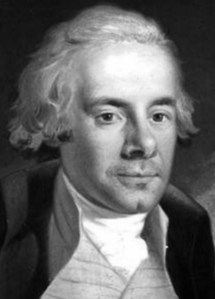
William Wilberforce: Abolition of the slave trade
There are other stories of how God can use holy discontent. In 1806, Great Britain officially abolished the slave trade, outlawing the carrying of slaves in any of its ocean-going vessels throughout the Empire. Yet few know the story behind the man largely responsible for this victory, who persevered through 20 years of set-backs to finally win a glorious victory. William Wilberforce (1759-1833) stood just 5’3″ inches tall. All his life, he suffered from colitis, a bowel condition that was very painful and that could only be treated with laudanum, an addictive form of opium. Despite his challenges, Wilberforce was ambitious and was elected as one of the youngest ever Members of Parliament.
William Wilberforce (1759-1833)
Yet something happened to Wilberforce at the age of 26. He understood the Gospel, repented, and was marvelously born again. Wilberforce referred to it as “the Great Change.” Later, he wrote a long letter to his friend and fellow MP, William Pitt (the younger), announcing that he would leave Parliament in order to preach and to have time for spiritual contemplation. Pitt- who became Prime Minister – was disappointed to lose his friend in Parliament, especially since Pitt had designs to end the slave trade but couldn’t do it alone. In a reply to Wilberforce’s letter, he wrote:
Sure the principles as well as the practice of Christianity are simple, and lead not to meditation only but to action.
It worked. Wilberforce stayed in Parliament and soon thereafter plunged into the battle against the slave trade. The oppression of thousands of African men, women, and children became for Wilberforce what sparked his calling, his holy discontent.
The 2007 movie, “Amazing Grace,” tells the story of the life of Wilberforce. Here is a short clip where Wilberforce tries to convince some reluctant MPs of the justice of the abolition cause:
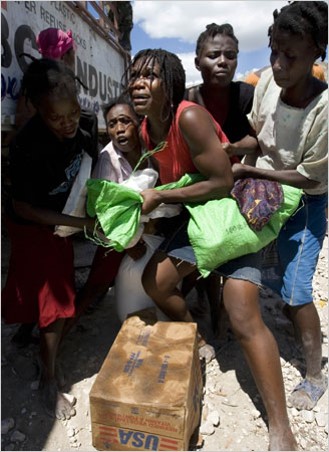
The plight of Haiti’s restaveks
I wish I could say that slavery in the world ended for good in 1833, when Parliament went a step further and outlawed not only the transporting of slaves on British ships but the keeping of slaves in any British territory. Yet we know human trafficking in many forms still exists around the world. One of the sadder cases is Haiti’s restaveks.
The word “restavek” means “to stay with.” Estimates are that among Haiti’s 8 million people, there are 300,000 children who have been reduced to domestic servitude. Those scouting child servants will visit the rural areas and look for poor families who are struggling to provide for a large family. With promises that they’ll take good care of their young child – often between ages 5 and 12 – that they’ll provide good food, shelter, and quality education, little boys and girls go to the city and quickly become indentured. They live as domestic servants, unpaid and provided just the bare minimum to live. Rarely do they get to attend school, and when they do, it’s a school hardly worth attending. There are now organizations working to rescue restaveks so that they can live a better life.
Conclusion: What is your holy discontent?
Amos announced: “Let justice roll on like a river, and righteousness like a never ending stream.” Look around you. What wrongs in your society do you see? What injustices weigh upon your heart? Ask God whether rectifying one of those injustices is His calling on your life, is your holy discontent. God has saved us so that each of us can change some corner of our world. Will you answer God’s call?
 When I was a boy and something broke, I’d take it to my dad. In my mind, he could fix anything. We’d go down in the basement to his work bench where we’d poke around in some of the boxes and containers. One tube of epoxy glue, one vice and 24 hours of patience later, whatever had been broken was as good as new.

 It’s known as the country of hospitality, and for good reason. Living for 4 1/2 years (1999-2003) in the welcoming but scorching and malaria-ridden African nation of Benin was simultaneously a joy and a monumental challenge. We’ll forever be grateful that they took-in an American missionary family and – despite our failings – opened their hearts to us and loved us. We will always have Beninese soil in our shoes!
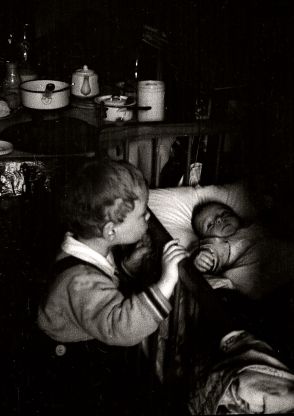 James writes that our life is but a vapor, here today, gone tomorrow (James 4:14). Life’s brevity means that we can’t experience everything, even if you give full-time to your “bucket list.”
 When I was 16, my dad taught me to drive a car.
 The Bible cares about economics. A search for words like “rich,” “poor” or “money” yields dozens of verses. Why is it, then, that pulpits so rarely sound off on this important theme?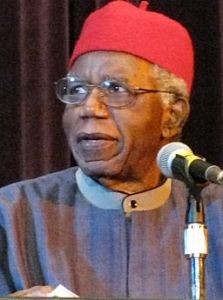


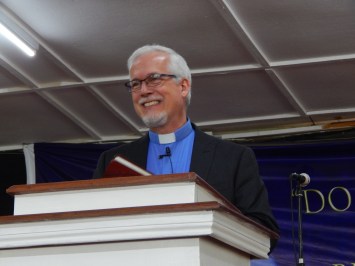 Note to the reader

 Gregory Crofford