Posted in book reviews, missions & evangelism

African voices

African_voices
African Voices, by Mark and Nancy Pitts (Nazarene Publishing House, 2010)

Mark and Nancy Pitts spent 3 years at Africa Nazarene University in educational administration. During that time, they opened up their home to a variety of Nazarene students and leaders from a swath of the African continent.  African Voices (CDs available here) presents profiles of eight leaders and the impact they are having as they serve Christ.

The Pitts did a good job presenting a variety of stories. Two of the leaders interviewed were women clergy (Jackie Mugane and Agnes Ibanda), a reminder that the Church of the Nazarene without apology believes that God calls both women and men to all roles of ministry in the church, both lay and ordained. Other profiles underscored the sacrifices that those whom God calls are willing to make (with their families’ blessing) in order to equip themselves for service. This came through in the story of Chanshi Chanda, who sold his business and for several months lived in humble conditions, awaiting their move to Malawi to begin ministerial studies.

But in all the stories, the emphasis on changed lives and holiness shone through. Sometimes this included the social impact that holiness should have. Ermias Choliye from Ethiopia observed:

“The message of holiness helps in corruption in the government, and it helps in the community to do away with individualism. Some preach prosperity, some preach tradition…but they don’t live like true Christians. When we bring in this living strategy from the teachings, then they accept, [and] the community now opens the door and gives licenses to the Church. So holiness is the full message that we need in life.”

African Voices does raise a question. One leader interviewed (p. 23) claimed 400,000 Nazarenes in a single field. Can this be accurate when the entire Region is composed of just over a half million?

Yet overall, African Voices effectively helps the reader get a glimpse of the passion for Christ that animates many of our African Nazarene leaders. Readers will be inspired to pray for them individually as they push out the boundaries of the Kingdom.

Posted in book reviews

The mystery of divine healing

faith_cureOf all the non-Nazarene churches where my family gave gospel concerts, the Tom’s River Assembly of God was among the most memorable.

My mom’s parents had long attended a staid, independent Baptist church. But some from the AOG befriended them, and for the next 10 years, they were faithful members.

We gave our concert at the same time that a faith healing evangelist was conducting a protracted meeting at the church. After having laid hands upon the sick and praying for them, he invited others to come forward to represent people who needed healing but were not present at the service. I went forward and prayed for Friend Stafford, an elderly mostly deaf man in my home church back in Rochester for whom I had learned sign language so I could be his interpreter during church services. We went back home, and I couldn’t wait to see what Friend would be like as a hearing man. Much to my disappointment, he was as hard of hearing as ever.

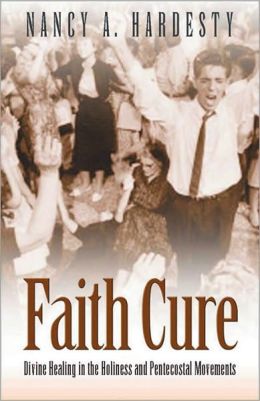
With my own background as a Nazarene and my contact with Pentecostal groups like the AOG, Nancy A. Hardesty’s Faith Cure: Divine Healing in the Holiness and Pentecostal Movements (Peabody, MA: Hendrickson, 2003) caught my attention. It is a handsome volume that packs a lot of solid historical research into a mere 152 pages.

Where Nancy Hardesty excels is in her making various heroes (and heroines) of the late 19th and early 20th century divine healing movement in America come alive. Aimee Semple-McPherson, Alexander Dowie, A.B. Simpson and a colorful cast of of others who emphasized God’s healing touch receive sympathetic treatment from Hardesty, though she does not hesitate to show their flaws.

In a chapter entitled “No doctors, no drugs,” the author delves into the quackery that passed as medical science at the end of the 19th century. This does much to establish the historical context that makes it understandable why Simpson and others insisted that believers seeking physical healing put their sole trust in Jesus, the Great Physician. As modern medicine has improved, this categorical insistence upon forsaking all other means toward healing except God’s direct touch has likewise faded.

Not all is well with Faith Cure. The chapter entitled “theology” is too short to do justice to various Bible passages often cited in defense of divine healing. Further, there is no attempt on the part of the author to research the authenticity of healings that the so-called “healing evangelists” performed in the mid-20th century.

Despite these shortcomings, Nancy Hardesty provides a good introduction to a vast topic. She acknowledges that there is an ongoing place for the doctrine and practice of  divine healing (and anointing with oil – James 5) in the life of local congregations within the Holiness and Pentecostal traditions. If her book stirs up a desire to return to balanced teaching on the topic, then it will have served a useful purpose beyond mere academic interest in a fascinating topic.

——–

Photo credit: Barnes and Noble

Posted in book reviews

Making a difference in West Africa

Responding_to_the_Call-thCan one little girl from an obscure village in Côte d’Ivoire make a difference? Read Responding to the Call: The Story of Jacqueline Dje Dje (Nazarene Publishing House, 2013) and you will answer with a resounding “yes.”

Amy Crofford* has written 6 missionary books for NPH, and in some ways, this is the best of the lot. Where other books have centered around the lives and experiences of Western missionaries, this biography revolves around the first ordained French-speaking  female pastor in the Church of the Nazarene in West Africa.

The reader is quickly caught up in young Jacqueline’s quest to fulfill her call from God, setting out in search of a denomination that will allow her to preach and shepherd God’s flock. Obstacles are not easily overcome, but with a patient spirit and a quiet determination, Jacqueline first conquers academic disadvantages to graduate from the Bible Institute. Later, she overcomes longstanding cultural biases, planting a new church and eventually receiving Nazarene ordination as an elder. To discover the moving ending to her story, the reader can find the book here or ask to borrow it from the NMI President at a local Church of the Nazarene near you.

While strong overall, the book has its weaknesses. It’s not clear what connection two profiles of other female African Nazarene pastors have to the main narrative. Also, some missing details will leave the reader in suspense, like the name of a “life changing book” that someone gave Jacqueline. More information, please!

Whatever the book’s flaws, Rev. Jacqueline Dje Dje’s courage shines through. She became a pioneer for other Nazarene women called by God to pastoral ministry. (A French translation of the book is planned). One serendipity is that by presenting the story of a female pastor overseas, perhaps the American Nazarene reader will be more open to considering some of his or her own biases about what gender a Nazarene pastor in the United States should be.

*Full disclosure: The author is married to the owner of this blog.

———-

Image credit: Nazarene Missions International

Posted in book reviews, reflections, The Wesleys and Wesleyan theology

When is simple too simple? Relational theology and love

relational_theologyThe word “relationship” is part-and-parcel of evangelical jargon. A tract left on a public bench may ask in bold letters:

Do you have a personal relationship with Jesus Christ?

And it is through the prism of relationship that some Christian theologians are formulating their views. A recent example is Brint Montgomery, Thomas Jay Oord, and Karen Winslow, eds., Relational Theology: A Contemporary Introduction (Point Loma Press, 2012), a collection of essays written by 31 authors contributing insights from the relational paradigm to a spectrum of theological and philosophical issues.

Structure and target audience

Relational Theology is structured around four categories:

1. Doctrines of theology in relational perspective;

2. Biblical witness in relational perspective;

3. The Christian life in relational perspective;

4. Ethics and justice in relational perspective.

Nested under these headings are intriguing subjects, including (among others) sin, free will and determinism, the means of grace, how humans relate to the creation, social justice, and feminist theology. True to its sub-title, “A Contemporary Introduction,” each of the essays is short, presenting a fly-over view at 30,000 feet of the ground beneath. Footnoting is very limited, which frees the text of heavy documentation, making the read more user friendly, especially for the novice. On the the other hand, since the book is geared toward the non-specialist, it is puzzling why the editors chose not to include questions for group discussion at the end of each chapter. This would have made for better learning as well as improved marketing of the book to small church groups, Sunday School classes or other venues.

Those who clicked on the Amazon.com link above will notice that the book is listed as “out of print.” Strangely, Point Loma Press (the publisher) also does not list the book on its website. It is hoped that these glitches can soon be corrected so that Relational Theology will be easily available to readers.

Continue reading “When is simple too simple? Relational theology and love”

Posted in book reviews, missions & evangelism

Jonny Steinberg’s Tale of Two Liberias

little-liberia-an-african-odyssey-in-new-york-cityIf you’re looking for a whimsical read, then steer clear of Jonny Steinberg’s Little Liberia: An African Odyssey in New York City (London: Vintage Books, 2012). But if you crave a journalistic style that ably presents riveting episodes from Liberia’s two civil wars (1989-96, 1999-2003) along with their ripple effect upon “Little Liberia” (Liberians refugees exiled on Staten Island in New York City), then Steinberg’s account is for you.

Full disclosure: I cannot read Little Liberia without seeing it through the eyes of my own visits to that country. It was during a lull in the fighting in the Spring of ’95  that I first touched-down in Monrovia, to teach a theology class to twenty pastors. Subsequent visits have confirmed for me the resiliency of this people, a determination to stick together through tough times. To visit Liberia is to love Liberians, a gregarious and hard-scrabble people.

This same enduring spirit imbues Steinberg’s book, narrated through the eyes of two Liberian refugees living in New York City. Rufus Arkoi was a soccer coach and organizer who left Liberia in 1986. His path later crossed with Jacob Massaquoi, whose foot had been badly mangled in a shooting in Monrovia during an outbreak of fighting. Through their childhood stories, we catch a glimpse of the historical dynamics that laid the tragic groundwork for the gathering storm.

What is it that made Liberia prone to such brutal civil wars? Part of it – according to Rufus Arkoi – is the “suspicion and jealousy” that permeates society. When asked where that comes from, his answer is polygamy (p. 149-50):

I always say it is because of how our families are structured: one man, four wives, four sets of children, four sets of goals, not one set of family goals. Jealousy among the four sets of children. This mother is only looking at the interests of her children and is wishing that those children from the other mothers do badly in life. That’s the family structure. That’s the society.

And yet the amazing thing about both Rufus Arkoi and Jacob Massaquoi is that – whatever the cause of suspicion – they both are most of the time able to rise above it, contributing to the good of their fellow Liberians in important ways. Theirs is an optimism that sees not only what is but what can be, both working to help Liberian youth on Staten island get the education that will keep them out of gangs, enabling them to build for a brighter future.

In connection with economic development back in their homeland, one assumption that that author never challenges is that salvation must come from outside of Liberia. It is Liberians working in New York City who – much like Haitians – send a significant portion of their salary back to their country of origin. On the one hand, this is admirable, a sign of solidarity that should be applauded. On the other hand, it perpetuates a cycle of dependency, blinding citizens to local resources. Of course, this is the dilemma of all foreign aid. How can legitimate human need be met without creating in those helped a sense of entitlement? To use the words of the late Jack Kemp, how can assistance be a “hand up” and not merely a “hand out”?

In the last chapter of the book, Rufus Arkoi returns to Liberia and makes promises that he will go back and raise money from American donors, that he will send American soccer scouts to Monrovia to recruit Liberian players for foreign teams (p. 241). One more time, he works from an old paradigm, that someone else from somewhere else will solve our problems. What is lacking is a strategy for developing local resources for long-term sustainability. To borrow a political slogan, how can Liberia move from “Yes, they can” to “Yes, we can”?

For those who have never traveled outside of North America, Little Liberia it is an excellent introduction to dynamics that operate not only in Liberia but across sub-Saharan Africa.  Truly, this is a continent with huge potential and where most of the solutions to most of the problems lie close by, not far away. A pastor from South Africa put it well: “We are a rich people with a poverty mentality.” Yet it is more than outlook; it is also values. Solutions are short-circuited by individual greed, through misappropriating for oneself funds that were intended for the common good. (And lest we Americans get too self-righteous on this score, Google “Bernie Madoff.” Pot, meet kettle.)

As Christian educators, our task remains to inculcate in the young the integrity that will prevent the corruption that has tainted the past. Economic poverty is closely tied to moral poverty, no matter where in the world one is working, Africa included. It is righteousness that “exalts a nation” (Proverbs 14:34). Truly, holiness is Africa’s hope; indeed, it is the world’s hope!

Whether describing the depressing ravages of civil war or the optimism of re-directing youth through sports and education, Jonny Steinberg is a gifted writer well worth the reader’s time. I highly recommend Little Liberia.

———–

Photo credit: Angus Robertson

Posted in book reviews

A Year of Biblical Womanhood: Evans stirs the pot

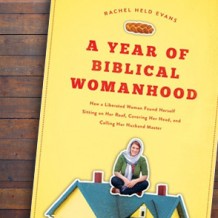
This book’s yellow cover evokes Curious George, except the Man with the Yellow Hat never shows up. But rather than judging a book by its cover – or by the negative reviews of some  – I read for myself Rachel Held Evans’ A Year of Biblical Womanhood: How a Liberated Woman Found Herself Sitting on Her Roof, Covering Her Head, and Calling Her Husband Master (Tyndale, 2012, Kindle edition).  What I discovered was a story that is funny and thought-provoking, though neglecting one important principle of interpreting the Christian Scriptures.

Who is Rachel Held Evans, and why this book?

Rachel Held Evans grew up in a fundamentalist Christian tradition. More recently, she has moved away from the narrow tenets of her upbringing and developed a huge following on her weblog. She has pulled this off largely through championing the cause of women, especially in the context of the dominant patriarchal ethos of American evangelical Christianity. It was in conversation with her blog readers (and apparently as a follow-up volume to A.J. Jacobs’ earlier book on living a year as a biblical man) that Evans decided to attempt living out for a year the major commands of the Bible directed toward women.  Her purpose in writing becomes clear in the introduction (p. xix):

Now, we evangelicals have a nasty habit of throwing the word biblical around like it’s Martin Luther’s middle name. We especially like to stick it in front of other loaded words, like economics, sexuality, politics, and marriage to create the impression that God has definite opinions about such things, opinions that just so happen to correspond with our own. Despite insistent claims that we don’t ‘pick and choose’ what parts of the Bible we take seriously, using the word biblical almost always involves selectivity.

Her activities included letting her hair grow longer without cutting it, sitting in a tent alone in the front yard during her monthly “impurity” (period), calling her husband, Dan, her “master,” covering her head, remaining silent in church, taking care of a computer baby for three days, and “praising her husband at the city gate” by holding up a sign at the outskirts of Dayton declaring: “Dan is awesome!”

Continue reading “A Year of Biblical Womanhood: Evans stirs the pot”

Posted in book reviews, reflections

For an angry age: Henry Fairlie and the “rights” obsession

“Don’t call me mad,” Bill Cosby warned. “Dogs get mad. People get angry.”

Dr. Cosby’s point – from an episode of The Cosby Show – is well-taken. To be “mad” is to be crazy, insane, off-your-rocker. Yet is there not a sense in which anger unchecked can produce in us a kind of mental illness?

In previous posts, we’ve looked at both pride and envy and their negative effects. Henry Fairlie’s The Seven Deadly Sins for Today (Notre Dame, 1978) addresses anger (from the Latin ira) as the third deadly sin. Admitting that there is a legitimate place for anger in the full spectrum of human emotion, Fairlie defines sinful anger that is closely related to hatred or the desire for vengeance (pp. 88-89). Such anger is comparable to fire (p. 89):

We think of Anger in terms of fire: blazing, flaming, scorching, smoking, fuming, spitting, smoldering, heated, white hot, simmering, boiling, and even when it is ice-cold it will still burn. It has been called the Devil’s furnace, and the other sins will fuel it.

The Bible talks about anger

In the same way, the Bible allows for some varieties of anger. Exhibit A is the Lord’s anger as he drove the money-changers from the Temple, declaring that what God intended as a “house of prayer” they had made a “den of robbers” (Matthew 21:13). Paul cautioned the Ephesians not to “sin” when angry (Ephesians 4:26), implying that anger without sinning is possible. Yet anger appears on the same list as “rage” elsewhere in Paul’s writings, as something of which we must rid ourselves (Colossians 3:8). Both “anger” and “wrath” are divine prerogatives, and God will display them one day toward the wicked (Romans 2:7-9). In short, Scripture is careful to delineate a legitimate place for anger both for the human being and for God, while careful to warn of a type of anger that is destructive.

Continue reading “For an angry age: Henry Fairlie and the “rights” obsession”

Posted in book reviews, reflections

Celebrating others’ misfortunes: Henry Fairlie on envy

I’ve never been a fan of the National Enquirer. They really ought to change their name to the National Meddler. To the captive audience in a narrow check-out line, it broadcasts the failings and misfortunes of the prominent. Such headlines should evoke our pity, not our delight. Does anyone deserve such brutal gawking?

What lies behind our frequent urge to tear people down? In Chapter Two of The Seven Deadly Sins Today (Notre Dame, 1978), Henry Fairlie answers the question. Reveling in the bad things that happen to others is a sign of envy, or invidia. Of all sins, Fairlie calls it the “nastiest, the most grim, the meanest.” It is “sneering, sly, and vicious” (p. 61), hence the expression to be “green with envy.” While other sins (suggests Fairlie) can give what seem to be “moments of elevation,” envy is “servile” and “never straightens its back” (p. 62). It poisons not only the ones whom it targets but those who wield it as a weapon.

Let us first consider briefly what envy is, as explained in the Bible and clarified by Henry Fairlie. Next, we’ll look at some of the negative social effects of envy in modern life, outlined in Chapter 2. Finally, we’ll conclude with what Fairlie prescribes as God’s remedy for envy.

Envy in Scripture and in life 

The boomerang effect of envy is clear in Job 5:2 – “Resentment kills a fool, and envy slays the simple.” Likewise, Proverbs 14:30 advises that “A heart at peace gives life to the body, but envy rots the bones.” Jesus taught that envy is one of the evils that come from inside of us, a vice that (among others) ends in our defilement (Mark 7:21-23). Finally, Paul lists envy as one of the characteristics of idolatry, of those whom God has given over to a “depraved mind” – see Romans 1:28-30.

In short, the Bible underscores the deleterious effects of envy. Envy goes beyond covetousness, the Tenth Commandment in the Decalogue. It looks at a promotion received by another or a fine talent and wishes that the other did not have it, since in comparison he or she feels inadequate: “The envious person is moved, first and last, by his own lack of self-esteem, which is all the more tormenting because it springs from an inordinate self-love” (p. 67). Slothful, it seeks to tear down the good name of others, an offense that Fairlie calls “second only to murder” (p. 66).

Here one may quibble with the author. Envy may be slothful, but it can also exist among the hard-working. When an industrious person is passed over for a promotion in lieu of one who is less qualified but politically better connected, he or she may be tempted to lash out from envy.

As a boy, I successfully challenged the answer of a good friend in a teen Bible quizzing match, leading to his disqualification. If I had let it pass, we would have advanced together to the next level of competition. At first, I was self-righteous about my motives. A wrong answer is a wrong answer, is it not? Only time has exposed my green-eyed envy of his achievement that day, an envy stemming from my buried resentment that he was a notch or two brighter than I, and so I had to study harder than he did to succeed. Surely I deserved the bigger trophy that day, not him! Our close friendship never recovered, despite later awkward attempts at reconciliation between us. Envy can result in lasting damage.

Continue reading “Celebrating others’ misfortunes: Henry Fairlie on envy”

Posted in book reviews, reflections

Henry Fairlie on pride as arrogant individualism

St. Augustine – searching for a description of sin – chose the Latin phrase In curvatus in se, meaning to be curved in on oneself. Henry Fairlie does not use the phrase in connection with the first of the seven deadly sins, “pride or superbia.” Still, the description aptly summarizes the content of  Chapter 2 of his The Seven Deadly Sins Today (Notre Dame, 1978).

The meaning of pride

In our time, the word “pride” has mostly positive connotations. For example, I can say that I am very proud of my sons and their accomplishments. But Henry Fairlie rightly underscores the negative tones to the word, which the Oxford English Dictionary defines as “an unreasonable conceit of superiority” or “an overweening opinion of one’s own qualities” (Seven Deadly Sins, p. 39). This kind of pride has nothing to do with self-esteem and much to do with arrogance.

This is consistent with the Old Testament use of the term. It is because of “pride” that the wicked person does not seek God and has “no room” in his thoughts for God (Ps. 10:4). It is with “lying lips” accompanied by “pride and contempt” that the wicked speak “arrogantly” against the righteous (Ps. 31:18). Most famous of all OT passages on pride is Proverbs 16:18: “Pride goes before destruction, a haughty spirit before a fall.”

Continue reading “Henry Fairlie on pride as arrogant individualism”

Posted in book reviews, reflections

The Fact of Sin: Reflections from Henry Fairlie

Henry Fairlie

I like the book of James. When given a choice in Greek 3 which New Testament book to translate, James was my pick. Its poetic expressions in the King James Version fired  my imagination, phrases like “perfect law of liberty” (1:25).

One can hardly address law from a Christian perspective without dealing with the concept of sin. When we become aware of God’s law, we automatically realize that we are lawbreakers, or sinners. This is apparent from the classical Wesleyan definition of sin as a “willful transgression of a known law of God “(see 1 John 3:4).

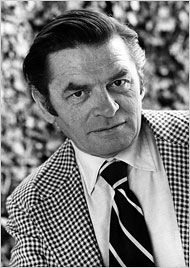
This essay is the first in a series of reflections on sin. To help focus our thoughts, we will dialogue with Henry Fairlie’s The Seven Deadly Sins Today (Notre Dame Press, 1978). Fairlie (1924-1990) was British by birth but spent much of his adult life in the United States as an essayist and journalist. He wrote for various publications, including the National Review and was fond of informal debate with the late Christopher Hitchens.

Henry Fairlie, a non-theologian who called himself a “reluctant unbeliever” (p. 6), entitles chapter 1 “The Fact of Sin.” Let us examine three subjects he raises in the chapter by answering these questions:

1) What is “sin” ?

2) What are the “seven deadly sins”?

3) Can psychiatry explain the reality of evil?

As we look at how Fairlie responded to these questions, it is hoped that we will gain greater insight into ourselves and each other. More importantly, we will more deeply appreciate how God’s saving and cleansing grace is the only solution to our sinful predicament.

What is “sin” ?

Fairlie describes sin in several ways. Simply put, sin entails “lapses in our conduct” (p. 3). More insightfully, he calls sin “an act of infidelity and not only of disobedience”; it is the act of “a traitor and not only of a criminal” (p. 9).

To be a sinner is to be a traitor. Scripture resonates with this, from when Adam and Eve betrayed God in the Garden of Eden (Genesis 3) to Judas’s betrayal of Jesus in the Garden of Gethsemane (Luke 22). Sin as betrayal underscores the relational nature of sin: “Sin is the destruction of one’s self as well as one’s relationships with others” (p. 4). When we ask ” Who is it hurting?” we are asking only a rhetorical question. Do we really want an answer? If we are honest, we will admit that by its very nature, sin is never solitary. Its painful consequences touch both God and other human beings. Accordingly, Fairlie (pp. 17-18) explains his reason for writing the essays in The Seven Deadly Sins Today :

They are written from the conviction that, as individuals and societies, we are trifling with the fact that sin exists, and that its power to destroy us is as great as ever; from the belief that much of the fecklessness and triviality, dejection and faintheartedness, wasting and corruption, which we now feel around us, in our personal lives but also in our common lives, have their source exactly where we do not choose to look.

Henry Fairlie accepts the concept of original sin – that we have inherited a “tendency” or “inclination” to evil from Adam and Eve – as long as this concept never becomes a reason to deny moral responsibility for our own actions. He clarifies (p. 19):

We will recognize that the inclination to evil is in our natures, that its existence in us presents us with moral choices, and that it is in making those choices that we form our characters. We may be given our natures, but we make our characters; and it if is in our natures to do evil, it can and ought to be in our characters to resist it. When we say that someone is a “good man” or ” good woman,” we do not mean that they are people from whom the inclination to do evil is absent, but that they are people who have wrestled and still wrestle with it.

Having tipped his hat to original sin, Fairlie (too optimistically) refuses to connect the dots. For him, sin is a “lapse,”  as if sin is an anomaly in our behavior. Yet Christian theology affirms the opposite. Sin is not a “lapse” but a symptom of a sickness. If we have better moments, these are but a reflection of God at-work in the lives of all through the influence of the Holy Spirit, what Wesleyans call “prevenient grace.” Even in the believer, what is good in me is most decidedly not me; rather, it is Christ shining out from me! All glory returns to God, who alone deserves it.

Nonetheless, Fairlie is correct when he insists that sin is not merely individual; it has corporate elements. It is not only persons that sin. Societies are also capable of sin (p. 25). It will be interesting to see if he applies this insight as he takes up the seven deadly sins in the remaining chapters of his book.

Continue reading “The Fact of Sin: Reflections from Henry Fairlie”