Posted in reflections

Eugénio Duarte on Last Things

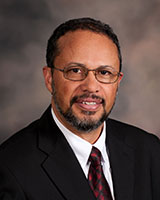
Dr. Eugénio R. Duarte
37th General Superintendent
Church of the Nazarene

Dr. Eugénio R. Duarte (pronounced DEW ART) is one of six General Superintendents in the Church of the Nazarene. His meditation (below) is part of the “We Believe” series on Nazarene beliefs, widely distributed via e-mail by the Board of General Superintendents.

———————————————–

We believe … that our Lord will return,
the dead will be raised,
and the final judgment will take place.

Growing up in a community greatly affected by emigration, I observed early on the struggle some experienced between wanting to stay home with loved ones and their need to leave. In fact those who were able to depart in search of a better life were considered brave; emigration became a mark of prestige. My older brother left the day before he would have been recruited to serve in the army. Many ran away out of fear of dying in battle.

My brother promised that he would return home. We waited for many years. Then one day we learned that he had passed away, and our hope of seeing him again vanished. We could never be certain about his real desire to return or even his ability to fulfill his promise. This is an oft-repeated human tragedy.

Unlike humans, Jesus is always able and willing to fulfill His promises. The promise of His return was made with unswerving confidence. “Do not let your hearts be troubled. Trust in God; trust also in me. In my Father’s house are many rooms; if it were not so, I would have told you. I am going there to prepare a place for you. And if I go and prepare a place for you, I will come back and take you to be with me that you also may be where I am” (John 14:1–3, NIV).

Theologians do not agree on details surrounding the second coming of Jesus; they have differing views about the order of eschatological events. But there is unequivocal agreement that Jesus is coming again because in His own words and in other parts of the Scriptures it is clear that He will return. In fact the Bible ends with Jesus’ words, “I am coming soon,” followed by the Church’s “Amen. Come, Lord Jesus” (Revelation 22:20, NIV).

Our belief in the second coming of Jesus is also firmly supported by God’s promise of His victory over all sin, death, pain, afflictions, and injustice. To see the Lord Jesus when He comes—whether we are raised from the dead or found alive in Him—will be cause for great celebration.

The spirit of hope and celebration with which 1 Thessalonians 4:15–17 proclaims His return must be accompanied by the declaration in Romans 2:1–16 that Jesus will judge the world. Those who refuse to know and confess Him as Lord will miss not only this moment of celebration at His coming, but also the eternal joy of being with the Lord forever. The reality of unbelievers having to face the unbiased Judge should prompt the Church to share the good news with everyone and to disciple all who come to know and love Jesus.

Let the Church say AMEN to the announced return of the Lord!

—————————————

“On the third day he rose again from the dead; he ascended into heaven, and is seated at the right hand of God the Father Almighty; from there he will come to judge the living and the dead.” (The Apostles’ Creed)

————————————–

Photo Credit: Wesleyan Anglican

Posted in book reviews, reflections

For an angry age: Henry Fairlie and the “rights” obsession

“Don’t call me mad,” Bill Cosby warned. “Dogs get mad. People get angry.”

Dr. Cosby’s point – from an episode of The Cosby Show – is well-taken. To be “mad” is to be crazy, insane, off-your-rocker. Yet is there not a sense in which anger unchecked can produce in us a kind of mental illness?

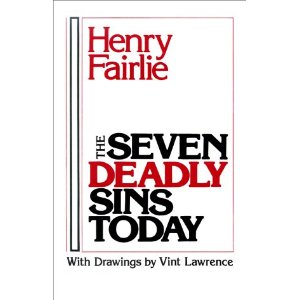
In previous posts, we’ve looked at both pride and envy and their negative effects. Henry Fairlie’s The Seven Deadly Sins for Today (Notre Dame, 1978) addresses anger (from the Latin ira) as the third deadly sin. Admitting that there is a legitimate place for anger in the full spectrum of human emotion, Fairlie defines sinful anger that is closely related to hatred or the desire for vengeance (pp. 88-89). Such anger is comparable to fire (p. 89):

We think of Anger in terms of fire: blazing, flaming, scorching, smoking, fuming, spitting, smoldering, heated, white hot, simmering, boiling, and even when it is ice-cold it will still burn. It has been called the Devil’s furnace, and the other sins will fuel it.

The Bible talks about anger

In the same way, the Bible allows for some varieties of anger. Exhibit A is the Lord’s anger as he drove the money-changers from the Temple, declaring that what God intended as a “house of prayer” they had made a “den of robbers” (Matthew 21:13). Paul cautioned the Ephesians not to “sin” when angry (Ephesians 4:26), implying that anger without sinning is possible. Yet anger appears on the same list as “rage” elsewhere in Paul’s writings, as something of which we must rid ourselves (Colossians 3:8). Both “anger” and “wrath” are divine prerogatives, and God will display them one day toward the wicked (Romans 2:7-9). In short, Scripture is careful to delineate a legitimate place for anger both for the human being and for God, while careful to warn of a type of anger that is destructive.

Continue reading “For an angry age: Henry Fairlie and the “rights” obsession”

Posted in ecclesiology & sacraments, reflections

Nazarene or “Baptarene”? When traditions collide

Phineas F. Bresee served for 38 years as a Methodist minister before beginning the fledgling “Church of the Nazarene” at the turn of the 20th century. Other non-Methodist groups fused with his in 1907 and 1908.

My dad grew up Nazarene, but my mom was raised independent Baptist. So, if ever there was a “Baptarene,” it was me. But I suspect I’m not the only former Baptarene who has rediscovered what being a Nazarene is, and now, I refuse to look back.

Don’t get me wrong. I harbor no animus against Baptists. I’ve always admired their fervor in evangelism, their giving for world missions and their emphasis upon the importance of Scripture. All three of those characterized John Wesley (1703-91) as well, the 18th century Anglican evangelist  who is the ecclesiastical ancestor of Nazarenes. But Wesley wasn’t a Baptist; he was an Anglican/Methodist, and I’ve come to treasure that heritage as something valuable and worth protecting.

Take the issue of women in ministry. From our official beginning in 1908, Nazarenes have formally acknowledged in our Manual that God calls both men and women to all roles of ordained ministry. Among other passages, we’ve always taken Acts 2:17-18 seriously, that in the “last days” God will pour out the Holy Spirit on everyone. The evidence of this outpouring will be (in part) that “servants” who are “both men and women” will “prophesy.” Prophecy is preaching, the telling forth of the message of salvation through Christ. This message is so important that you just can’t keep half of your team planted on the bench. Everyone – male and female – must get into the game.

Another legacy from our Methodist roots is infant baptism for the children of church-going parents, practiced alongside believer baptism for older converts. In the same message on Pentecost, Peter assured his Jewish listeners – the Covenant people of God – that God has done something new in Jesus Christ. After a scathing message where he accused them of having crucified Jesus, he ended with a word of hope: “God has made this Jesus, whom you crucified, both Lord and Messiah” (Acts 2:36). The promise of the Holy Spirit – as symbolized in baptism – was for all, regardless of age: “The promise is for you and your children, for all who are far off – for all whom the Lord our God will call” (v. 39, italics added). And so on that Day of Pentecost, whole families were baptized — dads, moms, and kids. That set a pattern that was repeated at key junctures in the book of Acts, where entire “households” (Gk. oikos) were baptized. It’s inconceivable that this did not include babes in arms. This was a New Covenant, and the sign of the New Covenant people of God was baptism.

A third heritage from our Methodist roots is the Lord’s Supper (or Eucharist) as a means of grace. John Wesley himself celebrated communion frequently, as a way to fortify his faith. Today in Methodist churches and a growing number of Nazarene congregations, Eucharist is the high moment of worship, following a meaty sermon. It is the culmination of the moments spent together as the adoring community of faith.

But what about the Church of the Nazarene?

Have we kept these strands of our heritage from Methodism, or have we been squeezed into a Baptist mold, becoming “Baptarenes”?

Continue reading “Nazarene or “Baptarene”? When traditions collide”

Posted in book reviews, reflections

Celebrating others’ misfortunes: Henry Fairlie on envy

I’ve never been a fan of the National Enquirer. They really ought to change their name to the National Meddler. To the captive audience in a narrow check-out line, it broadcasts the failings and misfortunes of the prominent. Such headlines should evoke our pity, not our delight. Does anyone deserve such brutal gawking?

What lies behind our frequent urge to tear people down? In Chapter Two of The Seven Deadly Sins Today (Notre Dame, 1978), Henry Fairlie answers the question. Reveling in the bad things that happen to others is a sign of envy, or invidia. Of all sins, Fairlie calls it the “nastiest, the most grim, the meanest.” It is “sneering, sly, and vicious” (p. 61), hence the expression to be “green with envy.” While other sins (suggests Fairlie) can give what seem to be “moments of elevation,” envy is “servile” and “never straightens its back” (p. 62). It poisons not only the ones whom it targets but those who wield it as a weapon.

Let us first consider briefly what envy is, as explained in the Bible and clarified by Henry Fairlie. Next, we’ll look at some of the negative social effects of envy in modern life, outlined in Chapter 2. Finally, we’ll conclude with what Fairlie prescribes as God’s remedy for envy.

Envy in Scripture and in life 

The boomerang effect of envy is clear in Job 5:2 – “Resentment kills a fool, and envy slays the simple.” Likewise, Proverbs 14:30 advises that “A heart at peace gives life to the body, but envy rots the bones.” Jesus taught that envy is one of the evils that come from inside of us, a vice that (among others) ends in our defilement (Mark 7:21-23). Finally, Paul lists envy as one of the characteristics of idolatry, of those whom God has given over to a “depraved mind” – see Romans 1:28-30.

In short, the Bible underscores the deleterious effects of envy. Envy goes beyond covetousness, the Tenth Commandment in the Decalogue. It looks at a promotion received by another or a fine talent and wishes that the other did not have it, since in comparison he or she feels inadequate: “The envious person is moved, first and last, by his own lack of self-esteem, which is all the more tormenting because it springs from an inordinate self-love” (p. 67). Slothful, it seeks to tear down the good name of others, an offense that Fairlie calls “second only to murder” (p. 66).

Here one may quibble with the author. Envy may be slothful, but it can also exist among the hard-working. When an industrious person is passed over for a promotion in lieu of one who is less qualified but politically better connected, he or she may be tempted to lash out from envy.

As a boy, I successfully challenged the answer of a good friend in a teen Bible quizzing match, leading to his disqualification. If I had let it pass, we would have advanced together to the next level of competition. At first, I was self-righteous about my motives. A wrong answer is a wrong answer, is it not? Only time has exposed my green-eyed envy of his achievement that day, an envy stemming from my buried resentment that he was a notch or two brighter than I, and so I had to study harder than he did to succeed. Surely I deserved the bigger trophy that day, not him! Our close friendship never recovered, despite later awkward attempts at reconciliation between us. Envy can result in lasting damage.

Continue reading “Celebrating others’ misfortunes: Henry Fairlie on envy”

Posted in book reviews, reflections

Henry Fairlie on pride as arrogant individualism

St. Augustine – searching for a description of sin – chose the Latin phrase In curvatus in se, meaning to be curved in on oneself. Henry Fairlie does not use the phrase in connection with the first of the seven deadly sins, “pride or superbia.” Still, the description aptly summarizes the content of  Chapter 2 of his The Seven Deadly Sins Today (Notre Dame, 1978).

The meaning of pride

In our time, the word “pride” has mostly positive connotations. For example, I can say that I am very proud of my sons and their accomplishments. But Henry Fairlie rightly underscores the negative tones to the word, which the Oxford English Dictionary defines as “an unreasonable conceit of superiority” or “an overweening opinion of one’s own qualities” (Seven Deadly Sins, p. 39). This kind of pride has nothing to do with self-esteem and much to do with arrogance.

This is consistent with the Old Testament use of the term. It is because of “pride” that the wicked person does not seek God and has “no room” in his thoughts for God (Ps. 10:4). It is with “lying lips” accompanied by “pride and contempt” that the wicked speak “arrogantly” against the righteous (Ps. 31:18). Most famous of all OT passages on pride is Proverbs 16:18: “Pride goes before destruction, a haughty spirit before a fall.”

Continue reading “Henry Fairlie on pride as arrogant individualism”

Posted in book reviews, reflections

The Fact of Sin: Reflections from Henry Fairlie

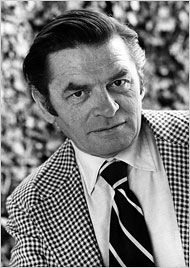
Henry Fairlie

I like the book of James. When given a choice in Greek 3 which New Testament book to translate, James was my pick. Its poetic expressions in the King James Version fired  my imagination, phrases like “perfect law of liberty” (1:25).

One can hardly address law from a Christian perspective without dealing with the concept of sin. When we become aware of God’s law, we automatically realize that we are lawbreakers, or sinners. This is apparent from the classical Wesleyan definition of sin as a “willful transgression of a known law of God “(see 1 John 3:4).

This essay is the first in a series of reflections on sin. To help focus our thoughts, we will dialogue with Henry Fairlie’s The Seven Deadly Sins Today (Notre Dame Press, 1978). Fairlie (1924-1990) was British by birth but spent much of his adult life in the United States as an essayist and journalist. He wrote for various publications, including the National Review and was fond of informal debate with the late Christopher Hitchens.

Henry Fairlie, a non-theologian who called himself a “reluctant unbeliever” (p. 6), entitles chapter 1 “The Fact of Sin.” Let us examine three subjects he raises in the chapter by answering these questions:

1) What is “sin” ?

2) What are the “seven deadly sins”?

3) Can psychiatry explain the reality of evil?

As we look at how Fairlie responded to these questions, it is hoped that we will gain greater insight into ourselves and each other. More importantly, we will more deeply appreciate how God’s saving and cleansing grace is the only solution to our sinful predicament.

What is “sin” ?

Fairlie describes sin in several ways. Simply put, sin entails “lapses in our conduct” (p. 3). More insightfully, he calls sin “an act of infidelity and not only of disobedience”; it is the act of “a traitor and not only of a criminal” (p. 9).

To be a sinner is to be a traitor. Scripture resonates with this, from when Adam and Eve betrayed God in the Garden of Eden (Genesis 3) to Judas’s betrayal of Jesus in the Garden of Gethsemane (Luke 22). Sin as betrayal underscores the relational nature of sin: “Sin is the destruction of one’s self as well as one’s relationships with others” (p. 4). When we ask ” Who is it hurting?” we are asking only a rhetorical question. Do we really want an answer? If we are honest, we will admit that by its very nature, sin is never solitary. Its painful consequences touch both God and other human beings. Accordingly, Fairlie (pp. 17-18) explains his reason for writing the essays in The Seven Deadly Sins Today :

They are written from the conviction that, as individuals and societies, we are trifling with the fact that sin exists, and that its power to destroy us is as great as ever; from the belief that much of the fecklessness and triviality, dejection and faintheartedness, wasting and corruption, which we now feel around us, in our personal lives but also in our common lives, have their source exactly where we do not choose to look.

Henry Fairlie accepts the concept of original sin – that we have inherited a “tendency” or “inclination” to evil from Adam and Eve – as long as this concept never becomes a reason to deny moral responsibility for our own actions. He clarifies (p. 19):

We will recognize that the inclination to evil is in our natures, that its existence in us presents us with moral choices, and that it is in making those choices that we form our characters. We may be given our natures, but we make our characters; and it if is in our natures to do evil, it can and ought to be in our characters to resist it. When we say that someone is a “good man” or ” good woman,” we do not mean that they are people from whom the inclination to do evil is absent, but that they are people who have wrestled and still wrestle with it.

Having tipped his hat to original sin, Fairlie (too optimistically) refuses to connect the dots. For him, sin is a “lapse,”  as if sin is an anomaly in our behavior. Yet Christian theology affirms the opposite. Sin is not a “lapse” but a symptom of a sickness. If we have better moments, these are but a reflection of God at-work in the lives of all through the influence of the Holy Spirit, what Wesleyans call “prevenient grace.” Even in the believer, what is good in me is most decidedly not me; rather, it is Christ shining out from me! All glory returns to God, who alone deserves it.

Nonetheless, Fairlie is correct when he insists that sin is not merely individual; it has corporate elements. It is not only persons that sin. Societies are also capable of sin (p. 25). It will be interesting to see if he applies this insight as he takes up the seven deadly sins in the remaining chapters of his book.

Continue reading “The Fact of Sin: Reflections from Henry Fairlie”

Posted in book reviews, reflections

New series on sin begins Saturday

It was one of those conversations not easily forgotten. “Greg,” a female colleague assured me, “when it comes to theology, I look at how most people are leaning, and I lean the other way.”

My professor friend understood that balance is a key to maintaining truth in the church. These days, I hear many extolling God’s soft side, lifting up grace and love. After all, isn’t that what good news is all about? But if we speak only about the solution and never about the problem, aren’t  we in danger of making salvation a remedy for an illness people don’t even know they have? The evil we have never acknowledged is the evil we are powerless to overcome.

Have we bought into the lie that people are by nature good? In our world of “I’m O.K. and you’re O.K.,” it’s time to remember that none of us is O.K. Left to our own devices, we’re all desperately  evil. That’s a nearly forgotten message, but profoundly biblical. For the sake of balance, it’s time to lean in the other direction. It’s time to face the bad news.

Enter Henry Fairlie’s The Seven Deadly Sins Today (Notre Dame Press, 1979). Chris Pollock, Senior High pastor at Bethany First Church of the Nazarene, recommended it, and at long last, Chris, I’m diving in! The book is divided into nine chapters. Beginning on Saturday, we’ll look at one chapter per week. I’m hoping that God will use this study as a mirror, showing me areas in my life where sin may still have a foothold, areas where God’s power still needs to cleanse and transform me.

How about you? Care to join me on the journey? See you Saturday!

Posted in ecclesiology & sacraments, reflections

Tom Oord calls for Nazarenes to “open the windows”

Thomas J. Oord

If the Church of the Nazarene were an army, then Tom Oord of Northwest Nazarene University would be one of the scouts riding out in front, probing new territory. Armies need scouts, and the Church of the Nazarene needs theologians like Dr. Oord.

Oord has written an intriguing essay, calling for us to “open the windows” in the Church of the Nazarene. He lists 10 areas where we need to “let the fresh air of the spirit blow through.” (No doubt he means the Holy Spirit, and not just any “spirit.”)

You can read all ten points over at his blog. They are all worth the reader’s time, but here I’d like to quote two of them as a springboard for further reflection. Oord writes:

1. Engage contemporary theology. Theological scholars in the colleges and universities sponsored by the Church of the Nazarene explore a variety of theological ideas. Theology in the denomination is significantly different today than it was fifty years ago. And that’s to be expected. Unfortunately, however, pursuing new forms of Wesleyan-Holiness theology in dialogue with these contemporary theological ideas is not encouraged as it should be. I believe the Spirit intends to do new things and guide the denomination in new ways theologically.

Tom Oord is justified in calling the Church of the Nazarene to the theological task. Each generation must grasp the biblical underpinning of the doctrine of holiness, but – having done so – must clothe the message in language relevant to its own generation and cultural context. It is not enough to just reprint old holiness classics. Those books use a distinctive idiom and illustrations that spoke to a time past. Who will write holiness theology in a language and style that touches the hearts of people in the 21st century? And the very style that makes an American writer resonate with American culture may for that same reason make the book ineffective in cultures outside North America. Our task as a global church is to raise up theologians from each culture where we are at work.

Yet is it enough to engage only the theology being written in our own culture? Worldwide – not just in the Church of the Nazarene – the Church is growing in what Philip Jenkins has called the “Global South,” including Central and South America, Africa, and Asia. More and more, contemporary theology is being written in these parts of the world, yet to what degree do seminary students in the United States grapple with theologians from these other cultures? Do our Nazarene universities in the U.S. read these emerging theologians? I admit my weakness in this area, but as one serving in Africa, am determined to become more conversant with thinkers like Kwame Bediako of Ghana. Who among our Nazarene theologians in Africa will rise to his stature?

The late Prof. Kwame Bediako of Ghana

Oord continues, underscoring the need for us to re-empower women in ministry. He sounds a clarion call:

8. Reestablish the power of and number of women in leadership. Many members of the Church of the Nazarene happily note that while the Roman Catholic church has not embraced the Spirit’s move to establish women in the highest positions of leadership, Nazarenes have affirmed this throughout their history. And yet a very small percentage of Nazarene pastors are women. And leadership in various denominational sectors is dominated by men. Steps must be taken to encourage Nazarene members to promote women into positions of leadership.

I believe that the Church of the Nazarene in Africa will set an example for other denominations in Africa and the global Church of the Nazarene in this regard. Currently, 14% of the nearly 1,000 students enrolled in the Nazarene Theological Institute are women. While we are not satisfied with this paltry figure, it is nonetheless movement in the right direction. Of the 16 students in a class I taught in Madagascar in 2011, 14 were women. Likewise, of nine who were ordained in Bukavu (Democratic Republic of the Congo), three were women, and a recent seminar on spiritual gifts (see photo) included a healthy representation of women.

Church leaders in Bukavu, DRC

The obstacles that African women must overcome to become pastors are daunting. If they can do it, what other culture in the world can be excused from fully empowering women to pursue all roles of lay and ordained ministry?

Thank you, Dr. Oord, for raising important issues. May the Holy Spirit continue to blow, refreshing His Church, including the small branch we call the Church of the Nazarene!

——————–

Photo credits:

Thomas J. Oord – from the website of the Zygon Center for Religion and Science

Kwame Bediako – from the Akrofi-Christaller Institute website

Posted in reflections

Ayn Rand, Blaise Pascal and atheism

Ben Witherington of Asbury Seminary dug up a fascinating Phil Donahue interview with the late objectivist philosopher, Ayn Rand.

In the interview, Rand calls religious faith “a sign of psychological weakness.” Also, like astronomer Carl Sagan, she subscribed to the so-called “steady state theory,” that the universe has always existed, obviating a need for a Creator God.

You can read my take on Rand’s philosophy in my review of her massive and meandering Atlas Shrugged.

Ayn Rand is not alone in her atheism. According to the Pew Research Center, 12% of the population of the United States self-identifies as atheist. In college, I became acquainted with “Pascal’s Wager”(or “Gambit”)  by reading Blaise Pascal’s most famous work, Pensées. In Thought 233, Pascal affirms:

Let us weigh the gain and loss in wagering that God is. Let us estimate these two chances. If you gain, you gain all; if you lose, you lost nothing. Wager then without hesitation that God is.

Many have lodged objections to Pascal’s Wager. Could the same argument, for example, not be made for any god, not just the Christian God?

At the end of the day, while Pascal’s Wager may re-affirm a believer in his or her faith, I don’t think a non-believer can be argued into belief in the God of Scripture. Even Pascal famously admitted: “The heart has its reasons, which reason does not know” (Thought 277). Experience plays a huge role in our decision to affirm faith or renounce it. But what systematic thinking about our faith can do is to engage our intellect in the love of God. Jesus calls us to love God with heart, soul, strength, and mind (Luke 10:27). Our faith should be a reasoning faith, even if ultimately in this world it rests outside the realm of proof.

————

Photo credit: Britannica Kids

Posted in reflections

Does God have all the power?

I like a catchy tune as much as the next person. It’s the lyrics that sometimes bog me down. The chorus to Twila Paris’ “God is in Control” affirms:

God is in control

We believe that His children will not be forsaken.

God is in control

We will choose to remember and never be shaken.

There is no power above or beside Him we know, oh oh oh

God is in control, oh oh oh

God is in control.

There’s much to commend here. Like Daniel in the lion’s den, we believe in a God who is able to rescue the faithful. So the line reminding us that God’s “children will not be forsaken” certainly rings true with the witness of Scripture, at least if we add in the final vindication of the righteous at the resurrection, as the book of Daniel itself does (see 12:1-3). The idea that we should “choose to remember and never be shaken” is likewise on-target. Thankful remembrance of the mighty acts of God is wrapped up with the celebration of Jewish Passover and Holy Week/Easter.

Where I start to question is the next line. It starts well, claiming that there is no power “above” God.  That’s an important affirmation for the Christian. To say that a power greater than God’s exists would de facto mean that this new power is the rightful God and that who we have called “God” until now is merely an imposter. But the Twila Paris lyric continues, veering into dubious territory. It claims that there is no power “beside” God. In other words, God’s is the only power.

Is that true?

Continue reading “Does God have all the power?”