Posted in Bible, reflections

Scripture: Our Rule of Faith and Practice

Philosopher Blaise Pascal once said that “man is only a reed, but at least he is a thinking reed.” Likewise, on the great tree of Christianity, the Church of the Nazarene is only a leaf, but we are a colorful leaf. Our emphasis upon holiness of heart and life, evidence of God’s transforming grace radically at work in us, helps us bring color to the branches of the Christian tree.
Sometimes as Nazarenes we get caught up on what makes us different from other Christians, on being the colorful leaf. We can forget that leaves are part of trees. The Church of the Nazarene shares much in common with Christians of other traditions, particularly those that bear the name “Protestant.” One common element is the emphasis we put upon the Bible as the benchmark for what we  believe, how we “do church,” how we hear the Spirit’s voice and how we decide questions of ethics and morality. In theology talk, we accept the Bible as our “rule of faith and practice.” [See discussion in Randy Maddox, “The Rule of Christian Faith, Practice, and Hope,” in Richard P. Thompson and Thomas J. Oord, eds., The Bible Tells Me So: Reading the Bible as Scripture, Kindle edition (Nampa, Idaho: SacraSage Press, 2011),  location 2098].

Continue reading “Scripture: Our Rule of Faith and Practice”

Posted in Christian ethics, reflections

Love? Absolutely, but what does love require?

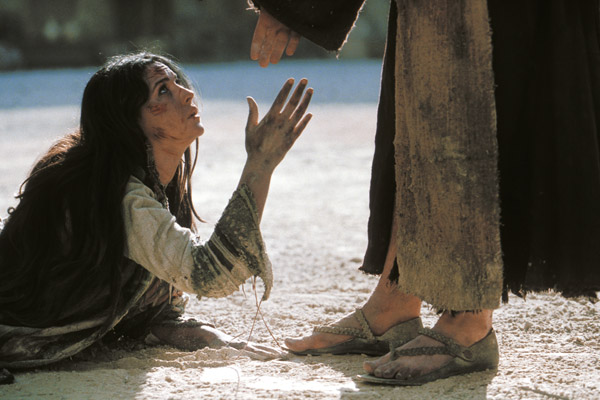
The essence of the Christian faith is love. Rarely, however, do we ask: And what does love require? Jesus answered this question not with a sermon but through his actions. He showed us what love requires during an instructive encounter with a woman unfaithful to her marriage vows (John 8:1-11).  The religious authorities brought her before the Lord. They demanded: “Teacher, this woman has been caught in the act of adultery. Now in the Law Moses commanded us to stone such women. So what do you say?” (v.5, ESV).

The reader hardly needs John’s explanation in v.6 to understand that this was a trap. Their target was not the hapless harlot but the teacher whose growing popularity they envied. They knew that if Jesus excused her action that de facto he would be setting aside the seventh commandment, a serious charge against any rabbi. On the other hand, if he concurred with the punishment that these scribes and Pharisees were only too willing to carry out, his popularity with the people would take a major hit. After all, hadn’t Jesus said that his “yoke” was “easy” and his “burden” was “light” (Matthew 11:29)? Yet agreeing with their decision would appear to undercut that claim, joining him to those who specialized in piling up laws and interpretations. In the eyes of the common person, Jesus might go from “one of us” to “one of them.”

Continue reading “Love? Absolutely, but what does love require?”

Posted in reflections

Don’t Be Brave

“You’re a wise woman; what are God’s words for me today?”

I was dumbstruck. How could Lois ask me that? I wondered.

Time seemed to stand still as I looked into my dear friend’s eyes, red and puffy from a week of tears and lack of rest. I glanced quickly around the small hospital room. My husband was quietly conversing with Rob, Lois’s husband. Their seven-year-old son, James, lay near death in the unkempt bed. He was moaning softly. The scabbed marks on his wrists and ankles betrayed the use of restraints that had tied him down during his earlier seizures. Rob had since convinced the hospital staff that the restraints were not needed if he lay on the bed with his feverish son. He stroked James’s face and arms with a damp cloth and murmured memories and endearments in an effort to keep him cool and calm. James was not only having complications from malaria and asthma, he was also experiencing heart problems caused by the differing medicines. The next morning, James would be flown on a life flight to Paris, France, from the small West African country where we all served as missionaries.

I closed my eyes and prayed. Lord, you said you would put words in our mouths. I don’t know what to say here.

When I opened my eyes, the movement of time was restored. Lois looked expectantly at me. I opened my mouth and only four words came out: “Lois, don’t be brave.” These were not words that my psychology professor would have approved, nor were they words that came from my experience as a pastor’s wife or missionary. In fact, I could not believe they had left my mouth at all, and my hand flew to cover my mouth as if to shove the unwanted words back.

Continue reading “Don’t Be Brave”

Posted in Bible, reflections

“He must increase, but I must decrease” – John 3:30

All human organizations have “pecking orders.” In junior high concert band, I desperately wanted to play first trumpet. First trumpets sat on the end, and could be seen by the crowd during performances. Second trumpets (which was my position) were buried in the back, out of sight. With time and practice, I moved up. Eventually, I was visible. I had “arrived.”

The Kingdom of God works on exactly the opposite principle. It’s not about prestige or position, it’s about obedience, faithful service in the place God has assigned us, whether seemingly “great” or “small.” John the Baptist seemed to understand this. When his disciples came and complained to him that the crowds were abandoning him in favor of Jesus, John pronounced these unforgettable words:

“He must increase, but I must decrease” (John 3:30).

This simply does not compute in human terms, but in God’s calculus, it makes perfect sense. Jesus calls us not to be masters, but to be servants. Greatness comes not through lording it over others, not in bullying them to get our way. True greatness lies in our ability put others before ourselves. To ascend, first descend.

Prayer:

“Lord, help me today to serve others, to put their interests above my own. Forgive me when I have made myself the center of my world. Teach me your way. In Christ’s name, Amen.”

—————

Reflection based on Scripture reading for Day 62, Cambridge Daily Reading Bible, 1995

Posted in book reviews, reflections

The Necessity of a Future Tense

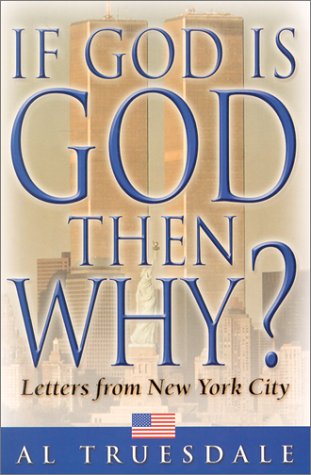
In many ways, Al Truesdale’s If God is God, Then Why? (Beacon Hill Press, 2002) is a helpful book. Originally written after the Oklahoma City bombing in 1996, Truesdale updated the book following the terrorist attacks of September 11, 2001.  In dogged fashion, he refuses to give simplistic answers to life’s toughest questions. His call is to treat hurting people with pastoral sensitivity, to silence some of our off-handed comments that might otherwise cause greater pain to a person who is already hurting.

One by one, Al Truesdale takes up the traditional solutions offered as theodicy (justifying God). One by one, those answers to the problem of evil and suffering are weighed and found to be inadequate. By the end of the book, the fictitious Barbara and Janice are desperate for a satisfying response from their Uncle Carl, a retired pastor. What response will he give to the theodicy riddle?

Continue reading “The Necessity of a Future Tense”

Posted in reflections

Finding God in the rubble

Note to the reader:

These thoughts on “natural evil” apply as much to yesterday’s devastating tornado in Joplin, Missouri as they did to the  Haiti earthquake of January, 2010. Faith seeking understanding can raise more questions than it answers, yet sometimes, questioning is its own solace. Our prayers go out to the families of those who lost loved ones, whether in Port-au-Prince or Joplin.

——————————————————————————————————————————————-

Last night, I tossed and turned. Finally, at 4 a.m. I gave up and went downstairs. Haiti was on my mind.

Estimates are that 110,000 Haitians died in the recent earthquake. News reports included names of specific locations in Haiti’s capital city that my wife, sons, and I frequented while living there briefly as missionaries, like the supermarket where we shopped that collapsed into rubble.

Some stories have been wrenching. Eleven year old Anaika Saint-Louis was a happy girl, sang in her church choir, and told anyone who would listen that someday, she would be a lawyer. When the quake hit, she was trapped under tons of concrete. For three days, she prayed desperately to God to save her. After heroic efforts, workers freed her, but at the cost of an amputated leg. She died en route to specialized medical treatment, three hours away. The Apostles’ Creed affirms: “I believe in the resurrection of the body.” We will see courageous Anaika again someday, but meanwhile her mom weeps, and we weep with her.

Continue reading “Finding God in the rubble”

Posted in Bible, reflections

When you think you’re alone – Psalm 12:1

In public high school, a believer can get pretty lonely. Sometimes, it’s tempting to think that there’s no one else who wants to follow Christ. But God gave me new eyes to see those around me for who they really were, and sent other believers my way. We started a prayer time, and met every day before homeroom. By the end of the school year, nearly twenty gathered daily to pray for each other. What a difference that made in my attitude! Truth be told, I had never been alone.

David sometimes thought he was all alone, too. He cried out to God:

Help, O Lord, for there is no longer anyone who is godly; the faithful have disappeared from humankind (Psalm 12:1, NRSV).

God did not scold David for his heartfelt plea. David knew that God was big enough to receive his wrenching complaint. He felt all alone, and longed for the comfort of the LORD’s presence. Though in Psalm 12 David never sees the solution to his problem, we know from his life that God was listening. At various times, God sent people David’s way to encourage him. In Jonathan, he found a friend closer than a brother. In Abigail, he found a caring wife. The LORD blessed him with family, children like Solomon who – while far from perfect – sought after God and His wisdom. To one all alone, God gave faithful community. His heart brimming with joy, David proclaimed:

I rejoiced with those who said to me,  “Let us go to the house of the LORD” (Psalm 122:1, NIV).

Thank God today for the companions that He has given you on your journey of faith.

—————-

Reflection based on Scripture reading for Day 45, Cambridge Daily Reading Bible, 1995

Posted in Bible, reflections

Getting beyond “if only” – Mark 14:8

After a dismal nine holes of golf, my dad and I were lamenting the tough breaks. “If only that stream had been ten yards further away, I wouldn’t have put it in the drink!”  my dad observed. “Yeah,” I joined in,  “and if only I’d used my 7 iron instead of my 5, I wouldn’t have overshot the green on the last hole.” Things got quiet as we sipped our Cokes in the clubhouse. “You know,” my dad reflected, “when if comes to golf, maybe the two words we need to remove from our vocabulary are ‘if’ and ‘only.’ ”

As in golf, so in life. In Mark 14, we find a remedy to the “if only” approach to living. A woman wondered what she had to offer the Lord. She may have been tempted to think: “If only I had been born rich, then I could contribute my wealth to the Master.” Then she remembered the jar of aromatic nard. She heard that Jesus was at the house of Simon the Leper. Timidly, she crossed the threshold and made her way toward the table. Perhaps Jesus smiled at her, giving her just enough courage to carry through with her plan. Opening the jar, she slowly poured the perfumed oil on his head. When others protested the lavish waste, the Lord scolded them. “Let her alone. Why do you trouble her?” (v. 6). Jesus insisted that the poor would always be with them, but the woman had done an incredibly loving and selfless thing:

“She has done what she could; she has anointed my body beforehand for its burial” (v. 8, NRSV).

Jesus affirmed: “She has done what she could.”  There are lots of things that we cannot do. We can waste a lot of time pondering the “if onlys,” or we can get busy doing what we can, using what is at our disposal. It’s time to get beyond “if only.” It’s time to do what we can.

——————-

Reflection based on Scripture reading for Day 42, Cambridge Daily Reading Bible, 1995

Posted in reflections

Visiting the shrine of the “Anti-Christ” – Mark 13:24-37

Last March, I visited the shrine of the “Anti-Christ.” Let me explain. Back in the 1980s, our President was active in negotiating treaties with the Soviet Union. By some weird twist of logic, this made him a candidate for the dreaded apocalyptic title, “Anti-Christ.” To bolster their case, the doomsayers added up the number of letters in each of his names:

R-o-n-a-l-d (6)   W-i-l-s-o-n (6)  R-e-a-g-a-n (6)

As you’ve guessed, the “shrine” was actually former President Reagan’s Presidential Library in Simi Valley, California. He’s now resting peacefully, awaiting the resurrection like countless other world leaders who played their parts on the world-stage. Last I heard, he didn’t turn out to be the dreaded Anti-Christ.

While President Reagan is gone, that kind of speculation is still with us. As I type these words, a radio preacher – whose theories don’t deserve to be dignified by the mention of his name – has predicted that Jesus will return on May 21. His kind belong to what theologian Ray Dunning has called “speculative eschatology.”  Suffice it to say that cotton candy is twice as nourishing to the stomach as speculative eschatology is to the mind and spirit.

In Mark 13:24-37, Jesus talks about the return of the “Son of Man.” Christians do believe that Jesus is coming back. Since this is our firm hope, we should heed two important things Jesus tells us in this passage:

1. No one knows precisely when – Verse 32 is clear: “But about that day or hour no one knows, neither the angels in heaven, nor the Son, but only the Father.” The creative ways prognosticators dance around this verse’s clear meaning are legion. “Maybe we don’t know the day or hour,” they’ll say, “but we might know the minute and second!” Seriously?

2. Keep awake – The reason why God didn’t give us the exact timing of Jesus’ return is obvious. Having made us, God knows our human tendency to procrastinate. Rather than living the kind of righteous life we should at all times, if we knew when Jesus was scheduled to return, we’d live any old way right until he returns. So Jesus warns us:

Therefore keep awake – for you do not know when the master of the house will come, in the evening, or at the midnight, or at cockcrow, or at dawn, or else he may find you asleep when he comes suddenly. And what I say to you I say to all: Keep awake” (Mark 13:35-37, NRSV).

Are you ready for Christ’s return, whenever that might be?

——————-

Reflections based on Scripture reading for Day 41, Cambridge Daily Reading Bible, 1995

Posted in reflections

David Bosch on discipleship

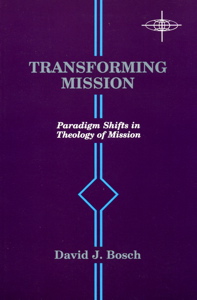
David Bosch makes one think. Here’s what he has to say about disciples (Transforming Mission, p. 74):

Every disciple follows the Master, but never alone; every disciple is a member of the fellowship of disciples, the body, or no disciple at all.

Bosch makes the comment in a section on Matthew, which he calls “the gospel of the church” (Ibid.). Matthew is the only one of the four gospels that uses the word ekklesia, the Greek New Testament word for “church.” To follow Jesus is to follow him together.

As a Wesleyan, Bosch’s comments make sense to me. Christianity is never about a one-time “decision for Christ.” If we must use the word “decision,” then it should always be a “decision to follow Christ.” To decide to follow Christ is to become a disciple. As Bosch notes, “disciple” (Gk. mathetes) occurs seventy-three times in Matthew, and is “the only name for Christ’s followers in the gospels” (Ibid.).

So…

1) To be a Christian is to be a disciple, and

2) To be a disciple is to follow Jesus with other disciples;

3) To follow with other disciples means being part of the body of disciples, the Church.

If I could identify the greatest weakness of American Christianity, it is this. Somehow we’ve latched on to the notion that being “saved” has no necessary connection with the ongoing, everyday decision to follow, to be a disciple, to be part of the Church. Is it the individualism woven into our American DNA that blinds us to the corporate nature of Christian faith?

Thank you, Mr. Bosch, for giving us lots to think about.