Conducting a 4th grade band takes a special kind of patience. Every child is new at his or her instrument, be it the flute, clarinet, trumpet, trombone, drums, or a dozen other things that make noise. And let’s face it, for 4th graders, about all we could was make noise. Like my brothers before me, I played the trumpet, or at least I tried.
Our first concert came at Christmas time. By then, all of us had a grand total of 3 months of experience, practicing twice per week in the band room. Parents and siblings gathered in the cafeteria and waited for us to file in. At last, all of us were in our seats and Mr. Taylor stepped up to the small platform, took his conductor’s baton, and raised his arms. We all snapped to attention and raised our instruments, ready to play.
I’m not sure what happened, but only about half of us began playing when his arms came down, signalling the start of the song. Were some still trying to spot where their families sat in the audience? Maybe others were still adjusting their music on the stand or simply daydreaming, but whatever the reason, it was a poor start.
Mr. Taylor then did something that surprised us. He suddenly stopped directing the song, tapping his baton several times on the music stand. We all ground to a halt, not knowing what to make of it all. Slowly, he turned around and addressed the audience:
“Ladies and gentlemen, we’ve had a very poor start to the song. Please forgive us. We can do better. Now, we are going to start all over again.”
And that is exactly what we did. I’m glad to report that the second time went much better, and when we were done, the audience applauded with gusto.
That’s what Heaven will be like. Heaven is New Creation. Heaven is God starting the song all over again.
The first time through, the song has been marred by sin, off-key. God knows we all can do better. One day, he will tap his baton on the music stand and we will all begin again.
John described it this way: :
Then I saw “a new heaven and a new earth,” for the first heaven and the first earth had passed away, and there was no longer any sea.2 I saw the Holy City, the new Jerusalem, coming down out of heaven from God, prepared as a bride beautifully dressed for her husband.3 And I heard a loud voice from the throne saying, “Look! God’s dwelling place is now among the people, and he will dwell with them. They will be his people, and God himself will be with them and be their God.4 ‘He will wipe every tear from their eyes. There will be no more death’ or mourning or crying or pain, for the old order of things has passed away” (Revelation 21:1-4).
More and more of those who have played their instruments with me in the band are now silent, awaiting that second chance to perform. On that day, the band will once again assemble. All who have played before us will be present, gloriously resurrected by the Lord in new, durable bodies. What a grand reunion that will be as Jesus raises the baton and we start the song all over again!
How about you? Will you be in the band? This life is only the poor beginning to the song, but a new, better beginning is coming. Don’t miss out on it. Keep your instrument in-tune. What a performance that will be!
The interface between theology and psychology has always intrigued me. Yesterday, I read Aldous Huxley’s Brave New World. The 1932 classic from the British novelist and philosopher presents a vision of a far-off future where humans no longer fulfill the role of “father” and “mother.” Instead, reproduction is carefully engineered by the State, social classes predetermined from fertilization and gestation in closely-monitored bottles.
There are many themes to explore in the book, and the dystopian vision still resonates well at a time when The Hunger Games is all the rage. Allow me to focus this brief essay on a single topic, namely, whether we believe in God only because others have conditioned us to do so.
Conditioning is a psychological technique whereby humans are molded to think and act in ways determined by the person in control. Brave New World portrays a system whereby young children are spoon-fed ideas while they sleep, messages repeated over-and-over through tiny speakers hidden under their pillows. In this passive way, the various classes – Alpha, Beta, Gamma, Delta and Epsilon – acquire their worldview, especially their prejudices toward members of other castes.
Though the novel never explains exactly how the rulers of the “brave new world” condition people’s thinking about God, the Divine Being comes up at the end of the book in a conversation between the Savage and Mustapha Mond, the Controller (p. 183):
The Savage interrupted him. “But isn’t it natural to feel there’s a God?” “You might as well ask if it’s natural to do up one’s trousers with zippers,” said the Controller sarcastically. “You remind me of another of those odd fellows called Bradley. He defined philosophy as the finding of bad reasons for what one believes by instinct. As if one believed anything by instinct! One believes things because one has been conditioned to believe them. Finding bad reasons for what one believes for other bad reasons – that’s philosophy. People believe in God because they’re conditioned to believe in God.” (italics added)
There’s some truth in what Huxley says. Can there be any doubt that Christian education – what Huxley would no doubt consider a form of conditioning – affects a child’s worldview, like a hand imprint left in wet cement? Children who have not yet learned to reason are particularly open to whatever teaching is given, positive or negative, whether it is training to be an altar boy or a child soldier.
Yet Huxley’s critique leaves unaddressed other considerations, particularly the role of religious experience. This experience is both individual and corporate. In the Judeo-Christian tradition, Scripture may be considered largely the experience of the divine as lived across time by persons and peoples. Further, it is not a mystical experience devoid of any historical reference, but experiences that transpired in real time. Isaiah saw the LORD lifted up, but it happened “in the year that King Uzziah died” (Isaiah 1:1). Likewise, The Apostles’ Creed assumes historical reality, portraying a Saviour who “suffered under Pontius Pilate.”
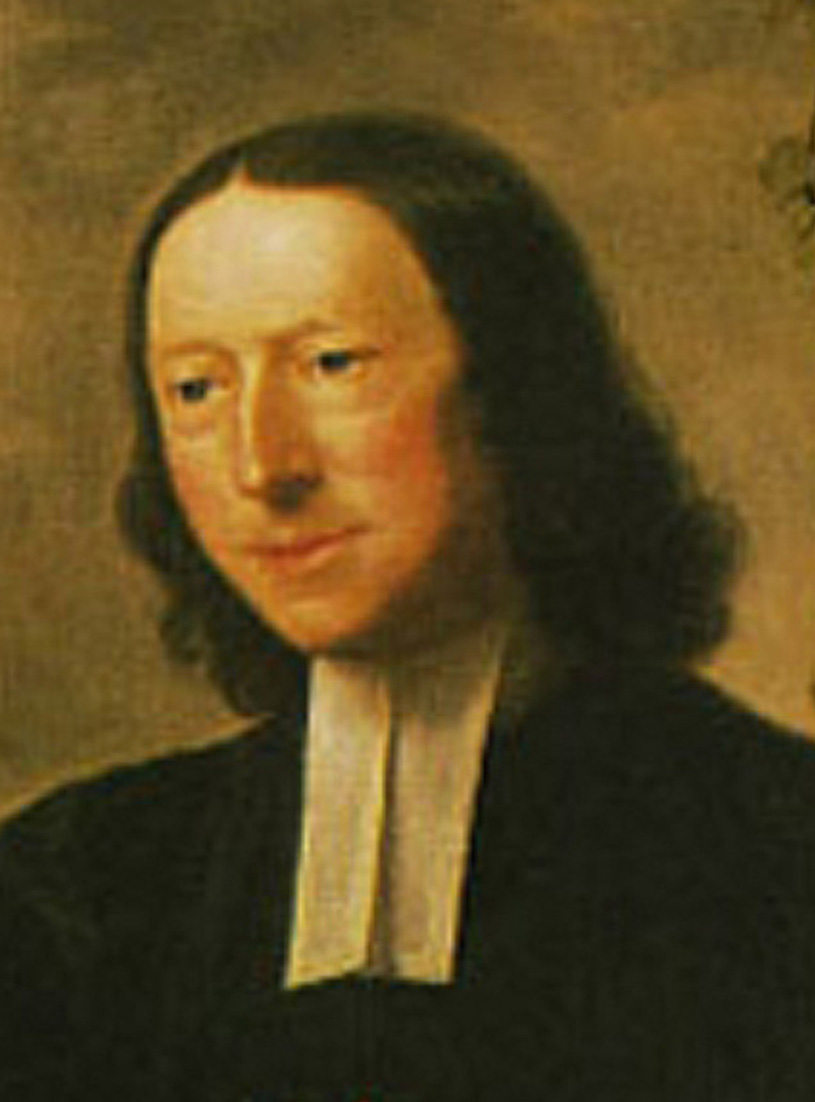
More than any other Christian tradition, evangelical faith has discerned the importance of moving past conditioning to encounter. John Wesley (1703-91) had been conditioned by his father and mother to believe that God existed, to pray and to read the Bible. Yet on May 24, 1738, Wesley recorded his personal experience of God’s grace, that his heart was “strangely warmed” while listening to someone read the introduction to Martin Luther’s commentary on Romans. Whether we call this his “evangelical conversion” or simply the moment of the assurance of faith matters little. The point is that – to use Wesley’s later term – he moved in his own self-perception from having the faith of a “servant” to that of a “son.”
Religious experience is always a slippery subject to discuss. Any faith – to be held as true by its adherents – must account for the religious experiences of those who espouse other faith traditions. Why should our community of faith’s experiences be considered more valid? Further, what one calls “God” the skeptic might call hallucination, but at least now we’re having a conversation not about “brainwashing” but something empirical, experiences that can to at least some degree be analyzed and evaluated.
The power of encounter should never be underestimated. Saul had been conditioned to believe certain strict tenets as a boy who grew up under Pharisaical teachings. It was only later, however, when conditioning met encounter in the person of the Living Christ on the road to Damascus that his vision was transformed. Through a radical experience of the transcendent, some of his conditioning was modified. No longer would he seek out Christians to imprison them as enemies of the Jewish faith. Instead, he now became one of their key leaders. Experience trumped conditioning.
Yet one must be careful. God exists independently of our experience of God. One might be tempted to conclude: “For you, God exists because you’ve experienced him, but for me God does not exist since I have never experienced God.” Yet the tree that falls in the forest still makes a sound, whether or not I am close enough to hear it. What matters is that the effects of encounter are measurable. Like a strong wind topples a tree, the fallen tree serves as evidence of an invisible reality. So it is in the spiritual realm. Lives transformed from drunkenness to sobriety, husbands who stop beating their wives, children who were before disobedient to parents who suddenly become more compliant and helpful, these effects and many more testify to a Cause, and that Cause is God. When it happens to enough people, we call it a religious awakening.
Brave New World is a fascinating book on many levels. Aldous Huxley has done Christ followers a favor by forcing us to begin to think through our assumptions, including how we have come to believe what we do about God. But what do you think? Is Christian faith – or any faith – no more than the result of conditioning? Weigh-in below in the comment thread.
Henry Ford invented the assembly line. His efficiency experts determined that to produce the maximum number of quality cars, workers should be stationed along the line, each one performing a given task.
But what works well for putting together cars is a failure when it comes to people. Having attended many District Assemblies in both the United States and in Africa, I wonder:
Do we now have District Assembly Lines?
Assemblies have become efficient, but less-and-less relational. The focus is on getting the church’s business accomplished in just a few short hours – a morning or an afternoon – but in the efficiency, have we surrender relational effectiveness?
It wasn’t always this way. We used to have District Assembly, which really were District Conferences. When I was boy on the Upstate New York District, we used to have a full two days given to Assembly. Pastors reported at-length on both victories and struggles. We took time to pray for each other. Resolutions were made from the floor, and we took the time to listen to both sides before going forward together.
Part of the problem is a good problem. In my life-time, we have more than doubled in number, from under 1 million to 2.3 million. This means that General Superintendents now are jetting around the world to hold District Assemblies. Since they are the only ones authorized to ordain elders and deacons, necessarily their stays are shorter.
Yet our sense of connection as local Nazarene churches is weakening. To reverse this decline, it’s time for us to get creative at the district level, and maybe the regional conference can guide us.
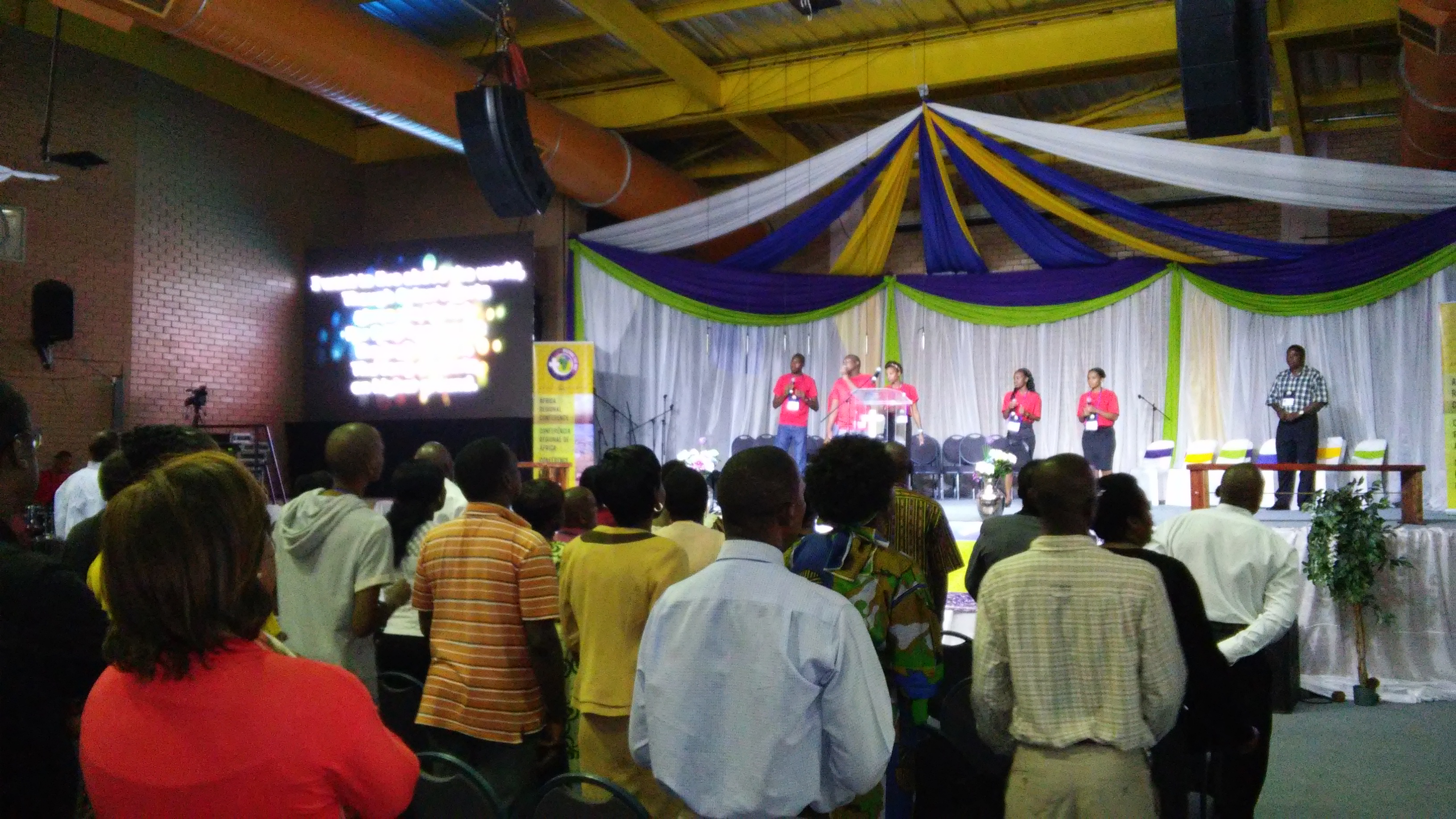
We have just finished a 5 day regional conference in South Africa. The incredible joy that I’ve seen on the faces of our delegates from southern Africa and lusophone Africa has done my heart good. We had time for each other. Around the breakfast, lunch, and dinner tables, we laughed and cried, renewed friendships and made new ones. In extended sessions, we discussed challenges in the church and shared possible solutions. Because it was a longer period, we had time for three nights of holiness preaching. Helpful workshops were the order of the day. We finished the week united in our common mission and feeling connected.
Singing during evening worship, Africa Regional Conference (Johannesburg)
Yet the regional conference is expensive. We come from long distances, and these are just representatives. Many more who would have profited from the relationship building could not attend, and even if they had been available, what venue is large enough? Further, the regional conference is only every four years, hardly frequent enough for most.
The question is:
How can the relational emphasis of the regional conference be brought to the district level on an every year basis?
1. Take time together, several days annually, to build connection. The word Conference has a rich heritage within Wesleyan-Holiness circles. It was John Wesley (1703-91) who convened in London the very first Methodist Conference in 1744. John Wesley reported regarding this Conference:
In June 1744, I desired my brother and a few other clergymen to meet me in London, to consider how we should proceed to save our own souls and those who heard us. After some time, I invited the lay preachers that were in the house to meet with us. We conferred together for several days and were much comforted and strengthened thereby.
Wesley noted that they were “comforted” and “strengthened.” It also did not happen in a half day of hurried business. Rather, they were together for “several days.” It takes time to bond and build a team. What was true in 18th century England is no less true for human beings today, no matter their cultural background. Have we forgotten this relational truth?
2. Change our language from “Assembly” to “Conference.” Words matter, and the term “Assembly” has come to be associated only with church business. Let’s get back to our Wesleyan roots and speak of Conference. If need be, we can carve out three hours from the Conference and call it “district church business session,” but let it not be the primary focus. Our main purpose should be connecting.
3. Remindthe District Superintendent and his or her team that they have great freedom to organize this annual event and to use their creativity. District Conference could be the most anticipated event of the year. As it currently stands, districts seem to feel like they cannot do much without the presence of the outside church higher-up, whether that’s the General Superintendent or whoever may have been appointed to preside in his or her place. If the “district business meeting” and the ordination service are the only two events requiring the presence of the G.S., then there is great latitude to plan other events around those times, events more conducive to team-building and making connections between local churches on the district.
4. Don’t forget the children, teens and twenty-somethings. On the planning team, there should be representation from teens and those in their twenties. Inter-generational events should be the norm and space given to participation in both planning and on the platform by these three often forgotten age categories. Let us enfranchise all ages at the District Conference, including children. Only then can we reverse the lamentable trend where the average age at what we now call District Assembly is certainly above 50 and perhaps higher.
In the movie “You’ve Got Mail,” the character played by actor Tom Hanks comes in to the neighborhood and builds a “big box” location of his chain book store. When the home-grown bookshop owner complains, he remarks:
“It’s not personal, it’s business.”
And that’s the problem with our current District Assembly Lines. They’re not personal, they’re just business. Assembly lines in the auto industry make for high efficiency, but in the church they’re destructive. It’s time to disassemble our annual District Assembly Lines and move to an annual District Conference, fostering over several days greater levels of connection while still accomplishing the church business that we must.
—————
UPDATE: Twenty-four hours after posting it, this article has been viewed almost 400 times, which is more than 4x my usual traffic. Thank you to Dr. Eugenio Duarte for his comments at Africa Regional Conference this week, about connection really being our fourth Nazarene Core Value, i.e. Christian, holiness, misssional, and connectional. My essay is nothing more than reflecting on what he said and attempting to apply that principle in a particular case. I’m late to the party, as conversation on FaceBook shows some districts have already been re-thinking District Assembly in creative ways to combine it with other events (NMI, NYI, camp meeting) to make it longer and more relational. May this trend take hold.
Friday is date night, but this week, Amy and I did a Friday date lunch instead. When I was done ordering our fish, as I’ll often do – gregarious Greg that I am – I made conversation with the server. Reading his name tag, I discovered a name I’d never seen before: “Ability.”
We chatted a bit, and later I reflected on the optimism behind his name. Twenty or so years ago, a son was born. Of all the names his father and mother could have chosen for him, they chose this unique name, one that says:
Look what we were able to do, together.
Ability’s name is not so much a “Yes, I can” as a “Yes, we can.”
North American media has done Africa a grave disservice. It seems to cover only wars, famine, and disease. The story of Africa Rising rarely makes the news, yet a huge part of that story is optimism, fueled by a deep trust in the goodness of God and the Lord’s desire to see life on this Great Continent not just survive but flourish.
O Africa, Ability is your name!
This week, 800 optimistic Nazarenes from across Africa are converging on Johannesburg for a time of worship and equipping. In the laughter and let’s-take-time-for-each-other conversations around the dinner table, a confident can-do attitude is never far away.
Here are some of the other positive “Abilities” that I’ve seen in Africa since arriving in 1993:
– Responsibility
– Dependability
– Respectability
– Accountability
– Flexibility
– Capability
Are they always demonstrated? Of course not. After all, what human society anywhere in the world perfectly reflects these characteristics? But I have come to cherish the dominance of these values, the sweet fruit of placing an emphasis not on independence but interdependence. Africa is at her worst when she forgets these communal values. On the other hand, she is at her best when she celebrates and rewards them.
Reuben Welch said it well:
We really do need each other.
Ability in all its forms takes root in the soil of dependence upon God, then blossoms in mutual assistance. It’s as simple as loving God and loving neighbor (Mark 12:28-34).
I’m glad I met Ability at the fish shop. His name reminds us that – with God, and working together – all things are possible.
John Wesley’s message was simple, just like Jesus’. Is ours?
He insisted in his 1746 The Principles of a Methodist Farther Explained:
I have again and again, with all the plainness I could, declared what our constant doctrines are; whereby we are distinguished only from Heathens, or nominal Christians; not from any that worship God in spirit and in truth. Our main doctrines, which include all the rest, are three, — that of repentance, of faith, and of holiness. The first of these we account, as it were, the porch of religion; the next, the door; the third, religion itself (Works, 8:521-22, CCEL digital edition).
Jesus was once asked to sum up all the Law and the Prophets, the heart of the message of what Christians now call the Old Testament. He answered by saying that we should love God and love our neighbor (Mark 12:28-34). These are the two Great Commandments, and they are the very marrow of what it means to be a Christlike disciple.
What does the religion of loving God and others look like, particularly as worked-out socially? In Principles Farther Explained, Wesley continued:
This love we believe to be the medicine of life, the never-failing remedy for all the evils of a disordered world, for all the miseries and vices of men…this religion we long to see established in the world, a religion of love, joy, and peace, having its seat in the heart, but every showing itself by its fruits, continually spring forth, not only in all innocence, (for love worketh no ill to his neighbor), but likewise in every kind of beneficence, spreading virtue and happiness all around it (p. 524).
Check out any news website. How many of the stories use fear as a hook?
– Something sinister is in our food!
– Vaccines cause autism!
– A meteor will strike the Earth!
The message is loud-and-clear: Be very, very scared.
The problem with fear is that it destroys relationships. The first ruptured relationship was between humans and our Creator. Genesis 3 tells the story of God’s search for Adam in the garden. God asked: “Where are you?” Adam and Eve were hiding, and Adam answered:
“I heard you walking in the garden, so I hid. I was afraid because I was naked.”
Their sin – disobedience to God’s command not to eat of the tree of the knowledge of good and evil – produced fear. Fear in-turn led them to flee from God. Hiding symbolizes estrangement, absence of relationship.
Yet fear wreaks havoc not only on our relationship with God. It also prevents deep relationships with others. Some years ago, we spoke of our missionary work at a church located in a U.S. town where historically there has been high tension between blacks and whites. After the service, the pastor gave us directions back home.
“Make sure,” he said, “that you don’t turn right heading out of the parking lot. That will take you through a bad section of town.”
Once the pastor had gone, rebels that we are, we climbed in the car, pulled out of the parking lot and turned right. We soon found a chicken restaurant and had some dinner. Sure, we were the only white customers in the establishment; it mattered not one bit. The employees treated us kindly and with respect and the other customers smiled at us. There was no fear; we were welcome. The well-meaning pastor had given us fear-based directions. Instead, we chose otherwise and enjoyed a pleasant and safe dinner. In a way, I pitied the pastor. What relationships was he missing out on in that town because he could not get past the fear factor, a fear based upon the superficial characteristic of skin color?
The apostle John gives the remedy for the fear factor. It’s the love factor:
“There is no fear in love. But perfect love drives out fear, because fear has to do with punishment. The one who fears is not made perfect in love” (1 John 4:18, NIV).
Paul writes: “Serve one another in love” (Galatians 5:13b). Service is the incubator in which love can grow. You may fear the homeless and want to walk past them, holding your wallet a bit tighter. But something happens when you volunteer at the rescue mission and find out that it’s not just “the homeless.” It’s George and Susan and Ralph and – suddenly – you begin to care.
Perfect love casts out fear.
“Religion of hate” is another popular phrase that instills fear. It allows us to “other” an entire swath of the Earth’s population, to write them off as infected with what can come across as a dangerous form of belief. But what happens when stereotypes are subjected to new information? “Aalim” (not his name) sat next to me on the plane. He was traveling home with some other high school students, checking out universities where he might attend. He told me that he liked the Oklahoma City Thunder (a city where I’ve lived before) and loved playing basketball. We talked about Kevin Durant and his amazing skills on the court. By the end of the flight, Aalim was no longer a faceless individual in a group. He was just a regular teenager, a basketball fan, an aspiring architect. Yes, I know what I’m told to think about “them.” It’s the same fear-based thinking that told me not to drive through “the bad part of town,” but how can I fear someone like Aalim when I get to know him even a little?
Perfect love casts out fear.
I’m part of the Wesleyan-Holiness stream of Christianity. We pride ourselves on the “optimism of grace,” a belief that God can do amazing things in the human heart, transforming our lives and making us like Jesus, filling us with love for God and neighbor. But when it comes to our knee-jerk response to current events, sometimes I wonder:
Do we have spiritual dyslexia? Is perfect fear driving out our love?
Do divisions in our families, communities and nation persist because we have allowed ourselves to be overcome by fear instead of getting down on our knees and giving our fears to God, serving the very ones we fear and thereby dispelling fear with love? What unquestioned prejudices passed down allow us with impunity to “other” our neighbors, building walls instead of bridges?
Fellow follower of Jesus, perfect love still drives out fear. Isn’t it high time we get beyond the fear factor?
Sometimes God is gentle breezes and rainbows. Other times, the LORD is ferocious winds and thunder clouds. In Numbers 21, God is both.
The people were griping and complaining…again. They railed against God and Moses:
Why have you brought us up out of Egypt to die in the desert? There is no bread! There is no water! And we detest this miserable food! (Numbers 21:5, NIV).
Scripture never says in so many words that God was angry, but it’s a justified conclusion. Right after this complaint, the LORD sent venomous snakes into the camp and “many Israelites died” (v. 6).
Yet God – in steadfast love – relented. God commanded Moses: “Make a snake and put it on a pole; anyone who is bitten can look at it and live” (v. 8). So Moses made a bronze snake and did exactly what God instructed. Those who looked up at the bronze snake, though bitten by a serpent, were healed.
It’s an inspiring story to that point, so memorable that Jesus discerned in the story a parallel to his own crucifixion, a day when he would be lifted up like the bronze desert snake (John 3:14), a spiritual balm for all who look to him.
But the story of the people of Israel and the bronze snake has another chapter. Fast forward hundreds of years. It is the time of King Hezekiah and this good servant of God is determined to purge the land and the Temple of idols. In 2 Kings 18:4 (NIV), we read:
“He removed the high places, smashed the sacred stones and cut down the Asherah poles. He broke into pieces the bronze snake Moses had made, for up to that time the Israelites had been burning incense to it. (It was called Neshutan).”
What happened? Sometime between Moses and Hezekiah, what had been intended as simply a helpful way to focus their attention on the God who heals had mutated into something magical. Instead of the people looking past a mere symbol to the awesome God behind the symbol, they made the bronze snake an object of their worship, an end in itself. Sensitive to the voice of the LORD, the king knew it had to go.
“Holiness, Africa’s Hope” is a banner that hung outside a church office, but I wonder: Can holiness become like a bronze snake? Can even the phrase “Holiness Unto the Lord” subtly shift over time to become a magical saying, falsely comforting those who mouth it as if the words themselves have power? Are we with every good intention unwittingly directing people to trust in a religious experience – however meaningful and valid – and not the Saviour who is the source of that experience? Rather than saying “Holiness, Africa’s Hope,” would it not be more accurate and biblical to say: “Jesus, Africa’s Hope”? Nowhere in the New Testament is holiness described as our hope, yet Colossians 1:27 affirms:
“To them (the saints) God has chosen to make known among the Gentiles the glorious riches of this mystery, which is Christ in you, the hope of glory.”
Our hope is not holiness, but Jesus. Our hope is not a what, but a Who.
“Star light, star bright, the first star I see tonight…”
The children’s poem came to mind last week. Under my feet was the cool grass of the Walter Sisulu Botanical Gardens in Roodepoort, South Africa. But this night we weren’t looking at the birds or the plants. Our focus was the heavens, and I learned amazing new things.
That “first star I see tonight” has a name. It’s called Sirius, the brightest star visible from any point on Earth. It is 8.6 light years away, or 8.6 x 5.8 trillion miles distant from our planet. It is a white star, of much greater size and intensity than our own Sun, which is only a medium-sized yellow star.
Likewise, the Hubble telescope keeps capturing images of space that take our breath away, glimpses of the enormity of the cosmos:
Hubble Ultra Deep Field, 2014
In A Short History of Nearly Everything (Doubleday, 2003), Bill Byron dazzles the reader with a fascinating description of how the stars, planets, and all that is suddenly sprang into existence:
In a single blinding pulse, a moment of glory much too swift and expansive for any form of words, the singularity assumes heavenly dimensions, space beyond conception…In less than a minute the universe is a million billion miles across and growing fast….in three minutes, 98 percent of all matter there is or ever will be has been produced. We have a universe. It is a place of the most wondrous and gratifying possibility, and beautiful, too. And it was all done in about the time it takes to make a sandwich. – p. 28
The Psalmist was no less impressed than Mr Byron, marveling:
When I look up at your skies and what your fingers have made – the moon and the stars that you set firmly in place – what are human beings, that you think about them; what are human beings that you pay attention to them? (Psalm 8:3, CEB).
There is a tendency these days in theology to size-down God. It’s a convenient way to solve the problem of evil and suffering: “Maybe a good God doesn’t always act because God can’t.” But after an evening gazing at the stars, that explanation loses whatever small attraction it might have held. When the heavens declare a mind-blowing, awesome, immensely powerful Creator God, how could I ever believe in a puny god like some Christians seem to half-heartedly serve?
Goodbye, puny god. Hello, majestic God of the universe!
But like the Psalmist dared paint his tiny self onto this boundless cosmic canvas, so I hazard to ask:
If God could fling stars into space, what could this God of love do in my life? Could this God in Jesus Christ forgive me, deliver me, change me, energize me to make a difference on this tiny speck of a planet we call Earth?
Likewise, a fresh vision of this beyond-my-imagination God is bound to deepen my intensity in worship. How can I, a mere grain of sand in the vast scheme of things, come lightly into the presence of such a fearsome Triune God? How dare I stand in the sanctuary and play with text messages, FaceBook or a dozen other distractions when in the presence of such a Being?
Get outside. Get away from the city lights. Look up, but I warn you: Your puny god will be no more. Instead, you will be drawn to your knees in praise of our magnificent Creator God.
——-
UPDATE: I changed the light year reference to 5.8 trillion rather than 1 trillion miles. See the comment from Lucien Jacquet below, who corrects that and a few other scientific details.
Bill and Gloria Gaither’s hymn, “Because He Lives,” affirms Christian faith in a powerful way. Other Gaither songs (mercifully) have faded into obscurity, ditties like “Happiness” –
I found happiness.
I found peace of mind.
I found the joy of living,
Perfect love sublime!
I found real contentment, happy living in accord.
I found happiness all the time, wonderful peace of mind, since I found the Lord.
The beloved composers from Alexandria, Indiana have written some amazing songs, but let’s be honest: This isn’t one of them. To assert that embracing Christian faith gives us “happiness all the time,” removing sadness from the believer’s experience, is theological quackery. Two events that made me decidedly unhappy this week were terrorist attacks in Paris and northeast Nigeria, the senseless toll of lives brutally snuffed-out surpassing 2,000. A third saddening occurrence didn’t make the news, but it was important to those who knew her. Karen (38), a loving wife and mother of three, succumbed to cancer after a prolonged, heroic fight. She was a teen in the Missouri church where I pastored. She had so much to live for! Really, God?
The “Minnesota Mission,” Sedalia Church of the Nazarene, summer 1992. Karen is the third girl from the right, standing.
At times of grief, we don’t need another happy-clappy song to make us feel guilty for crying. For times like this, we need lament, the words of King David grieving over his slain son, Absalom:
The king was shaken. He went up to the room over the gateway and wept. As he went, he said: “O my son Absalom! My son, my son Absalom! If only I had died instead of you—O Absalom, my son, my son!” (2 Samuel 18:33, NIV)
Thomas Tomkins (1572-1656) set this biblical text to choral music. As a tenor in the A Capella Choir at Eastern Nazarene College, the song never failed to move me. (Click here for to a moving rendition of the piece with a beautiful montage).
Ecclesiastes 3:4 reminds us that there is a time to weep. But apart from funerals – which these days are as likely to be called a “celebration of life,” further discouraging tears – do we allow lament as one of the languages of our Christian worship?
In his book, Worshipping Trinity: Coming Back to the Heart of Worship (Wipf & Stock, 2012), Robin Parry devoted chapter 9 to the topic of lament. Unpacking Romans 8:17-25, he notes (p. 140) that by “groaning in the Spirit,” we:
1. Express our “sorrow, pain and frustration at the current state of affairs”;
2. Signal our “expectation for a better future”;
3. Intercede, which is “simultaneously a prayer to God for new creation.”
Parry observed: “So the story of the church and of creation is darkness now but light to come – a story already played out in the life of Jesus” (p. 139). Yet much like Holy Week, are we sometimes on Dark Saturday tempted to fast-forward to the Resurrection?
Don’t do it. To heal, we need lament!
We need to give one another permission to feel the deep, searing pain of loved ones ripped away from us, just like Jesus was snatched from the disciples and laid lifeless in a damp tomb. And while it’s understandable that most of what we sing on Sunday morning is upbeat, positive praise addressed to God, is there not a place for worship music that says: “God, this hurts so bad”?
These reflections began with a critique of Bill and Gloria Gaither’s song, “Happiness.” To their credit, they wrote a more authentic song entitled “I believe, help thou my unbelief.” Make no mistake: This is a lament, a desperate desire to hold on to Christian faith even in our darkest moments. It doesn’t tie things up in a nice little bow, and so in the same spirit, I leave the reader with no tidy conclusion, only this song.
This is the time for making New Year’s resolutions. Last year, I made two that I’m glad to say – by the grace of God – I accomplished:
1) Read through the Common English Bible in 2014 (see the plan here);
2) Wrote a daily devotional guide, Trente Minutes Avec Dieu, for speakers of French, available here. This was based on what I read in the reading plan outlined in # 1.
As I look back on the experience of reading through the Bible, at least five observations come to mind:
1. This Book contains some practical things!
It’s a tribute to a collection of 66 ancient writings that even in the year 2014 it contains what I would call “Golden Passages” that speak to my own journey. So many could be cited, but here are just two:
“In your struggle against sin, you haven’t resisted yet to the point of shedding blood” (Hebrews 12:4).
How deadly must sin be if the writer to the Hebrews says we should resist it to the point of shedding our blood? We take sin far too lightly.
“I sought the LORD and he answered me. He delivered me from all my fears” (Psalm 34:4).
I’m reminded due to stormy weather of a very turbulent landing in Johannesburg in late November, following a trip to Mozambique. It’s good to know verses like Psalm 34:4 in times like that!
2. This Book is filled with anger and blood.
There’s no avoiding the issue: the Bible is a violent book, especially large swaths of the Old Testament. The fictional character, President Jeb Barlett, admits in one episode of The West Wing: “I’m a New Testament man, myself.” Wycliffe Bible translators start by translating the New Testament for a good reason. Though there are passages in the Old Testament that present a softer, more loving God, they can be obscured by the horror of other sections. Don’t tell my Old Testament profs, but there’s a reason many preachers prefer the last 27 books to the first 39.
3. This Book is amazingly simple.
Vacation Bible School teaches young children verses like John 3:16 and 1 John 1:9. As they memorize those Scripture portions, their young minds comprehend some basic truths: God is my Creator, God loves me, God wants to forgive me, and God wants to be part of my life. That’s the simple genius of the Bible.
4. This Book is amazingly complex.
On the other hand, men and women study for years to receive doctoral degrees in biblical literature. There is a constant stream of new commentaries being released to take into account recent findings about a myriad of questions related to the Bible and its background. (Check out the New Beacon Bible Commentary which is an excellent resource, available through the Nazarene Publishing House).
5. This Book will make you hungry for God.
Just when you’re ready to give up because of the complexity and tedious character of some parts of the Bible, all of the sudden there’s a passage that makes you want God more than anything:
“I want to know Christ–yes, to know the power of his resurrection and participation in his sufferings, becoming like him in his death, and so, somehow, attaining to the resurrection from the dead” (Philippians 3:10-11, NIV).
If you want to read the Bible through in 2015, I’d encourage you to do so. Was it an easy year? No. Was it a worthwhile thing to do? Absolutely. Go for it!
 Mr. Taylor was my first band conductor.










 Gregory Crofford


