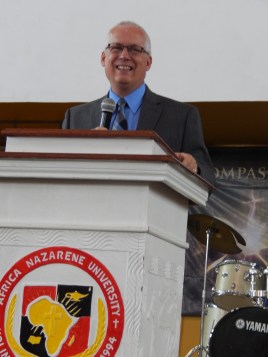
I preached this sermon on Thursday, September 27, 2018 in the chapel on the L.T. Marangu campus of Africa Nazarene University (Ongata-Rongai, Kenya).
N.B. – All Scripture references are from the Common English Bible.
Text: Colossians 3:12-17
I. INTRODUCTION
Have you ever had an earworm? You know what I mean by that. Have you ever gotten a song stuck in your head? Maybe it was the first song you heard when you woke up, or the last song you listened to before going to sleep at night. However it happened, it’s stuck in your brain and you can’t get away from it. At first, it was pleasant, but how that you’re hearing it for the 57th time, it’s just plain annoying. In fact, if you don’t get the song out of your head soon, it’s going to drive you crazy! What do you need? A new song, a better song. To drive out the old, find something new.
II. TRANSITION TO COLOSSIANS 3:12-17
In Colossians 3:16, Paul invites us to sing a new song, a better song. He writes:
The word of Christ must live in you richly. Teach and warn each other with all wisdom by singing songs, hymns, and spiritual songs. Sing to God with gratitude in your hearts.
III. THE OLD SONG
Earlier in chapter 3, Paul details the sour notes of the old song. These are the dischordant strains, the off-key melodies of the life of sin and selfishness. Verse 5 lists these practices: sexual immorality, moral corruption, lust, evil desire, and greed. Then v. 8 adds anger, rage, malice, slander, and obscene language. Verse 9 wraps up the list with a simple command: “Don’t lie to each other.”
These 11 practices, this dirty laundry list, make up the old song we used to sing before we came to Christ. But now, God has given us the Holy Spirit. The Lord has put a new song in our hearts, a better song. Verse 2 puts it this way:
Think about the things above and not things on earth. You died, and your life is hidden with Christ in God (CEB).
If we continue in our old ways, in the ways of sin and disobedience to God, there will be a price to pay. I’ve never met a person who practices the 11 sins Paul enumerates who in the long run is well-adjusted and who lives in peace and contentment. And the reason is simple: Every one of the practices mentioned – in one way or another – destroys community.
This is Africa, where Ubuntu teaches us that “I am because we are.” Yet greed, moral corruption, rage, and slander (to mention a few) push others away. And in the end, this old bitter song on our lips will have people plugging their ears so they don’t have to listen to it. You will be singing off-key, all alone.
I preached this sermon on Sunday morning September 9, 2018 at the University Church of the Nazarene on the campus of Africa Nazarene Univerity (Ongata-Rongai, Kenya). It was part of the “prayer” theme announced for the month of September.
Hezekiah has always amazed me. He is that rare king in Israel’s history who pleased the LORD and walked with integrity. May we be like Hezekiah.
“Hezekiah received the letter from the messengers and read it. Then he went up to the temple of the LORD and spread it out before the LORD. And Hezekiah prayed to the LORD: ‘LORD, the God of Israel, enthroned between the cherubim, you alone are God over the kingdoms of the earth. You have made heaven and earth. Give ear, LORD, and hear: open your eyes, LORD, and see; listen to the words Sennacherib has sent to ridicule the living God.
It is true, LORD, that the Assyrians have laid waste these nations and their lands. They have thrown their gods into the fire and destroyed them, for they were not gods but only wood and stone, fashioned by human hands. Now, LORD our God, deliver us from his hand, so that all the kingdoms of the earth may know that you alone, LORD, are God.”
INTRODUCTION
His name was Dominick. He was big; I was small. He was tough; I wasn’t so tough. He stood in my way on the road, grabbed the handlebars of my bike, and sneered:
Where do you think you’re going, punk?
My little boy’s heart beat fast with fear. What do you say to someone so scary, someone much taller and stronger than you? Then I had an inspiration. “Dominick, you may be bigger than I am, but my brother is bigger than you are!” Reluctantly, he let me go.
There have alway been bullies like Dominick in our world. They strut on the world stage and throw their weight around. King Sennacherib of Assyria was one of them. He stood in the way of little nations and threatened to beat them up. 1 Kings 19:12 lists some of the nations that had crumbled before the Assyrian armies – Gozan, Harran, Rezeph, Hamath, Arpad, Lair, Sepharvaim, Hennah, and Ivvah. Like a row of dominos, one-by-one, they capitulated.
THE THREAT TO JUDAH
King Hezekiah took the threat very seriously. 2 Chronicles 32:1-5 gives a parallel account. They heard the news that the Assyrian army was coming from Lachish, so they took action. The King ordered that the water outside the city be cut off. If Sennacherib’s thirsty army was determined to lay siege to Jerusalem, then why give them something to drink when they arrived? Next, he ordered the city’s walls to be reinforced, and he added watch towers to be constructed on the walls. Finally, they made large numbers of weapons and shields.
Brothers and sisters, hear me: When faced with the enemy’s threats, don’t remain idle. You may not be able to do everything, but you can do something.
Do what you can, with what you have, where you are.
Note to reader: I preached this sermon on Sunday, April 1, 2018 at University Church of the Nazarene on the campus of Africa Nazarene University, Ongata-Rongai, Kenya.
Unless otherwise noted, all Scripture quotations are from the Common English Bible.
Christ is risen! [He is risen indeed]. Several times today, we’ve repeated those words. But what would we say to a child who asks: “What difference does the resurrection make?” By the end of this messsage, we’ll know the answer to that question.
II. LIGHT ALWAYS FOLLOWS DARKNESS
Traditions have grown up around Easter that have little to do with the meaning of the day. The word “Easter” itself is of obscure origin. It may have come from an old English word referring to the goddess of Spring.
As a child, Easter meant wearing new clothes, a special outfit bought just for the day. Easter was also the day for the Easter Bunny who would deliver chocolates in a basket that we had to find hidden somewhere in the house. Or maybe there was an Easter egg hunt, children dashing about, looking for colored eggs.
These activities are fun for children but have little to do with the meaning of this day. And so instead of “Easter” we often now simply say “Resurrection Sunday.” For Christians, Resurrection Sunday is the surprise ending in a story that could have turned out much different, much darker. The joy and celebration of our living Christ is only meaningful when you linger at the foot of the Cross and behold the shame of a naked, lifeless Jesus. Only then does our Lord – clothed in glory and majesty, powerful and alive – stand magnificent in contrast. The bright light of Resurrection Morning is to us so precious because we have known the utter darkness of Holy Saturday.
And so here is the first answer to the question, “What difference does the Resurrection make?” It gives us hope that no matter how dark our lives may seem, light always follows darkness. The words of the song by Bill and Gloria Gaither ring true:
The amazing thing about the Bible is that it addresses nearly every area of human life. Money? It’s in there. Death? There’s plenty about death in Scripture. Sickness? The Bible talks about it. Joy? Sadness? Friendship? Salvation? God talks about those, too. Today, let’s talk about a biblical topic that preachers often avoid. Today, let’s talk about marriage and sexuality.
II. MARRIAGE AND SEX: THE ORDER MATTERS
The first thing you’ll notice is the order. I could have said “sex and marriage” and that’s often how people address it. Sex first – our world says – and then maybe we’ll get around to marriage. But God’s plan is the other way around. Marriage is to precede sex.
In the Bible, the Song of Solomon is a celebration of sexual love. But notice it’s sex within a covenant, within the bond of marriage. It’s a bride and a groom longing for each other. Some want to overlook the obvious and make that book a parable of Christ’s love for the church, but I think that is reading the Bible backwards, imposing the New Testament upon the Old. Instead, the Song of Solomon should be seen for what it is, a long poem celebrating the God-given physical aspect of married love. So today, the Christian ethic draws on the Jewish ethic, and affirms that God made sex very good, so good that it is worth protecting as something sacred, and that’s exactly what the covenant of marriage does.
Note: I preached this short message in the chapel of Africa Nazarene University (Nairobi, Kenya) on December 13, 2017. Thanks to Chalé Atikonda, a BTh student at ANU, who heard the sermon and later suggested a further point, i.e. “an unusual task,” which I’ve added to this revised version.
Scripture reading: Luke 1:26-38
All Scripture citations are from the Common English Bible.
INTRODUCTION
“How should a King come?”
Jimmy and Carol Owens penned these words to the popular Christmas song:
How should a King come?
Even a child knows the answer of course;
In a coach of gold with a pure white horse.
In the beautiful city in the prime of the day,
And the trumpets should cry
And the crowds make way.
And the flags fly high in the morning sun,
And the people all cheer for the sovereign one.
And everyone knows that’s the way that it’s done,
That’s the way that a king should come.
And yet the Gospel accounts of Christ’s coming to earth make it clear: God’s ways are not our ways. Today, let’s look at 7 unusual things about the Incarnation, based on Luke 1:26-38, the angel Gabriel’s announcement to Mary that she will give birth to a son.
FIRST, GOD SENT AN UNUSUAL MESSENGER.
The appearance of angels was hardly an everyday occurrence. This is implied when Gabriel says to Mary: “Fear not.” People aren’t afraid of everyday events, but when they’re rare, they might give you a scare. Here was God’s messenger coming to deliver stupendous news. The name “Gabriel” means “God is my strength.” Here was an unusual messenger, a mighty being sent by God, and Mary took notice.
SECOND, THE ANNOUNCEMENT CAME IN AN UNUSUAL PLACE.
If Nazareth were a Kenyan town, it might make the top 100 list, but somewhere at the bottom, nestled between Nambale and Tabaka. Then again, Nazareth might not make any list, for at the time, people said: “Can any good thing come out of Nazareth” (John 1:46). Wouldn’t it make more sense for a King to come to Jerusalem, the Nairobi of its day, the main commercial and economic hub? But God’s ways are not our ways.
I preached this sermon at University Church of the Nazarene (on the campus of Africa Nazarene University, outside Nairobi, Kenya) on June 4, 2017.
Text: Acts 2:1-13
Introduction
Everyone was excited about the Feast of Weeks. They called it Shavuot, or Pentecost. They counted them down with anticipation. From Passover to the giving of the Ten Commandments at Mt Sinai — count ’em: 7 weeks, 50 days. And so from all over the Mediterranean basin and beyond, Jews who had scattered descended upon Jerusalem for a 2 day celebration. It was party time!
A surprising twist
Do you like surprises? On Pentecost, God did something surprising, something these Jewish pilgrims could not have expected. Now, the 120 gathered praying in the Upper Room knew what Jesus had said. Just before he ascended to heaven, the Lord had promised:
In a few days you will be baptized with the Holy Spirit (Acts 1:5, CEB).
But the visitors to Jerusalem knew nothing of Jesus’ promise.
When the wind blew, when the Holy Spirit descended, when the fire lit over the heads of the 120, when they heard them speaking their languages, miraculously empowered by God, the crowds were amazed. Some thought they were drunk, even though it was only 9 a.m.!
The rest of Acts 2 records Peter’s sermon. You might call it a birthday sermon. No, it wasn’t Peter’s birthday, but if was the birthday of the Church.
3 Lessons from Pentecost
Today is Pentecost Sunday. It’s the day on the Christian Calendar when churches around the world commemorate the coming of the Holy Spirit on that day so long ago. Red is the traditional color of Pentecost, symbolizing the fire of the Holy Ghost. Pentecost sometimes is overlooked. It may seem less important than Christmas (the Festival of the Incarnation) or Easter (the Festival of the Resurrection). Yet Pentecost Sunday is foundational for our faith, especially for our life together as the Church, the People of God. As we consider Acts 2, let’s look together at 3 lessons from Pentecost:
Note: I preached the sermon, “Love is responsible” (Luke 10:25-37), at University Church of the Nazarene on the campus of Africa Nazarene University (Nairobi) on Sunday, February 27, 2017. As a mnemonic, I represented the five points of responsibility by the five fingers on the hand.
A man was walking from Jerusalem down to Jericho. Suddenly, robbers attacked him. They stripped him naked and left him for dead along the side of the road.
A priest came along. He saw the man, but perhaps was afraid of making himself ceremonially unclean, so he passed by on the other side of the road and hurried on his way.
Not long after, a Levite happened by. He, too, avoided the dying man and scurried down the road on the other side.
Finally, along came a Samaritan. When he saw the beaten and bleeding man, his heart went out to him. He knelt down beside him and gave him first aid; he poured oil and wine on his wounds, then took him in his arms and placed him on his donkey. They traveled to a nearby inn where the Samaritan took care of him like one of his own family. The next morning, he paid the inn keeper two days worth of his own wages. “I have to go now,” he said. “Take this money to care for the man, and when I come back through, if the bill exceeds this amount, let me know. I’ll cover the difference.”
Jesus turned to the crowd who was listening. “Of these three, which one was a neighbor?” The religious leader who’d started the conversation replied: “The man who had mercy on him.” The Lord concluded: “Now you go and do the same.”
The context
Often we hear this story with little reference to its context. But really it’s a love story. After all, in Luke 10:25-37, Jesus was talking about love. What does it mean to love God? And what does it mean to love our neighbor?
The religious leader who prompted Jesus to tell the parable of the good Samaritan asked: “But who is my neighbor?” What did he really want to know? He was asking: For whom am I responsible? We could even say that in this parable, Jesus defines love with a single word: responsibility. I would go so far as to say that love = responsibility.
On November 4, 2016 – in Des Moines, Iowa – I had the honor of performing the wedding ceremony for my son, Brad, who married Emily (Em) Papp. What a day of joy that was for me, Amy, and all gathered! With Brad’s and Em’s blessing, I share below the wedding homily delivered that day.
“Be kind, tenderhearted, and forgiving”
Ephesians 4:32 (NLT)
Emily and Brad,
Today is a day of great joy, a day that together you have anticipated for a long time. Life offers us many gifts. We are grateful that in God’s timing, you have received the gift of each other.
As a couple, you have done what many have tried but failed to do. Over several years, you have found creative ways to make a long-distance relationship flourish. Through 11 hour drives between Iowa and Oklahoma, through many “Skype dates” and too many text messages and phone calls to count, you’ve nurtured your love and watched it grow. That effort is praiseworthy. Look around you. On this your wedding day, we your family and friends strongly affirm our love and support for you. We who have walked the same road before you say with confidence that the person who finds a trustworthy companion for life has found a very good thing.
As wife and husband, you are beginning a new and rewarding chapter in your story. You will now enjoy companionship in close proximity and the many joys it brings. Yet most married couples can testify to the adjustment that newlyweds must make, moving from the all-too-familiar “I” to the less familiar “we”. Deuteronomy 24:5 speaks of the challenge of two becoming one:
“A newly married man doesn’t have to march in battle. Neither should any related duties be placed on him. He is to live free of such responsibilities for one year, so he can bring joy to his new wife.”
The Apostle Paul, though unmarried, provided simple advice that is useful to everyone but particularly for spouses early in their marriage. In Ephesians 4:32 (NLT) he writes: “…Be kind to each other, tender-hearted, forgiving one another, just as God through Christ has forgiven you.”
By Wknight94 talk (Own work) [GFDL (http://www.gnu.org/copyleft/fdl.html) or CC BY-SA 3.0 (http://creativecommons.org/licenses/by-sa/3.0)%5D, via Wikimedia CommonsMy wife says I make the best apple pies. I don’t know if that’s true. Our now grown sons didn’t seem to mind helping devour them (with some melting vanilla ice cream on top) on those rare occasions when I ventured into the kitchen and the aroma of a fresh baked pie soon filled the house. When it comes to baking apple pie, it’s really not preparing the apples that discourages me; that’s the simple part. And it’s a cinch to mix in the sugar and cinnamon. The part that’s tough, the part that keeps me from making apple pie more often, is the crust.
Crust either makes your pie, or breaks it. Where I usually get into trouble is not when adding the butter, or the small amounts of water. That’s easy; what’s tough is using the rolling pin. You have to roll it out to just the right thickness, just the right size to fit in the bottom of the pie plate. And the real trick is making sure you put enough flour on the rolling pin. Otherwise, the dough will stick to it. A time or two, when I was trying to roll out the dough to just the right thickness, it became so hopelessly stuck to the pin, that I had no choice. I gathered up the dough, shaped it back into a round dough ball, and started all over again. The second time around, I had enough flour. The dough cooperated this time, and I ended up with a nice, thin, tasty crust. What was the secret? I had to be willing to start over.
Lessons from Jeremiah 18:1-4
They didn’t have pie crust back in the prophet Jeremiah’s time, but God was about to teach Jeremiah a similar lesson. Sometimes, you just have to start over. In chapter 18, the Lord tells the prophet to go down to the potter’s house. In some ways, I think Jeremiah must have been relieved. At least God wasn’t asking him to do what he asked the prophet Isaiah to do once as a sign to Israel, to parade around stripped and naked! This assignment seems pretty simple. Jeremiah is to watch the potter as he works the clay on the wheel, making a pot.
I wish I could show you what the wheel looks like. I found a drawing in one of my books. Imagine a large stone wheel on bottom, then connected by an axle to a smaller stone wheel on top. The potter sits at the wheel, with the clay resting on the top, smaller wheel. Then, with his feet, he turns the bottom wheel, which makes the top wheel spin. And of course, that makes the clay spin, allowing the potter to form it with his hands.
So there sits Jeremiah, watching this craftsman working. And the more he watches, the more enthralled he becomes. Jeremiah was probably never a priest himself, but he came from a long line of priests. So while he might have seen a lot of sacrificing of animals by members of his family, it’s doubtful he knew much about pottery. And as he sits and watches the pot take shape, suddenly, something goes wrong. Look at verses 3 and 4 of Jeremiah 18: “But the pot he was shaping from the clay was marred in his hands; so the potter formed it into another pot, shaping it as seemed best to him” (NIV). Here’s how the New Living Translation reads: “But the jar he was making did not turn out as he had hoped, so the potter squashed the jar into a lump of clay and started again.”
There are lots of lessons that Jeremiah 18 has for us. Let’s take a few minutes and look at three of those lessons:
God believes in second chances.
New beginnings are usually painful.
God wants to mold us into the image of Christ.
God believes in second chances.
Let’s take a look at that first lesson. God believes in second chances. There’s a word for that; it’s called grace. Theologians define grace as “the unmerited favor of God.” That means we don’t deserve it. In fact, because of our sin, our disobedience to God’s good law, the only thing we deserve is punishment.
Punishment is certainly what Israel, God’s chosen people, more than deserved. God had warned them long ago, when they were just starting out as a nation, that obedience would bring God’s blessing, but disobedience would result in divine curses. Deuteronomy 27-28 talks about those blessings and curses. Listen to the words of Deut. 28:1-6 (NIV):
If you fully obey the LORD your God and carefully follow all hiscommands I give you today, the LORD your God will set you high above all nations on earth. All these blessings will accompany you if you obey the LORD your God: You will be blessed in the city and blessed in the country. The fruit of your womb will be blessed, and the crops of your land and the young of your livestock – the calves of your herds and the lambs of your flock. Your basket and your kneading trough will be blessed. You will be blessed when you come in, and blessed when you go out.
But something had gone terribly wrong. Jeremiah 18:3 says that the clay pot was marred in the hands of the potter. God’s people, using their own God-given free will, had chosen poorly. They forgot that the same God who has promised blessings for obedience in Deut. 28 had warned of curses for disobedience just one chapter earlier. Deut. 27:15 says: “Cursed is the man who carves or casts an idol – a thing detestable to the LORD, the work of the craftsman’s hands – and sets it up in secret.” Yet we now that, with the exception of King Josiah, who had tried to turn the people to the worship of the one true God, most of the recent kings of Judah had set-up public worship to other gods. The true God, the God of Abraham, Isaac, and Jacob, had become just one more god worshipped alongside others.
But there’s the potter, working away on his wheel. The jar he was making didn’t turn out as he had hoped. Jeremiah doesn’t go into too much detail, he just says it was “marred.” In any case, there was no way in its present condition that it would be a useful jar. No one would pay good money for it at the marketplace. The potter could have said: “Forget it. This clay is no good.” He could have thrown it aside, sent out his apprentice for some fresh clay. But he does something else. The potter squashes the clay, and starts all over again. The potter doesn’t give up. Brothers and sisters, hear the Word of the Lord this morning: God is a God of grace. God believes in second chances.
I don’t know what you’ve done; I don’t know what your sin is. I’m pretty sure, though, that Satan has told you time and again: “Forget it. God can’t forgive that. You’re over the line. You’re beyond help.” But Jesus tells it like it is. Satan is the Father of lies; don’t listen to him. Jesus stands with his arms outstretched, ready to forgive you, ready to say to you, like he said to the woman caught in adultery: “Woman, where are your accusers? Has none condemned you? Then neither do I condemn you. Go now, and leave your life of sin” (John 8:10-11, NIV). Jesus believed in second chances. And even if you need a third chance or a fourth or maybe even more, there is a place of beginning again. Just like the potter squashed the clay, and started over again, you can have a fresh start. You can’t change yourself, but God can change you. Are you willing to be changed?
Note to the reader: I preached this sermon at the Upstate New York District Family Camp, on Sunday, July 3. Scripture quotations are from the Common English Bible.
Text: Hebrews 13:1-16
Hebrews is an amazing book! It took a long time for the church to give it her stamp of approval, mainly because we’re not sure who wrote it. But one thing is certain: We sense in it the voice of the Lord.
Chapters 1-10 explain the high priestly ministry of Christ. We see how Jesus made atonement for our sins as God’s perfect sacrifice. Now chapters 11, 12, & 13 make some practical applications to life. In view of the great sacrifice for sin, the towering Cross of Christ, how shall we live?
Hebrews 13:1 sets the tone for the rest of the chapter:
Keep loving each other like family (CEB).
Love is one of the most overworked words in the English language. Still, it is the supporting beam that holds up the whole house of Christianity. Remove that beam, and the whole structure comes crashing down. Jesus in Mark 12 even summarized all the law and the prophets with two Great Commandments:
Love God;
Love others.
John Wesley with his brother, Charles, was the co-founder of the 18th century Methodist movement. If Phineas Bresee was our spiritual father, as Nazarenes, then Wesley was our spiritual grandfather. Here’s what he had to say about love:
How far is love…to be preferred before truth itself without love? We may die without the knowledge of many truths and yet be carried into Abraham’s bosom. But if we die without love, what will knowledge avail? Just as much as it avails the devil and his angels.
A few years ago, Bob Goff wrote a book entitled Love Does. It’s not enough to give an abstract definition of love. We understand what love is when we look at at what love does. Hebrews 13 may be understood as a long answer to a simple question:
What does love DO?
And to that question, I see in vv. 1-16 at least 4 answers:
Love welcomes.
Love remembers the forgotten and the mistreated.
Love lives simply.
Love sacrifices.
LOVE WELCOMES
First, love welcomes. Let’s read v. 2 again: “Don’t neglect to open your home to guests, because by doing this some have been hosts to angels without knowing it.”
When we first arrived in Kenya, one of the first words we learned in Swahili was the word for “welcome” – karibu, or (in the plural) karibuni. It literally means “come close.” The writer to the Hebrews is saying: Love welcomes. He’s reminding us that the people of God are radically hospitable, that we are a “come close” people.
Verse 2 begins by saying that being a “come close” people includes being in each others’ homes. Back in 1986, Amy and I were in Kansas City while I attended seminary. Sunday night was an important service in the life of our church because we got to know each other more informally. Sue (not her real name) was one of our close friends. I remember when 30 minutes after the service people were still visiting and laughing. The janitor needed to lock up, so Sue announced lightheartedly: “Go home, people! You do have homes?” In fact, we did, and often after Sunday morning church, we invited others over for dinner, or they invited us. Sometimes it was Sunday evening, and we’d play a game or watch a movie together, in our homes.
Have we gotten out of the habit of home fellowship? Verse 2 reminds us: “Don’t neglect to open up your home to guests…” What will that look like as individuals, as churches, as a nation? What opportunities to reach people for Christ is God sending right to our doorstep, people from other countries, moving in right across the street?
I graduated from Eastern Nazarene College in 1985 but walked the neighborhood in Wollaston (Massachusetts) once again last Tuesday. Wollaston Church of the Nazarene does not need to send missionaries to China. God has already sent a bunch of Chinese to Wollaston! The “mission field” has come to us. They own restaurants, real estate agencies, and laundromats. They send their children to the public schools. I wonder: Are we saying to the Chinese in Wollaston or those of other nationalities “Karibuni” – come close – or are we saying “go away”? The first lesson from Hebrews 13 is: LOVE WELCOMES.
 Note to the reader

 Note to reader: I preached this sermon on Sunday, April 1, 2018 at University Church of the Nazarene on the campus of Africa Nazarene University, Ongata-Rongai, Kenya.
 Genesis 1:27, 2:24
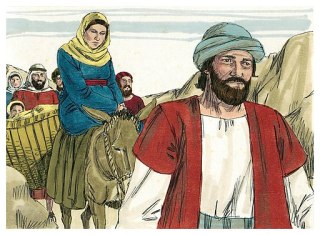 Note: I preached this short message in the chapel of Africa Nazarene University (Nairobi, Kenya) on December 13, 2017. Thanks to Chalé Atikonda, a BTh student at ANU, who heard the sermon and later suggested a further point, i.e. “an unusual task,” which I’ve added to this revised version.




 Gregory Crofford