Posted in Bible

Experience and the Bible

For Christians, experience has always been important. As a boy, I sang the hymn “He Lives” on many Sundays, but especially on Easter. One line concludes:

“You ask me how I know he lives? He lives within my heart.”

Experience is one factor that helps the church confirm calling. My first application for a District Minister’s License included questions about my religious experience, questions like:

When were you saved? When were you sanctified wholly? Why do you think God has called you to preach?

Recounting our life-changing experience with the Lord also encourages others, inviting them to participate in the things of God. In church jargon, these are called testimonies, and there’s biblical precedent for them. When Jesus cast demons out of the demoniac in the Gerasenes (Luke 8:26-39), the man was restored to health. The Lord commanded him:

“Go back to your family, and tell them everything God has done for you” (v. 39, NLT).

In the same way, the woman at the well in Samaria was so impressed by the words of Jesus to her, she went back to the village of Sychar and proclaimed: “Come and see a man who told me everything I every did! Could he possibly be the Messiah?” (John 4:29, NLT).

Experience confirms doctrine and practice. It can help establish the validity of divine calling, and it winsomely points other to Christ.

Experience informs our thinking

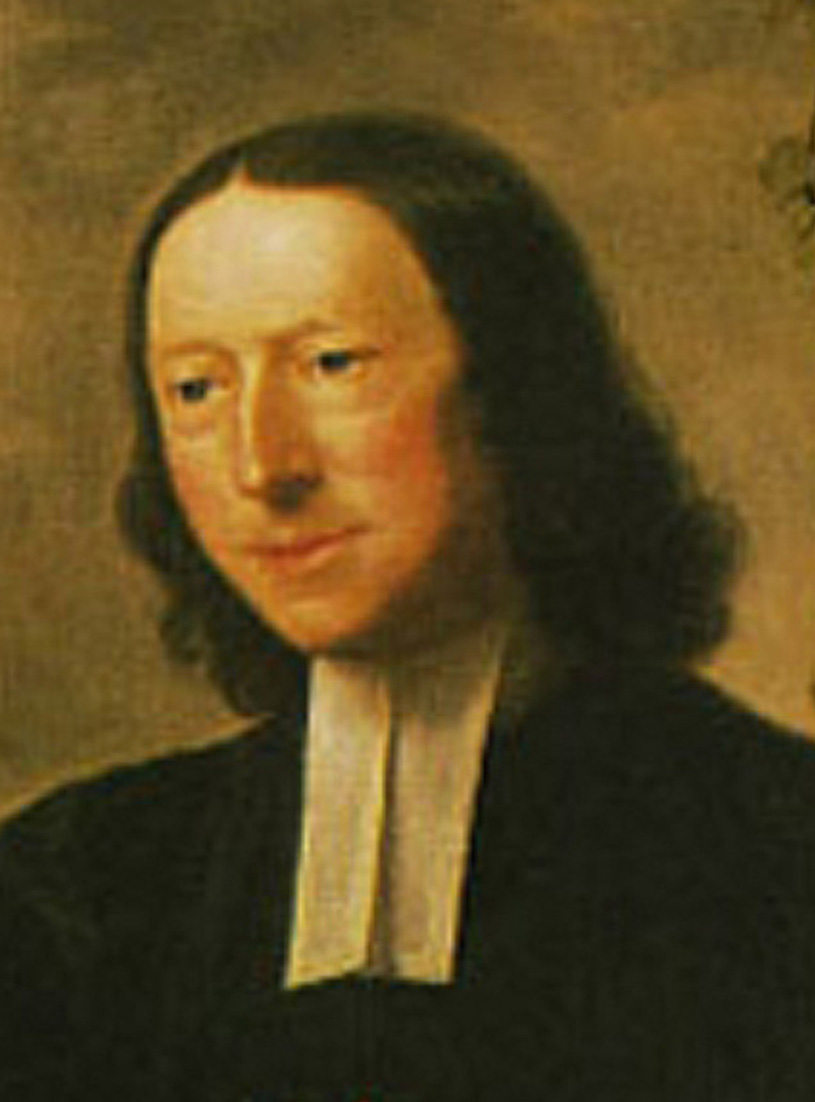
Let’s focus for the rest of this essay on the first point, that experience confirms doctrine and practice. John Wesley (1703-91) understood the role of experience as related to our faith and how we live it out. In the 1760s, some Methodists were testifying to having experienced entire sanctification (see 1 Thessalonians 5:23-24). He carefully interviewed many men and women about what had happened to them. Wesley knew that if the Methodists had interpreted Scripture correctly regarding the nature of sanctification, then they should expect validation of their viewpoint through on-the-ground testimonies. In the end, he was re-assured that the doctrine of Christian perfection as taught by himself, his brother, Charles, and the other Methodist preachers was indeed valid. It was confirmed through lived experience.

Whatever the Methodist understanding of Scripture arrived at through Bible study, Wesley knew that interpretations were always open to review. Interpretations are fallible because the Bible is always interpreted by human beings, with all their foibles and propensities toward error. If an interpretation is correct, then we can expect it to be confirmed “where the rubber hits the road.” The implication is simple: When there is a disconnect between a given understanding of the Bible and what Christians experience when applying it, then we must go back to the drawing board and – like a mathematician – check our work.

A musical illustration may help. There’s an old Sunday School chorus I learned to sing as a child. The lyrics say:

“I’m inright, outright, upright, downright happy all the time. Since Jesus Christ came in, and cleansed my heart from sin, I’m inright, outright, upright, downright happy all the time.”

For my young mind, the lesson was: “If I am saved and sanctified, then I’ll always be happy. Likewise, if I’m not always happy, then I can question whether I’ve really been saved and sanctified.”

My older self realizes that these lyrics — though sung by Sunday School children over decades – are nonetheless false. Christians may be saved and sanctified, but we are also human, with all the ups-and-downs that a full range of emotions bring. How did I come to this conclusion? It was because I found that far from being happy all the time, I sometimes was sad. My experience didn’t validate the theology of that children’s chorus. So, I went back to the drawing board, and checked my work. That’s when I realized that – however catchy the tune – that song’s lyrics were just plain wrong.

It’s important to note that experience isn’t just individual; groups also experience things. On the Day of Pentecost, the 120 who had gathered in the upper room experienced the Holy Spirit together. In our Western, individualistic outlook, we too often overlook this truth.

Let’s apply to a contemporary question the Wesleyan principal that experience validates (or calls into question) given interpretations of Scripture. Many churches believe that the role of pastor is reserved for males only. To make their point, they cite 1 Corinthians 14:34 – “Women must remain silent in the church.” Also highlighted is 1 Timothy 2:12, which seems to categorically forbid women to have authority over men. The question is:

Does the church’s experience validate this interpretation or call it into question?

John Wesley did not allow women to preach, until his mother, Susanna, insisted he come and listen to a woman who was leading a Methodist Society meeting in London. He couldn’t deny that the female leader was anointed by the Holy Spirit when she expounded the Scripture. He could have refused to even go with his mother to the meeting, considering the question of male only preaching a long-settled issue. Or having gone, he could have chosen to double down on his previous understanding of Scripture, telling the brave woman to sit down. For Wesley, this would have been to view what was happening in that Methodist meeting through the lens of his existing biblical interpretation. Instead, he went and listened with an open mind and heart. He let the new light he received inform his thinking. He did not jettison the Bible, but he adjusted his former interpretation to accommodate his new observation. The Church of the Nazarene follows in this understanding, believing that both men and women are called by God to preach, and can serve in any leadership capacity in the church.

John Wesley allowing experience to inform his doctrine was nothing new; he was following a well-worn New Testament path. For Peter, the question of clean and unclean animals was settled doctrine, having been addressed in the Old Testament purity laws. By extension, he understood that the children of Israel were the sole objects of God’s saving concern, the “clean” vs. the Gentiles, who were “unclean.” God was about to shake him up. On a rooftop in Joppa (Acts 10), Peter fell into a trance and had a vision. A sheet was let down from heaven, filled with all kinds of unclean animals, including reptiles and birds. Then, a voice commanded him: “Get up, Peter. Kill and eat them” (v. 13). Peter objected that he could not eat anything that Jewish law had declared unclean. The command came three times, then the sheet went back up to heaven.

The rest of the chapter recounts the arrival of messengers from Cornelius, a God-fearing centurion, a Gentile, and therefore (in Peter’s thinking) “unclean”. The Holy Spirit commands Peter to go with them to Cornelius, where Peter preaches the gospel and the Holy Spirit falls upon them, as evidenced by them speaking in languages they had never learned (vv. 44-46). Peter is astounded, and accepts Cornelius and his household as fellow Christians. Later, in Acts 15, he tells the story again, explaining how the experience of the Holy Spirit falling on Cornelius and his household had forced him to rethink what he thought he knew about Jews, Gentiles, and salvation.

Put yourself in the place of the elders in Jerusalem. Surely, Peter’s words must have seemed strange to them at first. After all, the understanding that salvation is limited to the Jews was a centuries-old interpretation of the Old Testament on the matter, yet they listened. They were willing to discuss together respectfully, allowing God to use the experience of Cornelius’ conversion to reshape their thinking. As for me, I’m glad Peter’s argument carried the day, or we would not as Gentiles be included in the church!

Coming into the 19th century, the principle of experience forcing a re-think of cherished biblical interpretations shows up again around the issue of slavery. Slave-owners in the United States viewed slaves as property, as sub-human. They could quote plenty of Bible passages that seemed to confirm that God held nothing against owning slaves. It was interaction with slaves and their undeniable humanity that led abolitionists to take up the cause of liberation: “Chains shall He break, for the slave is my brother, and in His name all oppression shall cease” (“O Holy Night,” 1855). Experience forced them to go back to the Bible and look again at longstanding, historic interpretations that had caused so much pain. They found better interpretations more in-line with love, a central tenet of the Christian faith.

Conclusion

I’m glad that the Church of the Nazarene historically has left a large place for experience in how we understand our faith and practice. I wonder: What other issues are we facing in the 21st century that need further study of Scripture, in-light of our individual and group experience? Will our fear prevent us from praying, studying, and talking together? Will anxiety lead us to sanction prophets among us who call us to this hard but holy work? May God grant us the grace and courage to re-evaluate interpretations of the Bible that – though longstanding – can cause harm, setting up stumbling blocks for those who otherwise might follow Christ.

Posted in ecclesiology & sacraments

Something fishy about this meme

10606456_10154618217465010_6734428944087588241_nReligion and church get a bum rap. They have become dirty words, something socially acceptable to talk down.

Exhibit A: Let’s look at the meme to the right. It came across my FaceBook, shared and “liked” many times by others.

In the top line, note how “religion” and “church” are obstacles. They stand in the way of you doing what you really want to be doing (fishing) instead of being in church. The message is clear:

Fishing is fun, but religion and church are BORING.

Just go fishing. You’ll connect with God there, and have a lot more fun. What you need is relationship, not religion or church, or so the picture would have us believe.

Like most deceptive memes, there’s just enough truth here to sugarcoat the underlying falsehood. So let’s start with the truth in the meme. Many people – myself included – do connect with God through nature. While I don’t fish, I love to hike with my camera at the ready. No bird, rock, tree or flower can escape my 30x zoom lens. Like the Psalmist, I regularly see the hand of God in what the LORD has created:

“The heavens proclaim the glory of God. The skies display his craftmanship” (Psalm 19:1).

When walking with my camera, I am drawn to think about God. I talk to the LORD, and often I sense God’s presence in return, a sense of peace, of God’s love, of companionship with the divine. So far, so good.

Where the meme loses me and I start to say – “Now, wait just a minute here!” – is the false dichotomy, as if you can choose either a relationship with God fueled by nature or religion/church. Truth be known, we need not choose between the two. Both hold many comforts for the disciple of Christ.

Let’s start with the word “religion.” Contrary to the negative connotation given by the meme and by the title of Christian rapper Jefferson Bethke’s well-intentioned but half-truthish viral video, the word “religion” as used in Scripture is positive. Two prominent uses are found in 1 Timothy 5:4 and James 1:26-27. There, the instruction by Paul and James is not to jettison religion but to live out a form of religion that is genuine and caring. How can this be done? Both agree that how we treat others – the members of our family, the widows, the orphans – is to model positive and genuine religion. Interestingly, the word “religion” in both passages is understood socially. The true and honorable practice of religion means confirming the value of our professed relationship with God by treating those around us with love and concern. Though he doesn’t use the term “religion,” John ratifies this sentiment:

Whoever claims to love God yet hates a brother or sister is a liar. For whoever does not love their brother and sister, whom they have seen, cannot love God, whom they have not seen (1 John 4:20, NIV).

Beyond the Scriptural understanding of religion is one more philosophical. The second definition of “religion” in Merriam-Webster’s Online Dictionary is “a system of religious beliefs or practices.” The words “belief” and “practice” are in the same constellation as the term “worldview.” Religion is the God-shaped “glasses” through which a believer views reality. C.S. Lewis once remarked: “I believe in Christianity as I believe that the sun has risen: not only because I see it, but because by it I see everything else.” To infer that religion is somehow opposed to relationship is like saying we should never use our eyes so that we can develop a keener sense of hearing. Religion (symbolized by the eye) helps us interpret reality God’s way. Relationship (symbolized by the ear) gives us a sense of meaning as we talk with God and develop intimacy with our Creator. Just like we function better with both eyes and ears – when it comes to God – we need both religion and relationship.

A second word in the first part of the meme that is given a negative spin is “church.” I’d be the first to admit that there are plenty of churches that aren’t worthy of the title. Ingrown, judgmental, legalistic, these clusters of Christians give churches in general a bad name. Prison chaplain Lennie Spitale laments that many who find Christ and grow in their faith inside prison fall away once released. Though they try to go to church on the outside, too many Christians leave the impression that they have their act together. The ex-prisoner feels awkward and uncomfortable, often reconnecting instead with former friends with whom they fall back into destructive habits and patterns (Prison Ministry: Understanding Prison Culture Inside and Out [B & H Publishing, 2002, Kindle edition], 28).

potatoesBut I learned a lesson about potatoes that applies to churches. As a teen, my boss at the supermarket asked me to sort through a shopping cart filled with 10 lb. bags of potatoes. The bags were smelling ripe, so I ripped them open and dumped the potatoes out on the table. Usually, out of 20 or 25 good-sized potatoes, it was only 1 or 2 that were rotten. These I threw away, while the rest got bagged up for re-sale. So it is with churches. Some Christians in churches seem rotten, so much that we’d like to throw them away like I did with those putrid potatoes. But most believers are just fine, imperfect people like you and me who – by God’s grace – are coming to look more and more like Jesus. Will we throw away the whole bag of potatoes for the sake of a few smelly ones?

Church is not just an option for the believer. It’s a necessity. The writer to the Hebrews urged his readers to keep coming together for worship and mutual encouragement (Hebrews 10:25). Likewise, John Wesley (1703-91)  identified 5 crucial “means of grace” that help us grow in our faith. These are prayer, reading the Bible, fasting, the Lord’s Supper, and “Christian conference.” By “Christian conference” he meant every way that believers come together. This involves weekly worship on Sundays but also includes being part of a small group where we can take care of each others’ needs, pray for each other, laugh together and – when necessary – warn a brother or sister when we see something creeping into their lives that risks drawing them away from God.

The community of faith has been so positive, so life-giving and joyful for me across the years that it’s rare for my mind to wander during worship to somewhere else I’d rather be. Instead, on the occasional Sunday morning when job duties and airline travel schedules keep me away from church, my mind often wanders there, with questions like:

-I wonder what songs they’re singing?

-I hope the pastor’s sermon series continues well today.

-Do you think that Joe’s job search we’ve been praying for has turned anything up?

-Today’s the day that the Smith’s baby gets baptized. They must be excited!

Relationship, religion, church – what powerful words! I’m glad that when it comes to us and God, we need not choose between them. They each have their place in our Christian vocabulary. By the strength of our example, energized by the Holy Spirit, let us make each of these words attractive and winsome in the eyes of our culture.

———–

Image credit (potatoes): thekitchencousins.com

Posted in reflections

From conditioning to encounter: A response to Aldous Huxley

huxley2
Aldous Huxely (1894-1963)

The interface between theology and psychology has always intrigued me. Yesterday, I read Aldous Huxley’s Brave New World. The 1932 classic from the British novelist and philosopher presents a vision of a far-off future where humans no longer fulfill the role of “father” and “mother.” Instead, reproduction is carefully engineered by the State, social classes predetermined from fertilization and gestation in closely-monitored bottles.

There are many themes to explore in the book, and the dystopian vision still resonates well at a time when The Hunger Games is all the rage. Allow me to focus this brief essay on a single topic, namely, whether we believe in God only because others have conditioned us to do so.

Conditioning is a psychological technique whereby humans are molded to think and act in ways determined by the person in control. Brave New World portrays a system whereby young children are spoon-fed ideas while they sleep, messages repeated over-and-over through tiny speakers hidden under their pillows. In this passive way, the various classes – Alpha, Beta, Gamma, Delta and Epsilon – acquire their worldview, especially their prejudices toward members of other castes.

Though the novel never explains exactly how the rulers of the “brave new world” condition people’s thinking about God, the Divine Being comes up at the end of the book in a conversation between the Savage and Mustapha Mond, the Controller (p. 183):

The Savage interrupted him. “But isn’t it natural to feel there’s a God?” “You might as well ask if it’s natural to do up one’s trousers with zippers,” said the Controller sarcastically. “You remind me of another of those odd fellows called Bradley. He defined philosophy as the finding of bad reasons for what one believes by instinct. As if one believed anything by instinct! One believes things because one has been conditioned to believe them. Finding bad reasons for what one believes for other bad reasons – that’s philosophy. People believe in God because they’re conditioned to believe in God.” (italics added)

There’s some truth in what Huxley says. Can there be any doubt that Christian education – what Huxley would no doubt consider a form of conditioning – affects a child’s worldview, like a hand imprint left in wet cement? Children who have not yet learned to reason are particularly open to whatever teaching is given, positive or negative, whether it is training to be an altar boy or a child soldier.

Yet Huxley’s critique leaves unaddressed other considerations, particularly the role of religious experience. This experience is both individual and corporate. In the Judeo-Christian tradition, Scripture may be considered largely the experience of the divine as lived across time by persons and peoples. Further, it is not a mystical experience devoid of any historical reference, but experiences that transpired in real time. Isaiah saw the LORD lifted up, but it happened “in the year that King Uzziah died” (Isaiah 1:1). Likewise, The Apostles’ Creed assumes historical reality, portraying a Saviour who “suffered under Pontius Pilate.”

More than any other Christian tradition, evangelical faith has discerned the importance of moving past conditioning to encounter. John Wesley (1703-91) had been conditioned by his father and mother to believe that God existed, to pray and to read the Bible. Yet on May 24, 1738, Wesley recorded his personal experience of God’s grace, that his heart was “strangely warmed” while listening to someone read the introduction to Martin Luther’s commentary on Romans. Whether we call this his “evangelical conversion” or simply the moment of the assurance of faith matters little. The point is that – to use Wesley’s later term – he moved in his own self-perception from having the faith of a “servant” to that of a “son.”

Religious experience is always a slippery subject to discuss. Any faith – to be held as true by its adherents – must account for the religious experiences of those who espouse other faith traditions. Why should our community of faith’s experiences be considered more valid? Further, what one calls “God” the skeptic might call hallucination, but at least now we’re having a conversation not about “brainwashing” but something empirical, experiences that can to at least some degree be analyzed and evaluated.

The power of encounter should never be underestimated. Saul had been conditioned to believe certain strict tenets as a boy who grew up under Pharisaical teachings. It was only later, however, when conditioning met encounter in the person of the Living Christ on the road to Damascus that his vision was transformed. Through a radical experience of the transcendent, some of his conditioning was modified. No longer would he seek out Christians to imprison them as enemies of the Jewish faith. Instead, he now became one of their key leaders. Experience trumped conditioning.

Yet one must be careful. God exists independently of our experience of God. One might be tempted to conclude: “For you, God exists because you’ve experienced him, but for me God does not exist since I have never experienced God.” Yet the tree that falls in the forest still makes a sound, whether or not I am close enough to hear it. What matters is that the effects of encounter are measurable. Like a strong wind topples a tree, the fallen tree serves as evidence of an invisible reality. So it is in the spiritual realm. Lives transformed from drunkenness to sobriety, husbands who stop beating their wives, children who were before disobedient to parents who suddenly become more compliant and helpful, these effects and many more testify to a Cause, and that Cause is God. When it happens to enough people, we call it a religious awakening.

Brave New World is a fascinating book on many levels. Aldous Huxley has  done Christ followers a favor by forcing us to begin to think through our assumptions, including how we have come to believe what we do about God. But what do you think? Is Christian faith – or any faith – no more than the result of conditioning? Weigh-in below in the comment thread.

————

Photo credit: Diccionari Cultural

Posted in ecclesiology & sacraments, missions & evangelism, reflections

Changing the world the Wesleyan way

images.duckduckgo.com
John Wesley, 1703-91

John Wesley’s message was simple, just like Jesus’. Is ours?

He insisted in his 1746 The Principles of a Methodist Farther Explained:

I have again and again, with all the plainness I could, declared what our constant doctrines are; whereby we are distinguished only from Heathens, or nominal Christians; not from any that worship God in spirit and in truth. Our main doctrines, which include all the rest, are three, — that of repentance, of faith, and of holiness. The first of these we account, as it were, the porch of religion; the next, the door; the third, religion itself (Works, 8:521-22, CCEL digital edition).

Jesus was once asked to sum up all the Law and the Prophets, the heart of the message of what Christians now call the Old Testament. He answered by saying that we should love God and love our neighbor (Mark 12:28-34). These are the two Great Commandments, and they are the very marrow of what it means to be a Christlike disciple.

What does the religion of loving God and others look like, particularly as worked-out socially? In Principles Farther Explained, Wesley continued:

This love we believe to be the medicine of life, the never-failing remedy for all the evils of a disordered world, for all the miseries and vices of men…this religion we long to see established in the world, a religion of love, joy, and peace, having its seat in the heart, but every showing itself by its fruits, continually spring forth, not only in all innocence, (for love worketh no ill to his neighbor), but likewise in every kind of beneficence, spreading virtue and happiness all around it (p. 524).

Continue reading “Changing the world the Wesleyan way”

Posted in reflections, The Wesleys and Wesleyan theology

Work with the end in mind

Steven Covey, author of The 7 Habits of Highly Effective People

Steven Covey penned one of the most influential leadership books of the late 20th century, The 7 Habits of Highly Effective People. Covey passed away in 2012, but his principles live on. Here is one of them:

Work with the end in mind.

Those words would have resonated well with 18th century Methodists in England. One of their characteristics that commended Methodism to the people of their day was the peaceful, even heroic way that Methodists faced their own end. Long before the time of drugging people in their final hours, those who approached death were often quite lucid. The 88 year old Rev John Wesley, laying on his death bed in 1791, murmured to those gathered around him: “And best of all, God is with us.”

Here are last words from some others:

“See in what peace a Christian can die.” – Joseph Addison, English politician and writer

“Am I dying, or is this my birthday?” – Lady Astor

“Now comes the mystery.” – Rev Henry Ward  Beecher, 19th century American abolitonist

“I regret that I have but one life to give for my country.” – Nathan Hale

“I’m going over the valley.” – Babe Ruth, 20th century American baseball player

“Bring down the curtain, the farce is played out.” – Rabelais

“They couldn’t hit an elephant at this dist-” – John Sedgwick, Union General, to his men when they advised him to take cover

“Let us cross over the river and sit under the shade of the trees.” – Confederate General Thomas “Stonewall” Jackson

“Leave the shower curtain on the inside of the tub.” – Conrad Hilton, hotel magnate

“So little done, so much to do.” – Cecil John Rhodes, South African gold and diamond miner

“Strike the tent.” – Confederate General Robert E. Lee

“Hold the cross high, so I may see it through the flames.” – Joan of Arc

“I have seen heaven open, and Jesus on the right hand of God.” – Rev Thomas Cranmer, Archbishop of Canterbury

Samuel Clemens, better known under his pen name, “Mark Twain,” had some “work with the end in mind” words of his own. I chose them for the “senior quotes” section of the 1985 Nautilus, the yearbook of Eastern Nazarene College:

Let us so live that – when we come to die – even the undertaker will be sorry.

Have a God-blessed and pivotal year in 2014.

————

Photo credit: NPR.org

Posted in sermons & addresses

Hate sin and love God by loving others – 1 John 3:7-18

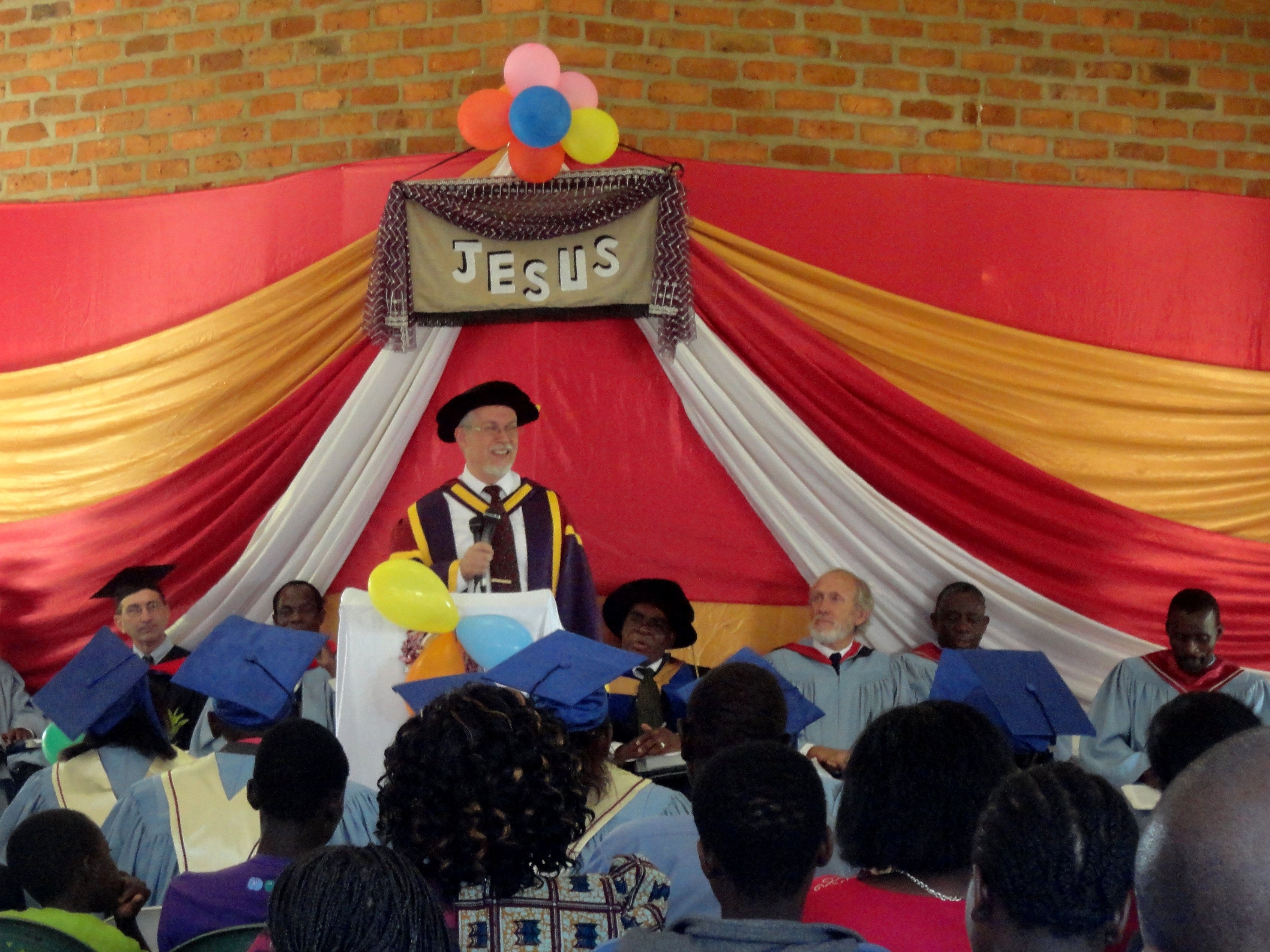
The chapel of NTCCA was full as Greg addressed graduates, their families, and friends
The chapel of NTCCA was full as Dr. Crofford addressed graduates, their families, and friends

Note: This is the graduation address I presented at the commencement exercises of Nazarene Theological College of Central Africa (Lilongwe, Malawi) on 4 May 2013.

Scripture reading: 1 John 3:7-18

Text: 1 John 3:8b – “God Son appeared for this purpose, to destroy the works of the devil” (Common English Bible).

——————————-

“Hate sin and love God (by loving others)”

I.  INTRODUCTION

(salutation and all protocols observed)

We are gathered together today to honor the achievement of the graduates of Nazarene Theological College of Central Africa, both campus and extension students. You have persisted through many hours, days, and months of study, and all for one reason: To better equip yourself for the ministry to which our Lord Jesus Christ has called you in his church. Today, we pause on this auspicious occasion to say two words: Well done!

Many of you have already been involved in ministry in the local church. Some of you will be taking the role of pastor for the first time. At such a moment, what words of wisdom does the Bible have for you?

We have heard the Scripture reading from 1 John 3:7-18. In the passage, two commands repeat themselves:

1) hate sin;

2) love God, by loving others.

Continue reading “Hate sin and love God by loving others – 1 John 3:7-18”

Posted in reflections

Seeing God from the lookout…and the street

Columbia Center, Seattle

When it comes to skyscrapers, I might as well admit it: I’m a soft touch.

Maybe it’s because of my NYC experience as a four-year-old. My Dad, Mom, my brothers and I headed north from Flemington, New Jersey to Manhattan. From the 80-something floor of the Empire State building, we looked out over the sprawling metropolis. My head poking through the railing, I looked at the vehicles so far below, then exclaimed: “Daddy, look at all those Matchbox cars down there!”

As a student on Boston’s South Shore, I trekked more than once to the Prudential building, in search of the same perched-above-it-all thrill. Then just last week, Seattle’s Columbia Center beckoned. From the 73rd floor of the 76 floor titan – the tallest in the West Coast region of North America – I spied the comings-and-goings of harbor boats in Elliott Bay, elevated highways snaking south toward Normandy Park, and Mt. Rainier foggy through the mist. Even on a cloudy day, it was worth the admission price.

Yet most of our life is lived down on the street. In Seattle, it’s down in Pike Place Market where they throw you the catch of the day…and you drop it. Or back in Boston, when you leave the Prudential building, the same subway that deposited you near tony Beacon Hill takes you back to Eastern Nazarene College winding through hardscrabble neighborhoods like Roxbury. Even the storied Empire State Building that summer day in ’67 sheltered in a stairwell a derelict man, sleeping away his hangover.

There are days when I see God from the lookout. Through prayer, Scripture reading or the well-crafted phrase of a praise song or sermon, I momentarily rise and glimpse the majesty of the vista. Perched above it all, the rays of the sun seem warmer, clearer, more pristine. There, the sweep of God’s plans fit together in unity, a well-choreographed dance scene from a Rodgers and Hammerstein musical.

Most days, though, I’m at street level. Instead of pondering the greatness of God, I’m frantically looking for my car keys or fretting about whether the money is going to run out before the month does.

Yet the amazing thing about the God we serve is that God is not confined! At the top of the skyscraper? God is there. Down on the street level where we suffer? God is there, too — Jesus, Immanuel, God with us.

Continue reading “Seeing God from the lookout…and the street”

Posted in reflections, The Wesleys and Wesleyan theology

On grace, law, and spaghetti sauce

garden veg spag sauce in potAs believers, do we follow grace, or do we follow law? And the answer is…

YES.

John Wesley spoke as much as anyone about grace. On the other hand, he cautioned against “antinomianism” (lawlessness). He realized that the same Scripture that speaks of the grace that saves us through faith (Eph. 2:8) also extols the perfect law of liberty (James 1:25).

In the Bible and in Wesleyan thought, grace and law must kiss.

I’ve always loved “America the Beautiful.” The lyrics by Katharine Lee Bates portray this delicate balance. The rarely sung second verse appeals:

O beautiful for pilgrim feet
Whose stern impassioned stress
A thoroughfare of freedom beat
Across the wilderness!
America! America!
God mend thine every flaw,
Confirm thy soul in self-control,
Thy liberty in law!

“Liberty” and “law” are not mutually exclusive, but complement each other.

Pastors are charged with the “cure of souls,” and for that cure to be successful, first a diagnosis must be made. Thirty years ago, I knew too many Nazarenes who for the sake of law, lost sight of grace. The early 20th century story (likely apocryphal) is told of the old woman who asked General Superintendent Phineas F. Bresee whether Nazarene women should wear makeup. His reply?

I’ve always said that if the barn needs painting, paint it!

That woman’s question betrays a graceless law, a piling up and keeping of rules as the be-all and end-all of faith. In such a context, an emphasis on grace was desperately needed, and eventually the corrective came.

But as Bob Dylan used to sing, the times, they are a changin’! Once heated discussions of whether we go to the movie theater, wear makeup or jewelry or participate in “mixed bathing” are relegated to cold and musty issues of the Herald of Holiness and Teens Today.  When Christian teens in 2013 show the same rates of sexual activity prior to marriage as those who claim no faith, when cheating on a test is winked at and often there seems to be no difference between the integrity of those attending church and those who never darken its doors, then clearly the issue for the Church is no longer graceless law. Rather, we have arguably careened into the ditch on the other side of the road, that of lawless grace, the antinomianism John Wesley warned us about and that Paul deplores in Romans 6:1 —

Shall we sin that grace may abound? God forbid! (NIV).

And here is where we come back to the pastor’s diagnosis. In a church where graceless law is the malady, more preaching on grace is a must. After all, you wouldn’t add more salt to a spaghetti sauce that is already too salty!

But for 90% of our churches, in the name of grace, I wonder: Are we stuck in the ditch of lawlessness? Lawless grace is every bit as dangerous, after all, as graceless law. In such a church, the pastor today in his or her preaching will speak often of Christian ethics, of the righteous standards to which God calls His people. When the spaghetti sauce is too bland, add a pinch of salt.

At the end of the day, neither graceless law nor lawless grace can satisfy God’s people. Grace and law must kiss. We need gracious law now more than ever.

God give us wisdom to live the delicate balance.

——–

Photo credit: A Kitchen Addiction

Posted in reflections

Have you been infected with MTD?

me-me-meThe songs we sing betray the theology we hold. In a church we recently visited, two lines from the choruses jumped out at my wife and me:

“I am a friend of God…He calls me friend.”

“He took the fall, and thought of me above all.”

There’s nothing wrong with experiential religion. As Wesleyans, we celebrate John Wesley’s “heartwarming” experience on Aldersgate Street in London 24 May 1738 when he received the assurance of his sins forgiven and reconciliation with God. God loves and cares for us and wants to enter into relationship with us. Still, I wonder: Does God exist for my sake, or do I exist for God’s?

Researchers Christian Smith and Melinda Lundquist Denton set out in 2005 to understand the religious worldview of American teenagers. What they discovered was a truncated Christian understanding that they dubbed MTD – Moralistic, Therapeutic Deism. MTD gives little thought to historic beliefs like resurrection, incarnation, sin, justification, or sanctification. Instead, what matters most is “being nice,” acting like a good, moral person – the “M.” Heaven exists and good people one day will get to go there. Further, God is someone to whom we can turn in times of trouble, but most days God doesn’t enter our consciousness – the “T.” But if skyscrapers start falling as on September 11, 2001, we run to God to comfort us. Finally, God is like the remote deity of 18th century deism, the Creator who is far away, uninvolved in our lives on a daily basis – the “D.”

How did we get to the place where God is nothing more than our lucky charm, a grandfatherly, non-demanding life coach to help us succeed? Albert Mohler places much of the blame at the feet of grown-ups:

All this means is that teenagers have been listening carefully. They have been observing their parents in the larger culture with diligence and insight. They understand just how little their parents really believe and just how much many of their churches and Christian institutions have accommodated themselves to the dominant culture. They sense the degree to which theological conviction has been sacrificed on the altar of individualism and a relativistic understanding of truth. They have learned from their elders that self-improvement is the one great moral imperative to which all are accountable, and they have observed the fact that the highest aspiration of those who shape this culture is to find happiness, security, and meaning in life.

Mohler doesn’t criticize evangelism plans, so I’ll do it for him. For years, the 4 Spiritual Laws was the default method for presenting the Gospel. That presentation begins with the affirmation that “God has a wonderful plan for your life.” Notice who is at the center of that message? It’s YOU! You’re the one that counts. You’re so important that the God of the universe’s reason for being is you and this supposed tailor-made plan. You are the sun, and God is merely Jupiter, the largest planet revolving around you.

I don’t buy it. The Bible lays out principles for living that don’t put us at the center, but God. There are general guidelines for living — “Love God, love your neighbor.” There are the 10 Commandments and the Beatitudes. If we live those out, then we are accomplishing God’s will for our lives. It’s all about God, not about us. Find out where God is at work, and join God’s mission. You don’t need a special invitation. We already received one in Scripture.

But let’s go back to those choruses cited above. They fail because they place the individual at the center rather than God. I’m not interested in fighting the so-called “worship wars” all over again, but you have to admit that some of the old hymns got it right. They exalted the Divine, God’s glorious attributes, effacing us and praising the Lord:

Immortal, invisible, God only wise!
In light inaccessible, hid from our eyes.
Most blessed, most glorious, the Ancient of Days
Almighty, victorious, Thy great name we praise.

Bring back the theological debates. Let’s discuss predestination, free grace, sovereignty, salvation and providence. At least these weighty topics are worthy of our time and point us away from ourselves and self-interest to the character of God and how we can bring God glory. The only antidote for those infected with MTD is to get our eyes off ourselves and our own petty interests, to put God back at the center where God belongs, in both our lives and our worship.

—————–

Image credit: Technorati

Posted in ecclesiology & sacraments, reflections

Nazarene or “Baptarene”? When traditions collide

Phineas F. Bresee served for 38 years as a Methodist minister before beginning the fledgling “Church of the Nazarene” at the turn of the 20th century. Other non-Methodist groups fused with his in 1907 and 1908.

My dad grew up Nazarene, but my mom was raised independent Baptist. So, if ever there was a “Baptarene,” it was me. But I suspect I’m not the only former Baptarene who has rediscovered what being a Nazarene is, and now, I refuse to look back.

Don’t get me wrong. I harbor no animus against Baptists. I’ve always admired their fervor in evangelism, their giving for world missions and their emphasis upon the importance of Scripture. All three of those characterized John Wesley (1703-91) as well, the 18th century Anglican evangelist  who is the ecclesiastical ancestor of Nazarenes. But Wesley wasn’t a Baptist; he was an Anglican/Methodist, and I’ve come to treasure that heritage as something valuable and worth protecting.

Take the issue of women in ministry. From our official beginning in 1908, Nazarenes have formally acknowledged in our Manual that God calls both men and women to all roles of ordained ministry. Among other passages, we’ve always taken Acts 2:17-18 seriously, that in the “last days” God will pour out the Holy Spirit on everyone. The evidence of this outpouring will be (in part) that “servants” who are “both men and women” will “prophesy.” Prophecy is preaching, the telling forth of the message of salvation through Christ. This message is so important that you just can’t keep half of your team planted on the bench. Everyone – male and female – must get into the game.

Another legacy from our Methodist roots is infant baptism for the children of church-going parents, practiced alongside believer baptism for older converts. In the same message on Pentecost, Peter assured his Jewish listeners – the Covenant people of God – that God has done something new in Jesus Christ. After a scathing message where he accused them of having crucified Jesus, he ended with a word of hope: “God has made this Jesus, whom you crucified, both Lord and Messiah” (Acts 2:36). The promise of the Holy Spirit – as symbolized in baptism – was for all, regardless of age: “The promise is for you and your children, for all who are far off – for all whom the Lord our God will call” (v. 39, italics added). And so on that Day of Pentecost, whole families were baptized — dads, moms, and kids. That set a pattern that was repeated at key junctures in the book of Acts, where entire “households” (Gk. oikos) were baptized. It’s inconceivable that this did not include babes in arms. This was a New Covenant, and the sign of the New Covenant people of God was baptism.

A third heritage from our Methodist roots is the Lord’s Supper (or Eucharist) as a means of grace. John Wesley himself celebrated communion frequently, as a way to fortify his faith. Today in Methodist churches and a growing number of Nazarene congregations, Eucharist is the high moment of worship, following a meaty sermon. It is the culmination of the moments spent together as the adoring community of faith.

But what about the Church of the Nazarene?

Have we kept these strands of our heritage from Methodism, or have we been squeezed into a Baptist mold, becoming “Baptarenes”?

Continue reading “Nazarene or “Baptarene”? When traditions collide”