This sermon was preached at Beacon of Hope Community Church (Moon Township, PA) on 8/25/24.
All Scripture quotations are from the New International Version (Zondervan, 2011).
Read Micah 6:1-8
Prayer
INTRODUCTION
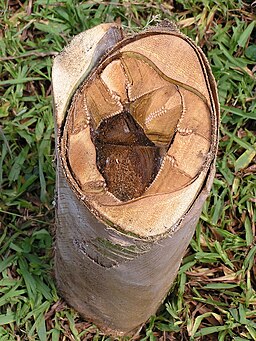
They call it “heart rot disease,” and one type is “brown rot.” You can look at a tree that appears to be perfectly healthy, yet inside, damage from fungus has already begun. The hemicellulose and cellulose begin to break down. The wood becomes dark brown and brittle, then when it dries, it makes the tree far less flexible. A strong wind can easily topple a tree suffering from brown rot. Indeed, the silent tree killer is rotting from the inside out. (Source: https://aaatrees.net)
TRANSITION TO MICAH: NATIONAL “BROWN ROT”
In the book of Micah, the fig tree is presented as a sign of prosperity and well-being. In Micah 4:4, the prophet envisions a time when “everyone will sit under their own vine and under their own fig tree, and no one will make them afraid, for the LORD Almighty has spoken.” Yet that is a vision of the distant future; in the present, the prophet instead sees nations that—like a tree with brown rot – are rotting from the inside out. Again and again, the prophet speaks of moral decay that manifests itself numerous ways. What are some of the evil actions that the leaders of both Samaria and Jerusalem are trafficking in?
SINS OF THE LEADERS
The first sin was idolatry. Micah 1:7 says that the LORD will break to pieces all her idols. Idolatry was a perennial problem for God’s people and had been from the start. God knew that when his people came into the promised land, they would discover those who worshipped other gods. Micah 5:14 mentions Asherah poles. Asherah was a Canaanite goddess often worshipped alongside Baal. It’s no accident that the first two commandments of the Decalogue – the “10 words” or commandments that God gave to Moses on Mt. Sinai – focus on gods (small “g”) and how they have no place in the worship of the people of God (capital “G”). “You shall have no gods other than me,” the LORD commanded, and “You shall not make for yourself an image in the form of anything in heaven above or on the earth beneath or in the waters below. You shall not bow down to them or worship them” (see Exodus 20:4).
A second sin is fraud. Micah 2:2 talks of those who confiscate property that doesn’t belong to them. Not just in Micah’s time but in our own, what makes for generational wealth is land and houses. To take these away without cause is to rob not only the present generation, but all generations to come. The tenth commandment forbids the people of God from coveting what doesn’t belong to us, yet they had forgotten the LORD’s directive.
A third sin – and you could add more to the list – is profiting off one’s position, corruption. Micah 3:9-12 warns: “Hear this, you leaders of Jacob, you rulers of Israel, who despise justice and all that is right; who build Zion with bloodshed, and Jerusalem with wickedness. Her leaders judge for a bribe, her priests teach for a price, and her prophets tell fortunes for money. Yet they look for the LORD’s support and say, ‘Is not the LORD among us? No disaster will come upon us.’ Therefore because of you, Zion will be plowed like a field, Jerusalem will become a heap of rubble, the temple hill a mound overgrown with thickets.”
Micah realized that the moral decay was far advanced. If these and other sins had weakened both the northern Kingdom (as represented by Samaria) and the southern Kingdom (as represented by Jerusalem), was there any hope? What solution does Micah propose to solve the problem?


 Gregory Crofford