Posted in Nazarenedom, reflections

An appeal for prayer and reflection

“In things essential, unity; in things non-essential, liberty; but in all things, love.”

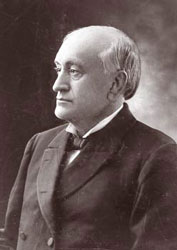
Phineas F. Bresee

– Rupertus Meldenius (1626); quoted by Dr. Phineas F. Bresee, General Superintendent, Church of the Nazarene (1907-1915)

As a seminarian, I was comforted by this dictum, which was framed and hung on the hallway wall at Nazarene Theological Seminary in Kansas City. First on Dr. Bresee’s “essential” list was agreement upon preaching entire sanctification as the ongoing work of God’s grace in the heart and life of the believer, a grace experienced as both instantaneous and gradual. Preach that, Bresee believed, and you’re preaching what is essential. Other secondary concerns – such as divine healing – were relegated in the 1908 Manual to a section called “special advices.” With this understanding of “keeping the main thing the main thing,” union was reached. Delegates from three diverse groupings of holiness churches in the U.S. marched a victory lap around the tent in Pilot Point, Texas. The Pentecostal Church of the Nazarene was born. In 1919, we reverted to the shorter “Church of the Nazarene”, the original name for the West Coast grouping of churches.

Since 1908, we’ve always managed to find a way forward when it comes to issues secondary to our primary mission. Peruse the Manuals published roughly every 4 years since Pilot Point, and you’ll see that -as society changes- the issues we wrestled with also changed. We’re no longer concerned about whether Nazarenes should go to the circus, or participate in so-called “mixed bathing.” Attendance at the cinema was forbidden, but now we’re to honor God in all our media choices, the music we sing, and the kinds of dances we dance. Even divorce and remarriage, a very contentious issue with seemingly very clear biblical directives from Jesus himself (Mark 10:11, Matthew 19:3-12), we tackled because it touches many of our Nazarene families, people we dearly love. Our leaders tasked our best Bible scholars to research and publish their findings, then calmly help us work through the matter. Now, divorce alone is no longer a disqualifier for church membership or ordination. Yes, it took time to get there in unity, but get there we did. Retrospect has confirmed the wisdom of that process and subsequent course correction. The church is stronger for conserving laity and clergy who made it through the pain of divorce and still minister faithfully and effectively among us. Some of our local churches even host divorce care support groups. Surely God is pleased!

The discussions at General Assembly in June 2023 uncovered several social and theological issues that threaten our unity. These are difficult subjects that – like Nazarenes across the years- we long to sit down and discuss openly, without fear of being shushed or suffering professional consequences. With an open Bible and the love of Christ in our hearts, can we do what Dr. Bresee taught Nazarenes to do? Can we create designated spaces to listen to brothers and sisters from a wide variety of viewpoints? Can we once again task qualified individuals to present relevant research and help us reflect? Having prayed and done the hard work together, can we then move forward together in unity, our primary mission intact, to “make Christlike disciples in the nations”?

In Acts 15, after prayer and deliberation, the elders in Jerusalem decided to allow Gentiles to stay Gentiles and be folded into the church as they were. In verse 28, they wrote: “It seemed good to the Holy Spirit and to us…” The issues we face today are different, but the methodology is the same. Are we ready for a new season of study, reflection, and prayer? May God calm our fears and anxiety long enough so that we can hear God’s gentle voice and arrive at the place of unity Dr. Bresee desired for “the people called Nazarene.”

_______________________________

Rev. Dr. Gregory Crofford is a third generation Nazarene. He holds a B.A. in Religion (Eastern Nazarene College, 1985), an M.Div in Missiology (Nazarene Theological Seminary, 1989) and an M.A. and Ph.D. in Theology (Nazarene Theological College/University of Manchester, 2005, 2008). He was ordained a Nazarene elder in August, 1991 by Dr. John Allen Knight. Dr. Crofford has served as a music minister, pastor, and educational missionary. Currently, his ministry is hospice chaplaincy.

Posted in ecclesiology & sacraments, sermons & addresses

What is a Nazarene? (preceded by the case of the secret panel)

Greg discovers Tracy & Ingersol's What is a Nazarene? at a Johannesburg secondhand bookshop
Greg discovers Tracy & Ingersol’s What is a Nazarene? at a Johannesburg secondhand bookshop

Note: This sermon inaugurated a series entitled “Christian, Holiness, Missional: Core Values in the Church of the Nazarene” at the Maraisburg Church of the Nazarene in Johannesburg, Republic of South Africa. What follows is not a word-for-word transcript, but captures the essence of what I said.

——————————-

Opening remarks

It’s  a joy for Amy and me to be with you today. We’ve visited several churches in Johannesburg area, and knew when we worshiped with you that this would be our church home.

When I was a boy, for a period of about 10 years, my family traveled around to various churches and gave Gospel concerts. Looking at this building this morning, which used to belong to a Dutch Reformed congregation, I’m reminded of one of those concerts in Marion, New York. We sang at the Dutch Reformed church, and as usual, set up our sound equipment on the platform prior to the concert. Some of you who know sound equipment might remember high impedance systems. One curious thing about them was the microphone cords couldn’t be longer than 15 feet, or you would lose signal. Because of this, my dad that Sunday morning had to stretch the microphone cords about 4 feet high across the paneled wall at the back of the platform to plug into the amplifier.

My older brother, Mark – probably 11 or 12 at the time – was an avid reader of the Hardy Boys detective series. One of the books was entitled “The Case of the Secret Panel.” As we sat listening to the organist play the prelude, and the congregation filtered in, Mark looked at that front panel where the microphone cords were stretched taut. “Dad,” he said, “I think there’s a secret panel on that wall.” My dad rolled his eyes and said: “Mark, I think you’re reading too many Hardy Boys books.”

Strangely, we hadn’t seen the pastor in a while. All of the sudden, can you believe it? A panel in that platform back wall opened up, and out came the pastor. When he saw the cords there, much to the delight of the congregation, he nimbly hurdled them like an Olympic champion!

I want you to know this morning that I’ve checked the paneled back wall here at Maraisburg church, and I can assure you that there is no secret panel.

SCRIPTURE READING: 1 Peter 4:12-19 (TNIV)

– Prayer –

I.  INTRODUCTION

Today, we begin a series on the core values of the Church of the Nazarene.

That’s a fancy way of answering the question: What is a Nazarene?

You may have seen the booklet a few years back, authored by the General Superintendents of the Church of the Nazarene. Here’s how they answered that question, “What is a Nazarene?”

Nazarenes are…

1) Christian

2) Holiness

3) Missional

In coming weeks, Pastor Kenneth and other preachers will address the second and third points. Today, we’ll look at the first one:

What does it mean to say we are Christian?

Continue reading “What is a Nazarene? (preceded by the case of the secret panel)”

Posted in ecclesiology & sacraments, reflections

Nazarene or “Baptarene”? When traditions collide

Phineas F. Bresee served for 38 years as a Methodist minister before beginning the fledgling “Church of the Nazarene” at the turn of the 20th century. Other non-Methodist groups fused with his in 1907 and 1908.

My dad grew up Nazarene, but my mom was raised independent Baptist. So, if ever there was a “Baptarene,” it was me. But I suspect I’m not the only former Baptarene who has rediscovered what being a Nazarene is, and now, I refuse to look back.

Don’t get me wrong. I harbor no animus against Baptists. I’ve always admired their fervor in evangelism, their giving for world missions and their emphasis upon the importance of Scripture. All three of those characterized John Wesley (1703-91) as well, the 18th century Anglican evangelist  who is the ecclesiastical ancestor of Nazarenes. But Wesley wasn’t a Baptist; he was an Anglican/Methodist, and I’ve come to treasure that heritage as something valuable and worth protecting.

Take the issue of women in ministry. From our official beginning in 1908, Nazarenes have formally acknowledged in our Manual that God calls both men and women to all roles of ordained ministry. Among other passages, we’ve always taken Acts 2:17-18 seriously, that in the “last days” God will pour out the Holy Spirit on everyone. The evidence of this outpouring will be (in part) that “servants” who are “both men and women” will “prophesy.” Prophecy is preaching, the telling forth of the message of salvation through Christ. This message is so important that you just can’t keep half of your team planted on the bench. Everyone – male and female – must get into the game.

Another legacy from our Methodist roots is infant baptism for the children of church-going parents, practiced alongside believer baptism for older converts. In the same message on Pentecost, Peter assured his Jewish listeners – the Covenant people of God – that God has done something new in Jesus Christ. After a scathing message where he accused them of having crucified Jesus, he ended with a word of hope: “God has made this Jesus, whom you crucified, both Lord and Messiah” (Acts 2:36). The promise of the Holy Spirit – as symbolized in baptism – was for all, regardless of age: “The promise is for you and your children, for all who are far off – for all whom the Lord our God will call” (v. 39, italics added). And so on that Day of Pentecost, whole families were baptized — dads, moms, and kids. That set a pattern that was repeated at key junctures in the book of Acts, where entire “households” (Gk. oikos) were baptized. It’s inconceivable that this did not include babes in arms. This was a New Covenant, and the sign of the New Covenant people of God was baptism.

A third heritage from our Methodist roots is the Lord’s Supper (or Eucharist) as a means of grace. John Wesley himself celebrated communion frequently, as a way to fortify his faith. Today in Methodist churches and a growing number of Nazarene congregations, Eucharist is the high moment of worship, following a meaty sermon. It is the culmination of the moments spent together as the adoring community of faith.

But what about the Church of the Nazarene?

Have we kept these strands of our heritage from Methodism, or have we been squeezed into a Baptist mold, becoming “Baptarenes”?

Continue reading “Nazarene or “Baptarene”? When traditions collide”