Posted in sermons & addresses

Act justly, love mercy, walk humbly

This sermon was preached at Beacon of Hope Community Church (Moon Township, PA) on 8/25/24.

Coconut tree heart rot disease

All Scripture quotations are from the New International Version (Zondervan, 2011).

Read Micah 6:1-8

Prayer

INTRODUCTION

They call it “heart rot disease,” and one type is “brown rot.” You can look at a tree that appears to be perfectly healthy, yet inside, damage from fungus has already begun. The hemicellulose and cellulose begin to break down. The wood becomes dark brown and brittle, then when it dries, it makes the tree far less flexible. A strong wind can easily topple a tree suffering from brown rot. Indeed, the silent tree killer is rotting from the inside out. (Source: https://aaatrees.net)

TRANSITION TO MICAH: NATIONAL “BROWN ROT”

In the book of Micah, the fig tree is presented as a sign of prosperity and well-being. In Micah 4:4, the prophet envisions a time when “everyone will sit under their own vine and under their own fig tree, and no one will make them afraid, for the LORD Almighty has spoken.” Yet that is a vision of the distant future; in the present, the prophet instead sees nations that—like a tree with brown rot – are rotting from the inside out. Again and again, the prophet speaks of moral decay that manifests itself numerous ways. What are some of the evil actions that the leaders of both Samaria and Jerusalem are trafficking in?

SINS OF THE LEADERS

 The first sin was idolatry. Micah 1:7 says that the LORD will break to pieces all her idols. Idolatry was a perennial problem for God’s people and had been from the start. God knew that when his people came into the promised land, they would discover those who worshipped other gods. Micah 5:14 mentions Asherah poles. Asherah was a Canaanite goddess often worshipped alongside Baal. It’s no accident that the first two commandments of the Decalogue – the “10 words” or commandments that God gave to Moses on Mt. Sinai – focus on gods (small “g”) and how they have no place in the worship of the people of God (capital “G”). “You shall have no gods other than me,” the LORD commanded, and “You shall not make for yourself an image in the form of anything in heaven above or on the earth beneath or in the waters below. You shall not bow down to them or worship them” (see Exodus 20:4).

A second sin is fraud. Micah 2:2 talks of those who confiscate property that doesn’t belong to them. Not just in Micah’s time but in our own, what makes for generational wealth is land and houses. To take these away without cause is to rob not only the present generation, but all generations to come. The tenth commandment forbids the people of God from coveting what doesn’t belong to us, yet they had forgotten the LORD’s directive.

A third sin – and you could add more to the list – is profiting off one’s position, corruption. Micah 3:9-12 warns: “Hear this, you leaders of Jacob, you rulers of Israel, who despise justice and all that is right; who build Zion with bloodshed, and Jerusalem with wickedness. Her leaders judge for a bribe, her priests teach for a price, and her prophets tell fortunes for money. Yet they look for the LORD’s support and say, ‘Is not the LORD among us? No disaster will come upon us.’ Therefore because of you, Zion will be plowed like a field, Jerusalem will become a heap of rubble, the temple hill a mound overgrown with thickets.”

Micah realized that the moral decay was far advanced. If these and other sins had weakened both the northern Kingdom (as represented by Samaria) and the southern Kingdom (as represented by Jerusalem), was there any hope? What solution does Micah propose to solve the problem?

Posted in ecclesiology & sacraments

Personal AND social transformation: lessons from a jetliner

Is your Gospel like a jet with one wing?
Is your Gospel like a jet with only one wing?

At the front of the chapel at Northwest Nazarene University (Nampa, Idaho – USA) is a memorable quote from Charles Wesley (1707-88), one of the founders of Methodism:

Unite the two so long disjoined, knowledge and vital piety.

With apologies to Mr Wesley, the theme on which God is putting a fire in my bones these days is this:

Unite the two so long disjoined, personal and social transformation.

Like airplanes need two wings, so the Gospel message needs both a personal and social aspect in order to take off and take us where we need to go. While there are some in all age categories who understand and practice a two-winged Gospel, sometimes it seems like the church is a plane with only one wing.

Personal transformation has been the stock-in-trade of the 50+ crowd. This is the Billy Graham flavor of Christian faith focused upon the individual. In the Wesleyan-Holiness variety, it’s a call to be saved and sanctified, meaning God forgiving the wrong things that we have done, filling us with love for God and others, so much that unworthy habits in our lives get crowded out. It’s a fresh start, a new beginning and a life-long journey toward being more-and-more like Jesus, even as God’s Spirit lives inside of us (2 Corinthians 3:18, 5:17). More recently, many have emphasized getting to heaven and – in the meantime – a daily nurturing of our relationship with God through prayer and the reading of Scripture. Historically, this approach is known as pietism.

Social transformation is the heart-cry of many believers in their 20s, 30s and 40s. Young followers of Christ see a world that is broken and needing to be fixed, a world in need of salt and light (Matthew 5:13-16). With social justice as an important rallying point, they throw themselves into helping the poor, saving the Earth by changing their consumption habits, or battling prejudice against minorities. It’s about seeing God’s Kingdom come, God’s will be done on earth as it is in heaven (Matthew 6:10). They see in Jesus a model for how to minister to those forgotten and oppressed by our society. Further, they have the audacity to believe that these wrongs can be righted, that evil systems can be changed.

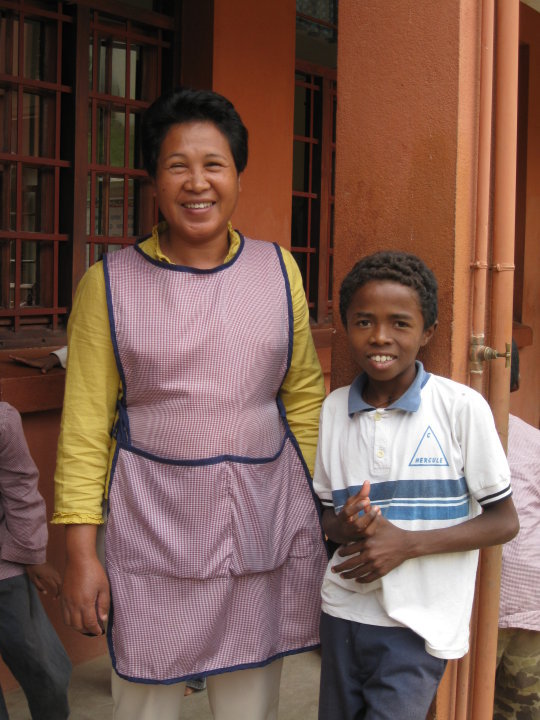
A teacher poses at the center for street kids run by the Church of the Nazarene in Antananarivo, Madagscar. Children receive basic education, a hot meal, and learn about the love of Jesus
At the center for street kids run by the Church of the Nazarene in Antananarivo, Madagascar, children receive basic education, a hot meal, and learn about the love of Jesus

Unfortunately, we have an unhealthy tendency to think in binary terms, as if one must be either in the personal transformation camp or the social transformation camp. In our day, we see a growing generational divide. The older set may consider those younger to be naive and distracted from the heart of the Gospel, which in their view is mostly about getting people ready for the next life, while the younger set rejects the “Club Heaven” approach, finding that flavor of Christianity to be insular and therefore of limited impact.

But what if the church – like a jet – was always meant to have two wings, not one? What if message of Jesus Christ is not either/or, but both/and?

In fact, the Gospel is about both personal and social transformation. It can neglect neither one for any length of time and thrive, no more than an airplane with only one wing can fly.

As related to local churches, the need differs according to the setting. In a congregation that is insular, we must lean in the direction of community involvement, of adding to piety what John Wesley called “works of mercy” — feeding the poor, visiting the sick, and clothing the naked. It may involve going beyond symptoms to root problems, of marching against corruption or government practices that destroy the environment or campaigning against abortion as a form of systemic evil.

In other churches that are already strong on social transformation, leaders will need to inject a healthy dose of the personal elements of the Gospel. Here is included a call to a life-changing encounter with Jesus Christ, a need to leave our sinful ways behind and let God change us from the inside out. The use of small accountability groups can do much to foster a stronger inner life and help move new believers on to a closer walk with God.

IMG_6216

Some will ask: Which comes first, personal transformation or social transformation?

As a community of faith, we must always pursue them at the same time.

If we say that personal transformation must come first, the track record is that the church never gets around to building the Kingdom of God beyond the church, to social transformation. Further, as Wesleyans, we believe in the means of grace. In addition to taking the Lord’s Supper, we believe that God can use any number of practices to bring about change in our own lives – praying with others, visiting a nursing home or prison, campaigning against wrongful imprisonment of the innocent, volunteering at the rescue mission, being a Big Brother or Big Sister, going on a Work and Witness trip – all of these practices and more can be what God uses to make people aware of their need for a radical encounter with Jesus that will deliver them from the grip that sin has upon their lives. We must never make “getting saved” a prerequisite for heading out in mission with the church. Often, God will use the mission itself and rubbing shoulders with disciples of Christ to draw individuals to salvation.

Jets need two wings to fly. In the same way, the message of Jesus Christ is about transformation, both personal and social. Pastors and church leaders, how are you pursuing these dual emphases in your setting?