Posted in ecclesiology & sacraments

Church of darkness or church of light?

squeers
Mr Squeers, the evil headmaster at Dotheboys

There are lessons for the church in unsuspecting places. Charles Dickens’ The Life and Adventures of Nicholas Nickleby is one such place.

The 2002 film version builds around a stark light/darkness dualism. Apart from Ralph Nickleby, Nicholas’ cold and wealthy but tightfisted uncle, runners-up for the malevolence trophy are Mr and Mrs Squeers, the heartless taskmasters of Dotheboys, a hellish boarding school for males. It is here that 19-year-old Nicholas takes a job as a teacher. Soon, he sees firsthand the wickedness of his superiors, especially in their abuse of their crippled boy servant, Smike.

During this part of the film, lighting is almost entirely in dark shades. Only young Nickleby shines like a lantern, becoming a benevolent savior to the captives of Dotheboys.

When Nicholas flees the wretched school, he takes Smike with him. As they leave the forest, day dawns and with it a splash of color and light. They join a troop of merry actors and eventually end up back in London. There, Nicholas meets the fair Madeline Bray. Though poor, she selflessly cares for her grumpy and abusive father. Her suffering ennobles her; she casts a pure light on all she meets.

hathaway
Madeline Bray falls for the noble Nicholas Nickleby.

But in day-to-day human existence, there is more than pure light or unmitigated darkness. There are shades of gray, a mixture of both good and evil even in the lives of individual Christians and in the life of the church. This is implied in Paul’s words to the Ephesians:

For you were once darkness, but now you are light in the Lord. Live as children of light (Ephesians 5:8).

At first reading, it seems Paul is describing their current reality, that they already are “light in the Lord.” The context suggests otherwise. Verses 3-5 give a laundry list of sins they were to avoid, including coarse joking, greed, immorality, and idolatry. That Paul warns against them assumes that all was not well in the church at Ephesus. Likely, dark practices had crept in; sin cast ominous shadows over what would otherwise be the joyful lives of “children of light.”

Good, bad – light, dark. When it comes to the church, have we been both, acting sometimes like Nicholas and Madeline, other times like Ralph Nickleby and the Squeers?

Could it be this strange mixture in the church of good and bad confuses our world and prevents nonbelievers from fully considering the claims of the Gospel?

Let’s try to step into the shoes of a young adult who has no profession of Christian faith but sees how the church (and its members) operate in society. Would such a person tag the church as a “church of light,” righteous, compassionate and coming to the aid of the oppressed, or as a “church of darkness,” self-righteous, concerned mostly for its own needs and silent about the oppression of others?

well

Why might others perceive us to be a “church of light”?

  • digging wells in the developing world – Churches and missionary organizations have dotted the remotest parts of Africa with wells, giving a cup of cold water in the name of Jesus (Matthew 10:42). That kind of compassion makes me proud!
  • combating human trafficking – It may be a restavek in Haiti, or a young girl trapped as a sex worker in Bangkok or Dallas. Slavery exists today in various forms. The church is waking up to the problem and swinging into action.
  • recovery groups – The Celebrate Recovery movement continues to grow. Churches across the United States sponsor small accountability groups that allow people to break free from “hurts, hang-ups and habits,” from overeating to pornography addiction. Many churches sponsor divorce care groups, bring healing to those who have suffered a failed marriage. There is new life in Christ!

Why might others perceive us to be a “church of darkness”?

  • spending mostly on herself and her own comfort – Do we really need fancier sound and lighting equipment for worship times that last only 1-2 hours weekly? Does God really want us as a church to go “first class” (like prosperity preachers claim) or could we be having a greater impact if a larger percentage of our tithes/offerings received were funneled outward toward the needs of our local community?

uncle
Ralph Nickleby, self-absorbed speculator
  • silence when others mistreat minority groups  – In Nicholas Nickleby, Smike (who had run away) is recaptured. Mr Squeers ties him up and promises to cane him within an inch of his life. Nicholas looks on in anguish; what will he do? Will he passively allow the beating or will he intervene? In righteous anger, Nicholas shouts: “Stop! This must not go on.” He rushes forward, snatches the cane from Mr Squeers and beats him (but less than he deserved), then unties the hapless Smike. The Roman Catholic Church and the vast majority of Protestant denominations correctly teach the historic view that God does not condone homosexual practice (Romans 1:18-31, 1 Cor. 6:9-11). Still, can this excuse our passiveness in the face of another caning? While rightly including commonsense provisions about which gender must use which public toilets, a recently minted Mississippi law jumped the rails, striking more broadly at LGBT individuals, permitting rental discrimination by landlords and allowing employers to fire employees solely on the basis of their sexual orientation. We’ve raised our voice against other injustices; why not now? Does not Christ’s love compel us as the church to speak up when any human being is grossly mistreated?

Nicholas Nickleby does well to portray characters who exemplify darkness and light. Where the film is less effective is showing that most people live their lives somewhere between those poles, in the shadow-land. Yet God calls us to holiness, to live according to a consistent, higher standard! Individually as followers of Christ and corporately as the people of God, we are called to forsake all that is dark and to live only as children of light. Where we have sometimes acted as a “church of darkness,” may God accept our repentance, filling us once again with his light, with unconditional love.

Posted in eschatology, reflections

No resurrection? No Christianity

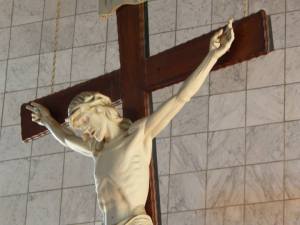
sproutI like Good Friday. There’s something about the love of God that you can’t miss when you look at the Cross.

Last week, I entitled my blog: “No Cross? No Christianity.”

But let’s imagine that Jesus had died but not risen. Would Christianity even exist?

The Apostle Paul didn’t think so. Writing to the Corinthians, he insisted:

And if Christ has not been raised, our preaching is useless and so is your faith (1 Cor. 15:14, NIV).

No resurrection? No Christianity.

Pondering the resurrection yields many truths. Here are a few:

1. Resurrection reminds us that “good” and “evil” are not to be confused.

People looked at the life of Jesus Christ and saw the loving goodness of God. Yet a handful of religious leaders refused to acknowledge that goodness. Instead, they called it evil and nailed it to a Cross.

God will not tolerate calling what is good, evil. That was the essential point of Peter’s sermon on the Day of Pentecost: “You will not let your holy one see decay” (Acts 2:27b). God had vindicated Jesus, the righteous one.

Good is good and evil is evil. The resurrection is God’s warning to not confuse the two.

2. Resurrection affirms that our bodies are to be joyfully celebrated.

Gnostics taught that only spirit is pure; matter – including our bodies – is corrupt and must merely be endured. Resurrection, on the other hand, reminds us that our bodies are good creations of a good God;  they are to be celebrated! In fact, our bodies are so important that God will one day give them back to us in new-and-improved form. Jesus’ resurrection is the prototype of the resurrection of all (John 5:28-29). The joys of this life are bodily joys. They will be restored in the Kingdom of Heaven.

3. Resurrection is the promise that God will one day right all wrongs.

Why do bad things happen to good people? Theologians have sometimes solved the riddle by either claiming that God is not all good or that God is not all powerful. Both of these solutions fail to satisfy because they leave out Christ, more specifically the Cross, the Empty Tomb and the Second Coming.

There is no greater example of a “bad thing” happening to a “good person” than when the religious leaders had Jesus crucified. Sometimes we forget that the story doesn’t end with the resurrection. The end of the story is the return of Christ! It is only then that the dead are raised and final judgment takes place (2 Thess. 4:13-18; 2 Cor. 5:10).

The resurrection of Jesus is a past event but one that points us forward. Because Jesus lives, we too shall live. Because God through a specific resurrection righted the terrible wrong done to his Son, so we believe that God will one day through a general resurrection right the wrongs suffered by many across human history.

Summing it all up

Resurrection Sunday is indispensable to the Christian faith. No resurrection? No Christianity. Good and evil are not to be confused. Further, we celebrate our bodies as God’s good creation here on earth and – one day – his new creation in the Kingdom of Heaven. And while we mourn that evil can triumph over good in this life, the resurrection teaches us that God will one day set things straight.

Christ is Risen! He is risen, indeed.

——-

Image credit: HDWYN.com

Posted in reflections

No Cross? No Christianity

11138657_10153316219233408_5909867169481489133_nSomething strange is happening to Christianity. In our accent on God wanting us to be happy, are we losing the Cross? No little loss would this be. No Cross? No Christianity.

The Apostle Paul knew the temptation of re-tooling the message to soft-pedal the shame of death on a Roman gibbet. A classic example is his discourse in Athens (Acts 17). Instead of talking about the death of Jesus and what it meant, he spoke in philosophical terms of the “unknown God.” It wasn’t a total failure. Luke reports that “some of the people became followers of Paul and believed” (17:34). Yet this was hardly the rousing success he had envisioned.

In Acts 18, Paul travels to Corinth and changed his strategy. Gone was the debate over Epicurean and Stoic categories. In its place stood Golgotha:

And so it was with me, brothers and sisters. When I came to you, I did not come with eloquence or human wisdom as I proclaimed to you the testimony about God. For I resolved to know nothing while I was with you except Jesus Christ and him crucified. I came to you in weakness with great fear and trembling. My message and my preaching were not with wise and persuasive words, but with a demonstration of the Spirit’s power, so that your faith might not rest on human wisdom, but on God’s power (1 Corinthians 2:1-5, NIV; bold added).

When we reflect on the Cross, what vital lessons about Christian faith come into focus?

1. The Cross symbolizes the death of self-centered living. The weed of “me first” thinking sprouts in the shallow soil of individualism but cannot grow in the healthy garden of interdependence. Jesus went to the Cross because he understood that our destiny depended on it. Romans 5:8 (NIV) teaches: “But God demonstrates his own love for us in this: While we were still sinners, Christ died for us.”

Jesus understood that to claim his prerogatives as the Son of God would have meant prioritizing himself above us. When a companion drew his sword to protect Jesus at the moment of his arrest in the Garden of Gethsemane, Jesus rebuked him:

Do you think I cannot call on my Father, and he will at once put at my disposal more than twelve legions of angels? (Matt. 26:53, NIV)

When marriage grows difficult, when “what’s in it for me?” appears a legitimate question, the Cross offers an eloquent rebuttal, a testimony that “it’s not about me” nor should it be.

2.  The Cross demonstrates that God’s love is stronger than humanity’s hate. Sometimes we mistakenly attribute hate to God when we say that the Cross was a manifestation of God’s wrath against sin. But the only wrath that day at Calvary was human anger obvious in the mocking tone of the religious leaders:

Come down from the cross, if you are the Son of God! (Matt. 27:40b, NIV).

Instead, Paul extols the love of God “that is in Christ Jesus our Lord” (Romans 8:39). And what was his  definitive proof of divine love? Divine sacrifice. God “did not spare his own Son, but gave him up for us all…” (8:32). To overcome hate, God did not resist it but – in a kind of cosmic jujitsu – with love, pinned hatred to the ground.

3. The Cross insists that suffering has meaning when it’s endured for a greater good. Athletes working out in the gym surround themselves with motivational posters with sayings like:

No pain, no gain.

What the athlete stands to win – a trophy, a laurel wreath, a medal – makes the agony of training worthwhile. John the Baptist was a living “no pain, no gain” sign for Jesus. When the Lord came for his baptism, John announced: “Look! The Lamb of God, who takes away the sin of the world!” (John 1:29, NIV). It was a reminder to Jesus of his mission, that because of his atoning death just 3 years later, people would be reconciled to God, that forgiveness of sins and cleansing from our moral pollution were possible (Hebrews 13:12). That positive outcome was worth all the trials Jesus would endure.

4. The Christ of the Cross demands our highest allegiance. Peter – who himself suffered martyrdom on a upside-down cross – urged his readers to follow in the steps of Christ’s sufferings (1 Peter 2:21). Ralph Hudson’s hymn captures this thought:

I’ll live for him who died for me!

Recent events in our world prove that the words of the hymn can be involuntarily transposed into a higher key: “I’ll die for him who died for me.” Would such a sacrifice be possible if Christ had not taken the lead, laying down his life for us? 1 John 3:16 (NIV) affirms:

This is how we know what love is: Jesus Christ laid down his life for us. And we ought to lay down our lives for our brothers and sisters.

These are some of the lessons that we learn at the foot of the Cross. Christianity without a Cross would be incomprehensible. No Cross? No Christianity. This Good Friday, let us together thank God for the Cross.


Posted in reflections, The Wesleys and Wesleyan theology

Love, or holy love? Why it matters

03202011-transcendentThere’s a conversation in Wesleyan circles about God’s nature. Thomas Jay Oord insists that the unadorned noun, “love,” is sufficient when talking about the character of God. Kenneth Collins, on the other hand, prefers to add an adjective, describing God as “holy love.” I side with Collins, and here’s why:

1. The biblical evidence – Two key New Testament passages come to mind. In 1 Peter 1:16, quoting Leviticus 11:44, God calls us to holiness in simple terms: “Be holy, because I am holy.” The verse is preceded by a call to avoid the “evil desires” that typified us when we “lived in ignorance” (1 Peter 1:14, NIV). Holiness is presented as the opposite of evil, i.e. righteousness. God is saying: “Pay attention! This is something crucial about who I am. Because purity is part of who I am, so it should be part of who you are.”

Yet if we stop there, we have only one half of the equation. 1 John 4:8 (NIV) teaches: “Whoever does not love does not know God, because God is love.” There is no hatred in God. Rather, God seeks the well-being of all creation. In fact, love does not exist where a genuine and prioritized interest in the well-being of others is absent.

2. Immanence and transcendence – Christian theology teaches that – in relation to creation – God is both transcendent (over and above) and immanent (close by). Isaiah 6:1 is the prophet’s vision of the LORD who is “high and lifted up.” This is the picture of transcendence, that the LORD is the Other, the Creator not to be confused with the creation. Yet this coin has two sides. In Jesus, Immanuel, we also encounter God with us (Matthew 1:23), the immanent one, close by and alongside all that God loves. This is a tension in our view of God, to be sure, but not unlike other tensions that we accept, such as Jesus being wholly human and wholly divine.

So where does this leave us?

If we say only that “God is love,” we are favoring part of the biblical revelation over another; it is an incomplete picture of God. Balanced doctrine takes into account what John Wesley called the “whole tenor of Scripture.” Though this brief essay has cited only a few passages, a more thorough study of Old and New Testaments would confirm that these dual emphases as related to God’s nature – holiness and love – exist side-by-side. Like a double helix strand of DNA, stability comes when the two remain joined together.

Danger lies in either extreme. Should we speak of God as only holy, inevitably our concept of God would be that of a distant, even harsh deity unable to identify with our weaknesses. On the other hand, if we only speak of God as love, we risk making God a doting grandfather who cares little about the moral quality of our lives. To maintain the transcendence/immanence tension – of the exalted, righteous God and the God who showed his affection for us through the incarnation of Christ – then speaking of God’s nature as “holy love” maintains equilibrium in our vision of who God is and who we are to be in response.

May the God who is holy love be our exemplar. May Jesus Christ – who is the very image of God – inspire us to lead lives that are simultaneously unpolluted by the world and selflessly poured out in loving service to others.

——

Image credit: aboutfbc.org

Posted in sermons & addresses

“Running well” – an address to the graduates of NTI-Liberia

IMG_8324Here’s a graduation address that I gave on October 21, 2012 to Liberian pastors receiving their Diploma in Theology from Nazarene Theological Institute.

————-

“Running Well” (1 Cor. 9:24-27)

Introduction

To the graduates of the NTI-Liberia class of 2012, families, friends, honored guests:

The Bible talks about the Christian life using several images. It speaks of birth and growth. At other times, it says we are buildings under construction. But the image that has always fired my imagination is running.

From one race to another

The Apostle Paul in 1 Cor. 9:24-27 (NIV) likewise draws lessons from sports. He encourages us:

Do you not know that in a race all the runners run, but only one gets the prize? Run in such a way as to get the prize. Everyone who competes in the games goes into strict training. They do it to get a crown that will not last, but we do it to get a crown that will last forever. Therefore I do not run like someone running aimlessly; I do not fight like a boxer beating the air. No, I strike a blow to my body and make it my slave so that after I have preached to others, I myself will not be disqualified for the prize.

Today, the day of your graduation from the Nazarene Theological Institute of Liberia, marks the end of a race. You have completed an academic race, a race that when you began you thought would be a 5k but it turned out to be much longer! You have crossed the finish line, and everyone here today pauses with you to reflect on your achievement. To you we say with sincerity and good cheer: WELL DONE!

Yet we are here today for another reason. We, your family, friends, colleagues, and members of the larger Liberian community, have gathered not only to congratulate you, but to cheer you on. For we know that while one race has finished, another race continues, and that is the race we are all running, the race of Christian faith. And for you, those called to full-time Christian ministry, there is the race of vocational service to Christ, his church, and the world.

In that race, you as graduates of NTI are pacesetters. You are leaders to whom not only the church but the nation looks for inspiration. To you, in both your relationship with Christ and in ministry, I say this afternoon: RUN WELL.

Let us look together in more detail at 1 Corinthians 9. Thankfully, not only does it say “run well” but it gives concrete advice on how to do so.

  1. Give the race your very best, together.
  2. Avoid disqualification.
  3. Remember the crown.

Give the race your very best, together.

Paul commands: “Run in such a way as to get the prize.” The Greek plural imperative indicates that Paul is not talking to one person, but to a group. He’s saying: “Run this race together.”

I was never an accomplished runner, but two years of high school cross-country taught me many things. My second year of running, we got a new coach. He didn’t just tell us to run; he strapped on his running shoes and led the way!

One day, he taught us what he called “Indian running.” All ten of us ran in single file. Each hundred meters or so, coach would yell “next runner!” The runner at the back of the line would have to speed up and pass all the others, taking his place at the front. Coach would refuse to let anyone else slow down so that the new runner could more easily get to the front of the line. Instead, he’d yell: “Come on, Crofford, you can do it!” And when I made it, he’d yell: “Good job!” Soon, we all understood and yelled out encouragement to each other, just like the coach had yelled out encouragement to us.

And so I ask our graduates: Are you running alone in ministry? If so, it’s time we did some Indian running. It’s time we encouraged each other.

John Wesley, our spiritual grandfather, understood this well. He grouped Methodists together in classes and bands. He knew that for us to give the race our best, we need each other. And so the movement that he and his brother, Charles, started eventually came to be called the Methodist connexion.

Europeo_Carreras_de_Montaña._Rep_Checa_2006
Own work, CC BY-SA 4.0, https://commons.wikimedia.org/w/index.php?curid=44533966
We are connected. In this connection we call the Church of the Nazarene, we strive to run the race the very best we can, and to do so, we stay connected. We run together.

Graduates, turn to the graduate on your left. Say these words:

“Brother, I promise to stay connected.”

Now, turn to the graduate on your right. Say these words:

“Brother, I promise to stay connected.”

As a young pastor, I was brand new in ministry. I had so much to learn! Thankfully, I wasn’t alone. Once per month, I met the four other pastors on the zone and we ate lunch together. Those were times when we could share our victories and our struggles. What precious times those were!

Connection can even happen on the Internet. On FaceBook, a former student of mine invited me to join a closed ministry support group. One of the members posted this the other day: “Please pray for me. I’m struggling. This is a season of temptation for me.” Within 10 minutes, two other brothers in ministry had responded. “Here’s my phone number,” one of them wrote. “Call me, brother, and we can talk. I’m here to help you through your struggle.”

However you do it, don’t run alone. Give the race your very best, together.

Avoid disqualification

His name was Taoufik Makloufi. On August 6, 2012, at the London Olympic games, a race referee disqualified him during the first lap of the 800m race. What was his offense? Makloufi had already qualified for another event in which he was better, the 1500m, an event in which he was expected to win a medal. By not trying in the 800, event, Makloufi hoped to save his energy for the 1500m. The end result was that officials kicked him out of the Olympics and he never got to run his preferred event.

It’s a tragedy when someone is disqualified. Paul himself – though a great Apostle – guarded against this possibility. In verse 27, he says that he “beat his body” to “make it my slave.” Why did he do this? The verse continues: “…so that after I have preached to others, I myself might not be disqualified for the prize.”

A Chinese proverb says: “You can’t stop the birds from flying around your head but you can stop them from nesting in your hair.” There is not a person in this room who is exempt from weakness. The devil knows your weakness. The question is: Do you?

What is your plan of action when your day of temptation comes? And it will come. The saying is still true: “Those who fail to plan, plan to fail.”

Paul says to us today:

  1. Give the race your very best, together.
  2. Avoid disqualification.

Finally, he exhorts us:

Remember the crown.

Verse 25 of our text reminds us: “Everyone who competes in the games goes into strict training. They do it to get a crown that will not last, but we do it to get a crown that will last forever.”

Stephen Covey was best known for his book, The 7 Habits of Highly Effective People. The second habit is this: “Begin with the end in mind.”

The Apostle Paul said the same thing: Remember the end; remember the objective. Remember the crown.

It seems like those who run shorter distances get more attention. We hear about Jamaica’s Usain Bolt, champion of the 100m and 200m distance. Many even know about Kenya’s David Rudisha, gold medalist in the 800m run in London. Fewer know the names of champion marathoners, names like Tiki Gelana, the female gold medal winner from Ethiopia.

Yet ministry in the church is more like a marathon than a 100m dash. To make it through this race, women and men of God, we have to remember the finish line. We have to remember the crown.

Chris shows off his medal received for finishing the Marine Corps marathon, October 2014
My nephew, Chris, this year successfully completed all 26+ miles of his third Chicago marathon. Here’s what he wrote about the experience:

While running my 3rd Chicago marathon today, I started thinking about the psyche of the ‘casual’ marathon runner such as myself…1) Starting line: Ecstatic! 2) 13.1 miles: confident. 3) 16 miles: Worried – ‘Really, I have 10 more miles!’4) 20 miles: Self pity – ‘This is painfully horrible! Why did I sign up for this thing again!’and 5) 26.2 miles – Ecstatic! ‘I can’t believe I made it through!’

Best time yet. Looking forward to next year.

Though my nephew didn’t say anything about it, I also know that his wife, Erin, and his two young daughters were waiting for him at the finish line with a warm embrace. I know because Erin posted up a photo of Chris and the whole family after he had finished. Chris didn’t set any records, but he finished, and for him that day, his wife and daughters were his “crown.”

I suspect that there will be moments in your ministry – if you haven’t had them already – when you will have the same self-pity Chris did after 20 miles. After a sermon that you thought was excellent flops, when criticism from someone in the church stings, when you see your family on the edge of poverty and the devil mocks you by saying how stupid you are and how much richer you could be if only you’d do something else rather than pastor –

Like Chris at mile 20, you may think:

This is horrible! Why did I sign up for this again?

When that moment comes, as it surely will, I say to you this afternoon:

Keep running! Remember the finish line. Remember the crown.

You’ll probably never receive here on earth the recognition that you deserve. But Paul says: There is a different crown, a crown that lasts forever. Recognition in this life is fleeting; the reward of heaven is eternal.

CONCLUSION

And so graduates of the NTI-Liberia, you have come at last to the end of a race, an academic race, a Diploma in Theology. As Director of the NTI, I wish you my hearty congratulations for a job well-done. We honor you today on the occasion of this tremendous achievement. Yet if one race is over, other races continue. For each of us here today, there is the race of the Christian life, but for you, the graduates, there is the ongoing race of full-time ministry in service to Christ, his church, and your world. In that race, give it your very best, not alone, but together. In that race, at all costs, avoid disqualification, and in that race, remember the crown.

Posted in eschatology

Heaven: Starting the song all over again

trumpet

Note: This week Bruce passed away. He was a very short man who – with tremendous grace and good humor – dealt with a physical lifelong disability. He loved the Lord, and he loved others. Well-done, Bruce!

The resurrection of the body is a crucial doctrine of Christian faith. We will be given new bodies, strong and eternal like the resurrection body of our Lord. Here we stake our claim; here we stand.

——————-

Mr. Taylor was my first band conductor.

Conducting a 4th grade band takes a special kind of patience. Every child is new at his or her instrument, be it the flute, clarinet, trumpet, trombone, drums, or a dozen other things that make noise. And let’s face it, for 4th graders, about all we could do was make noise. Like my brothers before me, I played the trumpet, or at least I tried.

Our first concert came at Christmas time. By then, all of us had a grand total of 3 months of experience, practicing twice per week in the band room. Parents and siblings gathered in the cafeteria and waited for us to file in. At last, all of us were in our seats and Mr. Taylor stepped up to the small platform, took his conductor’s baton, and raised his arms. We all snapped to attention and raised our instruments, ready to play.

I’m not sure what happened, but only about half of us began playing when his arms came down, signalling the start of the song. Were some still trying to spot where their families sat in the audience? Maybe others were still adjusting their music on the stand or simply daydreaming, but whatever the reason, it was a poor start.

Mr. Taylor then did something that surprised us. He suddenly stopped directing the song, tapping his baton several times on the music stand. We all ground to a halt, not knowing what to make of it all. Slowly, he turned around and addressed the audience:

“Ladies and gentlemen, we’ve had a very poor start to the song. Please forgive us. We can do better. Now, we are going to start all over again.”

And that is exactly what we did. I’m glad to report that the second time went much better, and when we were done, the audience applauded with gusto.

That’s what Heaven will be like. Heaven is New Creation. Heaven is God starting the song all over again.

The first time through, the song has been marred by sin, off-key. God knows we all can do better. One day, he will tap his baton on the music stand and we will all begin again.

John described it this way: :

Then I saw “a new heaven and a new earth,” for the first heaven and the first earth had passed away, and there was no longer any sea. 2 I saw the Holy City, the new Jerusalem, coming down out of heaven from God, prepared as a bride beautifully dressed for her husband. 3 And I heard a loud voice from the throne saying, “Look! God’s dwelling place is now among the people, and he will dwell with them. They will be his people, and God himself will be with them and be their God. 4 ‘He will wipe every tear from their eyes. There will be no more death’ or mourning or crying or pain, for the old order of things has passed away” (Revelation 21:1-4).

More and more of those who have played their instruments with me in the band are now silent, awaiting that second chance to perform. On that day, the band will once again assemble. All who have played before us will be present, gloriously resurrected by the Lord in new, durable bodies. What a grand reunion that will be as Jesus raises the baton and we start the song all over again!

How about you? Will you be in the band? This life is only the poor beginning to the song, but a new, better beginning is coming. Don’t miss out on it. Keep your instrument in-tune. What a performance that will be!

Posted in missions & evangelism

Peoples transformed: sharing Christ cross-culturally

Early_Benin_1If transformation is a key biblical concept, then grace is what makes it happen. Grace – a metaphor for the transforming work of the Holy Spirit – is one of the most powerful forces known to humanity. When God’s grace changes a person, it spills over to touch members of the entire family, even whole communities.

Yet the book of Acts doesn’t stop there. The power of the Holy Spirit – like sound waves from a sonic boom – travels outward, transforming everything in its path. The day of Pentecost in Acts 2 is the divine sonic boom, and the rest of Acts records the echoes.

No one culture or nation can trap God in a bottle, cork it, and taunt: “We have God in a bottle and we’re not sharing!” The good news of Jesus Christ is good news for all, or it is not good news at all.

Into the nations: from centripetal to centrifugal

In Matthew 28, our risen Lord appeared to his disciples on a hill outside Jerusalem. These were his parting words before he returned to his Father. What would he say to the men with whom he had spent 3 amazing years? Verses 18-20 (CEB) capture the moment:

I’ve received all authority in heaven and on earth. Therefore, go and make disciples of all nations, baptizing them in the name of the Father and of the Son and of the Holy Spirit, teaching them to obey everything that I’ve commanded you. Look, I myself will be with you until the end of this present age.

This is the moment when disciples (followers) became sent ones (apostles). In physics, a centripetal force draws an object and keeps it in a fixed orbit, preventing it from flying outward. In the Old Testament, the people of God were to be centripetal. This is Isaiah’s vision: “In the last days the mountain of the Lord’s temple will be established as the highest of the mountains; it will be exalted above the hills, and all nations will stream to it” (Isaiah 2:2).

But something radical transpires in Matthew 28. Standing outside of Jerusalem – the very city alluded to in Isaiah’s vision – Jesus does not call the disciples to a centripetal mission. Instead, their mission is to be centrifugal. Think of the mud that cakes on a tire. The faster the tire spins, the more mud that flies off in all directions. Now, God doesn’t call us to fly off and make the world dirty! But the point remains: Jesus calls us not to stay but to go and transform. In the New Testament, the people of God are centrifugal; in the new order, God sends us on a cross-cultural mission.

Timothy Tennent describes the church’s task and the centrifugal force that enables it:

The central way the Holy Spirit brings the New Creation into the present is through empowering the church to proclaim the gospel in word and deed in the midst of all contextual challenges that the present evil order presents.

An Invitation to World Missions: A Trinitarian Missiology for the 21st Century (Grand Rapids, Michigan: Kregel Publications, 2010), 96.

Continue reading “Peoples transformed: sharing Christ cross-culturally”

Posted in missions & evangelism

Families and communities transformed: changing our “Jerusalem”

rippleI’ll call them Susan and Lisa. Though their names have been changed, their story hasn’t.

Susan had since childhood been angry. She could lash out viciously toward others, but then something happened. Susan met Jesus and Jesus changed Susan. Sweetness replaced bitterness and church became a regular part of her life as she grew in her faith.

Her sister, Lisa, noticed. “What happened to you?” she asked Susan. “You used to be so angry.” Susan told Lisa about her newfound faith in Christ. Lisa was intrigued and started going to church with Susan. Soon, Lisa also decided to follow Jesus.

When God transforms the lives of individuals, the impact ripples to others.

In Acts 1, Jesus talks about this ever-widening impact. The Lord predicted the coming of the Holy Spirit and the change that would make in the lives of his followers. The disciples (followers) would become apostles (sent ones). Like a stone dropped in a pond, ripples would spread out in all directions:

But you will receive power when the Holy Spirit comes on you; and you will be my witnesses in Jerusalem, and in all Judea and Samaria, and to the ends of the earth” (Acts 1:8, NIV).

Jesus’  words serve as a brief outline for the 28 chapters of Acts. The transformation God desired began with the Jewish people on the Day of Pentecost, gathered in Jerusalem. Pilgrims who had gathered for the Jewish feast returned to their homes in other parts of the world, but some did not return the same as they came. They had believed in Jesus and their lives would never be the same; they took their new faith with them. Later, a second wave rippled out from the epicenter as persecution drove many believers out of Jerusalem. They, too, would impact others wherever they went. Paul of Tarsus – who at first persecuted Christians – became one himself. With his traveling companions, they crossed over cultural and linguistic barriers becoming the first Christian missionaries. Wherever they went, the power of the Gospel message transformed individuals, families, communities, and even the culture itself.

Families transformed

But let’s come back to that place in the pond where the stone first falls in. What does the first ring that ripples out represent?

For Susan, that first ring – her Jerusalem – was her family. Her sister, Lisa, noticed the change in her life but didn’t know why the change had taken place. By sharing her story with Lisa, her sister also came to faith.

John’s Gospel shows a similar effect. Jesus first called Andrew to follow him. The first thing he did was to find his brother, Simon, and tell him: “We have found the Messiah.” John 1:42 records: “And he brought him to Jesus.” Christian faith travels through family networks.

In the book of Acts, the term oikos appears frequently, including in the story of Cornelius (Acts 10) and the jailer in Philippi (Acts 16).  This Greek word is usually translated as “household.” Often, entire households would decide to follow Christ – wives, children, servants and their families. Pastor Tom Mercer of High Point Church – a congregation of 11,000 in southern California – sees a pattern that is still applicable in the 21st century. He explains:

Oikos, the Greek word for ‘extended family,’ encompasses our relational worlds—anywhere from eight to fifteen people, on the average, whom God has supernaturally and strategically placed in our spheres of influence…our relational worlds. We are all Christ’s partners in world-change.

-from “Sermon Central,” online: http://www.sermoncentral.com/pastors-preaching-articles/tom-mercer-how-the-oikos-grew-high-desert-church-to-11000-attenders-728.asp)

The first step in impacting our oikos is writing down their names. Who are your family members? Your close friends? Co-workers? Others with whom you have regular contact? Make a commitment to pray for one each day. Ask God to use your relationship with them as a bridge they can walk across to join the community of faith.

Bethany First Church of the Nazarene in Bethany, Oklahoma is an example of how churches grow using the oikos principle. The church has a close-knit feel even though more than 2,000 attend on any given Sunday. There are many family connections in the church since generations of families have intermarried. Christian faith has been shared historically through the family networks in the church. This in-part explains the healthy numerical growth experienced over decades.

Communities transformed

Yet oikos is broader than family networks. Mercer speaks of  “spheres of influence.” It is through our relational worlds that transformation can spill over from families to touch entire communities.

The growth of the church in sub-Saharan Africa has been astounding in part because of the oikos principle. Teams that project the Jesus film always seek the permission of the village chief and elders before planning a showing. What is the oikos for a village chief and elders? The whole village! If even some leaders of the village make a clear decision to follow Christ, often many will follow Christ because of their lead.

jesus

As in Africa, so in Ephesus. The early part of Acts 19 shows the impact made not only through miracles that Paul performed but also the decisions by sorcerers to abandon their occult craft and follow Christ.  The church was growing strong among both Jews and Greeks to the point that the even the religious culture of the city was being transformed.

Ephesus was renowned for its temple to Artemis, the Greek goddess of the hunt, wild animals, fertility and childbirth. Worshipers came to the temple and would purchase silver statues of Artemis. It was a lucrative trade (Acts 19:25), but Paul’s message of Christ was siphoning off business as people abandoned idol worship in favor of Christianity. Disturbed by his falling revenues, a silversmith named Demetrius riled up a theater crowd, shouting: “Great is Artemis of the Ephesians!” A riot ensued. They seized a couple of traveling companions of Paul and likely would have done them bodily harm except for the intervention of the city clerk. He calmed the crowd and convinced them to use the courts and magistrates if they had a grievance (19:38).

An Anglican Bishop is reported to have lamented: “Wherever the Apostle Paul went, there were riots. Wherever I go, they serve me tea and crumpets.” How often do our churches resemble the Bishop’s lament? Yet as followers of Christ intentionally pray for their Jerusalem – their oikos -and model another, better way of living, God can use them to transform both their families and communities.

Summing it all up

How can God use us to help transform our Jerusalem? To answer that question requires another: Who is our oikos? God has given each of us families, friends and co-workers. This is our sphere of influence. Our mission is them!  As families are changed by the love of God, so communities will be transformed for the better. Are we ready to make a difference, together?

——–

Image credits

Jesus film showing:

Jesusfilm.org


Posted in book reviews

N.T. Wright gets back to basics

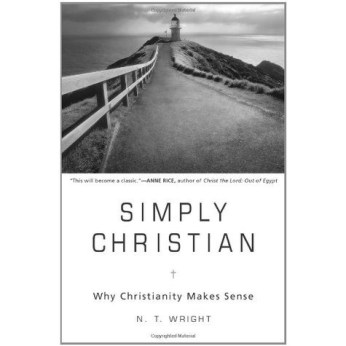
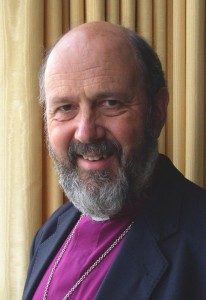
christianBishop N.T. Wright is arguably the most prolific biblical theologian of our time. Capable of treatises that challenge long-cherished interpretations of doctrines – such as his expansive Paul and the Faithfulness of God addressing justification- Wright’s versatility shows through in a different approach targeted both to the believer and to the intelligent seeker. Simply Christian: Why Christianity Makes Sense (Harper Collins, 2006; Amazon Kindle edition) is one such book.
Part One, “Echoes of a Voice,” invites the reader into a conversation. By examining injustice (and the human desire to correct it), the “hidden spring” of an undeniable thirst for spirituality in the human heart, relationships between persons and the role of beauty for meaningful existence, Wright examines longings common to all human beings, asking important questions for whom the only sensible answer is God.

Part Two launches into a review of who God is and how God has chosen to relate to creation. He briefly reviews (pp. 60-63)- and dismisses – traditional approaches to God, including what he calls “Option 1,” namely, pantheism (“all is God and God is all”), panentheism (“all is in God”), and “Option 2,” deism (where God creates then removes himself). In its place, he proposes Option 3, a scheme where heaven and earth are “overlapping and interlocking” (p. 63). The biblical narrative of both Old and New Testaments bears witness to this engagement between Creator and Creation, but why is such engagement necessary? Wright clarifies (p. 66):

In particular, this God appears to take very seriously the fact that his beloved creation has become corrupt, has rebelled and is suffering the consequences.

With this premise given, much of the rest of the book (including Part 3) falls into place as a solution to a problem. The Kingdom of God (chapter 7), Jesus as the one who rescues and renews (chapter 8) and New Creation (chapter 16) can be viewed in this light. Other themes include worship (chapter 11), prayer (chapter 12) and the nature of Scripture (chapter 13), to name a few. In each case, Wright keeps things simple, remaining faithful to his goal of helping those who are new to faith or considering following Jesus.

n-t-wright-206x300
Bishop N.T. Wright

A great strength of the book is its stories. Wright is quick to spin a tale, such as the powerful dictator who decided to control the unpredictability of springs and the floods they cause by paving them over. In their place, he introduced a complicated system of pipes from which water would flow. What happens when people realize that there is far better water to drink than the bland brew that comes out of rusty pipes? Religion taps the deep wells that authorities have forbidden and that many have forgotten, springs that – when tapped – can produce unexpected results. Wright (p. 20) concludes:

September 11, 2001, serves as a reminder of what happens when you try to organize a world on the assumption that religion and spirituality are merely private matters, and that what really matters is economics and politics instead. It wasn’t just concrete floors, it was massive towers, that were smashed to pieces that day, by people driven by ‘religious’ beliefs so powerful that the believers were ready to die for them. What should we say? That this merely shows how dangerous ‘religion’ and ‘spirituality’ really are? Or that we should have taken them into account all along?

Where Wright shines is his treatment of the meaning of resurrection. While he fleshes out his eschatology in greater detail in Surprised by Hope: Rethinking Heaven, the Resurrection and the Mission of the Church (Harper Collins, 2008), in Simply Christian (p. 114), he previews his later thoughts: “Resurrection isn’t a fancy way of saying ‘going to heaven when you die.’ It is not about ‘life after death’ as such. Rather, it’s a way of talking about being bodily alive again after a period of being bodily dead.” In any case, Wright places his accent in the same place as the New Testament, namely, on resurrection as the cornerstone of Christian faith and the basis of Christian hope.

(Read my review of Surprised by Hope by clicking here.)

Simply Christian isn’t flawless. A survey like Wright’s doesn’t have the space to delve too deeply into topics. One example is his description of King Saul’s reign as a “false start” (p. 77). There’s no acknowledgment that Saul’s reign has been estimated as having lasted between 10 and 40 years. By comparison, David ruled for 40 years (1 Kings 2:11) so Saul’s reign was a healthy duration by any measure.

This is the second book I’ve read by N.T. Wright. His writing are appealing in large part because they major on interpreting the biblical witness, avoiding a speculative, philosophical approach to theology. Though he doesn’t allude to John Wesley, one can’t help but think that Wesley would have been a fan of the former Bishop of Durham.

——-

Photo credit (N.T. Wright): Patheos.com


Posted in From soup to nuts

Pumpkin and sugar bean curry

Pumpkin and sugar bean curry

I’m not a vegetarian but this vegetarian dish was tasty!

Here’s the recipe as given on the side of the box of Rajah mild & spicy curry powder:

  1. Sort and clean 2 cups of dry sugar beans and soak in water overnight. (I used red beans instead).
  2. Boil in clean water for 60 minutes or until soft, then drain.
  3. Heat some vegetable oil (2-3 tablespoons should do) in pot and fry 1 sliced onion and 1 chopped green pepper until soft.
  4. Add 2 tbs. of Rajah Mild and Spicy curry powder and 2 chopped tomatoes and fry for about 2 minutes. (Note: I’m sure other brands would work fine, too).
  5. Add 2 cups peeled and cubed pumpkin (or butternut squash), 2 cups of water and beef stock cube, then bring to boil. Turn down the heat and simmer for 20 minutes with the lid on frying pan.
  6. Add the cooked beans and allow to simmer for 10 minutes more.
  7. Season to taste with salt and pepper
  8. Serve with rice. MAKES ENOUGH FOR 4-6.