Posted in Christian ethics

“Spider dead” or “Let’s be friends”?

A number of years ago, I was at a family reunion. My brother’s little boy, around two at the time, was seated in his high chair. Just for fun, I pretended that the fingers of my right hand were a hairy spider. “Spider’s coming to get you!” I warned. Without a second thought, Clay tightened his fist and slammed it down on the “spider.” With glee, he pronounced:
” Spider dead!”

That was what I’d expected him to do, since I’d played the game dozens of times with my own sons when they were younger. I wasn’t prepared for Gabrielle, his older sister. When my finger-spider inched toward her, with my usual verbal warning, she made a finger spider of her own, and inched it out toward mine. In a high-pitched voice, obviously the voice of the arachnid, she replied:

“Let’s be friends!”

And that, my friends, is why our world is going to hell in a hand-basket. Armies roam the world, sent by powerful male politicians wanting to play “spider dead.” How many wars are there going on right now in Africa alone, with all its countries (except Liberia) ruled by male Presidents?

Enough suffering. Let’s give the women a try. Maybe it’s time for “Let’s be friends.” It can’t be any worse.

Posted in ecclesiology & sacraments

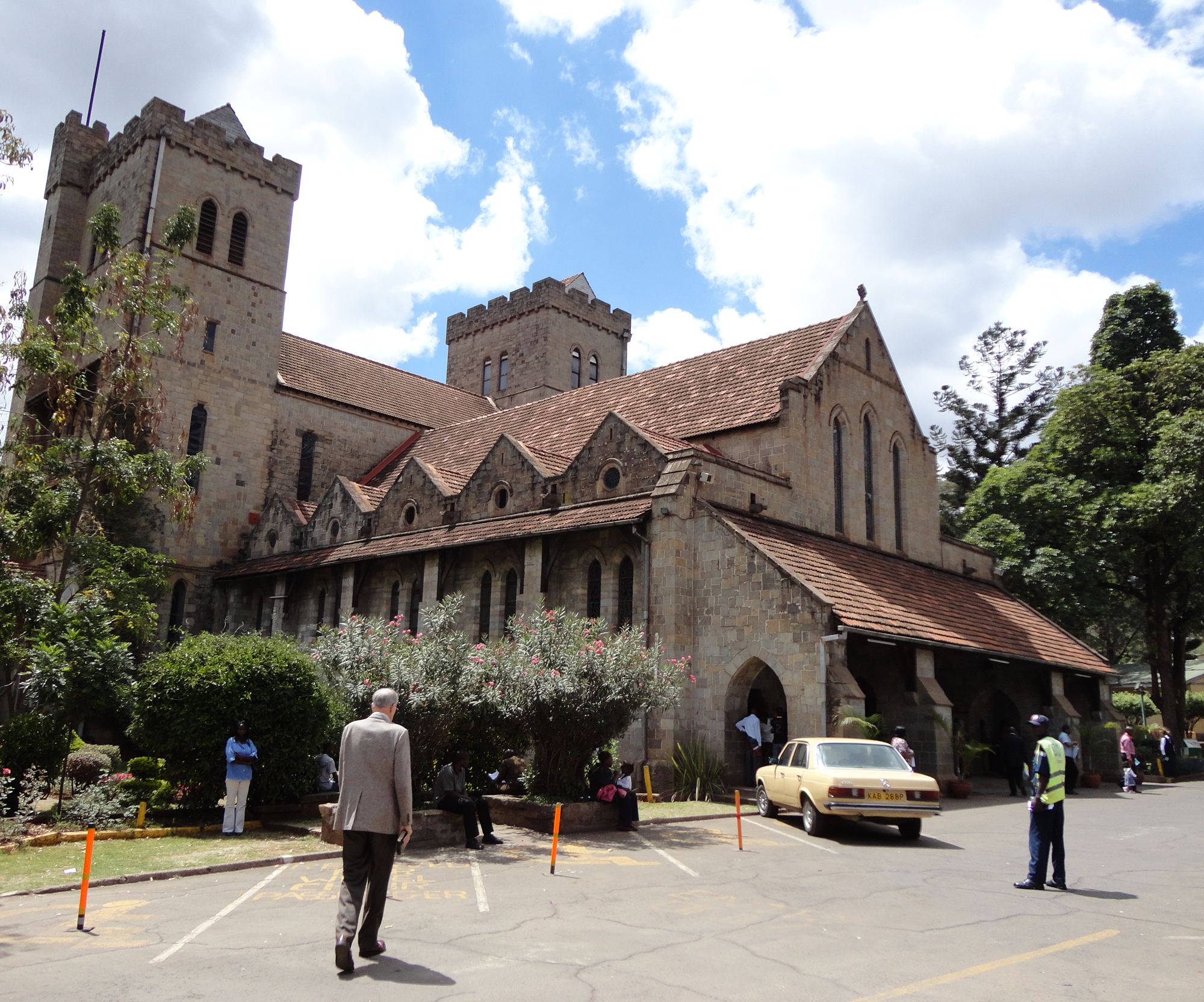
Our visit to All Saints’ Cathedral (Anglican Church of Kenya)

The church building was erected in 1917, but the church isn’t really the building, is it?

We’d been told the service started at 11 a.m., but it actually started thirty minutes later. No problem — That gave us the time we needed to find a spot in the very crowded parking lot. As we waited on the porch for the 9:30 a.m. service to conclude, I poked my head inside. There wasn’t a space to be had in the spacious cathedral! The congregation sang “In Christ Alone, My Hope is Found” as words were projected on multiple T.V. monitors mounted on the stone support columns. All the words were correctly spelled in English, and scrolled in time with the music. A large choir in colorful robes sang, as robed clergy distributed Eucharist by intinction to believers filing by the communion table.

Soon, the service ended, and the crowd dispersed at 11:25 a.m. When they’d cleared, we walked in and found places to sit in pews made of old polished wood. We’d received a program at the door, four pages carefully typed, clearly laying out the order of worship. Three pages of announcements testified to a congregation deeply involved in community life: relief for the poor, care for the aged, baptism courses for new believers. Between old hymns, we recited responsive readings and read prayers. Two women participated as Scripture readers, one reading the O.T. passage from Genesis, and another the N.T. Epistles passage from Galatians. The words from the Bible were projected on the monitors which most followed, though a smattering of churchgoers read from Bibles they had brought to church.

The pastor smiled in his white and green robe, later leading an extemporaneous prayer of intercession. Afterward, he invited a team of young people to come to the front. They carried a banner they promised to plant on the top of Mt. Kilimanjaro when they trek there next week. Hikers solicited sponsors as a fund-raiser to finish construction of the church’s youth center.  When they’d returned to their seats, we all stood again to share the “peace of Christ,” greeting each other with handshakes.  At the instructions of the pastor, all who were not there for the first time sat down, and visitors (like us) he  asked to remain standing. They then officially welcomed us as a group, and applauded. “That’s a nice twist,” I thought. “It’s much easier to have the regular attenders sit down than to have the newcomers stand up.” I made a mental note to tell my pastor when I see him next.

The theme of the day was harvest, and the service revolved around praise to God for rain, crops, and bounty. A Kenyan T.V. station was present, as this service kicked off the week-long Nairobi trade fair, which begins tomorrow.  The “message” (not a sermon, the speaker insisted) came from a Baptist pastor from the other side of town. It was refreshing to see that kind of ecumenism on display. The preacher had us laughing with stories from his past, punctuated with phrases that underscored his evangelical credentials. When he finished, I realized I could have listened for longer. He was anointed.

After the offering, the clergy and choir recessed down the middle aisle. Though there had not been a single “chorus” or contemporary song, a quick glance around at those in attendance revealed a broad age range, from the early 20s upward. (Children and teens had their own services in a separate location). It got me thinking about whether young people will reject a service format that only has hymns. Obviously, they were passing a legacy on to the next generation and at least two lengthy Sunday morning services were packed to the hilt with seekers of all ages, coming to the spiritual feast.

Whither Nazarene ecclesiology?

As a Nazarene, I am aware of our denomination’s  search for an ecclesiology, a doctrine of the church and a self-identify of who we are as a community of faith.  The late William Greathouse in a theology conference underscored this task as a priority for our church. At times, we seem to be an empty vessel filled by whatever the dominant way of doing church is in a given country. If that dominant mode is Pentecostal, then we act like Pentecostals (minus the tongues, mind you). If it is Baptist, then we are de facto Baptists. The revivalism in which Nazarenes were born in early 20th century America has worn thin. In Africa, it can seem like a foreign plant trying to take root.  (For example, the altar has been dutifully constructed in many Nazarene buildings, but its use has been less than effective. Does it fit?)

Because I find the Pentecostal way of doing church shallow, participating in deep and carefully planned worship like we experienced today was a breath of fresh air. What’s more, our own forebears, at least some of them, trace their roots back through Methodism and — via the Wesley brothers — to Anglicanism. An evangelical Anglicanism like that on display at All Saint’s Church would appear to provide a meatier model for how worship could be effectively done in the Church of the Nazarene. The Holy Spirit can move hearts through structure, and such carefully conceived and well-executed times of celebration could be just what we need.

Posted in book reviews

Randy Maddox recommends ‘Streams of Mercy’

Randy Maddox has recommended my monograph, Streams of Mercy: Prevenient Grace in the Theology of John and Charles Wesley (Emeth Press, 2010). Here’s what Maddox wrote in the on-line document, “Recent Dissertations in Wesley Studies, 2001-2008,” on the Duke Divinity School website:

Crofford provides the most thorough study to date of the roots of John Wesley’s understanding of prevenient grace in 16th-18th century Anglican, Puritan, and Dissenting theologians, with particular emphasis on Wesley’s indebtedness to Robert Barclay. To this Crofford adds the first detailed exposition of the theme of prevenient grace in the writings of Charles Wesley.  He concludes with a survey of how recent Wesleyan theologians have appropriated and applied the theme of prevenient grace.

To order the book from Amazon, click here.

Posted in book reviews

‘The Language of Science and Faith’ – a review

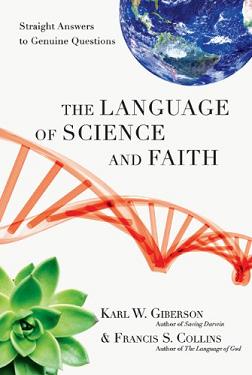
We love either/or thinking. Problems are solved either in one way, or in another. When someone comes along and offers a third possibility, it’s like a breath of fresh air in a stuffy room. Karl W. Giberson’s and Francis S. Collins’ The Language of Science and Faith: Straight Answers to Genuine Questions (InterVarsity, 2011) is one such book.

Giberson (a physicist) and Collins (a geneticist) organize their discussion around responses to frequently asked questions. These include:

Can we really know the earth is billions of years old?

– How does God fine-tune the universe?

– Why is Darwin’s theory so controversial?

Concluding that the term “theistic evolution” now carries too much baggage, the authors substitute BioLogos, but the meaning is the same: God created all that is, and when it comes to life on earth, the means by which God did so was evolution.

Continue reading “‘The Language of Science and Faith’ – a review”

Posted in Bible, reflections

“He must increase, but I must decrease” – John 3:30

All human organizations have “pecking orders.” In junior high concert band, I desperately wanted to play first trumpet. First trumpets sat on the end, and could be seen by the crowd during performances. Second trumpets (which was my position) were buried in the back, out of sight. With time and practice, I moved up. Eventually, I was visible. I had “arrived.”

The Kingdom of God works on exactly the opposite principle. It’s not about prestige or position, it’s about obedience, faithful service in the place God has assigned us, whether seemingly “great” or “small.” John the Baptist seemed to understand this. When his disciples came and complained to him that the crowds were abandoning him in favor of Jesus, John pronounced these unforgettable words:

“He must increase, but I must decrease” (John 3:30).

This simply does not compute in human terms, but in God’s calculus, it makes perfect sense. Jesus calls us not to be masters, but to be servants. Greatness comes not through lording it over others, not in bullying them to get our way. True greatness lies in our ability put others before ourselves. To ascend, first descend.

Prayer:

“Lord, help me today to serve others, to put their interests above my own. Forgive me when I have made myself the center of my world. Teach me your way. In Christ’s name, Amen.”

—————

Reflection based on Scripture reading for Day 62, Cambridge Daily Reading Bible, 1995

Posted in book reviews

‘Surprised by Hope,’ by N.T. Wright – Part 2

Take away resurrection, and you take away the central message of the New Testament. This is the conclusion of N.T. Wright, renowned New Testament scholar and author of Suprised by Hope : Rethinking Heaven, the Resurrection, and the Mission of the Church (HarperOne, 2008).

Wright maintains that Scripture emphasizes not a disembodied existence after death, but the resurrection (or new creation) of our bodies at the return of Christ, a continuation of meaningful service in the Kingdom of God. This is not “life after death” but “life after life after death.” An interim period after death – a time marked by our conscious existence with Christ – will be crowned on “that great, getting’ up mornin’” with life eternal.

What makes N.T. Wright’s book challenging is that he’s not content to leave the resurrection as an abstract, future doctrine. He is determined to bring the future into the present. We say in the Apostles’ Creed: “I believe in the resurrection of the dead” – so what? How will this radical doctrine affect the way the Christian church operates in the here-and-now? Wright observes (p. 197):

As long as we see salvation in terms of going to heaven when we die, the main work of the church is bound to be seen in terms of saving souls for that future. But when we see salvation, as the New Testament sees it, in terms of God’s promised new heavens and new earth and of our promised resurrection to share in that new and gloriously embodied reality – what I have called life after life after death – then the main work of the church here and now demands to be rethought in consequence.

Continue reading “‘Surprised by Hope,’ by N.T. Wright – Part 2”

Posted in book reviews

‘Suprised by Hope,’ by N.T. Wright – Part 1

At Easter each year, we celebrate Christus Victor, the victory of our Lord over sin, death, and the devil. It’s the perfect season to reflect on the meaning of the resurrection, and N.T. Wright’s lucid Surprised by Hope: Rethinking Heaven, the Resurrection, and the Mission of the Church (Harper, 2008) helps us to do just that.

Why does it matter to say as we do in the Apostles’ Creed, “I believe in the resurrection of the body”? N.T. Wright tackles the question with gusto, putting the resurrection back on center stage where it belongs. This begs the question: And exactly what has been front and center? Wright argues that a form of Platonic dualism (even Gnosticism) dominates, where “salvation” has been narrowed to whether we’re ready to go to heaven. Lurking behind such thinking is a downgrading of the importance of our bodies. In this mistaken view, what is important is an immortal soul and whether it’s fit for an eternal dwelling in heaven. Such a position narrows our focus to the next world, undercutting our engagement in this one — more on that in Part 2 of this review.

N.T. Wright maintains that the New Testament does not teach that every human being has an immortal soul. Rather, 1 Cor. 15:53 is clear that what is mortal (our present body) must put on what is “immortal” (our resurrection body). At the same time, Wright affirms that there is consciousness that continues after our death. In an illustration borrowed from John Polkinghorne, he writes (p. 163):

“God will download our software into his hardware until the time when he gives us new hardware to run the software again.”

Continue reading “‘Suprised by Hope,’ by N.T. Wright – Part 1”

Posted in book reviews, missions & evangelism

Mission to the Skeptics: Reflections on Timothy Keller’s ‘The Reason for God’

Billy Graham peppered his sermons with the phrase, “The Bible says.” A direct appeal to the authority of the Christian Scriptures made sense when his listeners came from cultures that respected Christianity. But times are changing. Timothy Keller – pastor of an vibrant church of six thousand in multi-cultural Manhattan, New York – realizes that to reach an urban audience, today’s missionary must first clear away a pile of stumbling blocks. In The Reason for God: Belief in an Age of Skepticism (Riverhead Books, 2008), Keller addresses seven common doubts about Christian faith, followed by seven “reasons for faith.” At least three topics raised by Keller impact our theology of mission, namely, religious pluralism, hell, and the resurrection.

Religious pluralism

Many of Timothy Keller’s sophisticated New York City listeners would identify with what Wes Tracy called “the scandal of particularity.” In a world filled with many religions, how could Peter claim boldly concerning Jesus that “Salvation is found in no one else, for there is no other name given under heaven by which we must be saved” (Acts 4:12, TNIV)? One student lamented to a panel of Christian, Jewish, and Muslim clerics: “We will never come to know peace on earth if religious leaders keep on making such exclusive claims!” (Reason for God, 4).

Continue reading “Mission to the Skeptics: Reflections on Timothy Keller’s ‘The Reason for God’”

Posted in book reviews, reflections

The Necessity of a Future Tense

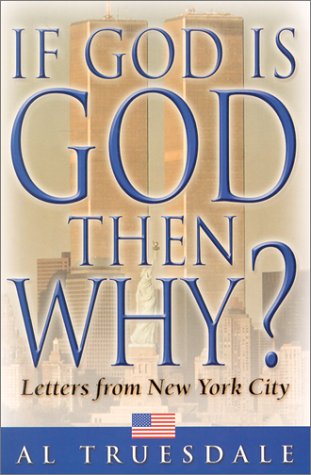
In many ways, Al Truesdale’s If God is God, Then Why? (Beacon Hill Press, 2002) is a helpful book. Originally written after the Oklahoma City bombing in 1996, Truesdale updated the book following the terrorist attacks of September 11, 2001.  In dogged fashion, he refuses to give simplistic answers to life’s toughest questions. His call is to treat hurting people with pastoral sensitivity, to silence some of our off-handed comments that might otherwise cause greater pain to a person who is already hurting.

One by one, Al Truesdale takes up the traditional solutions offered as theodicy (justifying God). One by one, those answers to the problem of evil and suffering are weighed and found to be inadequate. By the end of the book, the fictitious Barbara and Janice are desperate for a satisfying response from their Uncle Carl, a retired pastor. What response will he give to the theodicy riddle?

Continue reading “The Necessity of a Future Tense”

Posted in reflections

Finding God in the rubble

Note to the reader:

These thoughts on “natural evil” apply as much to yesterday’s devastating tornado in Joplin, Missouri as they did to the  Haiti earthquake of January, 2010. Faith seeking understanding can raise more questions than it answers, yet sometimes, questioning is its own solace. Our prayers go out to the families of those who lost loved ones, whether in Port-au-Prince or Joplin.

——————————————————————————————————————————————-

Last night, I tossed and turned. Finally, at 4 a.m. I gave up and went downstairs. Haiti was on my mind.

Estimates are that 110,000 Haitians died in the recent earthquake. News reports included names of specific locations in Haiti’s capital city that my wife, sons, and I frequented while living there briefly as missionaries, like the supermarket where we shopped that collapsed into rubble.

Some stories have been wrenching. Eleven year old Anaika Saint-Louis was a happy girl, sang in her church choir, and told anyone who would listen that someday, she would be a lawyer. When the quake hit, she was trapped under tons of concrete. For three days, she prayed desperately to God to save her. After heroic efforts, workers freed her, but at the cost of an amputated leg. She died en route to specialized medical treatment, three hours away. The Apostles’ Creed affirms: “I believe in the resurrection of the body.” We will see courageous Anaika again someday, but meanwhile her mom weeps, and we weep with her.

Continue reading “Finding God in the rubble”