
Mere Ecclesiology: Finding Your Place in the Church's Mission (Wipf & Stock, 2016) explores the church's purpose and mission in two movements: 1) "breathing in" (worship and discipleship) and 2) "breathing out" (transformational service in the world). It is available in paperback for $ 13.60 USD from Wipf & Stock by clicking here..
NOTE: A Kindle e-book edition is available at Amazon for only $ 9.99 USD by clicking here.. See the same site for hardback and paperback editions.
From the Foreword:
"Greg has powerfully captured the church, 'God’s mission in the World', in these brief pages. Ecclesiology is generally a subject written and discussed in academic theological circles and rarely reaches the person in the pew. But this is one for the pew and will be valued as well."
-Jo Anne Lyon, Ambassador
General Superintendent Emerita
The Wesleyan Church
From the back cover:
"This is an excellent overview of the work of the church. Refreshing!"
- Jesse C. Middendorf, General Superintendent Emeritus, Church of the Nazarene
"If ever the church needed a grassroots understanding to fulfill its mission in the world in this significant time, then this is the 'back to the basics' guide so desperately needed."
- Gabriel J. Benjamin, Church of the Nazarene, Africa Region Education and Clergy Development Coordinator
"Crofford invites us into a discussion regarding the theology of church and the practical implications for ministry...This work will prove useful for the church engaged in the formation of Christlike disciples."
-Carla Sunberg, President, Professor of Historical Theology, Nazarene Theological Seminary
"In promoting a healthy church, Dr. Crofford emphasizes the need for 'spiritual respiration.' His conception of church health first requires a 'breathing in' of personal growth that is spiritual, knowledgeable, and communal. Second, spiritual respiration requires a 'breathing out' that is missional, ministering practically to others for their holistic salvation, societal well-being, and ecological care-giving. . . Crofford identifies step-by-step strategies that help Christians to implement 'spiritual respiration' in finding their place in the church's mission."
-Don Thorsen, Professor of Theology, Azusa Pacific University Seminary

The Dark Side of Destiny: Hell Re-Examined (Wipf & Stock, 2013) is available in paperback and Amazon Kindle editions by clicking here.
It is also available here for just $ 6.99 for users of the Nook e-reader.
From the back cover:
"Discussion of Hell is hotter than ever. Yet for all the attention the topic has drawn, few are the resources that provide an overview of the major points in dispute without bogging down in detail.
The Dark Side of Destiny: Hell Re-examined is an excellent primer, yet goes beyond a mere description of options. Dr Crofford weighs various views of Hell in the light of Scripture and finds them wanting. In the end, he champions a neglected view of last things that both responds better to the preponderance of biblical evidence and safeguards the character of God as equitable, holy, and loving.
With probing discussion questions at the end of short chapters, The Dark Side of Destiny is ideal for Bible studies, Sunday school classes, or small groups."
The buzz about Dark Side (from Amazon.com reviews):
"I read this book with my husband on a recent trip out of state. The book is short but says all I'd hoped it would say and does so very neatly. It gave us hours of discussions to make an otherwise dull drive very interesting." - Charlotte Burton
"Dr. Crofford thoughtfully engages with a neglected part of the biblical message: final judgment." - Andrew Pottenger
"Dr. Crofford writes well and treats all positions with gentleness and respect. Beware,-- this little gem is very thought provoking." - John Watton

Wesley and Methodist Studies (WMS) publishes peer-reviewed essays that examine the life and work of John and Charles Wesley, their contemporaries (proponents or opponents) in the eighteenth-century Evangelical Revival, their historical and theological antecedents, their successors in the Wesleyan tradition, and studies of the Wesleyan and Evangelical traditions today.
Dr. Crofford's article, ‘Grace to All did Freely Move’: Thoughts on Charles Wesley’s 1741/42 Hymns on God’s Everlasting Love' appeared in Volume 6 (January 2014). Based upon research conducted during the 2012 Wesleyan Studies Summer Seminar at Asbury Theological Seminary (Wilmington, Kentucky, USA), the essay examines the predestinarian controversy between the Wesley brothers and the followers of George Whitefield, with special focus upon the pastoral concerns that motivated the publication of the Wesleys' hymn collection.
For further information about WMS, click here.

The Global Wesleyan Dictionary of Theology is available in hardcover by clicking here.
Dr. Al Truesale, Professor Emeritus of Systematic Theology at Nazarene Theological Seminary, is editor of this excellent selection of essays by global scholars in the Wesleyan-Holiness tradition of Christianity.
Dr Crofford contributed 6 articles, including essays on sin, prevenient grace, predestination, and John Wesley's small groups.

Streams of Mercy: Prevenient Grace in the Theology of John and Charles Wesley (Emeth Press, 2010) is available in both softback and Kindle editions at Amazon.com by clicking here.
This is the monograph form of Dr. Crofford's 2008 PhD thesis from the University of Manchester (Nazarene Theological College), U.K.
From the back cover of Streams of Mercy
"Exploring the theological roots of the doctrine of prevenient grace in Anglican, Puritan and Quaker sources as they streamed into the theologies of both John and Charles Wesley, Gregory Crofford has written an engaging account of the significance of this salient grace. In a work marked by careful balance, Crofford ably demonstrates that the doctrine of prevenient grace not only helped the Wesley brothers to integrate diverse elements in their respective theologies but it also enabled them to avoid rigid determinism on the one hand and the 'despair of moralism' on the other. This is an important contribution to the field."
- Kenneth J Collins, Ph.D., Professor of Wesley Studies and Historical Theology, Asbury Theological Seminary
Streams of Mercy was cited by Dr. Amos Yong (currently the Director of Fuller Theological Seminary's Center for Missiological Research) in his plenary address on religious pluralism given to the 2012 meeting of the Wesleyan Theological Society held at Trevecca Nazarene University.
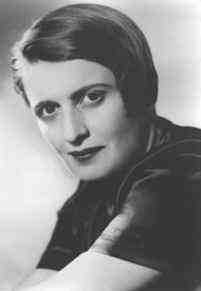 Atlas Shrugged sat unread on the shelf, mocking me. One thousand sixty-nine pages, fifty one hours and fourteen reading sessions later, that monument lies in smitherines at my feet.

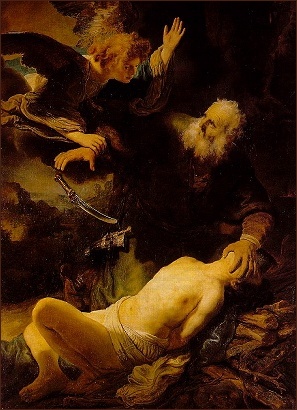


 Gregory Crofford