Posted in reflections

Confessions of a Protestant lost in a sea of Catholicism

giotto_crucifixMy friend, Jim, pastored in small-town Missouri. “Greg,” he once confided, “you can’t swing a dead cat in my town without hitting a Baptist.” Apart from whether dead-cat swinging is advisable, I understood what he meant. What is true in Missouri is even more pronounced in Oklahoma (my adopted state), where there are not just Baptists but as many choices of church “flavors” as ice cream flavors at Coldstone Creamery.

Yet my roots are in the Northeast, where most of my growing up years were in Rochester, New York. While Syracuse is dominated by the Irish, Rochester and Buffalo were more heavily settled by Italian immigrants. In my high school, there were wonderful Italian last names like Dallasandro, Cervone, and Arcuri, to name a few. With a strange, decidedly un-Italian name like Crofford, at times it seemed like I was one of the few whose last name didn’t end with an “i,” “o,” or “e.”

Italian ancestry brought with it Roman Catholicism. In elementary school, the cafeteria never served hamburgers on Fridays, only fish sticks, a concession to old-school Catholicism and its fasting practices that endured in the early 70s, Vatican II notwithstanding. On the bus, students talked about their Saturday “religion” classes and later about taking “first communion” or “confirmation.” In 10th grade chemistry, I chatted with my friend, Greg, who asked me what I wanted to do with my life. “I’m going to be a pastor,” I answered. Shocked, he asked: “But don’t you want to get married and have children?” Since Roman Catholic priests (pastors) are celibate, he couldn’t comprehend that as a Protestant I could purse the ministry and  have a family.

As I look back on my public school experience, I realize that in many ways I was a Protestant lost in a sea of Catholicism.

As incredible as it now seems, as a child I believed that Catholics were all bound for hell. Maybe it was the Chick Tract that said the Pope was the Anti-Christ. Perhaps it was a stray comment here-and-there from adults, asking prayer for good Catholic church attending individuals, that they would be “saved.” Whoever it was that wrote on the wet cement of my young mind, the etching soon hardened.  We were “in” and they were “out.” Others told me that we should “have a burden for the lost,” that we should pray and “witness” to them. Throughout 3rd grade, I was determined to tell my friends at school about  Jesus, but at the end of the day, always felt guilty that I hadn’t had the courage to do so.

High school ended, and I’ve never gone back. College at one of the liberal arts institutions sponsored by my denomination meant I was no longer religiously isolated. Rather, I was one of the “birds of a feather who flock together,” surrounded by individuals of like faith. Later years brought marriage, family, and work as a pastor and missionary in my denomination.

As I’ve grown older, I’m able to reflect more objectively on my experience as a lonely Protestant. Here are some of the things I’ve concluded:

1. I needlessly distanced myself from my peers. I wonder how many friendships never blossomed because I was convinced in some way that I couldn’t articulate at the time that association = religious compromise? When Catholic girls flirted with me, I didn’t flirt back, but how could I tell them it wasn’t because they weren’t pretty but because they were Catholic? In retrospect, my aloofness was overkill.

2. Some of my prejudices are inherited. As one in the Anglican/Methodist tradition, I was surprised to find anti-Catholic sentiments in the writings of two of my heroes, John and Charles Wesley. They speak of “Papism” as shorthand for their distaste of all things Roman. Some of that bigotry has been passed down to their ecclesiastical descendants, myself included, and we would do well to challenge it.

3. Roman Catholics love the Church. Whereas my own tradition does well speaking of the importance of being born again, being “saved,” and having a relationship with Jesus Christ, too many of the “saved” don’t have a good grasp of how church fits into the scheme. Sadly, faith then becomes an individualistic endeavor. On the other hand, Roman Catholics by-and-large respect the importance of the Church as the community of faith. Sure, they can be openly critical of it and sometimes will only attend a few times a year (as do some Protestants), but when outsiders attack the Church, watch out! They circle the wagons. Church is not a “tack on” for the Catholic; it is at the center of their faith, and there is something alluring about that. When former Catholics join Protestant churches, I’ve noticed that they often conserve their high view of the Church. What Protestant pastor isn’t thrilled to have loyal members like that?

4. The liturgy and architecture point us Godward. Does the bread and wine literally become the body and blood of Jesus during Eucharist? That’s a hard one for me to swallow, yet there is a majesty to the old rituals of Catholic worship that make the evangelical fad of “seeker sensitive” worship seem shallow by comparison. Protestant church buildings – at least lately – look more like office complexes. There is something worshipful, on the other hand, about a vaulted ceiling, stained glass windows, and pews that are bolted down. Cathlolic architecture says: “Do you need a place for dinners? That’s in the adjoining building. This space is for worship, and that’s enough.”

5. Socially, Roman Catholics care about many of the things I care about. Family is vital, and abortion is to be avoided. These two conservative tenets overlap with the thinking of many Protestant evangelicals.

6. I like Pope Francis. His tenure has started off with him garnering respect from a wide spectrum of Christian leaders as he lives a simple life and radiates love to all with whom he comes in contact.

Purposely, this essay has not dwelt upon where Roman Catholicism and Protestantism part ways. That list includes the place of Mary and the saints, but I have learned that non-adherence to the overall beliefs/practices of a particular religious group does not mean that we must paint with a broad brush, calling what is good, bad. We can celebrate the ways that God is working in other groups, and hope that they will in-turn celebrate the ways that God is working among us, warts and all.

Jesus said to Peter in John 21 not to worry about the so-called “Beloved Disciple,” that he was not Peter’s concern. Instead, he simply said to Peter: “You must follow me.” As Christians, let us affirm one another where we can, but most importantly, keep our eyes upon the One whom we are following. Doing that, how can we go wrong?

—————-

Image credit: Artchive.com
Posted in Bible, reflections

Fasting, justice, and Sabbath rest: reflections on Isaiah 58:6-14

manaclesLet’s play a word association game. When you hear the word “fasting,” what is the first thing that comes to your mind?

Since I can’t read your mind, I’ll have to be content to let you know what images came to me. I envisioned a desert monk, someone like John the Baptist, austere, skinny, and prophetic. Another image is Ash Wednesday, a sober time when we give up something for Lent.

I must confess that upon hearing the word “fasting,” the first thing that popped into my thoughts was definitely not “justice.” Yet the prophet Isaiah insisted that the two concepts are intertwined. If fasting is abstaining, then there are practices from which we must refrain. Isaiah explains:

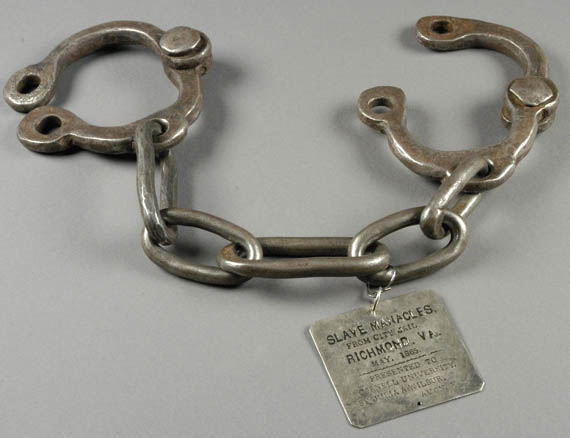
Isn’t this the fast I choose: releasing wicked restraints, untying the ropes of a yoke, setting free the mistreated, and breaking every yoke? Isn’t it sharing your bread with the hungry and bringing the homeless poor into your house, covering the naked when you see them, and not hiding from your own family? (Isaiah 58:6-7, CEB)

Isaiah calls us to “fast” (abstain) from any enterprise that enslaves people, “untying the ropes of a yoke” (v.6).  For example, millions around the world are enslaved to cigarette smoking. If we are involved in the production of tobacco, are we not implicated in that bondage? Likewise, to “set free the mistreated,” using Isaiah’s colorful phrase, will mean abstaining from our own involvement, however indirect, in the mistreatment of others. Perhaps this will mean that we think twice about spending our dollars at businesses that could pay their workers a livable wage but stubbornly refuse to do so.

At the end of the chapter, Isaiah speaks of keeping the Sabbath (58:13-14). When God first spoke of the Sabbath (Exodus 20:8-11), he clearly underscored the principle of rest. This is a fast from all work. When serving as a missionary in Haiti, often we had no power from the local municipality. Our solution was to install a large generator that could give light to all the buildings on campus. I was assigned to maintain the generator, changing the oil and the filters as needed. Most importantly, however, was the instruction regarding how many hours uninterrupted the generator could run. It was important not to run it for too long without having several hours idle or else the generator would wear out.

If we understand that about a machine, why do we miss the lesson when it comes to ourselves? God made us and understands that sometimes we must fast from work in order to rest. Recreation – what as children we called “play” – is not just for children. We literally must be “re-created” by finding time free from toil, to unstring the tightly strung bow, to kick back and do nothing useful. Yet in our 24/7 world, even the people of God grossly neglect the Sabbath principle. Have we sacrificed our health on the altar of corporate profits?

Holiness is not just personal; holiness is social. Profession of saving and sanctifying faith can be easily undermined by our wicked practices. Fasting from food is not sufficient if at the same time we refuse to abstain from practices that undercut our witness.

But if we feed the poor and clothe the naked (v. 7, 10), then Isaiah affirms that what we say with our words will be seconded by our actions. And guess what? People will notice!

Then your light will break out like the dawn, and you will be healed quickly. Your own righteousness will walk before you, and the LORD’s glory will be our rear guard. Then you will call and the LORD will answer; you will cry for help, and God will say, ‘I am here (8-9a).

When reading Isaiah 58, I’m forced to reflect on my own life first of all. Renewal always begins with the person in the mirror. Will you join me in this prayer?

“Help me, LORD, in this sin-sick world, to be part of the solution and not part of the problem. Show me where my words and actions do not match up, that what I do might open doors for sharing the love of Christ with others and not impede the advance of Your Kingdom. In Jesus’ name I pray, AMEN.”

——————-

Image credit: Cornell Library Guides


Posted in ecclesiology & sacraments

From Church to Kingdom: A God-sized mission for the people of God

24 lion lambSome time ago, I sat in a meeting and heard a colleague say: “I’m a company man.”

On one level, I understood the sentiment. He was expressing loyalty to his denomination. Yet at another level, it made me wonder: Is that all there is? Is this all just about expanding the membership of a particular ecclesiastical grouping?

No matter what denomination or congregation we call home, one thing is certain:

We signed on not merely to build an organization, but to build the Kingdom.

“Your Kingdom come, your will be done on earth as it is in heaven” (Matthew 6:10) is the pithiest Scriptural expression of this longing. We see the lifeless corpses of Syrian victims of chemical weapons, and we pray: “Your Kingdom come!” The cries of a child with an empty stomach, suffering from the ravages of drought-induced famine move us to cry: “Your Kingdom come!” A hundred preventable heartaches evoke a spontaneous: “Your Kingdom come!”

The genius of the Christian message is that – properly understood – it never sees a conflict between calling people to reconciliation with God through Christ and calling people to active involvement in bettering our world. Renewal in the “image of God” – to use John Wesley’s term – is a renewal both for the individual and for society. To pursue one and neglect the other is like detaching one wing from a plane. Just like planes need two wings to fly, so does the Christian message.

As we speak about the mission of God in the world, our “plane” must have two wings, both “Church” and “Kingdom.”

Church – Ours is not a solitary faith. The Church is the people of God, the gathered community of belief. We affirm the old truths, that we are born estranged from God, but that in Jesus, we can draw near! Forgiveness of sins and cleansing are possible because of the atoning death of Jesus. We have hope for the next life because of the resurrection. Many tragedies in this world are not because people who are inherently good acted badly. Rather, Scripture teaches that each of us are inherently evil until we allow the grace of God to change us. Church is the arena where together we celebrate the transforming grace of God that makes saints out of unworthy sinners. And yet there is more…

Kingdom – The objective is not Church; the objective is building the Kingdom of God. My own denomination speaks of “making Christlike disciples in the nations.” This is good as far as it goes, yet something is missing. As God transforms our lives through the community of faith, God wants to deploy us for a Cause that goes beyond adding more disciples. The Great Commission of Matthew 28 cannot be divorced from the Kingdom themes that appear again and again in Matthew 1-27, and those Kingdom themes direct the Church to a Cause bigger than itself.

Transformed by God, the Church moves out to transform the world.

There has been a lot written about the growing exodus from churches in North America. As my wife and I have visited in many churches, we have been struck by the self-centeredness of some of the worship choruses, such as this:

“I am a friend of God, I am a friend of God, I am a friend of God, He calls me friend.”

Narcissistic lyrics like these will never fire the human imagination. Yes, a relationship with God through Christ is essential, and it is amazing to know that God has a plan for my life (Jeremiah 29:11). But if that’s all that we have to say, then we have provided no Cause bigger than ourselves. We have only reinforced what the culture is telling us in a thousand ways, that we are the center of the universe, and by the way, there is a God who revolves around you. Someone testified:  “I couldn’t find a parking space, so I prayed, and God gave me one!” Yet what kind of a puny God exists only to serve the whims of even punier creatures?

But what if instead of God existing to serve us, we exist to serve God? What if the purpose of our lives is not us, but something bigger? What if we as the Church are about not only “making Christlike disciples in the nations” but about “making Christlike disciples who will change the world”?

Now that’s the kind of Cause for which people will give their lives. People aren’t responding to other-worldly evangelism plans that sound like a no-risk offer to join “Club Heaven.” They  want to worship in a church absolutely convinced that the same God who can powerfully change individuals can powerfully change  the world. 

Planes need two wings. How many “wings” does our message have? Are we about Church and Kingdom? We need both. Let’s make sure we are promoting a God-sized mission for the people of God.

——–

Image: Chippep

Posted in autobiographical, From soup to nuts, Uncategorized

What are your strengths?

Body_Coach_Dumbbell_set_10_kg_innerLast week, we had a two day seminar on the Strength Finders program by Gallup. Following an extensive questionnaire, Gallup determined that – out of 34 possible strengths – my top 5 are:

1. Achiever

2. Intellection

3. Context

4. Input

5. Learner

Achiever means that I don’t feel good at the end of the day unless I have in some way been productive. It also means that I often have a gnawing sense that I could have done more. This is the ghost of the unanswered e-mails, the pending projects, etc. Achiever has an upside (i.e. several earned degrees), but the “shadow side” for me means finding it hard to relax.

Intellection means processing things mentally. This requires space and time. I’m typing this on a blog, probably a pretty good indicator of intellection!

Context signifies wanting to know the background to a situation before acting. It’s the historian’s gift, and can be very helpful, as long as wanting to know background doesn’t become an excuse not to act.

Input and learner go together. It is collecting and classifying data, as well as hunger to know more about the world. Like context, the shadow side of these strengths might be paralysis, or simply categorizing data rather than using them for some good purpose.

Since we did this activity in a group, each of us wore a name badge listing our top 5. It’s a helpful tool for teams, as we seek mutual understanding and for leaders as they assign tasks to team members in-light of their strengths.

I like how Strengths Finder focuses not on who I am not, but rather on who I am. When I know where I’m strong I can maximize those abilities for the best possible impact.

Are you interested in discovering your strengths? You can check it out on Gallup’s website.

———-

Image: Sport Bay

Posted in Christian ethics, reflections

Thank you, Dr King

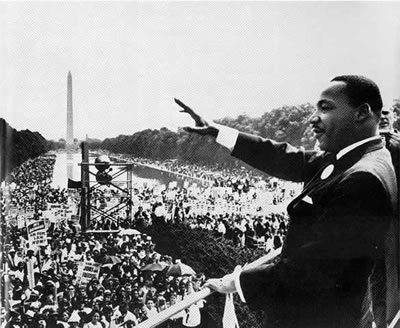
kingOn August 28, 1963, the Rev. Dr. Martin Luther King, Jr. gave a speech on the steps of the Lincoln Memorial that galvanized a nation, with echoes heard around the world. Coming from the airport in Johannesburg yesterday, the taxi driver who transported me listened to a radio discussion on to what degree King’s ideals have been realized in South African society. I’m proud that a fellow American like Dr King left a positive legacy that is still referenced 50 years later.

The story of Jackie Robinson is brilliantly portrayed in the film, 42. As a baseball player post-WW II, he faced blatant prejudices as he broke the color barrier in professional sports. There can be little doubt that we have come a long ways since the time when “Whites Only” signs were painted on the doors of public bathrooms or over water fountains. Yet much remains to be accomplished.

But let us narrow the focus from society in general to our own personal, daily choices. Here are a few small ways that in recent years I’ve tried to narrow the gap at least a little bit:

1. There is only one race, the human race. Dr Charles Gailey, Professor Emeritus of Missions at Nazarene Theological Seminary, spoke eloquently that there are not “races,” but only one, the human race. Within that race, there are certainly variations and diversity, yet there is so much more that unites us than what divides us! When a political pollster called one evening, at the end he needed to check off the boxes on his questionnaire. “What race are you?” he asked. “Human,” I replied. There was a long silence, then the pollster responded:  “You are correct. I never thought of it that way before.” Thank you, Dr Gailey, for reminding us that what we share far outweighs what differentiates us.

2. Take a bus. You can have some amazing conversations on buses. Everyone is on a journey somewhere, and buses are among the best multicultural crossroads in our nation. (If I had more than one life, I would travel buses between cities and in cities for a year, just so I could write a book about my experiences). They say that love’s first duty is to listen, and on buses you get the chance to hear each other out. I spoke for 45 minutes with several African-American men headed to California, breaking into celebrity in the world of rap music. In that one hour, I learned more about that topic than I had learned before. I also learned that a few of my comments were perceived as racist, even though I had no idea they were coming across that way. They in-turn were interested in my experiences in Africa. We shook hands at the end, and wished each other well. My world expanded in a way that it likely would not have except for riding the bus together.

3. Gently correct. In a rural church, the greeter met me at the door and introduced himself. Within 5 minutes, he had asked me questions that were pejorative toward those who skin is of a darker color. I’ve learned that the best way to correct discordant notes in someone’s narrative is to give them a new narrative. After he had listened to our missionary presentation, you could see the wheels turning in his head as his conclusions about entire groups of people were challenged by new information. Now he knew names and details, a new narrative. At the end of my presentation, I closed in prayer, thanking the Lord that one day we would all gather in worship around God’s throne, black and white, men and women and children of all nations, to worship God eternally.

4. Go out of your way to welcome those different than yourselves. At a recent church gathering, I noticed that there were only two African-American women present. Understandably, they were sitting together. From what I could tell, no one engaged them in conversation. They looked uncomfortable, so I shook their hand and exchanged names, asked them where they were from, and welcomed them to the meeting. You could see them visibly relax as a smile replaced what had been a frown.

5. Grow beyond your biases. A friend recently talked about “Jewing someone down.” When I asked why she would use such an expression, she apologized. “My mother used to say that,” she said. “But you’re right. I’ll do better.” And so must I! You can’t help but breathe some biases growing up in an all-white neighborhood, attending a high school where perhaps only 1% of the student body was black. And I suspect that many Americans are in the same boat as myself. Limited experience with those of a different color or cultural background allows negative stereotypes to thrive since there is little first-hand experience to contradict it. But my world is growing, and as it does, I’m seeing it with new eyes.

6. Accommodate as much as possible the wishes of others. The other day I made a new friend. When I called him “Ed,” he gently corrected me. “Please call me Edward” he said. What would my new friend think if I had insisted on calling him “Ed” even though he had requested otherwise? Would that have harmed or hurt our budding friendship? Likewise, there are minority groups who are sensitive about how they are called. Out of love, we now say “little people” instead of “midget” or “dwarf.” The handicapped more positively are known as the physically challenged. When we accommodate others as much as possible, we are fulfilling the command of the Lord to do unto others as we would have them do unto us (Matthew 7:12).

Dr Martin Luther King held up a mirror to our collective face, and allowed us to gaze into it. He reminded us in his “I Have a Dream Speech” on that warm day in August 1963 that what matters is not the color of our skin, but the content of our character. Thank you, Dr King, for showing us the better path that – by the grace of God – we all can follow.

Posted in autobiographical, reflections

Last-place finish

cross_countryThis essay, based upon a cross-country meet in the autumn of my first year in high school, appeared in the Standard for August 9, 1992. I have no photo from the event, but this pic from a recent Pennsylvania meet evokes my own experience as a young man in Spencerport, New York.

————————————

Dark clouds loomed overhead, threatening to turn the high school cross-country meet into an impromptu swimming competition. At last, skittish officials called runners to the starting line. A shot from the starting gun cracked the misty air. The race was on.

While we jostled for early position, my mind hurried back in time, even as my body advanced with smooth strides. Academically, the year was off to a good start. I ranked near the top of my freshman class, but my longstanding awkwardness in things athletic grated on my self-esteem like a coarse wool sweater. The previous summer, I determined to scratch the itch or die trying. An early day in September, I boldly laced on my factory-fresh blue Nike trainers and made for the locker room.

Friends had warned me of the rigors of racing, and their advice proved accurate. The first athletic “Everest” consisted of eight consecutive timed miles. Our drill-sergeant coach barked out impatient orders as he pushed our bodies to the edge of endurance. Hard work in practice paid off; my race times improved from meet to meet. Soon there were some on the team I managed to outrun. Still, I envied those runners who placed high in the standings and could cheer others as they entered the chute and crossed the finish line. Improvement notwithstanding, I usually got no more than a bird’s-eye view from the other end of things!

A sharp elbow from a teammate snapped me out of my daydream, and I set myself squarely to the task at hand. Two and one quarter miles later, the verdict was in. Unfortunately, the puddles turned out to be the only unique aspect to this latest effort. I crossed the finish line about two-thirds back in the pack.

Most runners quickly donned their sweat suits and headed for the buses, anxious to get warm and dry. Spectators became fewer, so no one seemed to notice one mother who stood at the mouth of the finish chute. Scanning the distant field with a hand over her eyes, her facial expression betrayed the worry she felt. Could there be someone still out on the course? I thought. For several minutes she kept up the vigil, starting at the slightest movement upon the horizon.

Moments later I spotted the object of her concern. In the distance, a bobbing figure was approaching. It became obvious from his halting stride that this youngster was in a great deal of pain. As he drew closer, the strained expression on his face bore eloquent testimony to the difficult run it had been. Drawing on all the strength he could muster, the boy’s determination was outdone only by the encouragement of his devoted mother. Tears streamed down her cheeks as she yelled through cupped hands: “Come on, Johnny! You can make it! You’re almost here!” Exhausted, he stumbled the final few yards, then fell headlong into the warm embrace of his mother’s arms. I overheard the tender words: “You made it, Johnny! I knew you would. I love you, son.”

Slowly, I walked toward the team bus and took my seat among my companions. The miles swept by while I replayed the scene in my mind’s eye. Soon I pondered a different type of race, but a race nonetheless. The apostle Paul speaks in 1 Corinthians 9:24 of the Christian race: “Do you not know that in a race all the runners run, but only one gets the prize? Run in such a way as to get the prize” (NIV).

Children of God have a clear course marked out before them. For sure it is not all roses; the narrow way never is. There are swirling streams to be forded, jagged roots that must be sidestepped, and sharp inclines to mount. At the times the Christian runner even falls flat on his face, mocked by the elements around him. When you face lands in the mud, there is but one thing to do: Get back on your feet, and in God’s power, press on. The finish line is still up ahead.

By most people’s standards, Johnny was a lousy runner. No crowds lined the chute to cheer his last-place finish. No blue ribbons or “great job!” pats on the back awaited him. Yet somehow I sensed that for mother and son at that moment, nothing could be more of a reward than the unfeigned love between them.

The cross-country season ended, and with it my fleeting dreams of running stardom. But the lesson for life learned that rainy Saturday in October lives on. From the view of many I meet, I’m so far back in this world’s race you could even count me out. There will be no great accolades from dignitaries, no medals of commendation for a hasty “rise to the top,” no Nobel peace prize or prime-time television interviews. Last-place finishers don’t guest host “The Tonight Show.” However, with sheer confidence I can say I’m “running to win the prize.” And when I finally get to the finish chute, I suspect everyone will have already boarded the buses and gone home. Everyone except One, that is. His name is Jesus, and when I fall exhausted into his outstretched arms, he’ll put the first-place crown on this last-place finisher. That will be worth it all.

————————————–

Photo credit: The Patriot News

Posted in Uncategorized

General Assembly 2013 wrap-up

logoGeneral Assembly is always a big family reunion, and I like family reunions!

Trying to move from point “A” to point “B” in the convention hall can be challenging, but it’s a good kind of problem. Seeing old friends, catching up on kids and grand kids, and finding out where long-lost colleagues in ministry are serving is always a joy.

Spiritually, GA was a time of refreshing. Whatever their other gifts, I’m glad that our general superintendents are all excellent preachers. Night after night, they led us close to the heart of God, following outstanding worship music.

It’s encouraging to see how the Lord guided us in the choice of two new general superintendents. Dr David Busic and Dr Gustavo Crocker will make tremendous contributions, with Crocker joining Dr Eugenio Duarte as only the second g.s. born outside North America. That’s an encouraging recognition of the global nature of our church!

Of course, there is always room for improvement. I’m not sure what the one message was that we were supposed to take away:

“Making Christlike Disciples in the Nations”

“Christian, Holiness, Missional”

“We’re better together.”

Secondly, it may seem like a small thing, but can the air conditioning please be turned down? Am I the only one who took home a terrible cold (sore throat) from sitting in the convention hall?

Finally, it was encouraging to see greater participation on the floor of the Assembly by our international delegates. With the approval by the Assembly to allow in the future for off-site locations for delegates to follow by satellite and vote, I’m hopeful that we’ll see some resolutions in 2016 originate from outside North America, along with an even greater participation in floor discussion by those delegates.

In short, GA 2013 was overwhelmingly a positive experience. Do we have a ways to go? Absolutely, but I’m glad to be part of a faith community that still believes in the optimism of grace as God’s solution for the needs of the sinful human heart.

—–

Image credit: Nazarene.org

Posted in Uncategorized

105 year old gives birth

Dr Nina Gunter is preaching a powerful sermon on newness and creativity in the church. Our message does not change, but our methods must be fresh and creative:

“Christ inspires amazing creativity.”

Her best line was: “The Church of the Nazarene may be 105 years old, but she can still give birth!”

Other quotes:

“Our milestones do not need to become tombstones.”

“God’s holiness moves us from problems to purpose.”

Thank you, Dr Gunter, for sharing your heart.

Posted in Uncategorized

Fresh wind, fresh fire

dieh_2Dr. Jim Diehl is preaching a wonderful sermon to open the Tuesday session of the General Assembly. Some highlights:

“Like Jim Cymbala wrote a few years ago, we still need fresh wind and fresh fire.”

“If you’re only giving 10% of your income to God, you haven’t graduated from elementary school.”

“In so many ways, we are unequal. But in one way, we are all equal: we only get one life.”

“God’s greatest gift that he gives to his children is peace.”

“Don’t tell me that sanctified people don’t cry.” – commenting on the death of his son, David, four years ago, due to melanoma

“Nazarenes, tend to the fire. Lord, send fresh fire on we Nazarenes.”

“Make your one walk across the stage count for Christ.”

———

Photo credit: Nazarene.org

Posted in From soup to nuts, reflections

Thoughts on the eve of Nazarene General Assembly 2013

I was only 12 years old when I attended my first General Assembly of the Church of the Nazarene in 1976, held in Dallas, Texas. We attended because my older brother, Mark, made the Easter (ENC) regional team representing us at the teen Bible Quiz. On the trip there, we discovered a wonderful up-and-coming hamburger restaurant around Lousiville, Kentucky. You may have heard of them.  They were called Wendy’s.

The other memory from that Assembly involved my two littlest brothers, Jay and Chad, only 6 and 5 years old. Somehow, they slipped away from their mom in the big Saturday crowd milling about the exhibits. Like Mary and Joseph frantically searching for the boy Jesus, we scoured every venue. No, they didn’t turn up in the Temple talking with the teachers of the Law, nor were they chatting with the General Superintendents. But a friend found them gleefully riding the elevator of the famed 18 story Baker Hotel where we were staying.

Now the General Assembly is in Indianapolis. For my brothers’ sake (and for my own enjoyment), Amy and I already rode the glorious glass elevator of the Hyatt Regency all the way to the top. Willie Wonka was nowhere in sight, and the elevator didn’t pop through the roof, but it was still lots of fun. I can’t wait to initiate some of our African delegates to this breathtaking experience.

Who says General Assembly has to be all so serious?

But on the other hand…

I do hunger for a movement of God’s Holy Spirit upon our church! If we can just set aside for a moment all the little things and get a glimpse of His perspective and His plans for us, then this time in Indianapolis will have been worth all the effort.

“Come, Holy Spirit, I need thee!

Come, sweet Spirit, I pray.

Come, in Thy strength and Thy power,

Come, in Thy own gentle way.”